The chain on my bike popped for the third time that morning. I didn’t mind. The grease on my hands felt real. It felt honest. After twelve years in the sandbox, smelling nothing but cordite and burning oil, the scent of a suburban morning in Oakhaven was supposed to be a gift.
I was wearing my old Carhartt jacket—the one with the frayed cuffs—and jeans that had seen better decades. To the people in the sparkling white Lexuses driving past, I was an eyesore. A glitch in their curated matrix of manicured lawns and Starbucks lattes.
I pulled over near the park to fix the link. That’s when the shadows fell over me.
“Hey, Hobo Joe. Pretty sure there’s an ordinance against parking your scrap metal on this sidewalk.”
I didn’t look up. I knew the voice. Tyler Vance. Twenty-three, driving a car his daddy bought, and carrying enough unearned confidence to fill a stadium. He had two of his gym-rat friends with him, all of them wearing clothes that cost more than my first house.
“Just fixing a chain, Tyler,” I said, my voice low. “I’ll be gone in a minute.”
“You should have been gone months ago,” Tyler spat. He kicked the frame of my bike. The rusted metal groaned. “This neighborhood has a standard. You look like a walking hepatitis warning. Why don’t you take your trash back to the shelter?”
I stood up slowly. I’m not a small man, but I carry myself with a hunch—a habit from carrying eighty pounds of gear through mountains. To them, it looked like weakness. To them, I was just a tired old man who didn’t know how to fight back.
“I live three blocks away,” I said, looking him in the eye. “I pay my taxes. I mind my business. You should try the latter.”
Tyler laughed, a sharp, ugly sound. “You live in that shack on the corner. We’ve been talking, ‘neighbor.’ We don’t want you here. You’re bringing down the property value just by breathing.”
He stepped closer, invading my personal space. I could smell the expensive cologne and the cheap entitlement. “What are you gonna do? Hit me with your food stamps?”
His friends chuckled. One of them reached out and shoved my shoulder. It wasn’t a hard shove, not by a soldier’s standards, but it was enough to make me stumble back against a tree.
“Look at him,” Tyler mocked, turning to the growing crowd of morning joggers and moms with strollers. “Big tough guy can’t even stand up straight. Go on, get out of here before I call the cops for loitering.”
I looked at the people watching. Most of them looked away. Some looked disgusted. Only one person, a waitress from the diner across the street named Sarah, looked like she wanted to help. But she was terrified of Tyler’s father, who basically owned the town council.
I felt the old heat rising in my chest. The “dark passenger” they warned us about in therapy. I took a breath, centering myself. “Tyler, leave it alone. You don’t know what you’re doing.”
“Oh, I know exactly what I’m doing,” Tyler said. He reached for my jacket, grabbing the collar. “I’m cleaning up the neighborhood.”
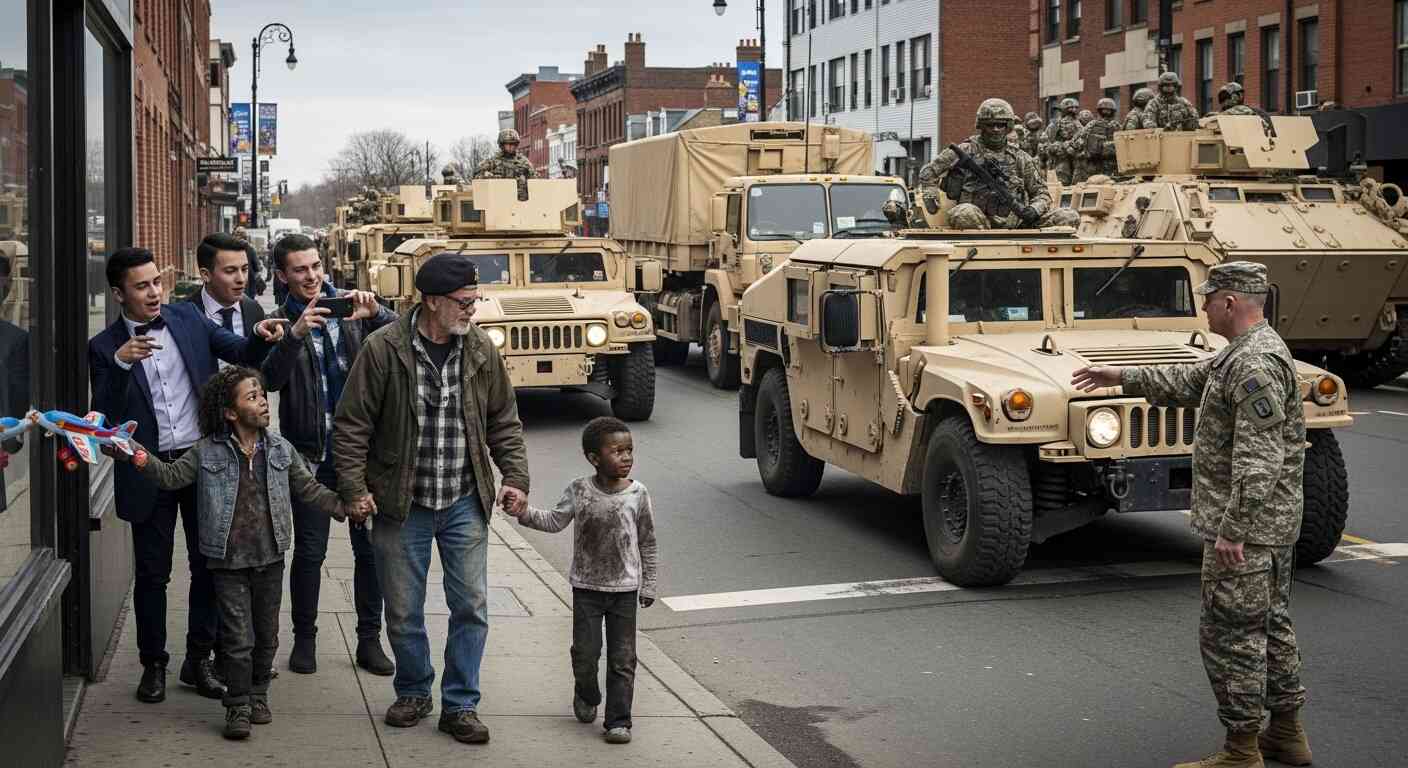
He didn’t see the black SUV turn the corner. He didn’t see the second one, or the third. He didn’t hear the low, rhythmic hum of thirty engines vibrating the asphalt.
But I did. I knew that sound. It was the sound of a promise being kept.
“FULL STORY
Chapter 1: The Ghost in the Suburbs
The chain on my bike popped for the third time that morning. I didn’t mind. The grease on my hands felt real. It felt honest. After twelve years in the Special Forces—the kind of work that doesn’t exist on paper—the scent of a suburban morning in Oakhaven was supposed to be a gift. I had traded a rifle for a wrench, and a uniform for rags.
I was wearing my old Carhartt jacket—the one with the frayed cuffs and the faint scent of woodsmoke—and jeans that had seen better decades. To the people in the sparkling white Lexuses driving past, I was an eyesore. A glitch in their curated matrix of manicured lawns and $7 lattes.
I pulled over near the park to fix the link. That’s when the shadows fell over me.
“”Hey, Hobo Joe. Pretty sure there’s an ordinance against parking your scrap metal on this sidewalk.””
I didn’t look up. I knew the voice. Tyler Vance. Twenty-three, driving a car his daddy bought, and carrying enough unearned confidence to fill a stadium. He had two of his gym-rat friends with him, all of them wearing clothes that cost more than my first house. Tyler was the crown prince of Oakhaven, the son of a developer who thought he owned the air we breathed.
“”Just fixing a chain, Tyler,”” I said, my voice low and gravelly. “”I’ll be gone in a minute.””
“”You should have been gone months ago,”” Tyler spat. He kicked the frame of my bike. The rusted metal groaned. “”This neighborhood has a standard. You look like a walking hepatitis warning. Why don’t you take your trash back to the shelter?””
I stood up slowly. I’m not a small man, but I carry myself with a slight hunch—a habit from years of carrying eighty pounds of gear through the Hindu Kush. To them, it looked like age and defeat. To them, I was just a tired old man who didn’t know how to fight back. They saw the “”rags,”” but they didn’t see the scars beneath them—the map of a life lived in the shadows so they could sleep in their temperature-controlled master bedrooms.
“”I live three blocks away, in the cottage on Miller Lane,”” I said, looking him in the eye. “”I pay my taxes. I mind my business. You should try the latter.””
Tyler laughed, a sharp, ugly sound that drew the attention of the morning joggers. “”You live in that shack? My dad’s been trying to buy that lot to put in a tennis court. We’ve been talking, ‘neighbor.’ We don’t want you here. You’re bringing down the property value just by breathing.””
He stepped closer, invading my personal space. I could smell the expensive cologne and the cheap entitlement. “”What are you gonna do? Hit me with your food stamps? Or maybe you’ll tell me a sad story about how the world owes you something?””
His friends chuckled. One of them, a thick-necked kid named Kyle, reached out and shoved my shoulder. It wasn’t a hard shove, not by a soldier’s standards, but it was enough to make me stumble back against an oak tree.
“”Look at him,”” Tyler mocked, turning to the crowd. “”Big tough guy can’t even stand up straight. Go on, get out of here before I call the cops for loitering.””
I looked at the people watching. Most of them looked away, adjusting their AirPods. Some looked disgusted, as if my presence were a stain on their perfect Saturday. Only one person, Sarah, a waitress from the diner across the street, looked like she wanted to help. She stood on the sidewalk, wringing her apron, her eyes filled with pity and fear. She knew Tyler’s father basically owned the town council. She knew that in Oakhaven, justice was something you bought at the country club.
I felt the old heat rising in my chest. The “”dark passenger”” they warned us about in the VA therapy sessions I usually skipped. My heart rate didn’t spike; it leveled out, becoming a cold, rhythmic drumbeat. I took a breath, centering myself.
“”Tyler, leave it alone,”” I said. “”You don’t know what you’re doing. You’re playing a game you don’t understand the rules of.””
“”Is that a threat?”” Tyler’s eyes lit up. He loved this. He wanted a reason to go further. “”Did the homeless man just threaten me?””
He reached for my jacket, grabbing the collar and twisting it. “”I’m cleaning up the neighborhood, Elias. Starting with you.””
He didn’t see the black SUV turn the corner three blocks away. He didn’t see the second one following it, or the third. He didn’t hear the low, rhythmic hum of heavy engines—the kind of sound that usually precedes a change in government in certain parts of the world.
But I did. I knew that sound. It was the sound of a promise being kept. It was the sound of the only family I had left.
“”Let go of the jacket, Tyler,”” I said, my voice dropping an octave.
“”Or what?”” Tyler sneered, raising his hand as if to strike. “”What are you gonna do, old man?””
Behind him, the first SUV slowed to a crawl. Then the second. Then the third. A parade of midnight-black glass and steel began to encircle the park, cutting off the street. The joggers stopped. The moms with strollers froze. The air in Oakhaven suddenly felt very, very heavy.
Chapter 2: The Weight of the Medal
To understand why I was standing on a suburban sidewalk being bullied by a boy who hadn’t yet grown into his own skin, you have to understand the man I used to be. Before I was “”Elias the Handyman,”” I was Master Sergeant Elias Thorne. I had spent twenty years in a world where the only thing that mattered was the man to your left and the man to your right.
When I retired, I didn’t want a parade. I didn’t want a “”Thank you for your service”” discount at the hardware store. I wanted silence. I bought the smallest, most run-down cottage in Oakhaven because it had a backyard overgrown with weeds and a porch that faced the sunset. I wanted to disappear into the mundane reality of civilian life.
But civilian life has its own kind of warfare.
In the military, your enemy wears a uniform, or at least carries a gun. In Oakhaven, the enemy wears a smile and a suit. They use zoning laws and social exclusion as their weapons. And Tyler Vance was their foot soldier.
Tyler’s father, Richard Vance, had been trying to buy my property for a year. He wanted to expand his estate, and my little cottage was the only thing standing in his way. When I refused to sell, the harassment started. Small things at first—fines for “”unkempt landscaping,”” mysterious complaints about noise when I was barely home. Then, it escalated to Tyler and his friends.
They saw my rusted bike and my old clothes as proof that I was “”lesser.”” They didn’t know that the bike was a restoration project, a way to keep my hands busy so they wouldn’t shake. They didn’t know that my “”rags”” were the only things that felt comfortable against a body that had been broken and stitched back together more times than I could count.
As Tyler held my collar, his face twisted in a mask of arrogant rage, I saw Sarah, the waitress, step forward.
“”Tyler, stop it!”” she cried out. “”He’s not doing anything to you! Just leave him be!””
Tyler didn’t even look at her. “”Shut up, Sarah. Go back to flipping burgers. This is between me and the trash.””
I looked at Sarah. She was twenty-four, working two jobs to support her younger brother, Leo, who had Down syndrome. She was the only person in this town who had ever brought me a slice of pie without me asking, or checked in when I didn’t show up for coffee. She had a heart too big for a place like Oakhaven.
“”Elias, please,”” she whispered, her eyes pleading with me. She wasn’t afraid for me; she was afraid of what might happen if I fought back. She had seen me once, months ago, when a car had backfired near the diner. She had seen the way I dropped, the way my eyes went cold and distant. She knew there was a monster sleeping inside the “”bum.””
“”It’s okay, Sarah,”” I said, my voice steady.
Tyler shoved me again, harder this time. I let myself hit the tree. I had to. If I didn’t play the victim, the world wouldn’t see who he really was.
“”You’re pathetic,”” Tyler said, looking around at his friends for approval. “”My dad says people like you are a cancer. You don’t contribute. You just take. You’re a drain on the system.””
“”I’ve given more than you’ll ever know, kid,”” I muttered.
“”What was that?”” Tyler leaned in, his ear inches from my face. “”Speak up, ‘hero.’ Tell us about your glory days. Did you lose your mind in the desert? Is that why you’re a loser now?””
He reached out and snatched the small silver chain around my neck. It held a single dog tag—the one that belonged to my brother, Marcus, who didn’t make it home from our last tour.
“”Give that back,”” I said. The coldness in my chest turned into a searing ice.
“”Make me,”” Tyler mocked, dangling the tag in front of me. “”What’s this? A souvenir? Did you steal it?””
The first SUV door opened.
A man stepped out. He was tall, wearing a crisp black suit that couldn’t hide the massive frame underneath. He had a military fade and a look in his eyes that made the air temperature seem to drop ten degrees. This was General “”Mac”” Mackenzie, though today, he wasn’t wearing stars. He was wearing the rage of a father.
Behind him, more doors opened. One, two, ten, fifty.
Men and women began stepping out of the SUVs. Some were in suits, some in leather jackets, some in simple tactical gear. They were of every race, every age, but they all had the same walk. The walk of people who had been to the edge of the world and decided it wasn’t that scary.
Tyler didn’t notice yet. He was too busy laughing at my “”trashy”” necklace.
“”Look at this junk,”” Tyler said, holding the dog tag up. “”Probably got it at a thrift store to look—””
“”Drop the tag, son.””
Mac’s voice wasn’t loud, but it carried the weight of a thunderclap. It was the voice of command—the kind of voice that stops hearts.
Tyler spun around, his smirk faltering as he saw the wall of black SUVs and the sea of stern, disciplined faces closing in. He saw the sheer numbers. He saw the 500 brothers and sisters I had bled with, cried with, and buried friends with.
They hadn’t come for a parade. They had come for me.
Chapter 3: The Gathering Storm
The silence that fell over the Oakhaven park was absolute. Even the birds seemed to stop chirping. The morning breeze, which had been pleasantly cool, now felt like the breath of a predator.
Tyler’s hand stayed frozen in mid-air, still clutching Marcus’s dog tag. His two friends, Kyle and the other one whose name I never cared to learn, took several instinctive steps back. Their bravado had evaporated the moment they realized they weren’t looking at “”bums.”” They were looking at an army.
Mac walked forward, his footsteps heavy and deliberate on the pavement. He didn’t look at Tyler. He looked at me.
“”Thorne,”” he said, his voice softening just a fraction. “”You’re late for the reunion.””
I wiped a smudge of grease from my forehead and managed a tired smile. “”The chain snapped, Mac. You know how it is. Old gear doesn’t like the cold.””
Mac’s eyes shifted to Tyler. The boy looked like he wanted to vanish into the sidewalk. The designer polo he wore suddenly looked like a costume.
“”Who’s the kid?”” Mac asked.
“”Just a neighbor,”” I said. “”He was just explaining the local property values to me.””
One of the men who had stepped out of the second SUV—a man named Jax, who had lost an arm in Fallujah and now ran one of the most successful private security firms in the country—stepped forward. He adjusted his prosthetic and looked at the bent wheel of my bike.
“”He kick your bike, Elias?”” Jax asked, his voice a low growl.
“”It’s an old bike, Jax. It’s seen worse,”” I replied, but my eyes remained on my brother’s dog tag in Tyler’s hand.
Mac stepped into Tyler’s personal space. He didn’t touch him. He didn’t have to. The sheer aura of authority Mac projected was enough to make Tyler’s knees shake.
“”The tag,”” Mac said.
Tyler’s fingers trembled. “”I… I was just… he shouldn’t be here… my dad says—””
“”I don’t give a damn what your father says,”” Mac interrupted. “”I’m asking you one last time. Give the Master Sergeant his property back.””
The word “”Master Sergeant”” hit the crowd like a physical blow. I saw the joggers stop in their tracks. I saw the moms pulling their strollers closer, their eyes wide. The “”bum”” they had ignored or despised was a Master Sergeant?
Tyler dropped the tag into Mac’s open palm as if it were made of white-hot coal. Mac turned and handed it back to me. I took it, the cool metal feeling like an anchor, grounding me back to reality.
“”Get up, Elias,”” Mac said, reaching out a hand.
I took it and let him pull me up. I stood tall for the first time in months. My back straightened, my shoulders squared, and the “”hunch”” vanished. In an instant, the transformation was complete. I wasn’t a broken old man anymore. I was a warrior among his kin.
“”You guys shouldn’t have come,”” I muttered, though my heart was pounding with a relief I hadn’t felt in years.
“”We heard there was a problem,”” a woman named Sarah—not the waitress, but a former combat medic—said as she stepped forward. “”We heard one of our own was being treated like a ghost in his own home. We don’t leave people behind, Elias. Not on the field, and sure as hell not in the suburbs.””
Tyler, realizing he was no longer the center of attention, tried to edge away. “”Look, I didn’t know… I thought he was just some guy… we were just joking around…””
Jax stepped in his path. “”Joking? You shoved a man who has a Silver Star. You mocked a man who spent more time in the dirt for your freedom than you’ve spent in a gym. You think this is a joke?””
The 500 brothers and sisters didn’t shout. They didn’t scream. They just stood there, a silent, overwhelming presence. It was the silence of a tidal wave before it hits the shore.
Suddenly, a sleek black Mercedes-Benz S-Class pulled up to the curb, tires screeching. The door flew open, and Richard Vance, Tyler’s father, stepped out. He was a man used to being the most important person in any room. He saw the SUVs, he saw the crowd, and he saw his son looking like a cornered rat.
“”What is the meaning of this?”” Richard barked, trying to reclaim his authority. “”Who are you people? This is private property! I’ll have you all arrested for trespassing!””
Mac turned slowly to face him. A thin, dangerous smile touched his lips. “”Mr. Vance, I presume? We’ve been looking forward to meeting you.””
Chapter 4: The Truth Unveiled
Richard Vance marched toward Mac, his face a shade of purple that matched his silk tie. He looked at the 500 men and women as if they were a nuisance, an infestation in his perfect town.
“”I don’t know who you think you are,”” Richard said, pointing a manicured finger at Mac’s chest. “”But I own half this town. My brother is the District Attorney, and I have the Chief of Police on speed dial. You and your… biker gang… need to clear out of here immediately.””
Mac didn’t flinch. “”Biker gang? That’s an interesting observation, Richard. Actually, what you see here are doctors, lawyers, business owners, and active-duty officers. But more importantly, what you see here are the people who make sure you get to live in this ‘perfect’ town without worrying about the rest of the world.””
Mac reached into his suit jacket and pulled out a leather folder. He tossed it onto the hood of Richard’s Mercedes.
“”What is this?”” Richard snapped.
“”It’s a comprehensive audit of your recent land acquisitions in Oakhaven,”” Mac said. “”Including the illegal pressure you’ve been putting on a certain Master Sergeant to sell his home. It also includes the tax records for your development firm. You’ve been cutting corners, Richard. Shifting funds. Taking liberties with federal grants.””
Richard’s face went from purple to a ghostly white. “”You… you can’t have those. Those are private—””
“”Nothing is private when you mess with one of ours,”” Jax added, stepping up beside Mac. “”We have friends in very high, very quiet places. You thought Elias was an easy target because he didn’t fight back. You thought his silence was weakness.””
I stepped forward, my hand resting on the handlebars of my rusted bike. “”I told you, Richard. I just wanted to be left alone. I didn’t want any of this.””
“”You did this?”” Richard hissed at me, his eyes full of venom. “”You brought these people here to ruin me?””
“”No,”” I said quietly. “”You did this to yourself. You taught your son that people like me are trash. You taught him that money makes you a god. I was just the man who refused to bow.””
Tyler was shaking now, looking between his father and the wall of veterans. The “”brothers in black”” hadn’t moved an inch. They were a living fortress.
“”We’re not here to ruin you, Richard,”” Mac said, his voice dropping to a whisper that felt like a blade. “”We’re here to give you a choice. You’re going to issue a public apology to Master Sergeant Thorne. You’re going to pay for the full restoration of his home—and that bike. And then, you’re going to donate a very large sum of money to the Veterans’ Outreach program Sarah here runs.””
He pointed to the waitress, Sarah, who was watching from the sidelines, tears streaming down her face. She wasn’t a veteran, but she had been the only one in this town who treated me like a human being.
“”And if I don’t?”” Richard tried to bluster, but the fire was gone.
“”Then the folder on your car gets delivered to the IRS and the FBI within the hour,”” Mac said. “”And I promise you, Richard, your brother the DA won’t be able to help you. In fact, he’ll probably be the one signing the indictment to save his own skin.””
The crowd of Oakhaven residents was buzzing now. The joggers were recording everything on their phones. The “”shame”” was no longer on the man in the rags; it had shifted, with surgical precision, to the man in the suit.
Richard looked at his son. Tyler looked at the ground. The power dynamic of the town had shifted in the span of ten minutes.
“”Well?”” Mac asked. “”What’s it going to be?””
Richard Vance looked at the 500 faces staring back at him. He saw the discipline. He saw the unbreakable bond. He realized that for all his money and all his influence, he was utterly alone. He looked at me, his mouth twitching.
“”I… I’m sorry,”” he muttered.
“”I didn’t hear you,”” Mac said.
“”I’m sorry!”” Richard shouted, his voice cracking. “”I’ll do it. Just… just take the folder. Please.””
Mac picked up the folder. “”We’ll keep it. For insurance. We’ll be watching, Richard. Every time Elias walks down this street, every time he goes for a ride on his bike… we’ll be watching.””
Mac turned to the 500. “”Company! Dismissed!””
In perfect unison, the men and women began to head back to their vehicles. There was no cheering, no celebration. It was a mission accomplished.
But the story wasn’t over. Not for me.
Chapter 5: The Cost of Peace
The SUVs began to roar back to life, the deep thrum of their engines echoing through the streets of Oakhaven. One by one, they pulled away, leaving the park behind. The crowd of onlookers slowly dispersed, whispering to each other, their eyes darting toward me with a new, uncomfortable kind of respect.
Mac stayed behind for a moment, his hand on the door of the lead SUV. He looked at me, his eyes searching mine.
“”You okay, Elias?”” he asked.
“”I will be,”” I said, leaning against my damaged bike. “”Thanks for coming, Mac. I didn’t mean to cause a scene.””
“”You didn’t cause it,”” Mac said. “”They did. We just finished it. But listen… a man like you shouldn’t be hiding in a shack, Elias. You have a family. You don’t have to carry the weight alone anymore.””
“”I know,”” I said. “”But sometimes, the weight is the only thing that feels real.””
Mac nodded. He understood. He had his own weight to carry. He hopped into the SUV and pulled away, leaving me standing on the sidewalk with my rusted bike and the echoes of the morning.
I looked over and saw Sarah walking toward me. She looked hesitant, as if she wasn’t sure if she should speak to the “”Master Sergeant”” or the “”Handyman.””
“”Elias?”” she whispered.
“”Hey, Sarah,”” I said, my voice returning to its normal, quiet tone.
“”I… I had no idea,”” she said, looking at the street where the SUVs had been. “”I mean, I knew you were special, but… why didn’t you say anything? Why did you let them treat you like that?””
I looked at the bent wheel of my bike. “”Because if I fight every battle with my fists or my rank, I never really leave the war, Sarah. I wanted to see if there was a world where I didn’t have to be a soldier.””
“”And is there?”” she asked.
I looked at her—at the kindness in her eyes, the way she had stood up for me when she had everything to lose.
“”Maybe,”” I said. “”But it helps to know that when the world gets too loud, I have brothers who can make it quiet again.””
She smiled, a small, genuine thing. “”Come to the diner. Leo’s there. He made some drawings he wants to show you. And the pie is on the house. Forever.””
“”I’d like that,”” I said.
As she walked back toward the diner, I started to push my bike. It wobbled and squeaked, the chain clicking against the guard. I looked up and saw Tyler and his father standing by their Mercedes. Richard was on his phone, likely frantically calling lawyers, while Tyler just stared at me.
He didn’t look angry anymore. He looked small. He looked like a boy who had just realized that the world was much bigger and much more dangerous than his father’s backyard.
I didn’t say anything to them. I didn’t need to. I just pushed my bike past them, my head held high.
But as I reached the corner, a silver car pulled up. It was Detective Miller, the local cop who usually handled the complaints against me. He rolled down his window and looked at me, then at the Vances.
“”Hell of a morning, Elias,”” Miller said, a smirk playing on his lips.
“”Just a Saturday, Detective,”” I replied.
“”The Chief wants to know if you’re planning on having 500 SUVs in town every weekend,”” Miller said. “”It’s a bit of a traffic nightmare.””
“”Tell the Chief that as long as the neighbors are neighborly, the streets will stay clear,”” I said.
Miller tipped his cap. “”Copy that. Carry on, Master Sergeant.””
I watched him drive away. For the first time since I moved to Oakhaven, the air didn’t feel heavy. The “”rags”” I wore didn’t feel like a disguise or a burden. They felt like a choice.
I reached my cottage. The gate was hanging off its hinges, and the porch needed paint. To anyone else, it was a wreck. To me, it was a sanctuary. I sat down on the top step and unbuttoned my jacket, pulling Marcus’s dog tag out. I held it in my hand, feeling the warmth of the sun on the metal.
“”We’re okay, Marcus,”” I whispered. “”We’re home.””