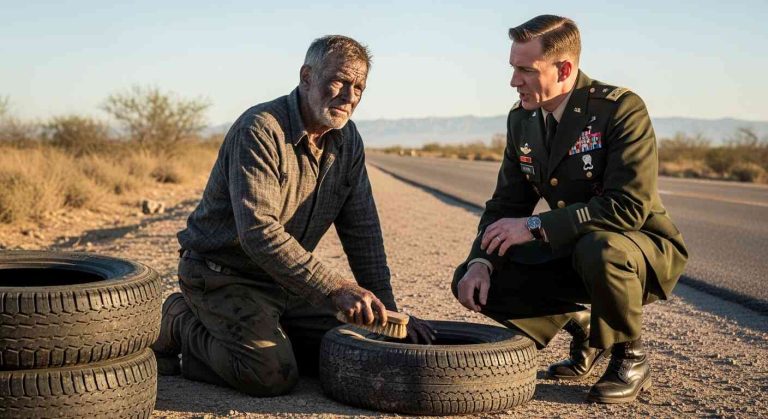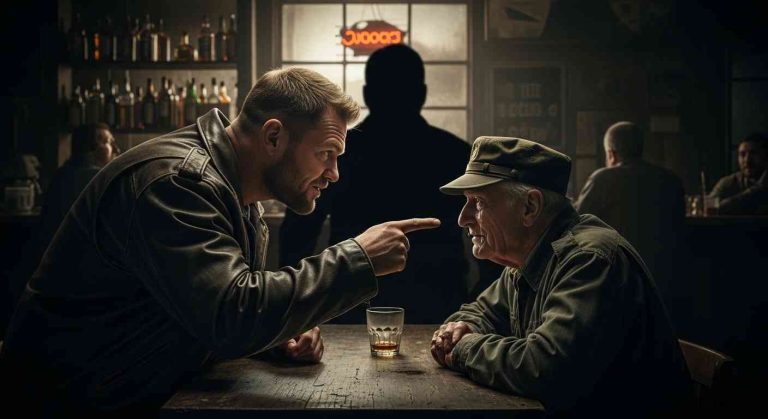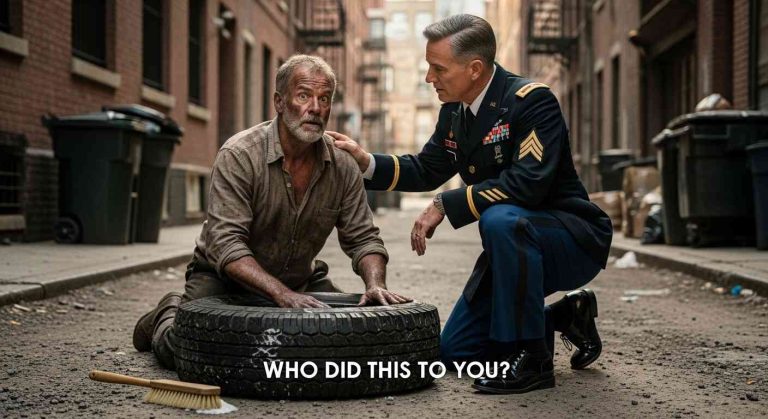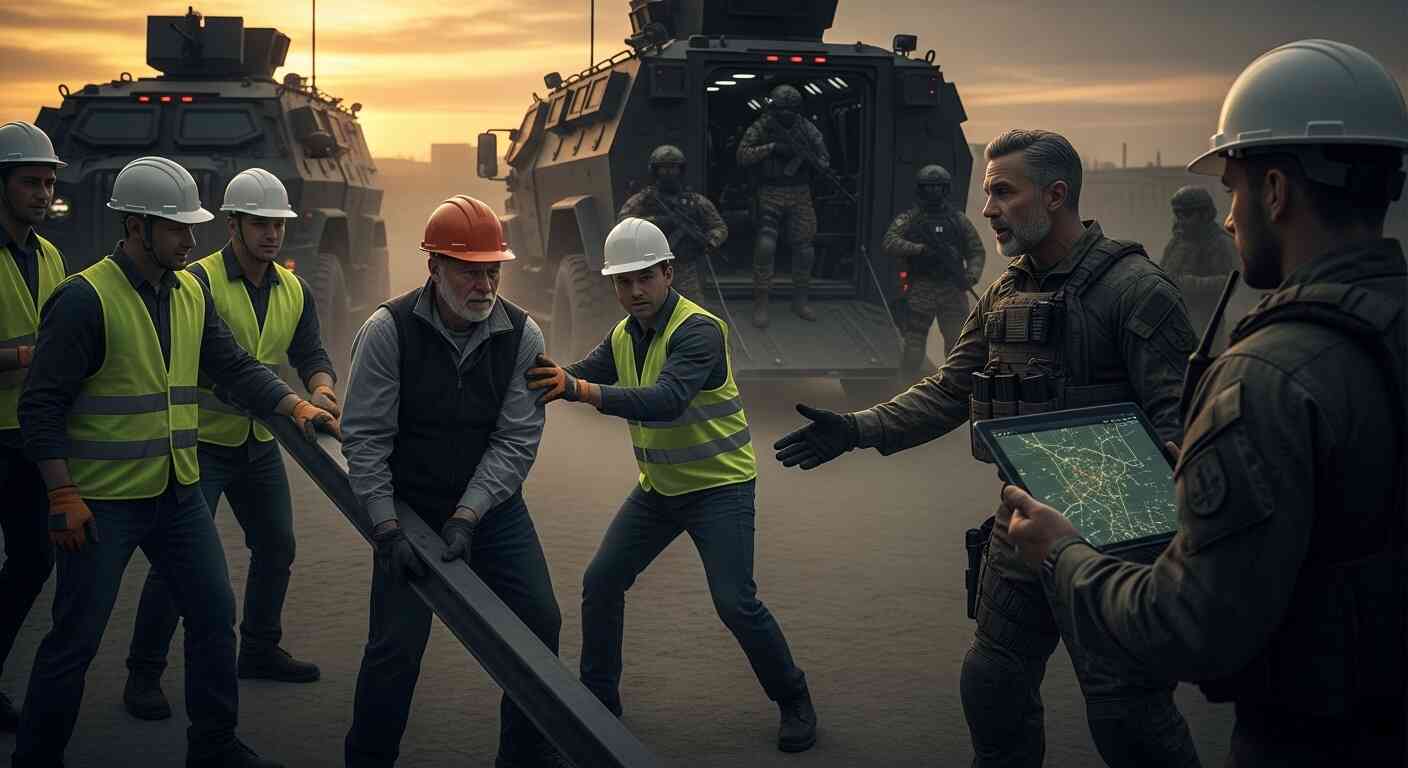
I’ve spent forty years learning how to keep my temper under wraps. At seventy-two, my bones ache more than my heart does, but today, that changed.
I was just the “old guy” on the crew. The one who swept the dust, hauled the heavy rebar without complaining, and ate my ham sandwich in the shade of the crane. To Jax and his pack of hyenas, I was a punching bag. A man who had outlived his usefulness.
“Hey, Pops! I think your oxygen tank is leaking!” Jax yelled, kicking my shins as I walked past. His friends roared with laughter, the kind of hollow, cruel sound you only hear from people who have never known real sacrifice.
I didn’t say a word. I just kept walking. I’ve survived jungles, deserts, and the kind of silence that follows a grenade blast. A twenty-four-year-old with a TikTok following and a leased truck wasn’t going to break me.
But then, he saw the photo. The one I keep tucked in my breast pocket, right over my heart. The photo of the boys who didn’t make it home from the valley in ’94.
Jax snatched it from my hand with a sneer. “Who are these losers? Looks like a bunch of suckers who couldn’t cut it.”
Before I could breathe, he ripped it in half. Then he dropped it into the wet cement.
The world went very, very still. My hand didn’t shake. My heart didn’t race. It just grew cold—a cold I haven’t felt since I wore a uniform with stars on the shoulders.
I looked Jax in the eye. For the first time, he stopped laughing. Something in my gaze made him take a step back.
“You shouldn’t have done that, son,” I whispered.
I pulled a burner phone from my pocket—the one they always mocked me for—and hit a single speed-dial button.
“This is Iron Horse,” I said into the receiver. “The nest has been disturbed. I need a pickup at the Miller Creek site. Bring the family.”
Jax laughed nervously. “Who you calling, Gramps? The nursing home?”
He didn’t hear the roar of the engines yet. He didn’t see the dust cloud on the horizon. But he was about to find out that when you mess with a mentor of the Special Forces, you don’t just face one man. You face the entire pack.
“
Chapter 1: The Invisible Man
The humidity in northern Virginia has a way of sticking to your skin like a guilty conscience. At seventy-two, Elias Thorne felt the weight of it in his marrow. He wiped the sweat from his brow with a grease-stained bandana, his joints popping like dry kindling as he stood up from the rebar cage he’d been tying.
“”Move it, Grandpa! You’re slowing down the pour!””
The voice belonged to Jax Miller, the foreman’s nephew. Jax was twenty-four, wore mirrored sunglasses that cost more than Elias’s weekly grocery budget, and possessed the unique arrogance of a man who had never been told “”no.””
Elias didn’t look up. He just tightened the wire and moved to the next joint. He didn’t need this job for the money—not really. He had his pension, though most of it went to Mary, the widow of his best friend, Joe, who had died in his arms in a place the mapmakers had forgotten. He worked because the silence of his small apartment was louder than the jackhammers. He worked because he didn’t know how to stop.
“”I’m talking to you, Thorne!”” Jax stepped into Elias’s personal space, his steel-toed boot intentionally landing on Elias’s hand.
Elias didn’t flinch. He looked at the boot, then up at Jax. His eyes were a startling, icy blue, framed by a roadmap of wrinkles. They weren’t the eyes of a victim; they were the eyes of a man who had seen the sun rise over a dozen different war zones.
“”I heard you, Jax,”” Elias said, his voice a low, gravelly rumble. “”The rebar is set. You can pour whenever you’re ready.””
“”I’ll pour when I say I’ll pour,”” Jax spat, leaning in. His breath smelled like energy drinks and entitlement. “”You’re a relic. My uncle only keeps you around because he’s got a soft spot for charity cases. You’re a ghost, Elias. Why don’t you go find a cemetery and save us the trouble of burying you?””
The four other guys on the crew—mostly boys in their early twenties who followed Jax like stray dogs—erupted in “”Oohs”” and laughter.
“”Maybe he’s waiting for his medal to arrive in the mail,”” one of them, a kid named Tyler, mocked. “”Hey, Pops, did you fight in the Civil War? Or was it the one with the muskets?””
Elias picked up his tool belt. It was heavy, but no heavier than the memories he carried. He walked toward the break area, a small patch of dirt shaded by a tattered tarp. He sat on a plastic crate, his back protesting the movement.
He reached into his pocket and pulled out a small, laminated photograph. It was his anchor. Four men in camouflage, arms around each other’s shoulders, grinning in front of a dusty Humvee. Elias was in the center, thirty years younger, his face smeared with grease and pride. They were his “”boys.”” He had trained them, led them, and eventually, buried three of them.
“”What you got there, Gramps? A picture of your first girlfriend?””
Jax appeared, flanked by his shadows. Before Elias could react, Jax snatched the photo from his calloused fingers.
“”Give it back, Jax,”” Elias said. The tone wasn’t a plea. It was a warning. But Jax was too high on his own perceived power to hear it.
“”Look at this,”” Jax laughed, holding the photo up for the crew to see. “”Check out the high-and-tight haircut. You look like a dork, Elias. And look at these guys. Who are they? The losers’ club?””
“”That’s my family,”” Elias said, standing up slowly. His height was still there, a towering presence that usually made men think twice, but Jax was blinded by the audience watching him.
“”This?”” Jax sneered, flicking the photo with his thumb. “”This is trash.””
With a slow, deliberate motion, Jax ripped the photo in half.
The sound of the lamination tearing was louder than the nearby bulldozer to Elias’s ears. It was a physical blow.
“”Oops,”” Jax smirked. He let the pieces flutter to the ground, right into the edge of a fresh concrete pour. He ground his heel into the fragments, sinking them into the grey sludge. “”Looks like your memories are permanent now, Pops. Part of the foundation.””
The site went silent. Even the other bullies stopped laughing. There was a line, and Jax hadn’t just crossed it; he’d burned the bridge behind him.
Elias looked at the concrete where his brothers were now buried. He didn’t yell. He didn’t swing. He just reached into his other pocket and pulled out a battered, old-school flip phone.
“”Who you calling? The cops?”” Jax mocked, though his voice had a slight tremor now. Something about Elias’s stillness was terrifying.
Elias pressed a single button. He waited three seconds.
“”This is Iron Horse,”” Elias said. His voice was no longer that of a construction worker. It was the voice of a commander. “”The nest has been disturbed. I’m at the Miller Creek site. I need a formal extraction. And… I want the family here.””
He closed the phone.
“”Extraction?”” Jax laughed, trying to regain his bravado. “”What, you calling a taxi? Get back to work, you crazy old bastard.””
Elias looked at him. Truly looked at him. “”You should start cleaning your locker, Jax. You won’t be needing it much longer.””
Chapter 2: The Ghost in the Machine
Thirty miles away, in a room filled with flickering monitors and the hum of high-level encryption, a young sergeant froze.
“”Sir? We have a hit on the ‘Old Man’ frequency.””
General Marcus Reed, a man whose chest was a mosaic of ribbons and whose face was etched with the stresses of global security, looked up from a map of Eastern Europe.
“”Repeat that, Sergeant?””
“”Frequency 104.2, sir. The ‘Iron Horse’ signal. It just went active. GPS coordinates place it at a commercial construction site in Fairfax.””
Reed didn’t hesitate. He didn’t ask for verification. He knew that frequency hadn’t been touched in fifteen years. Elias Thorne—the man who had rewritten the manual on unconventional warfare, the man who had saved Reed’s life in a ditch in Mogadishu—never asked for help. Ever.
“”Status?”” Reed barked.
“”He used the ‘Nest Disturbed’ code, sir. It’s not a medical emergency. It’s a… behavioral intervention request.””
Reed’s eyes narrowed. He remembered the stories of how Elias used to deal with bullies in the ranks. He also remembered that Elias was seventy-two years old and working a blue-collar job because he refused to take a government paycheck while ‘his boys’ widows struggled.
“”Alert the 5th Special Forces Group at Fort Belvoir,”” Reed ordered. “”I want a full honor guard. Every man who went through Thorne’s academy who is within a fifty-mile radius—get them in uniform. Now.””
“”Sir? That’s over four hundred men,”” the Sergeant stammered.
“”I don’t care if it’s a thousand. The man who built the backbone of this army just called for ‘family.’ We don’t keep family waiting.””
Back at the site, Miller, the owner of the construction company and Jax’s uncle, walked over, sensing the tension.
“”What’s going on here? Why is the pour stopped?”” Miller was a man who saw the world in profit margins.
“”The old man’s losing his mind, Uncle,”” Jax said, pointing at Elias. “”He’s standing there talking to a dead phone, threatening me. He’s a liability.””
Miller looked at Elias. He had always respected the old man’s work ethic, but Jax was family. And Jax was the future of the company. “”Elias, maybe it’s time to call it a day. Permanently. I’ll mail you your final check.””
Elias didn’t move. “”I’m not leaving yet, Mr. Miller. I’m waiting for my ride.””
“”I’m the boss here!”” Miller shouted, frustrated by Elias’s calm. “”I say you leave now, or I’m calling the police for trespassing!””
“”I wouldn’t call the police,”” Elias said softly. “”They’ll only get in the way of the traffic.””
“”What traffic?”” Jax sneered.
Then, they felt it.
It started as a low thrum in the soles of their boots. Then, the windows of the site office began to rattle in their frames.
From the north, a line of black SUVs appeared, moving with military precision, ignoring the ‘Road Closed’ signs. Behind them, two transport helicopters crested the treeline, the thinned air of the suburb whipped into a frenzy by their rotors.
The construction crew stood paralyzed. This wasn’t the police. This was something else entirely.
Chapter 3: The Weight of the Crown
The first SUV didn’t slow down for the gate. It hit the chain-link fence at forty miles per hour, tearing it off its hinges like it was made of wet paper. It skidded to a halt ten feet from where Elias stood.
Jax took a step back, his face turning the color of the wet concrete he’d just ruined. “”What the hell is this?””
Four men in charcoal suits with earpieces jumped out, their movements synchronized. They didn’t look at Jax. They didn’t look at Miller. They formed a perimeter around Elias, their backs to him, eyes scanning the crowd with lethal intensity.
“”Secure,”” one of them said into a lapel mic.
Then came the buses. Three massive, olive-drab transport buses pulled into the clearing, followed by dozens of personal vehicles—trucks, motorcycles, sedans.
And out of them stepped the men.
They weren’t in suits. They were in Class A uniforms—crisp, decorated, and intimidating. There were colonels, majors, sergeants, and privates. Men with scars, men with medals, and men with the unmistakable posture of those who have seen the worst of humanity and survived it.
One by one, they lined up. The construction site, once a place of dirt and noise, became a cathedral of silence.
General Marcus Reed stepped out of the lead SUV. He walked past the gaping mouth of the site manager, past the trembling Jax, and stopped three feet in front of Elias.
He didn’t say a word. He just snapped the sharpest salute Elias had seen in twenty years.
Behind the General, five hundred men snapped to attention simultaneously. The sound of their boots hitting the gravel was like a single crack of thunder.
“”Master Sergeant Thorne,”” Reed said, his voice echoing off the half-finished walls of the luxury condos. “”The family is present. Who is the problem?””
Elias didn’t point. He didn’t have to. Jax was currently trying to hide behind a stack of plywood, his knees knocking together so loudly you could almost hear them.
“”The young man has a misunderstanding about the value of things, Marcus,”” Elias said, his voice steady. “”He thinks because something is old, it’s trash.””
Reed turned his gaze toward Jax. It was like a spotlight of pure, concentrated judgment. Jax collapsed. He actually fell to his knees in the dirt.
“”Is that right?”” Reed asked, stepping toward Jax. “”You think this man is trash?””
“”I-I-I didn’t know!”” Jax sobbed, the tough-guy act disintegrating into a puddle of pathetic tears. “”He was just a worker! I didn’t know!””
“”He isn’t just a worker,”” Reed said, his voice dropping to a terrifying whisper. “”This man designed the SERE training you’ll never be tough enough to pass. He’s the reason half the men in this line are still breathing. He’s a Congressional Medal of Honor recipient who chose to work in the dirt because he wanted to stay humble.””
Reed looked down at the concrete pour. “”Where is the photo, Elias?””
“”Under his boot,”” Elias replied.
Reed looked at the wet cement. He looked at Jax. “”Pick it up.””
“”It’s… it’s in the cement,”” Jax blubbered.
“”I didn’t ask for a status report on the concrete,”” Reed growled. “”I said. Pick. It. Up. With your hands.””
Chapter 4: The Price of Disrespect
Jax didn’t hesitate this time. He lunged forward, plunging his hands into the caustic, heavy wet concrete. He scrambled, his fingers clawing through the grey muck, desperately searching for the pieces of the photo.
The five hundred soldiers watched in absolute, terrifying silence. No one cheered. No one laughed. The weight of their collective disapproval was heavier than any physical punishment.
Finally, Jax pulled out the two torn halves of the photo, coated in thick, drying sludge. He held them out with trembling, grey hands.
“”I’m sorry,”” Jax choked out. “”I’m so sorry.””
Miller, the site manager, finally found his voice. “”General, please, this is a private business. My nephew… he’s just a kid. He didn’t mean anything by it.””
Reed turned to Miller. “”Your business exists in a country kept safe by men like Elias Thorne. You allowed this environment. You allowed a legend to be mocked while he worked for his keep.””
Reed looked at a man in a suit who had just stepped out of another vehicle—a JAG officer.
“”Mr. Miller,”” the officer said, stepping forward. “”We’ve been reviewing your federal contracts for the Belvoir expansion. It seems there are several safety and labor violations we’ve overlooked in the past. We won’t be overlooking them anymore. Your company is being blacklisted from all Department of Defense contracts, effective immediately.””
Miller’s face went white. That was 80% of his business. He looked at Jax with a sudden, burning hatred.
“”You’re fired, Jax,”” Miller whispered. “”Get out. Get off my site.””
“”But Uncle—””
“”Get out!””
Jax scrambled away, slipping in the mud, humiliated in front of the very crew he had used to bolster his ego. His four ‘friends’ were nowhere to be seen; they had vanished into the shadows of the machinery the moment the first helicopter appeared.
Elias walked over to Jax. The young man looked up, expecting a blow.
Instead, Elias took the ruined pieces of the photo. He wiped the concrete off them with his bandana—the same one he’d used to wipe his own sweat.
“”You see these men, Jax?”” Elias asked, pointing to the blurred faces in the photo. “”They died so you could have the right to be an idiot. But they didn’t die so you could be a coward. Being a man isn’t about who you can push down. It’s about who you’re willing to lift up.””
Jax couldn’t even look him in the eye. He just stared at the ground, a broken boy in a neon vest.