FULL STORY
Chapter 5: The Final Code
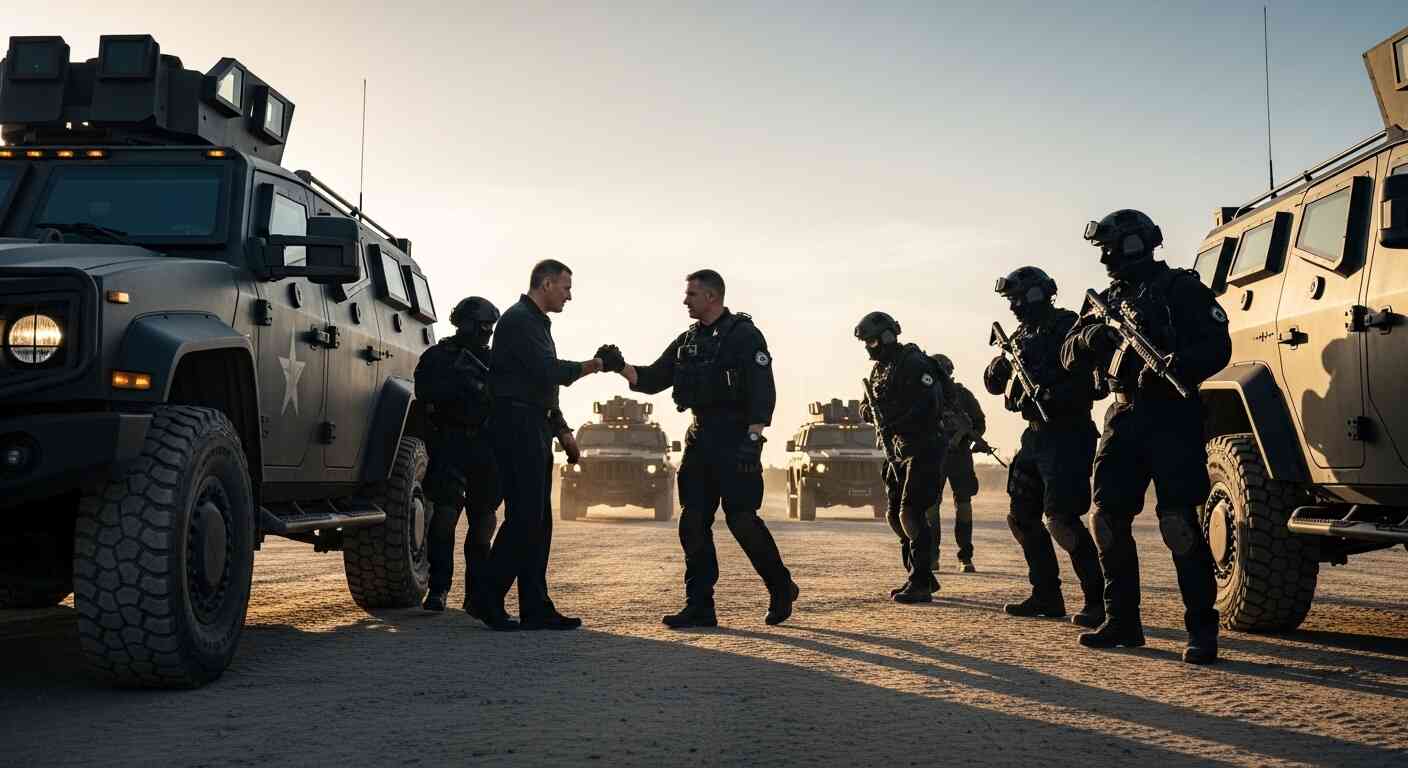
The Cheyenne Mountain Complex was a fortress of cold stone and humming steel. As the helicopter touched down, the sound of gunfire was already echoing through the tunnels.
“”The Directorate is already inside!”” Reed shouted over the rotors. “”Jax, Sarah—get to the Core. My men will hold the perimeter!””
We ran. My boots, still slick with oil, skidded on the polished concrete. We passed bodies—security guards who had died trying to protect a secret they didn’t even understand.
Every time I saw a uniform on the ground, a part of me flinched. These were men like I used to be. Men who followed orders.
“”In here!”” Sarah pointed to a heavy blast door.
I slammed my hand against the biometric scanner. Access Denied.
“”They’ve locked us out,”” Sarah hissed, pulling out a hacking rig. “”It’ll take me twenty minutes to bypass this.””
“”We don’t have twenty minutes,”” I said. I looked at the wiring panel next to the door. I didn’t need a computer. I remembered the architecture. I tore the panel off with my bare hands, the jagged metal slicing into my palm.
Blood dripped onto the wires. Red on copper.
“”Jax, what are you doing?””
“”Giving it what it wants,”” I muttered. I grabbed two high-voltage leads. “”Cerberus isn’t looking for a password. It’s looking for a pulse.””
I crossed the wires. A massive arc of electricity surged through my body. My vision went white. My heart felt like it was being squeezed by a giant’s fist. I wasn’t just Jax anymore; I was a bridge.
The door hissed open.
I fell to my knees, gasping for air, my smell of burnt ozone mixing with the scent of old oil.
“”You’re insane,”” Sarah whispered, dragging me inside.
The Core was a cathedral of light. Thousands of servers pulsed with a rhythmic, red heartbeat. At the center was the “”Eye””—the interface for the AI.
I staggered to the console. My vision was blurry, my hands shaking.
“”Jax, look,”” Sarah pointed to the main screen.
TOTAL GRID COLLAPSE: 98%
PURGE SEQUENCE INITIATED
The Directorate wasn’t just shutting down the power. They were erasing the data. All the medical records, all the bank accounts, all the history of a nation—gone. They wanted a blank slate to build their new world.
“”I can’t stop the purge from here,”” I said, my fingers fumbling over the keys. “”The commands are being sent from an external source. Someone is ‘feeding’ the virus from inside the mountain.””
“”Where?””
I looked at the internal map. “”The observation gallery. Above us.””
I looked up. High above the server racks, behind a pane of reinforced glass, stood a man in a tailored suit. He wasn’t a soldier. He was a bureaucrat. A man who had never seen a day of combat, never felt the sting of grease, yet was currently destroying more lives than a thousand wars.
He saw me. He smiled and held up a remote detonator.
“”He’s going to blow the servers!”” Sarah cried.
I looked at the console, then at the man. I had a choice. I could try to save the data, or I could save the people. If I saved the data, the blast would kill us and the grid would stay down. If I stopped the detonator…
“”Sarah, get behind the cooling stacks,”” I ordered.
“”What are you doing?””
“”I’m going to do what I should have done three years ago. I’m going to give the AI a soul.””
I didn’t type code. I typed a message. I typed the names of every man I had lost in the war. I typed the feeling of the sun on the oil field. I typed the memory of the spit on my jacket. I fed the AI everything that made me human—the pain, the scars, and the refusal to break.
“”Cerberus,”” I whispered. “”Don’t be a dog. Be a man.””
The red lights turned a blinding, brilliant white.
FULL STORY
Chapter 6: The Man Who Saved the World
The explosion didn’t happen.
Up in the gallery, the bureaucrat was frantically pressing the button on the detonator, but the servers remained humming and calm. The AI had reached out through the internal network and fried the blasting caps before they could trigger.
The “”Eye”” on the screen turned to face the gallery.
A voice, synthesized from a thousand human languages but carrying the distinct, gravelly undertone of my own, filled the room.
THREAT DETECTED. AUTHORIZATION REVOKED.
The bureaucrat froze. The glass of the observation gallery didn’t shatter—it polarized, turning into a mirror. He was forced to look at himself.
Suddenly, the doors to the gallery burst open. Colonel Reed and his men flooded in, tackling the man to the ground.
I slumped against the console, the adrenaline leaving my body in a cold rush. The screen in front of me began to scroll at light speed.
RESTORING GRID…
HOSPITALS ONLINE…
COMMUNICATIONS ACTIVE…
CITIZEN DATA RECOVERED…
I watched as the maps of the United States flickered back to life. City by city, the darkness was pushed back. Chicago. New York. Los Angeles. And finally, a tiny little suburb in North Dakota.
“”You did it,”” Sarah said, kneeling beside me. She wiped a smudge of oil from my forehead. “”You actually did it.””
“”No,”” I said, looking at the screen. “”We did it.””
The “”Eye”” blinked once, a small icon of a veteran’s patch appearing in the corner of the display. A silent salute from the machine to its creator.
One week later.
The Oak Creek suburb was back to its quiet, pristine self. The oil spill on the three-million-dollar driveway was gone, cleaned by a professional crew paid for by a mysterious government grant.
Rick Vance was no longer the foreman. In fact, Rick Vance wasn’t working in construction at all. Following the “”security audit”” of the site, his company had been liquidated, and Rick was currently facing charges for the assault of a federal asset. He was last seen picking up trash on the side of the highway as part of his court-ordered community service.
I stood at the edge of the driveway, wearing a brand-new suit that felt too tight and a jacket that carried the weight of a dozen medals I’d never asked for.
Colonel Reed was waiting for me in a black car. “”The President wants to see you, Jax. There’s a medal, a ceremony… and a new lab.””
I looked at the house. A little girl was playing on the lawn. She stopped and looked at me, then at the “”Veteran”” pin on my lapel. She smiled and waved.
“”I’ll take the lab,”” I said, looking at Reed. “”But skip the ceremony. I’ve had enough of people looking at me.””
“”And the medals?””
I thought about the old, grease-stained jacket sitting in a box in the back of the car. The one with the spit on the shoulder.
“”Keep them,”” I said. “”The only rank I care about is the one that lets me sleep at night.””
As the car pulled away, I looked out the window at the neighbors who were now pointing and whispering. They knew now. They knew that the man they had mocked was the reason their lights were on, the reason their phones worked, and the reason their world hadn’t crumbled into ash.
They watched me go, their faces filled with a mix of awe and deep, burning shame.
I didn’t hate them. I just hoped that the next time they saw a man in a faded jacket cleaning their dirt, they’d remember that heroes don’t always wear capes—sometimes, they just carry the weight of the world in silence.
True strength isn’t found in the power to bully others, but in the courage to save those who don’t even know your name.”