The first drop of crude oil hit my scalp like a cold, viscous insult. It wasn’t the heat of the Texas sun that made my skin crawl; it was the jagged, ugly sound of ten men laughing while I knelt in the dirt.
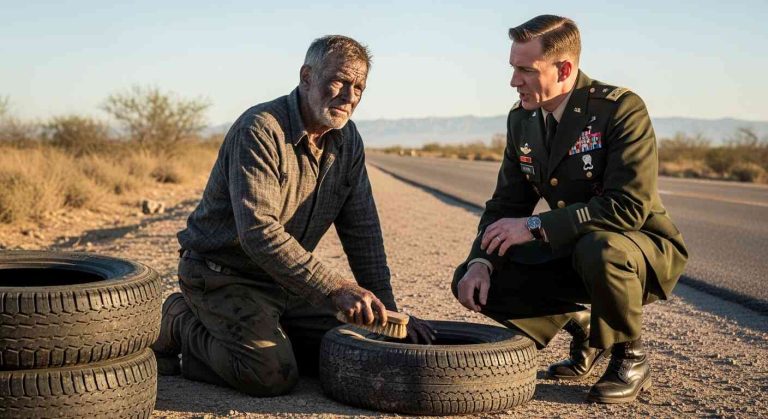
I’m seventy years old. To them, I was just “Old Man Elias,” the guy who mopped the trailers and picked up the cigarette butts around the Permian Basin rigs. I was the ghost in the faded field jacket, a man they thought had nowhere else to go.
Miller, the foreman—a man half my age with twice the ego—stood over me with a five-gallon bucket of raw crude.
“You missed a spot in the breakroom, Elias,” Miller sneered, his voice booming for the benefit of his crew. “I think you need a reminder of where you belong in the food chain.”
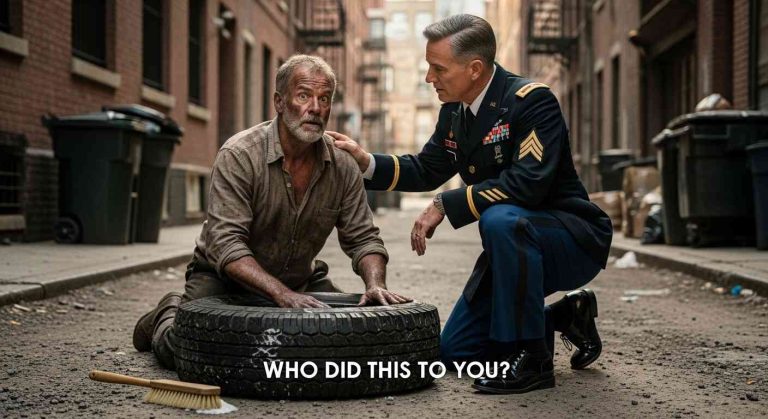
He tipped the bucket. The black sludge coated my hair, ran into my ears, and soaked into my skin. It smelled like ancient earth and impending doom.
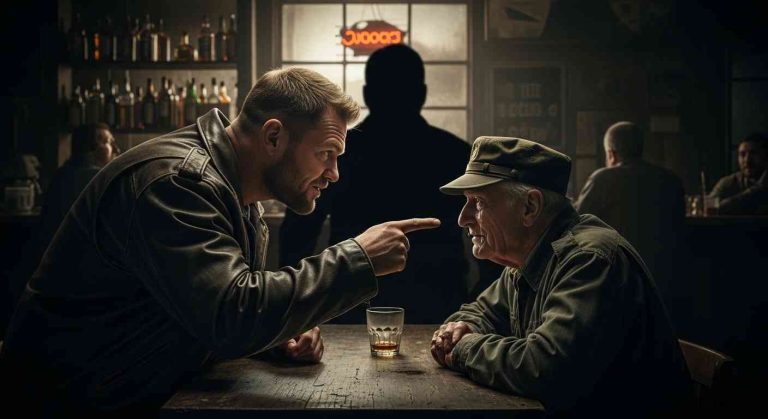
“Now,” Miller whispered, leaning down so close I could smell the stale coffee on his breath. “Beg for your life. Show us that ‘veteran pride’ everyone talks about.”
I didn’t beg. I just looked at my watch—a battered old Casio that had seen more wars than Miller had seen birthdays.
“You’re late,” I said quietly.
Miller laughed, a harsh, braying sound. “Late for what, pop? Your funeral?”
He didn’t see the dust cloud on the horizon. He didn’t see the vibration in the water puddles near the rig. But I did. After forty years in the shadows of military intelligence, you learn to feel the earth move before the world ends.
“FULL STORY
Chapter 1: The Weight of the Oil
The Permian Basin doesn’t care about your resume. It’s a landscape of rusted steel, burning sun, and men who have forgotten how to be human. I had spent six months here, living in a cramped trailer, working the lowest-tier maintenance job on the rig. To Miller and his crew of “”Roughneck Kings,”” I was a punching bag. A reminder of what happened when you didn’t have a plan for retirement.
“”I asked you a question, old man!”” Miller shouted, giving my shoulder a shove that sent me deeper into the oily slush.
I wiped a streak of black from my eye with a shaking hand. It wasn’t shaking from fear; it was the Parkinson’s-like tremor I’d carried since a botched extraction in Sarajevo in ’94.
“”I heard you, Miller,”” I said, my voice raspy. “”I just don’t think you’ve thought this through.””
Sarah, a twenty-four-year-old rig hand who was the only one with a shred of decency, stepped forward. “”Come on, Miller, that’s enough. He’s an old vet. Just let him go wash up.””
Miller turned on her, his eyes flashing. “”You want to join him, Sarah? I pay the bills here. This old dog needs to learn to bark.””
He turned back to me, his heavy work boot pressing into the center of my chest. “”Beg. Say: ‘Please, Mr. Miller, thank you for the oil.'””
I looked past him. The dust cloud was closer now. Six black dots moving at eighty miles an hour across the flats.
“”You have thirty seconds to take your foot off me,”” I said.
The circle of men erupted in laughter. Caleb, a young kid who followed Miller like a lost puppy, started filming on his phone. “”Look at him! He thinks he’s Rambo!””
They saw a broken old man in the dirt. They didn’t see the man who had authored the “”Black-Site Protocols.”” They didn’t see the man who had the personal cell phone numbers of three different Prime Ministers. They saw the oil, but they didn’t see the fire coming behind it.
Chapter 2: The Ghost of Langley
Seven months ago, I was sitting in a mahogany-lined office in Northern Virginia, deciding which global threats were worth the public’s panic and which ones should be buried in a shallow grave. I was the Director of Global Intelligence—a position that officially didn’t exist, but unofficially controlled the flow of the world’s most dangerous secrets.
Then came the burnout. The weight of the bodies. The betrayal of a senator I thought was a friend. I walked away. I told my detail I was going off the grid. I wanted to be somewhere where the air was hot and the problems were simple.
I chose West Texas. I chose anonymity. But I forgot that bullies are a universal constant.
“”Ten seconds, Miller,”” I whispered.
“”Or what?”” Miller laughed, leaning his full weight into my sternum. “”You gonna call the cops? The sheriff is my cousin. You gonna fight us? There’s ten of us and one of you, and you can barely stand.””
I closed my eyes. I felt the vibration now—the heavy hum of 6.7L turbo-diesel engines. The sound of professional precision.
“”Time’s up,”” I said.
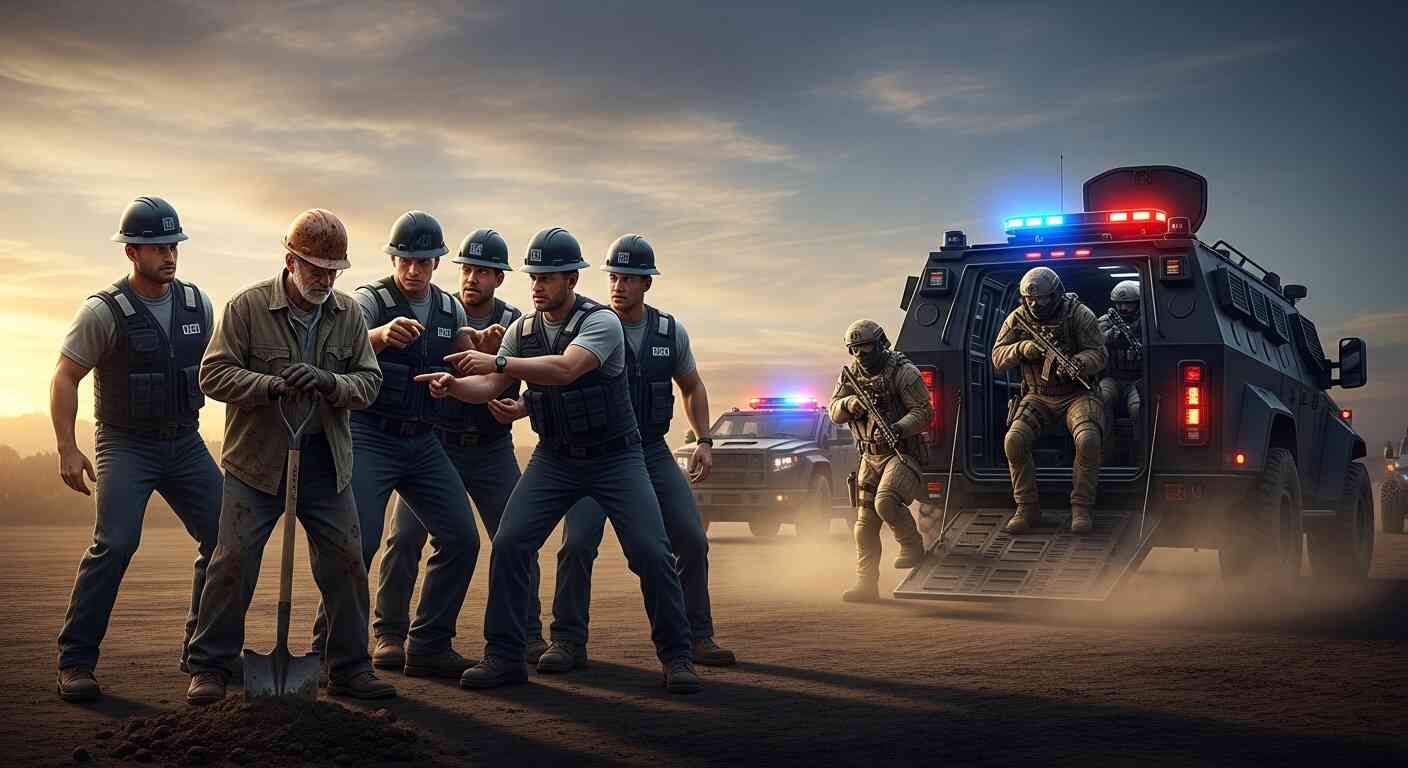
The first SUV hit the perimeter fence of the rig site without slowing down. The chain-link screeched as it was torn from the posts. Miller spun around, his mouth hanging open.
Three more vehicles swerved in, performing a perfect tactical “”box”” maneuver around our group. These weren’t police cruisers. They were matte-black, armored beasts with government plates and tinted windows that looked like obsidian.
The laughter died instantly. The only sound was the idling of the engines—a low, predatory growl.
Chapter 3: The Order of Precedence
The doors of the lead SUV opened in perfect synchronization. Four men stepped out. They weren’t wearing “”Security”” shirts. They were in full tactical kits—high-cut helmets, suppressors on their rifles, and the cold, vacant stares of men who did this for a living.
“”Hands!”” one of them barked.
Miller, usually so loud, found his voice had retreated into his throat. “”Hey! This is private property! You can’t—””
A laser dot appeared on Miller’s forehead. He froze. His foot slid off my chest.
A fifth man stepped out of the second vehicle. He wasn’t in tactical gear. He was wearing a tailored charcoal suit that cost more than Miller’s truck. This was Jackson, my former Chief of Staff. A man I had mentored for twenty years.
Jackson walked through the mud and oil, his polished Oxfords ruining as he moved toward me. He didn’t look at Miller. He didn’t look at the guns. He only looked at me, kneeling there, covered in filth.
The silence on the rig was absolute. The wind whistled through the derrick, carrying the smell of ozone and fear.
“”Sir,”” Jackson said, his voice trembling—not with fear, but with a quiet, terrifying rage.
He reached down, ignoring the oil, and took my hand. He helped me stand.
“”Are you hurt, Director Thorne?””
At the mention of the title “”Director,”” I saw Miller’s knees actually buckle. The color drained from his face until he looked like a man already dead.
Chapter 4: The Evaluation of Sin
I took the white silk handkerchief Jackson offered and wiped the oil from my mouth. I looked at the ten men who had been laughing moments ago. Caleb, the kid with the phone, was shaking so hard the device slipped from his hand and shattered in the mud.
“”I told them you were coming, Jackson,”” I said, my voice regaining the steel it had lost in the desert. “”They didn’t believe in the schedule.””
Jackson turned his head slightly toward the tactical lead. “”Commander. Identify everyone here. Secure their devices. If a single frame of the Director in this condition is uploaded, I want their lives dismantled. Legally, financially, and personally.””
“”Wait!”” Miller gasped, his hands high in the air. “”We didn’t know! We were just… it was just a joke! We didn’t know he was someone!””
I stepped toward Miller. The black oil was still dripping from my jacket, leaving a trail on the dusty earth. I stood six inches from him. I was shorter, older, and covered in his “”lesson.””
“”That’s the problem, Miller,”” I said softly. “”You think it’s only wrong to humiliate someone if they are ‘someone.’ You think a man’s dignity is tied to his paycheck or his title.””
I looked at Sarah, who was watching with wide, wet eyes. “”Sarah stays. She tried to help. The rest of them?””
I looked at Jackson. “”I want this site audited. Every safety violation, every tax loophole, every dark corner Miller has been hiding in. By the time you’re done, he shouldn’t be able to get a job flipping burgers in this county.””