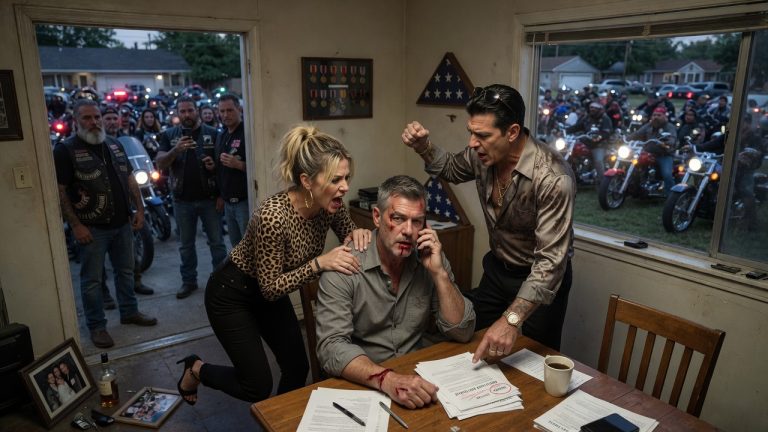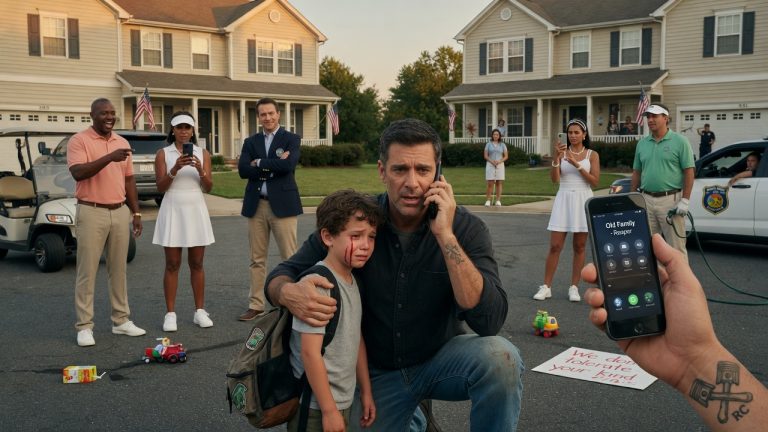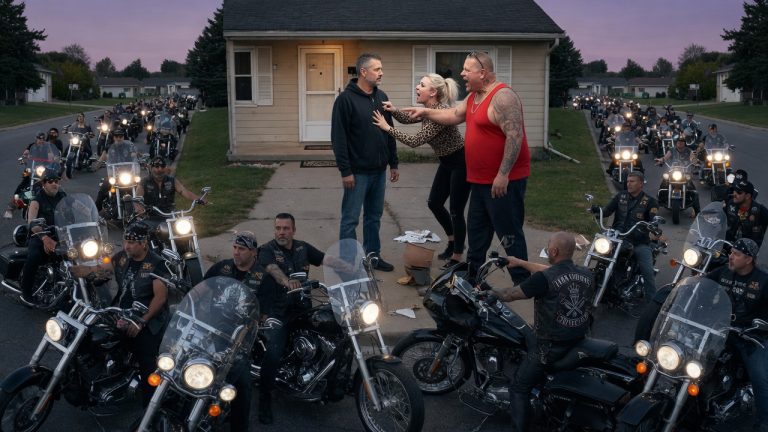
The sidewalk on Oak Avenue was meant for “”people who mattered.”” At least, that’s what Julian Vane told my mother as he cornered her outside the bakery.
My mother is sixty-eight years old. She spent forty of those years scrubbing floors and changing bedpans so I could grow up to be a man who never had to go hungry. She was wearing her favorite coat—a beige wool number she’d found at a thrift store for ten dollars. She thought she looked nice.
But to Julian, she was an eyesore. A “”stain”” on the pristine landscape of his father’s real estate empire.
“”You’re blocking the light, old lady,”” Julian sneered, his hand reaching out to shove her shoulder. He didn’t care that she was holding a bag of groceries. He didn’t care that she was someone’s mother.
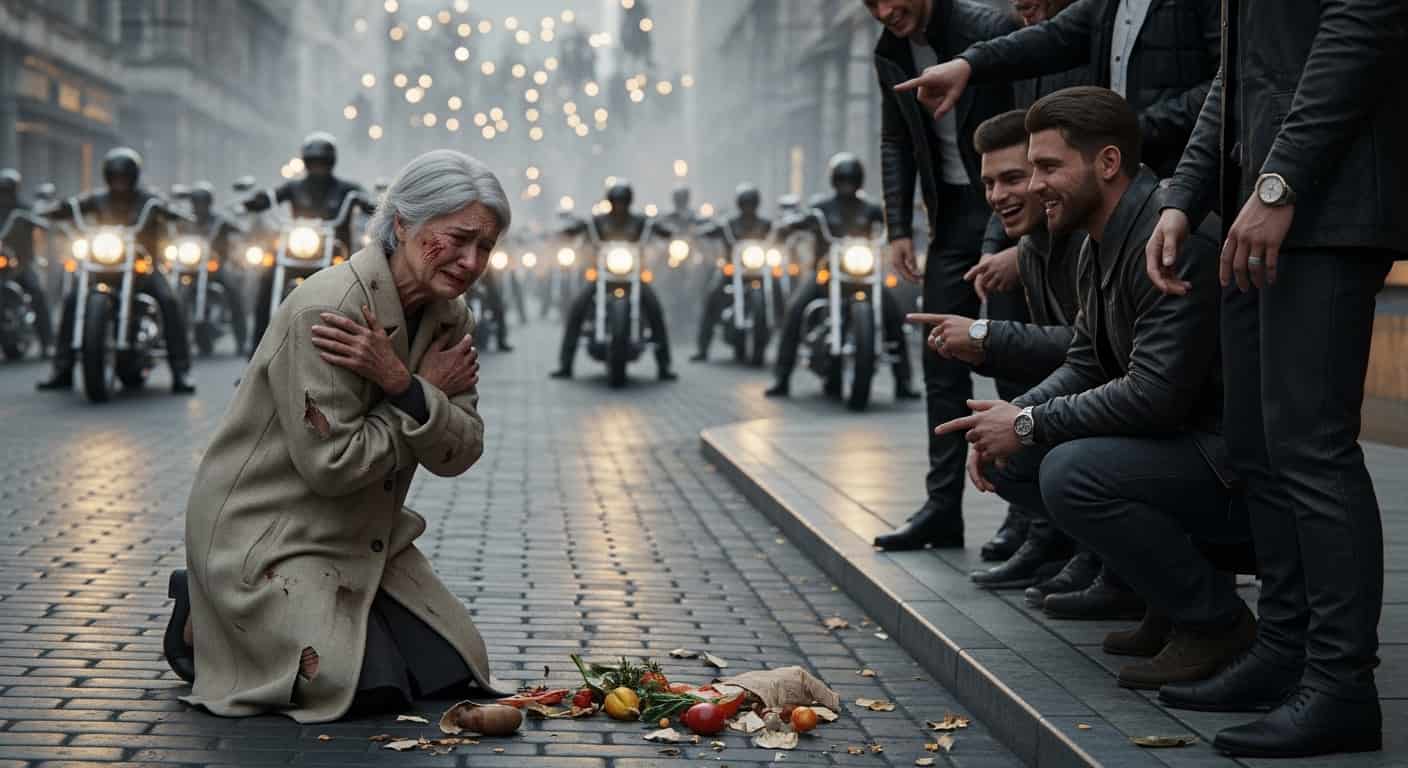
His friends laughed, their designer watches catching the afternoon sun. One of the girls—a blonde with a smile as sharp as a razor—reached out and yanked at the sleeve of my mother’s coat. The sound of tearing wool was loud enough to stop traffic.
“”Oh, look!”” the girl shrieked. “”I think I did it a favor. It’s finally ‘distressed’ fashion!””
My mother started to cry. Not because of the coat, but because of the way they looked at her—like she wasn’t human. She begged them to just let her pass. She told them she didn’t want any trouble.
Julian just stepped closer, his shadow swallowing her whole. “”Trouble? You’re the trouble, Martha. People like you shouldn’t be allowed to walk where we breathe.””
He didn’t see her hand shaking as she reached into her pocket. He didn’t see her press the SOS button on the custom keychain I’d given her three years ago.
For ten minutes, they mocked her. They tore her clothes, made her drop her groceries, and called her “”trash”” while the “”good people”” of the suburbs watched from behind their glass windows.
They thought she was alone.
Then, the ground began to shake.
It started as a low hum, a vibration that rattled the windows of the Gucci store and sent Julian’s $200,000 SUV into a security alarm frenzy. Then came the roar—the sound of 5,000 engines screaming through the quiet streets of the heights.
Julian looked up, his arrogance finally flickering. He saw the chrome. He saw the leather. He saw the Iron Vanguard.
And at the front of that steel wave, he saw me.
“FULL STORY
Chapter 1: The Weight of a Wool Coat
The morning had started with a sense of quiet triumph for Martha Miller. She had finally saved enough from her small pension to buy the “”good”” organic blueberries from the market on Oak Avenue—the kind her son, Jax, used to love when he was a boy. Martha didn’t get out to the “”fancy”” side of town often. She knew the looks she got. She knew that her sensible orthopedic shoes and her faded, thrift-store coat didn’t match the gleaming glass and polished marble of the North Heights.
But today was Jax’s birthday. And for Jax, she would walk through fire, let alone a gauntlet of judging eyes.
She was exiting the bakery, clutching a small box of pastries and her bag of groceries, when she felt the first bump. It wasn’t an accident. It was the deliberate, sharp contact of a shoulder against hers.
“”Watch where you’re going, lady,”” a voice barked.
Martha stumbled, her groceries shifting precariously. She looked up into the face of Julian Vane. She knew the name because the Vane family owned half the billboards in the city. Julian was the crown prince of the local elite—handsome in a way that felt manufactured, with eyes that held the coldness of a predatory bird.
“”I’m so sorry,”” Martha whispered, her voice instinctively lowering in the presence of his obvious wealth. “”I didn’t mean to—””
“”You didn’t mean to exist? Because that would be more helpful,”” Julian snapped. He was surrounded by a small entourage—three guys and two girls, all looking like they had just stepped out of a luxury fitness commercial.
“”Julian, look at her coat,”” one of the girls, Chloe, giggled. She reached out, her manicured nails snagging on the wool. “”Is this vintage or just… moldy?””
“”It’s a ten-dollar rag,”” Julian said, his voice rising so the surrounding shoppers could hear. “”This is why the Heights is going downhill. They let people in who look like they belong in a shelter.””
Martha tried to step around them, her heart hammering against her ribs like a trapped bird. “”Please, I’m just going home.””
Julian stepped into her path, his chest inches from her face. He smelled like expensive cologne and unearned power. “”Not so fast. You bumped me. You spilled your cheap, dusty flour on my shoes.”” He pointed down at his pristine white sneakers. There wasn’t a speck on them, but that wasn’t the point. This was about the sport of it.
“”I didn’t see anything on them, sir, truly—””
“”Are you calling me a liar?”” Julian’s voice dropped to a dangerous whisper.
He reached out and grabbed the lapel of Martha’s coat. With a sudden, violent jerk, he pulled her forward. The old buttons, held on by years of Martha’s own careful stitching, popped one by one, hitting the pavement with tiny, rhythmic thuds.
“”Hey!”” Martha cried out, her hands flying up to hold the garment together. “”Stop it!””
“”Stop what? This?”” Chloe reached out and grabbed the sleeve, yanking it downward. The sound of the wool tearing was sickening. The seam split from the shoulder to the elbow, exposing Martha’s thin, trembling arm.
The group erupted in laughter. To them, this was a viral moment. Two of them already had their phones out, recording the “”homeless lady”” getting a “”makeover.””
“”She’s crying!”” Chloe pointed, her voice filled with mock sympathy. “”Oh, poor Grandma. Do you want us to buy you a new one? Oh wait—I don’t think they sell garbage at the mall.””
Martha felt the hot sting of tears. It wasn’t the coat—it was the humiliation. It was the way people were walking by, turning their heads, pretending not to see a sixty-eight-year-old woman being bullied by children half her age.
“”My son,”” Martha choked out, her hand going to the pocket of her skirt where she kept her keys. “”My son told me… he told me if anyone ever…””
“”Your son?”” Julian laughed, a harsh, jagged sound. “”What’s he gonna do? Come over here in his rusty pickup and beg for a job? Tell him to come. I’ll give him twenty bucks to wash my SUV.””
Martha didn’t respond. Her fingers found the small, rugged plastic fob attached to her keys. Jax had been paranoid since he came back from the service. He’d joined the Vanguard, built something massive, and his first priority had been her safety. “If you’re ever scared, Ma. If anyone ever makes you feel like you can’t get away. Just hold it for three seconds. I’ll find you.”
She held it. One. Two. Three.
Julian saw her hand in her pocket and sneered. “”What are you doing? Calling the cops? Go ahead. My dad plays golf with the Chief. They’ll arrest you for vagrancy before they even look at me.””
He reached out and gave her a final, hard shove. Martha fell back, her grocery bag splitting open. Blueberries rolled across the sidewalk like tiny, dark pearls. The pastry box crushed under her weight.
Julian stood over her, looking down with a sense of divine right. “”Stay down, Martha. It’s where you belong.””
He didn’t know that sixty miles away, in a warehouse that smelled of grease and brotherhood, five thousand phones had just vibrated with a single, high-priority coordinate. He didn’t know that the man who loved Martha Miller more than life itself had just dropped a wrench, looked at his screen, and felt a cold, terrifying silence settle over his soul.
The silence didn’t last long. It was replaced by the sound of a thousand starters firing at once.
FULL STORY
Chapter 2: The Predator’s Playground
Julian Vane lived for the “”Gap.”” The gap between those who had and those who served. To him, life was a ladder, and his boots were firmly planted on the fingers of anyone trying to climb up.
He stood on the sidewalk of Oak Avenue, watching Martha struggle to pick up her ruined groceries. He felt a surge of adrenaline. It was better than the high he got from the pills he took or the speed of his car. It was the high of absolute consequence-free cruelty.
“”Look at her,”” Chloe whispered, leaning her head on Julian’s shoulder. “”She’s actually trying to save the blueberries. How pathetic do you have to be?””
Julian kicked a stray blueberry, crushing it into the pavement. “”It’s a survival instinct, babe. Like rats.””
A few bystanders had stopped. An older man in a suit looked like he wanted to say something, but Julian caught his eye. Julian knew that look. He knew the man recognized his face, recognized the Vane name. The man looked down at his watch and hurried away.
That was Julian’s favorite part. The complicity of the “”good”” people.
“”You should leave her alone, Julian,”” one of his friends, Derek, said, though his voice lacked any real conviction. He was still filming. “”Someone might actually call the cops.””
“”Let them,”” Julian said, stepping onto the sleeve of Martha’s torn coat as she tried to pull it toward her. He felt the fabric stretch and groan. “”I’m doing this neighborhood a service. We pay the highest property taxes in the state. We shouldn’t have to look at this.””
Martha looked up at him, her eyes red-rimmed but suddenly remarkably clear. “”You have a mother, don’t you, Julian?””
Julian’s face darkened. His mother was a ghost who lived in the west wing of their mansion, sedated by gin and “”nerves.”” The mention of her felt like a personal insult.
“”Don’t you dare talk about my family,”” Julian hissed. He reached down and grabbed the grocery bag, dumping the remaining items onto the street. A carton of eggs shattered, the yellow yolks running into the gutter. “”You want to talk about mothers? Mine doesn’t shop at the dump. Mine doesn’t look like a charity case.””
“”I am a mother,”” Martha said, her voice shaking but gaining strength. “”And I raised a man. Something your mother clearly failed to do.””
The silence that followed was sharp. Chloe gasped. Derek stopped recording for a second, his eyes wide.
Julian’s face went from pale to a deep, bruised purple. He didn’t think. He didn’t calculate. He simply reacted. He reached out and grabbed Martha by the arm, hauling her to her feet with a strength fueled by pure, unadulterated rage.
“”You think you can talk to me like that?”” Julian snarled, his face inches from hers. “”You’re nothing. You’re a ghost. You’re a mistake.””
He shoved her back against the brick wall of the bakery. The impact knocked the breath out of her.
“”Julian, chill,”” Derek said, finally moving forward. “”That’s enough, man.””
“”It’s not enough!”” Julian screamed. He turned to the crowd, his arms spread wide. “”Does anyone here care? Does anyone want this trash in our streets?””
No one answered. The silence of the North Heights was its greatest weapon.
“”See?”” Julian turned back to Martha, a cruel triumph in his eyes. “”No one cares about you. You’re alone.””
He reached out and yanked the other sleeve of her coat, the fabric giving way with a final, definitive rip. He tossed the scrap of wool into the street.
“”Now you look like you feel,”” he whispered.
Martha slid down the wall, her legs giving out. She sat in the middle of her ruined groceries, her coat hanging in tatters around her. She didn’t look at Julian. She looked at the horizon.
“”I’m not alone,”” she whispered.
Julian laughed, a sound of pure mockery. “”Who’s coming for you, Martha? The social workers? The garbage men?””
In that moment, a strange thing happened. A bird that had been perched on a nearby lamp post suddenly took flight, chirping in alarm. A dog at a sidewalk cafe began to howl, its tail tucked between its legs.
And then, the sound began.
It wasn’t a car. It wasn’t a siren. It was a low-frequency thrum that seemed to come from the earth itself. It was the sound of a storm, but there wasn’t a cloud in the sky.
Julian frowned, looking around. “”What is that? A plane?””
The vibration grew. A wine glass on a nearby outdoor table shattered. The pavement beneath their feet began to thrum with a rhythmic, mechanical heartbeat.
From the end of the long, straight boulevard of Oak Avenue, a speck appeared. Then another. Then a dozen. Then a hundred.
It looked like a black ribbon being pulled across the asphalt. A ribbon of chrome, leather, and fury.
Martha wiped her eyes and leaned her head back against the brick. She knew that sound. It was the sound of her son’s heart. And it was coming for everything Julian Vane held dear.
FULL STORY
Chapter 3: The Vanguard Awakens
Jax Miller didn’t believe in much. He didn’t believe in the government that had sent him to a desert to fight for oil, and he didn’t believe in the “”peace”” of the suburbs that turned its back on the people who built it.
But he believed in Martha.
He was standing in the center of the “”Fortress,”” the sprawling warehouse that served as the headquarters for the Iron Vanguard. Around him, three hundred men were working on bikes, drinking coffee, or just enjoying the brotherhood. Jax was the National President, a title he’d earned through blood, sweat, and a refusal to let anyone in his “”family”” fall behind.
When the alert hit his phone, the world stopped.
The app was simple. It showed a map of the city. A red pulsing dot sat squarely in the middle of North Heights.
“”Silas!”” Jax roared.
His Vice President, a man built like a brick wall with tattoos snaking up his neck, looked up. “”Yeah, boss?””
“”My mother,”” Jax said. His voice was terrifyingly calm. It was the voice he used right before a bridge was blown or a door was kicked in. “”She’s in the Heights. She hit the button.””
The room went silent. Every man in that building knew Martha. She was the woman who brought cookies to the garage on Sundays. She was the woman who had knitted scarves for the club’s toy drive. She was “”Ma”” to all of them.
Silas didn’t ask questions. He didn’t ask what happened. He just walked to the PA system and keyed the mic.
“”All hands,”” Silas said, his voice booming through the warehouse and the outdoor lots. “”Ma’s in trouble. North Heights. Full colors. Full throttle. Move.””
It was a chain reaction. The Iron Vanguard wasn’t just a local club; they were a brotherhood with chapters in every surrounding county. Within seconds, the word went out over radios, texts, and calls.
Jax walked to his bike—a custom-built beast he’d named The Reckoning. He kicked the starter, and the engine roared to life, a guttural, primal scream that echoed off the corrugated steel walls.
“”How many?”” Silas asked, pulling up beside him on his own bike.
Jax looked at his phone. The Vanguard’s internal GPS showed bikes moving from all directions. The Northern chapters were already merging on the highway. The Southern brothers were cutting through the industrial district.
“”All of them,”” Jax said. “”I want 5,000 bikes on that street in fifteen minutes.””
“”They’ll call the National Guard,”” Silas said with a grim smile.
“”Let them,”” Jax said, snapping his visor down. “”By the time they get there, I’ll be done.””
They hit the road like a physical force. On the highway, cars pulled over to the shoulder, drivers watching in awe as a literal sea of black leather and polished chrome flowed past them. It wasn’t a protest. It wasn’t a parade. It was a deployment.
Jax rode at the head of the formation, his eyes fixed on the GPS coordinates. Every time he thought of his mother—her small stature, her kind heart, the way she never raised her voice—his grip on the throttle tightened.
He knew the North Heights. He knew the kind of people who lived there. People like the Vanes. People who thought that because they had a high credit score, they were allowed to be monsters.
As they crossed the bridge into the wealthy district, the contrast was jarring. The roar of 5,000 high-performance engines shattered the carefully curated silence of the manicured lawns and gated communities.
Security guards at the gates of private estates stood frozen, their hands hovering over their radios, too terrified to move as the wave of steel roared past.
Jax could feel the vibration in his teeth. He could feel the collective rage of 5,000 men who had all been told, at some point in their lives, that they didn’t belong.
They turned onto Oak Avenue.
Jax saw the crowd first. He saw the expensive cars parked along the curb. And then, he saw the circle.
He saw a woman sitting on the ground, surrounded by ruined groceries. He saw the beige wool of her coat—the one he’d told her a hundred times he’d replace, but she’d refused because “”it has character””—lying in pieces on the asphalt.
He saw a young man in a designer tracksuit standing over her, laughing.
Jax didn’t slow down. He didn’t coast. He slammed on his brakes, fishtailing the heavy bike until it came to a stop mere inches from a white SUV that cost more than most people’s houses.
Behind him, the roar didn’t stop. It multiplied. One by one, then ten by ten, then hundred by hundred, the bikes pulled in. They filled the street. They filled the sidewalks. They blocked every exit, every alley, every escape route.
The sound was deafening. It was a physical wall of noise that made the air feel heavy.
Jax kicked his stand down and stepped off the bike. He was a large man, made larger by his tactical vest and the sheer aura of violence radiating from him.
He walked toward the circle. The crowd of wealthy shoppers parted like the Red Sea. They weren’t looking at Martha anymore. They were looking at the man with the “”Iron Vanguard”” patch on his back and the cold, dead look in his eyes.
Julian Vane had stopped laughing. He was staring at the wall of motorcycles that now boxed him in. He looked at Jax, then at the 5,000 men behind him, and for the first time in his life, Julian Vane realized that his father’s money was just paper.
And paper burns.
FULL STORY
Chapter 4: The Sound of the Reckoning
The air on Oak Avenue had changed. It was no longer filled with the scent of expensive lattes and blooming jasmine. It smelled of burnt rubber, high-octane fuel, and the metallic tang of impending justice.
Julian Vane stood frozen. He was used to being the center of attention, but this was different. Usually, people looked at him with envy or resentment. Now, he was being looked at by 5,000 pairs of eyes that saw him as nothing more than a bug on a windshield.
“”Julian?”” Chloe whispered, her voice trembling. She was clutching his arm so hard her knuckles were white. “”Julian, do something.””
Julian tried to swallow, but his throat felt like it was filled with sand. He looked at Jax, who was walking toward him with a slow, predatory deliberate. Jax wasn’t running. He wasn’t yelling. He was just… coming.
“”Who… who are you?”” Julian managed to croak.
Jax didn’t answer. He walked past Julian as if he didn’t exist. He went straight to Martha.
The 5,000 engines suddenly cut out in near-perfect unison. The silence that followed was even more terrifying than the noise. It was a heavy, suffocating silence that pressed against the eardrums.
Jax knelt in the dirt and the eggs and the crushed blueberries. He didn’t care about his leather pants or his reputation. He reached out and gently took his mother’s hands.
“”Ma,”” he whispered. The voice was so soft, so filled with tenderness, that it made the bystanders catch their breath. “”Are you hurt?””
Martha looked at her son, her eyes filling with a fresh wave of tears—relief this time. “”He tore my coat, Jax. He said… he said I didn’t belong here.””
Jax looked at the torn sleeve. He touched the frayed wool. His jaw tightened, the muscles jumping in his neck. “”I know, Ma. I know.””
He stood up, helping her to her feet with infinite care. He handed her to Silas, who had appeared at his shoulder like a silent guardian.
“”Take her to the bike. Get her some water. And find her a jacket. One of the heavy ones,”” Jax ordered.
Silas nodded, his eyes fixed on Julian. “”You got it, Prez.””
As Martha was led away, Jax turned back to Julian. He didn’t say a word. He just stood there.
“”Look,”” Julian said, his voice gaining a frantic, high-pitched edge. “”I didn’t know who she was. I… she bumped into me. It was an accident. The coat was old, okay? I’ll pay for it. I’ll buy her ten coats. Just tell your… your friends to back off.””
Jax took a step forward. Julian took a step back, hitting the side of his luxury SUV.
“”You think this is about a coat?”” Jax asked. His voice was low, vibrating with a frequency that made Julian’s skin crawl.
“”What else could it be about?”” Julian cried. “”I told you, I’ll pay! Name a price! Five thousand? Ten? Just get these people out of my neighborhood!””
Jax looked around at the pristine buildings, the “”Vane Real Estate”” signs, the terrified faces in the windows.
“”Your neighborhood,”” Jax repeated. He looked at his men. A low, mocking rumble of laughter went through the ranks of the Vanguard.
“”My mother spent forty years working as a nurse,”” Jax said, stepping into Julian’s personal space. “”She’s held the hands of dying men who had more honor in their pinky finger than you have in your entire bloodline. She’s the strongest person I know. And you thought you could break her because she shops at a thrift store?””
“”I was just joking!”” Julian screamed, his back pressed hard against the SUV’s window. “”It was for a video! A prank!””
“”A prank,”” Jax said. He looked at the phone in Derek’s hand. Derek dropped it as if it were red-hot.
Jax reached out, his hand moving so fast Julian didn’t even have time to blink. He didn’t hit him. He just grabbed the front of Julian’s designer tracksuit—the one that cost $2,000.
Rip.
With one hand, Jax tore the zipper straight off the track. With the other, he gripped the shoulder and yanked. The expensive fabric shredded like tissue paper.
“”Hey! That’s custom!”” Julian wailed, his vanity still fighting with his fear.
Jax ignored him. He turned Julian around and shoved him toward the crowd of bikers. “”He likes ‘distressed’ fashion, boys! What do you think?””
A biker named Bear, a man who weighed 350 pounds and had a beard down to his chest, stepped forward. “”I think he’s a bit too ‘high-end.’ He needs some character.””
Before Julian could scream, a dozen hands reached out. They didn’t hit him. They didn’t punch him. They simply dismantled his wardrobe. His shirt was torn to ribbons. His shoes were tossed into the fountain. In thirty seconds, Julian Vane was standing in the middle of Oak Avenue in nothing but his boxers, shivering despite the heat.
“”Now you look like you feel,”” Jax whispered, echoing Julian’s own words back to him.
“”You can’t do this!”” Chloe screamed from the sidelines. “”I’m calling the police! My father is—””
“”Your father isn’t here,”” Jax said, turning his cold gaze on her. “”And the police are currently blocked by three miles of motorcycles. No one is coming, Chloe. Not for you.””
Jax turned back to Julian, who was shaking so hard his teeth were chattering.
“”You called my mother trash,”” Jax said. He reached out and grabbed Julian by the neck, not to choke him, but to force him to look at the SUV behind him. “”You think your things make you better than her. You think this glass and metal makes you a man.””
Jax pulled his fist back.
“”Wait! No!”” Julian shrieked, closing his eyes.
Jax didn’t hit Julian. He hit the SUV.
The sound of the punch was like a small explosion. Jax’s fist, reinforced by years of heavy labor and a solid silver “”Vanguard”” ring, slammed into the reinforced safety glass of the SUV’s windshield.
The glass didn’t just crack. It shattered, a spiderweb of white lines exploding from the point of impact. The force of the blow was so great that the entire front of the vehicle buckled.
Julian fell to his knees, his face inches from the jagged, broken remains of his status symbol.
“”The next time you want to pick on someone,”” Jax said, leaning down over him, “”make sure they don’t have 5,000 brothers.”””