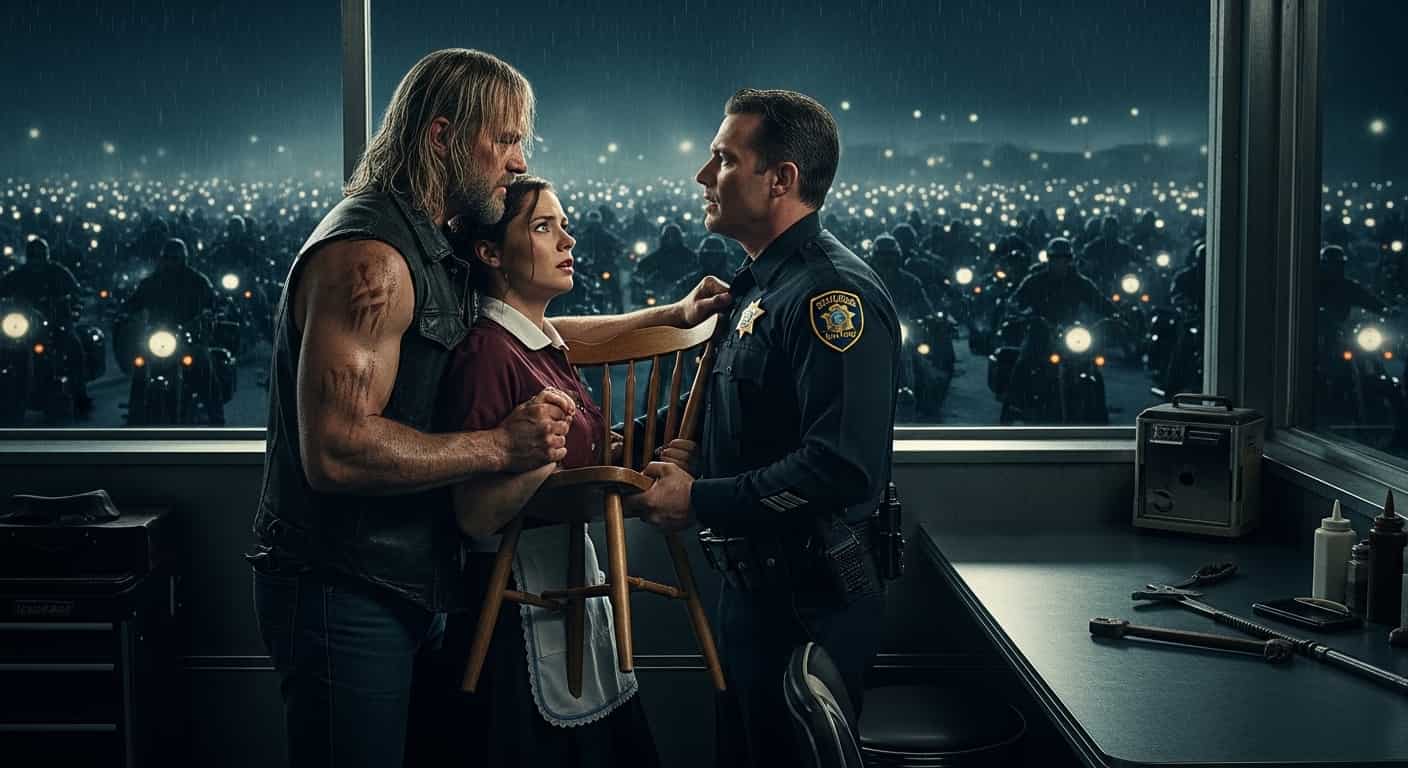
“Chapter 5: The Night the Engines Sang
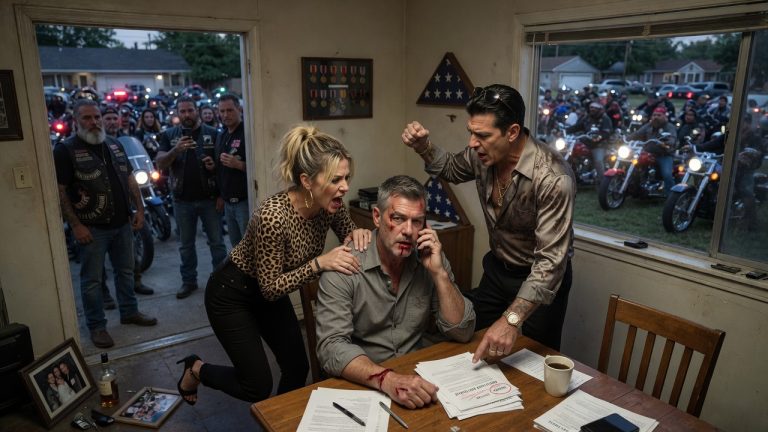
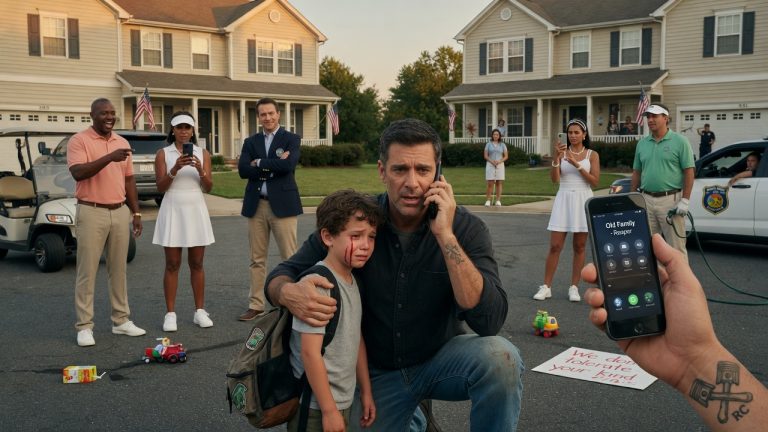
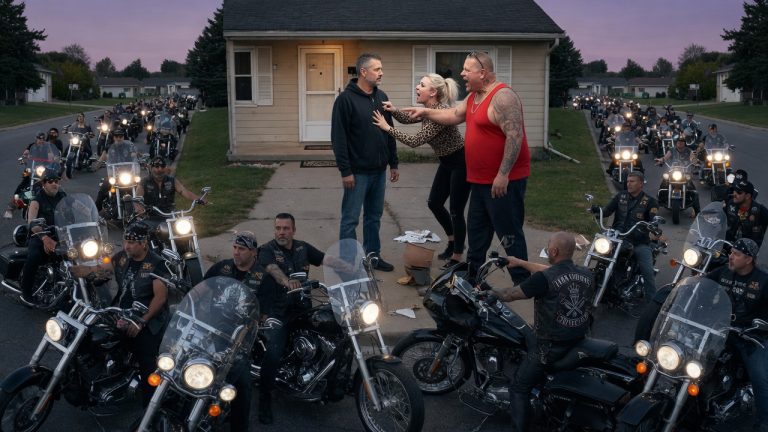
The next few hours were a blur of chrome and justice. As word spread that Wade was gone and the “”Blue Wall”” was being dismantled by the Brotherhood, the townspeople started coming out of their houses.
It started with a few people from the diner. Then the neighbors. Then the shop owners who had been paying “”protection”” to Wade for years. They brought out coffee. They brought out blankets.
The Brotherhood didn’t leave. We stayed until every name on that thumb drive was accounted for.
I sat with Dutch on the curb outside the precinct. The air was still cold, but the tension had evaporated. It felt like the whole town was finally exhaling a breath it had been holding for twenty years.
“”You did good, Jax,”” Dutch said, lighting a cigarette. “”Your old man would have been proud. He always said the club wasn’t about the bikes; it was about the people who rode them.””
“”I just wanted her to be safe, Dutch. That’s all.””
“”She is. But look around. It’s not just her.””
He was right. I saw a young mother talking to one of our road captains, thanking him because Wade had once impounded her car for no reason, leaving her unable to get to work. I saw an old man shaking hands with Big Sal.
We weren’t the heroes in a comic book. We were just men who knew what it felt like to be stepped on, and we decided we weren’t going to let it happen in our backyard.
Around 10:00 PM, the State Police finally arrived. They didn’t come with sirens blaring or guns drawn. They had been briefed. They saw the thousands of bikers and the peaceful crowd. They saw the boxes of badges sitting on the precinct steps.
The lead investigator, a woman with a sharp gaze and a no-nonsense attitude, walked up to me.
“”Mr. Miller?”” she asked.
“”Just Jax,”” I said.
“”We have the files you sent. We’ve already picked up Sergeant Wade at the county line. He was trying to flee.””
“”Good to hear.””
“”We’ll take it from here. You and your… associates… have made your point. I suggest you clear the roads before we have to start writing tickets for illegal parking.””
She had a small smirk on her face. She wasn’t an enemy. She was just the new law.
I stood up and whistled. The sound cut through the night air.
“”Brotherhood! Mount up!””
The sound of two thousand engines starting at once was like a thunderclap that shook the very foundations of Oakhaven. It wasn’t a sound of war anymore. It was a victory lap.
As we pulled out, I looked back at the diner. Elena was standing in the doorway, waving. She looked warm. She looked safe.
She was wearing my cut, and for the first time, she wasn’t shrinking. She was standing tall.
Chapter 6: A New Dawn
The ride back to the clubhouse was long and loud. We stretched out for miles, a ribbon of light cutting through the darkness of the Georgia backroads.
When we finally got back, the sun was just starting to peek over the trees. We were exhausted, our faces covered in road grime and our bones aching from the cold. But nobody was complaining.
I walked into the clubhouse and saw the map on the wall. Oakhaven was just one small dot. There were thousands of towns like it. Thousands of bullies who thought a title or a badge gave them the right to treat people like trash.
We couldn’t fix the whole world. But last night, we’d fixed one piece of it.
A few days later, I was back at Miller’s Diner. It was quiet. The “”No Smoking”” sign was still there, but now, people actually followed it.
Chief Henderson was sitting at the counter, wearing civilian clothes. He’d retired the day after the standoff.
“”How’s she doing?”” Henderson asked, nodding toward the kitchen.
“”She’s okay,”” I said. “”Taking a few weeks off. Then she’s going back to school.””
“”I wanted to say thank you, Jax. For not burning it down. You could have, you know. With that many men… you could have leveled that precinct.””
“”That wouldn’t have helped Elena,”” I said. “”And it wouldn’t have helped the town. We don’t destroy things, Chief. We just take out the trash.””
I walked over to the counter where Elena was packing up some leftovers. She looked up and smiled—a real smile, one that reached her eyes.
“”Hey, big brother,”” she said.
“”Hey, kiddo. Ready to go?””
“”Yeah. Just one thing.””
She reached under the counter and pulled out my leather vest. It was cleaned and folded neatly.
“”I think this belongs to you,”” she said.
I took the vest and put it on. It felt right. It felt heavy with the responsibility of the brothers who followed me.
As we walked out to my bike, a little girl and her father were walking in. The father saw my vest—the skull and the iron chains—and he didn’t pull his daughter away. He didn’t look down.
He just nodded. “”Morning, Mr. Miller.””
“”Morning,”” I said.
I hopped on my Harley and Elena climbed on the back. I kicked the engine over, and the roar echoed off the brick walls of the diner.
As we pulled away, I realized that the badge might represent the law, but the brotherhood represents the heart. And as long as we were riding, no one in Oakhaven would ever have to shiver in the cold alone again.
Because when you mess with one of us, you realize that the most dangerous thing in the world isn’t a man with a gun—it’s a man with two thousand brothers who have nothing but time and a very long memory.
The silence of a bully is the sweetest music a free man can ever hear.”