“Chapter 5: The Walls Come Down
The arrival of the Police Chief, a man named Henderson who had actually served with my father, changed the energy of the afternoon. He didn’t come in with sirens. He came in with a look of deep, soul-shattering embarrassment.
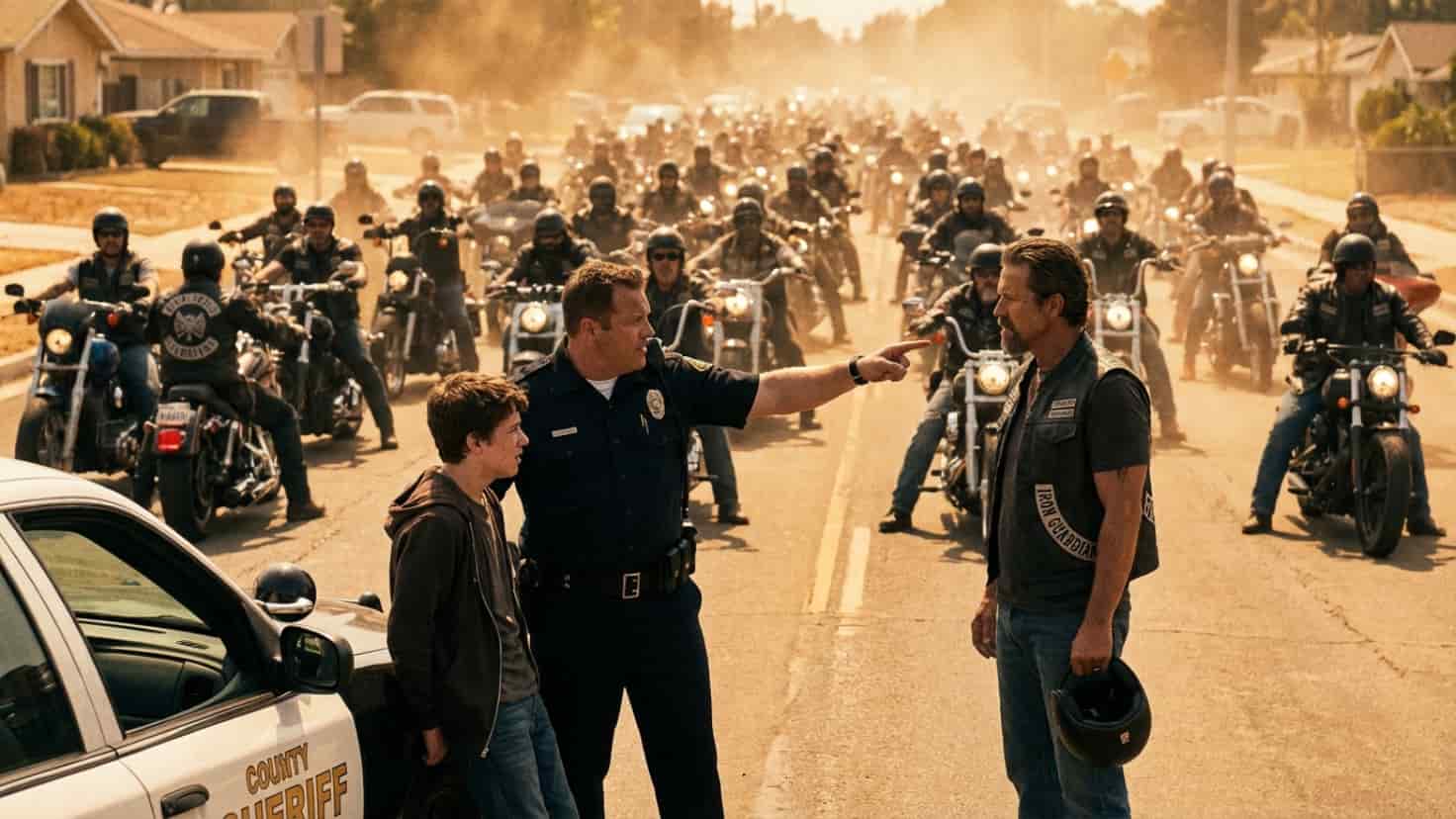
He took Vance’s badge right there on my driveway. He didn’t wait for a hearing. He didn’t wait for a union rep. He saw the recording Leo had made, and he saw the 1,500 witnesses standing on his town’s streets.
“”Get in the back of the car, Vance,”” Henderson said, his voice weary.
As Vance was led away—not in the front seat, but in the back, where he’d put so many kids like Leo—the Brotherhood let out a cheer that probably reached the next county.
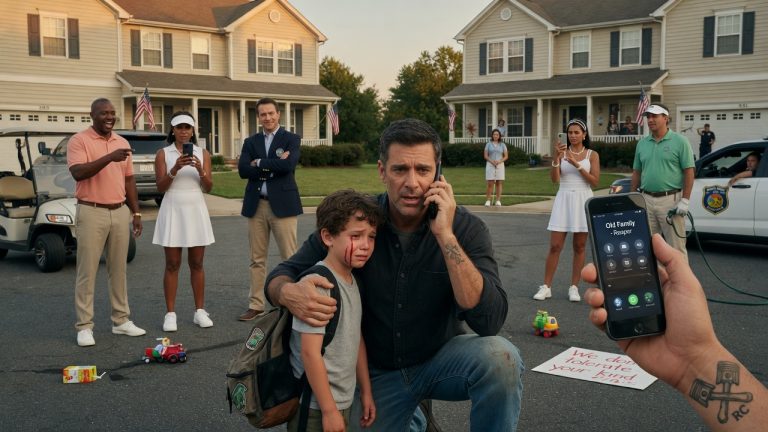
But I wasn’t cheering. I was looking at Leo. The kid was staring at the Miller-Hines house down the street. The Watkins were standing on their porch, looking terrified. They knew their meal ticket was about to be cancelled.
“”Tank,”” I said, nodding toward the house.
“”Already on it, Jax,”” Tank replied. “”We’ve got three lawyers and two social workers who ride with the Detroit chapter. They’re already making calls. Those kids are getting out of that house tonight.””
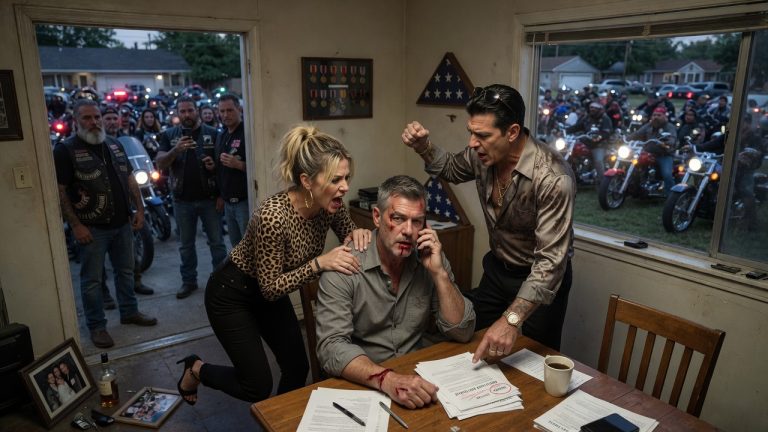
The next four hours were a whirlwind. The Brotherhood didn’t leave. They turned my front yard into a staging area. They brought out coolers of water and sandwiches. They sat with the other kids from the foster home, telling them stories and making them laugh.
For the first time in their lives, those kids weren’t invisible. They were the center of a world that cared.
The Mayor showed up, trying to shake hands and act like he was part of the solution. Tank just looked at him until the man turned around and walked back to his car. We didn’t want politicians. We wanted justice.
As the sun began to set, casting long, golden shadows across the neighborhood, the social services vans arrived. They weren’t there to take the kids to another “”facility.”” They were there to move them to emergency placement with families the Brotherhood had vetted—people we knew, people who actually wanted to be parents.
Leo stood by my side as they loaded his small bag into a van.
“”Where am I going?”” he whispered.
“”You’re going to stay with Sarah,”” I said, pointing to the nurse who had been one of the first to stand with us. “”She’s got a big house, a bigger yard, and two dogs that need as much love as Buster.””
Leo looked at Sarah, who was waiting by her car with a warm, nervous smile. Then he looked at me.
“”Will you come visit?””
I felt a lump in my throat that no amount of tough-guy posturing could hide. “”Visit? Kid, who do you think is going to teach you how to rebuild the engine on that bike next summer?””
Leo hugged me then. It wasn’t a quick, awkward hug. It was the kind of hug a person gives when they finally feel safe for the first time in their life.
Chapter 6: The Last Ride of the Day
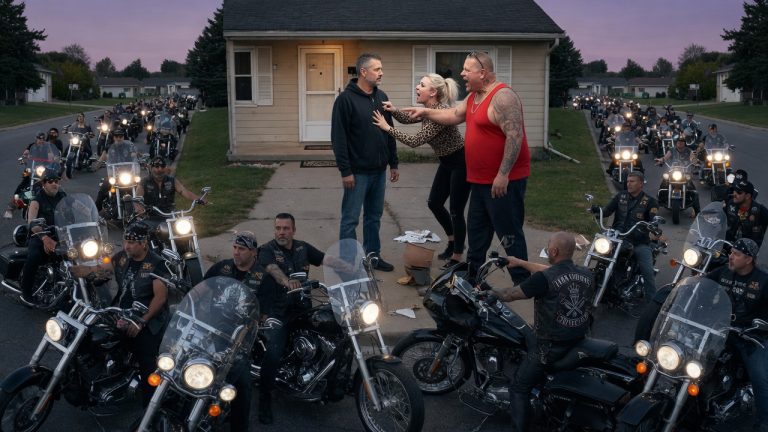
By 8:00 PM, the street was starting to clear. 1,500 bikes don’t leave quietly, but they leave with a sense of purpose. One by one, the engines fired up, a rolling thunder that signaled the end of a long day.
Tank was the last to leave. He stood by his bike, looking at my house, then at me.
“”You okay, Jax?””
“”I’m better than okay, Tank. Thanks for coming.””
“”We don’t leave our own behind,”” Tank said, slapping me on the shoulder. “”And that kid? He’s one of us now.””
He kicked his bike into gear and roared off, joining the tail end of the procession.
I stood on my porch, the evening air cooling my skin. Buster was lying at my feet, his chin resting on my boot. The neighborhood was quiet again, but it was a different kind of quiet. It wasn’t the silence of fear or apathy. It was the silence of a place that had been scrubbed clean.
Vance was in a cell. The Watkins were under investigation. And five kids were sleeping in real beds tonight.
I looked down at my phone. A photo was going viral. It was a shot taken from a drone, showing my little suburban street completely choked with motorcycles, and in the middle of it all, a scrawny kid in a hoodie standing tall.
The caption read: They thought he was nobody. They forgot he had a family.
I walked inside and grabbed a bowl of ham. I walked back out to the porch and sat down.
“”Hey, Buster,”” I whispered.
The dog looked up, his tail thumping against the wood.
I thought about the medals in my garage. I thought about the wars I’d fought in places no one remembers. I’d always thought my greatest achievements were behind me, buried in the sand of a desert half a world away.
I was wrong.
The greatest battle I ever won happened right here, on a patch of cracked asphalt, with nothing but a brotherhood at my back and a boy’s hand in mine.
Justice doesn’t always come in a courtroom. Sometimes, it comes on two wheels, 1,500 strong, reminding the world that the smallest voice is the one that deserves to be heard the loudest.
I leaned back, the ghost of my hip pain finally fading into the cool night air.
“”Good boy, Buster,”” I said, sharing a piece of ham. “”Good boy.””
Because in the end, we aren’t defined by the power we hold over others, but by the way we use our strength to protect those who have none.”