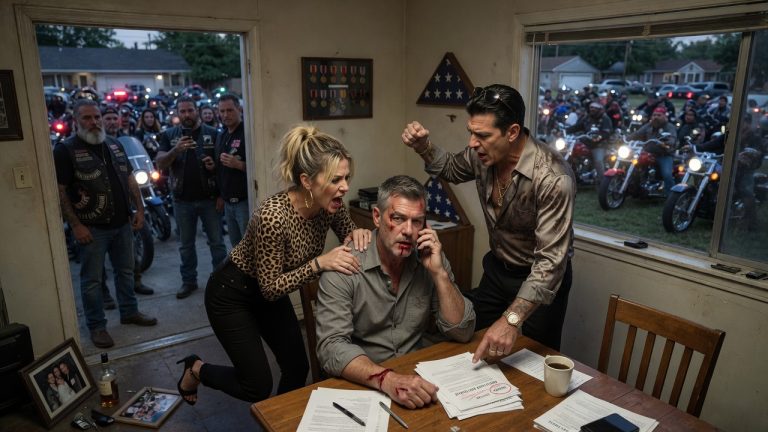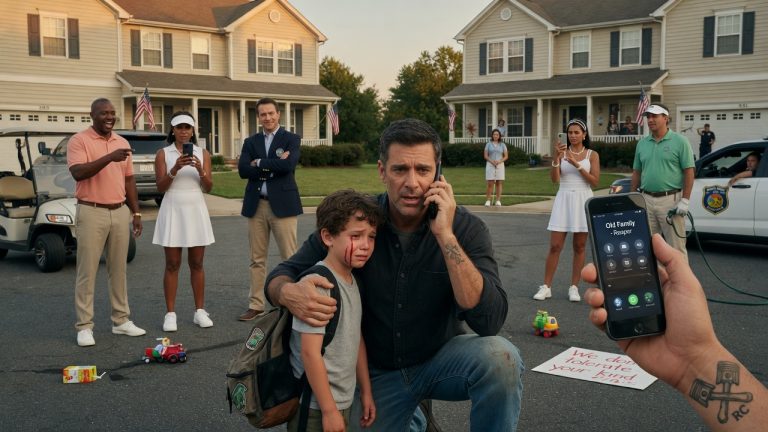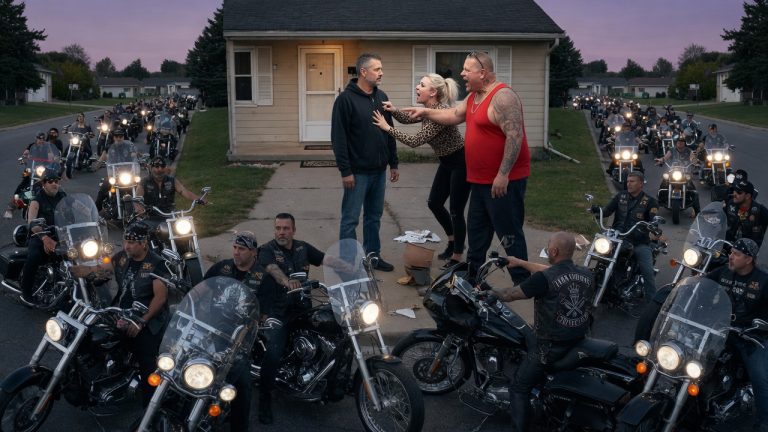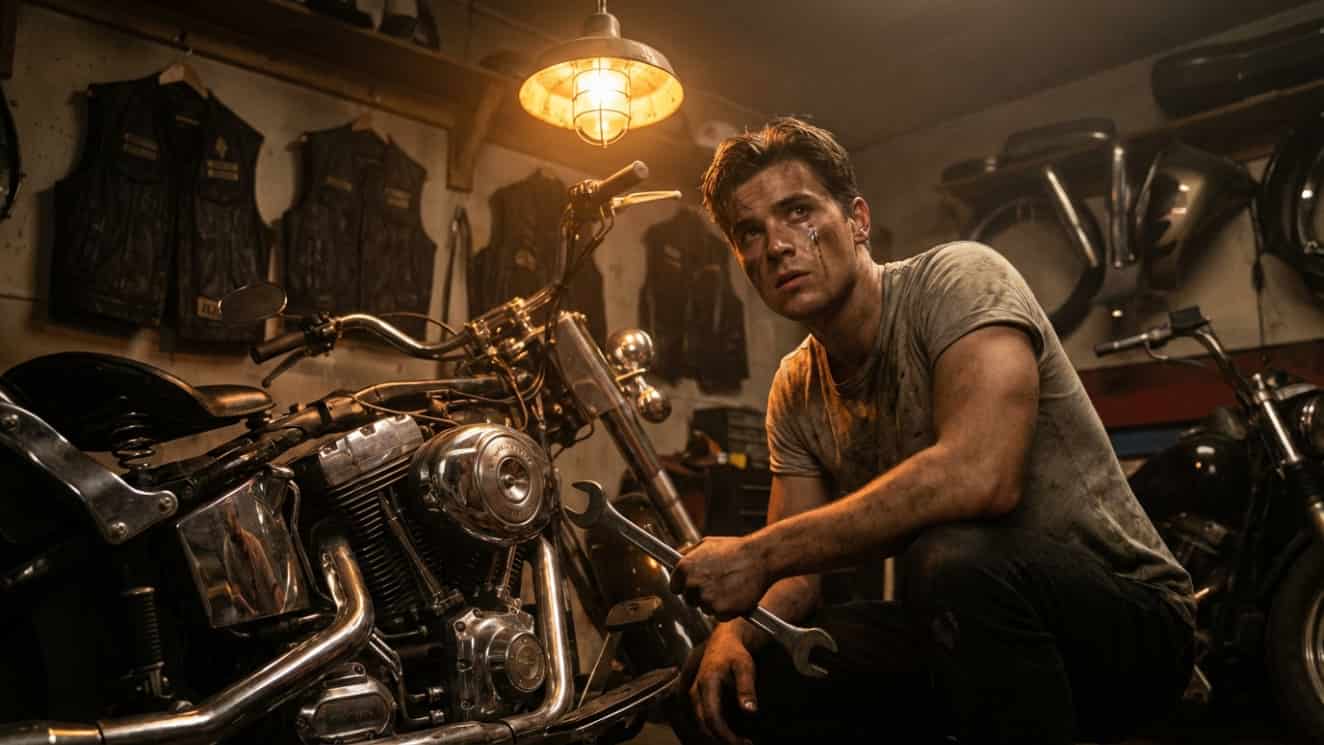
Toby is the son of “Legend,” the most feared man the 500 MC ever saw. In a town where your last name is your destiny, Toby is expected to lead the next generation of the brotherhood.
But Toby has a secret hidden under his bed. While the club expects him to ride, he’s been quietly stripping his father’s memorial bike to fund a life they would kill him for wanting.
The “brothers” call it loyalty. Toby calls it a prison. And tonight, the bars are going to burn.
FULL STORY
Chapter 1
The Panhead sat in the center of the garage like an altar. It was a 1965 Electra Glide, the last of the Panheads, draped in enough chrome to blind a man if the sun hit it right. But in the dim, oil-soaked light of the 500 MC’s clubhouse garage, it just looked heavy. It looked like a tombstone.
“She’s yours now, Toby,” Big Ray said. He didn’t say it like a gift. He said it like a sentence.
Ray was a man built of square angles and old leather. His beard was a gray thicket that smelled of Winston Reds and stale beer. He put a hand on Toby’s shoulder, the weight of it pressing Toby down toward the concrete floor. Ray’s rings—heavy silver skulls—dug into Toby’s collarbone.
“Your old man built this from a basket case,” Ray continued, his voice a low rumble that vibrated in Toby’s chest. “He was riding this the night he took out three of the Iron Skulls in Bluefield. This bike is the soul of this chapter. And you’re the blood.”
Toby nodded because he didn’t know how to do anything else. At nineteen, his frame was still lanky, his face still holding onto the soft edges of boyhood that the coal dust of West Virginia tried its best to erode. He looked like his father—the same sharp nose, the same deep-set blue eyes—and that was his primary misfortune.
“Thanks, Ray,” Toby managed. His voice sounded thin to his own ears.
“Don’t thank me. Thank the brotherhood. We spent six months tracking down the original carb for this. It’s perfect. Just like Legend left it.”
Legend. That was the only name Toby ever heard for his father. To the town of Bishop, he was the man who ran the local drug trade with a smile and a heavy chain. To the club, he was a martyr who died in a high-speed chase on I-77, refusing to lay the bike down even when the cruisers boxed him in. To Toby, he was a framed photograph on the mantel and a series of terrifying stories told by drunk men who expected Toby to be just as loud and just as mean.
Ray slapped Toby’s back, a blow that made his lungs hitch. “Take her home. Get her out on the ridge tonight. Let people see you on it. Let ‘em know the King is back.”
Toby gripped the handlebars. The rubber was cold. He kicked the stand up, the heavy metal clanking against the frame. He knew how to ride—he’d been on dirt bikes since he could walk—but this felt different. It felt like he was mounting a wild animal that had already tasted his family’s blood.
He rolled the bike out of the garage. The afternoon sky over Bishop was the color of a bruised plum. The Appalachian Mountains rose up on all sides, steep and suffocating, covered in dense, dark timber that seemed to lean in toward the valley. The air tasted of woodsmoke and the sharp, metallic tang from the prep plant down the river.
He kicked the engine over. It roared to life, a rhythmic, gut-punching thrum that shook the teeth in his skull. He saw the “brothers” standing in the doorway of the clubhouse—Miller, the treasurer with the missing ear; Preacher, the sergeant-at-arms who hadn’t been in a church in forty years. They were all watching him. They were looking for the ghost of his father.
Toby twisted the throttle, the bike lunging forward, and he rode out of the gravel lot, leaving a cloud of dust that tasted like copper.
He didn’t go to the ridge. He rode the back way, sticking to the narrow county roads where the asphalt was cracked and the weeds grew through the fissures. He pulled up to a small, sagging house on the edge of the holler. It was his mother’s house, or it had been before she’d moved to Ohio with a pharmacy tech three years ago, leaving Toby the deed and a refrigerator full of expired condiments.
He pushed the bike into the shed behind the house. He didn’t cover it. He just stood there, looking at the chrome.
“I hate you,” he whispered.
The bike didn’t answer. It just smelled of hot oil and gasoline.
Toby went inside, locking the door behind him. He didn’t turn on the lights. He didn’t want the neighbors—most of whom were related to club members—to see him. He went to his bedroom, a small space that felt more like a cell. He knelt by the bed and reached underneath, pulling out a flat wooden box.
Inside weren’t drugs. There were no stolen handguns or club ledgers.
Inside were tubes of Windsor & Newton oil paints, a set of expensive hog-hair brushes, and a stack of small canvases. He’d bought them one by one over the last year, using the money he made working part-time at the NAPA store and, more recently, by selling off pieces of his life he didn’t think anyone would miss.
He pulled out a half-finished painting. It wasn’t a picture of a bike. It wasn’t a portrait of a tough man. It was a landscape of the New River Gorge at dawn—the way the mist hung in the trees like torn silk, the way the light turned the water to a deep, bruised gold.
He sat on the floor, the only sound the distant whistle of a coal train cutting through the valley. He picked up a brush, but his hand was shaking. The vibration of the Panhead was still in his bones, a lingering tremor that made the fine work of the painting impossible.
He stared at the canvas. He wanted to be there, in the mist, away from the leather vests and the “property of” patches and the weight of a dead man’s name.
There was a knock at the door. Not a polite knock. A heavy, rhythmic thud.
Toby froze. He shoved the painting back into the box and slid it under the bed. He wiped his hands on his jeans, checking for paint under his fingernails.
“Toby! Open up, man. I saw the lights.”
It was Silas. Toby exhaled, the tension leaving his shoulders in a jagged rush. Silas was the only person in Bishop who didn’t look at Toby and see Legend.
Toby opened the door. Silas stood there in a University of West Virginia hoodie, looking out of place in the grimy shadows of the porch. Silas was leaving in three weeks. He had a scholarship. He had a way out.
“You got it?” Silas asked, nodding toward the shed.
“Yeah,” Toby said, stepping back to let him in. “Ray gave it to me today. Said it was my birthright.”
Silas sat on the edge of the kitchen table, his face tight. “You know what they’re saying at the diner? They’re saying you’re taking the patch next month. They’re saying Ray’s going to make you an officer by Christmas.”
“They say a lot of things,” Toby said, leaning against the counter.
“It’s not just talk, Toby. My dad says the club is hurting. The feds are sniffing around the Crystal Meth business in the next county, and Ray wants a face that looks clean. He wants your face. You’re the hero’s son. You’re the brand.”
Toby looked at the sink, where a single glass sat covered in a film of dust. “I’m not taking the patch, Silas.”
“How are you going to say no? You think you can just tell Big Ray you’d rather paint trees? They’ll think you’re mocking them. Or worse, they’ll think you’re weak. And you know what they do to weak things in this town.”
Toby didn’t answer. He thought about the Panhead in the shed. He thought about the rare S&S carburetor Ray had bragged about. He knew a guy in Charleston who collected vintage parts. That carb alone could pay for three months of art school tuition in Pittsburgh. It could buy him a bus ticket and a room in a boarding house.
“I’m selling the carb,” Toby said.
Silas stared at him. “You’re what? Ray told everyone they spent six months finding that. If he sees a cheap knockoff on that bike, he’ll know.”
“He won’t look. He thinks I worship that machine. He thinks I’m him.” Toby looked at his friend. “I need the money, Silas. I’m not going to die on I-77 with a police cruiser in my rearview. I’m not going to be a legend.”
Silas looked toward the shed, then back at Toby. “They’re going to kill you, Toby. Not because you’re a thief. But because you’re not who they need you to be.”
“Then I guess I better be fast,” Toby said. But as he looked out the window at the dark, looming mountains, he felt like he was already buried.
Chapter 2
The morning light in Bishop never felt like a beginning; it felt like an interrogation. It crawled over the ridgelines, exposing the rusted machinery of the abandoned mines and the sagging porches of houses that were only held together by habit and cheap paint.
Toby spent the morning in the shed. He had the tools laid out on a greasy rag: a set of wrenches, a screwdriver, and a sense of dread that felt like a cold stone in his stomach. The Panhead gleamed at him, a silent witness to his betrayal.
Removing the carburetor was a surgical act. He knew these engines—Ray had made sure of that, forcing him to spend his summers in the clubhouse garage until his cuticles were permanently stained with 10-weight oil. He worked slowly, his breath hitching every time a bolt groaned. He felt like he was stripping the skin off his father’s corpse.
When the S&S carb came free, he wrapped it in a heavy towel. It felt heavier than it should have. It felt like evidence.
He replaced it with a generic Linkert he’d scavenged from a wrecking yard two towns over. It looked right to the untrained eye, but the performance would be sluggish. The bike would cough. It wouldn’t have the “Legend” roar. He just needed it to hold together long enough for him to make his move.
He stashed the S&S carb in his backpack and pushed the bike back into the corner of the shed. He felt sick, a sour heat rising in his throat.
He rode his old, battered mountain bike into town. He didn’t want to be seen on the Harley yet. He needed to blend in, to be the quiet kid everyone ignored until they needed someone to project their nostalgia onto.
The NAPA store was a cavern of fluorescent lights and the smell of rubber fan belts. Miller was there, leaning against the counter, talking to the manager. Miller was the club’s treasurer, a man who could find money in a desert. He saw Toby and grinned, showing a row of teeth that looked like weathered tombstones.
“There he is,” Miller barked. “How’s the Glide, kid? She purr for you last night?”
Toby leaned his bike against the glass. “She’s a beast, Miller. Still getting used to the weight.”
Miller walked over, his heavy boots clumping on the linoleum. He reached out and squeezed Toby’s forearm. “You got your old man’s hands. Steady. Strong. We’re having a run out to the Lake this Saturday. Ray wants you at the front, right behind him. It’s a big deal, Toby. It’s a statement.”
“I have to work,” Toby said, the lie coming out smoother than he expected.
Miller’s grip tightened. Not enough to hurt, but enough to remind Toby that it could. “NAPA can wait. The brotherhood can’t. Tell the manager you’re sick. Tell him your house burned down. I don’t care. Be at the clubhouse at ten.”
Miller didn’t wait for an answer. He turned and walked out, the bells on the door jingling like a warning.
Toby stood there, his heart hammering against his ribs. Saturday. That was four days away. He had four days to sell the parts, get the money, and find a way out of the valley before the club realized their “King” had sold the crown for a set of paintbrushes.
After his shift, he went to the diner. He needed to see Sarah.
Sarah was twenty-one, with tired eyes and a way of pouring coffee that made the world feel a little less jagged. She’d grown up in the same shadow as Toby—her father had been a miner who’d lost his lungs to the black dust and his mind to the bottle. She understood the weight of the mountains.
The diner was nearly empty, the red vinyl booths cracked and taped with silver duct tape. Toby sat at the far end of the counter. Sarah slid a mug of black coffee toward him without being asked.
“You look like you’re waiting for a funeral,” she said, leaning on the counter.
“Just tired,” Toby said.
“I heard about the bike. Ray’s been telling everyone you’re the second coming.” She looked at him, her gaze lingering on his face. “You don’t look like a legend, Toby. You look like a kid who wants to hide.”
“Is it that obvious?”
“To me it is. Everyone else sees what they want to see. They see the leather and the name. They don’t see you.”
Toby looked down at his coffee. “I’m leaving, Sarah. Soon.”
She didn’t look surprised. She just sighed, a small, weary sound. “Where to?”
“Pittsburgh. Maybe further. I’m going to try for the art institute.”
Sarah smiled, but it was a sad thing. “You and your pictures. I saw that sketch you did of the river. The one you left on the napkin last week. It was… it was real. I could almost hear the water.”
“It’s the only thing that makes sense,” Toby said. “Everything else is just… noise. People shouting about loyalty and blood and things that happened before I was even born.”
“Ray won’t let you go,” she whispered, leaning closer. “He needs you. He’s getting old, Toby. The club is losing its grip on the town. The younger guys don’t care about the ‘old ways’ unless there’s a paycheck involved. But if they see Legend’s boy standing there? They’ll fall in line. You’re his anchor.”
“I’m not anchoring anyone,” Toby said, his voice sharpening. “I’m not a ghost.”
“Then don’t let them turn you into one.” She reached out, her hand brushing his for a second before she pulled back. “Be careful. Ray isn’t just a biker. He’s a believer. And there’s nothing more dangerous than a man who believes his own lies.”
Toby left the diner and rode toward the highway. He had a meeting with the collector in Charleston. It was a forty-mile ride on his old mountain bike, but he couldn’t risk the Harley, and he didn’t have a car.
He rode until his legs burned and his lungs felt like they were filled with crushed glass. The highway was a ribbon of black between the dark hills. Every time a pair of headlights appeared behind him, he flinched, expecting the roar of a V-twin and the glint of a “500” patch.
He met the collector in a brightly lit gas station parking lot. The man was older, wearing a golf shirt and driving a clean silver SUV. He looked like the kind of person who had never had grease under his fingernails.
He inspected the S&S carburetor with a jeweler’s loupe. “It’s pristine,” the man said, his voice sounding like dry paper. “Hard to find these in this condition. Especially with the original manifold.”
“I know what it’s worth,” Toby said, trying to sound tougher than he felt.
The man looked at Toby, then at his battered bike. “I’m sure you do. One thousand. Cash. No questions asked.”
It was less than it was worth, and they both knew it. But it was more than Toby had ever seen at once.
“Twelve hundred,” Toby said.
The man shrugged. “Eleven. That’s my final. Take it or leave it. I have to get back to the city.”
Toby took the money. He tucked the envelope into his waistband, the paper feeling like a warm coal against his skin.
The ride back was harder. The wind had picked up, howling through the gaps in the ridges. By the time he reached the shed, it was after midnight.
He opened the shed door and froze.
The Harley was gone.
The space where it had been was empty, the dirt floor showing the fresh tracks of tires. A cold sweat broke out on Toby’s neck. He looked around the yard, his mind racing. Had Ray come for it? Had someone stolen it?
Then he saw the figure sitting on his back porch.
It was Silas. He was hunched over, his head in his hands.
“Silas?” Toby called out, his voice cracking.
Silas looked up. His face was bruised, his lip split and swollen. “They came for it, Toby. Ray and Miller. They said they wanted to take it to the clubhouse to ‘detail’ it for the run.”
Toby felt the world tilt. “Did they look at it? Did they see the carb?”
Silas shook his head, then winced. “I don’t know. They just saw me hanging around your porch. Miller… he didn’t like the way I looked at him. He said friends of the King shouldn’t be skulking in the dark.”
Toby sat on the steps next to his friend. The eleven hundred dollars in his waistband felt like a lead weight.
“They’re going to find out, Silas,” Toby whispered.
“I know,” Silas said, wiping blood from his chin. “And when they do, they’re going to come back. And they won’t just be looking for a bike.”
Toby looked at the empty shed. The plan was falling apart before it had even begun. He wasn’t just a thief now. In the eyes of the 500 MC, he was a traitor to the blood. And in West Virginia, blood was the only thing that didn’t wash away.
Chapter 3
The clubhouse of the 500 MC was an old masonry building that used to be a machine shop. It sat on a dead-end road near the river, surrounded by a chain-link fence topped with concertina wire. It was a place where the law didn’t go unless they had a warrant and a SWAT team.
Toby stood at the gate the next morning. His stomach was a knot of acid. He’d spent the rest of the night tending to Silas, then hiding his art supplies in a hollow log deep in the woods behind his house. He was stripped down to the essentials: his wallet, the eleven hundred dollars, and the clothes on his back.
He walked into the garage. The smell of exhaust and heavy-duty degreaser hit him like a physical blow.
The Panhead was on a lift in the center of the room. Miller was standing over it with a rag, polishing the primary cover. He didn’t look up when Toby approached.
“Thought you were working,” Miller said.
“I called in,” Toby said. “Heard you guys picked up the bike. Wanted to make sure she was okay.”
Miller stopped rubbing. He turned slowly, his one good ear twitching. “She’s fine. A little sluggish on the way over, though. Ray said she felt like she was breathing through a straw.”
Toby’s heart skipped a beat. He forced a shrug. “She’s been sitting for a long time. Probably just needs the timing adjusted.”
Miller walked around the bike, his eyes narrowed. He stopped near the carburetor. He reached out a greasy finger and traced the line of the Linkert knockoff.
“Ray’s got a good memory for parts,” Miller said softly. “He remembers the way Legend’s bike looked better than he remembers his own mother’s face. He says this isn’t the S&S.”
The silence in the garage became heavy, thick with the sound of a compressor humming in the corner. Toby felt the sweat trickling down his spine.
“It’s an old bike, Miller. Parts wear out. I had to swap it so I could ride it home.”
“Where’s the original?”
“In my shed. I was going to clean it.”
Miller stepped closer, his face inches from Toby’s. “Ray doesn’t like it when things go missing. Especially things that belong to the club.”
“It belongs to me,” Toby said, a spark of defiance flickering in his chest. “It was my father’s.”
“Nothing belongs to you, kid,” Miller hissed. “Everything you have—this house, that name, the air in your lungs—it belongs to the 500. We looked after your mother when Legend went down. We made sure you didn’t starve. We’re your family. And families don’t keep secrets.”
He shoved Toby back, not hard, but enough to make him stumble. “Ray wants to see you. Upstairs.”
The “upstairs” was the inner sanctum. It was a room filled with smoke, the walls covered in old photos and the colors of the chapters that had fallen. Ray was sitting behind a heavy oak desk, a bottle of bourbon in front of him. He was looking at a photograph of Toby’s father.
“Sit down, Toby,” Ray said. He didn’t look up.
Toby sat. The chair was hard, bolted to the floor.
“Your father was a complicated man,” Ray said, his voice unusually quiet. “People think being a ‘Legend’ is all about the fights and the fast rides. But it was about the weight. He carried this chapter on his back when the mines closed and everyone else was giving up. He kept us together.”
Ray finally looked at Toby. His eyes were bloodshot, rimmed with a deep, haunting exhaustion. “But he was also a man who didn’t know how to stop. He knew he was going to die that night. He told me before he left. He said, ‘Ray, if I don’t come back, make sure my boy doesn’t end up like me.'”
Toby stared at him, stunned. “He said that?”
“He did,” Ray said, taking a long pull from the bottle. “But your father was wrong. You have to be like him. Because without you, there is no 500. Without the legacy, we’re just a bunch of old men playing dress-up in a dying town. We need the myth. We need the son of Legend.”
“You’re asking me to be a lie,” Toby said.
Ray slammed his hand on the desk, the bottle rattling. “I’m asking you to be a leader! I don’t care what you feel inside. I don’t care about your little drawings or the way you look at the mountains like you want to fly away. I know about the sketchbook, Toby. I’ve known for a long time.”
Toby felt like the floor had vanished. “You saw them?”
“I saw them. And I burned them. Six months ago, while you were at school. I went into your house and I burned every last one of those soft, weak things.”
The world went white for a second. The landscapes, the river, the hours of work—all of it, gone. The fire he’d felt for his art was suddenly replaced by a cold, sharp blade of hatred.
“You had no right,” Toby whispered.
“I had every right! I was saving you from yourself! You think art is going to keep you safe in Bishop? You think some college in Pittsburgh cares about a biker’s kid from the hollers? They’ll laugh at you. They’ll chew you up and spit you out. Here, you’re a king. There, you’re nothing.”
Ray leaned forward, his face twisted in a grimace of supposed love. “I’m doing this for you. Now, give me the money.”
Toby froze. “What money?”
“The money you got for the carb. Miller saw you riding back from Charleston last night. He followed you. He saw the exchange.” Ray held out a massive, calloused hand. “Give it to me. We’ll put it in the club fund. We’ll call it a ‘donation’ from the new President. It’ll make the boys trust you.”
Toby looked at Ray’s hand. He thought about the eleven hundred dollars. He thought about the paintings that were now ash in some forgotten pit.
He reached into his waistband and pulled out the envelope. He laid it on the desk.
“Good boy,” Ray said, his voice softening. “You’re learning. Saturday morning, Toby. We ride. You’ll be wearing your father’s old vest. We’ve been cleaning it up for you.”
Toby stood up. He felt hollow, a shell of a person. He walked out of the room, down the stairs, and past Miller, who was still polishing the Panhead.
He walked out of the clubhouse and didn’t stop until he reached the river. The water was high, rushing over the rocks with a violent, uncaring energy. He sat on a log and looked at his hands. They were stained with oil. He tried to rub it off, but it wouldn’t come. It was etched into his skin.
He had no money. He had no art. He had nothing but a name he hated and a “family” that was a cage.
But Ray had made one mistake. He’d told Toby that his father didn’t want this life for him. For the first time, Toby didn’t feel like he was fighting a ghost. He felt like he was fulfilling a dying man’s wish.
He wasn’t going to be a legend. He was going to be the man who ended the story.
He reached into his pocket and found a single matchbook he’d swiped from the clubhouse bar. He looked at it for a long time.
Ray wanted a statement. Saturday morning, Toby would give him one.
Chapter 4
The days leading up to Saturday were a blur of performance. Toby went to work at the NAPA store. He nodded to the bikers who stopped by to congratulate him. He even sat in the clubhouse bar for an hour on Thursday night, nursing a soda and listening to Preacher tell stories about “The Great Run of ’98.”
He was a perfect actor because he had nothing left to lose. The grief for his burned paintings had turned into a cold, mechanical focus. He was no longer a boy trying to escape; he was a demolition crew of one.
On Friday evening, he went to the diner. Sarah was closing up. The neon “Open” sign flickered and died as he walked to the door.
She let him in, locking the door behind him. “I heard,” she said. Her eyes were red-rimmed. “I heard you’re taking the vest tomorrow.”
“Is that what the town is saying?” Toby asked.
“That’s what everyone is saying. Ray’s been buying rounds at the VFW, telling anyone who’ll listen that the 500 is back.” She looked at him, her voice trembling. “I thought you were different, Toby. I thought you were going to make it out.”
Toby walked over to her. He wanted to tell her. He wanted to see the hope return to her face. But he couldn’t. If she knew, and if things went wrong, Ray would destroy her too.
“Sometimes the mountains are just too high to climb, Sarah,” he said, using a voice that sounded like a stranger’s.
She looked at him with a mix of pity and disgust. “You’re just like him. You’re just another man who’d rather be feared than be himself.”
She turned away, grabbing a stack of menus. “Get out, Toby. I don’t want you here when the sun goes down.”
Toby left without another word. The sting of her words was necessary. It was fuel.
He went to the hollow log in the woods. He pulled out the few things he’d managed to save: a small charcoal pencil and a single scrap of heavy paper. In the fading light, he drew a quick, jagged sketch of a bird in flight. It was messy and desperate, but it was his.
He folded the paper and tucked it into his boot.
He spent the rest of the night in his shed. He didn’t sleep. He worked. He took a five-gallon plastic jerry can and filled it with a mixture of gasoline and used motor oil. It was a thick, volatile sludge. He hid it in a burlap sack and tied it to his mountain bike.
Saturday morning broke cold and gray. A low mist clung to the valley floor, smelling of damp earth and coal.
Toby rode his mountain bike to the clubhouse. He left it in the brush a hundred yards away, stashing the burlap sack behind a dumpster.
The parking lot was already full. There were at least forty bikes, the chrome glinting dully under the overcast sky. The air was thick with the rumble of idling engines and the shouting of men. It was a carnival of leather and testosterone.
Ray was standing on the porch of the clubhouse, wearing a fresh vest and a wide, triumphant grin. When he saw Toby, he beckoned him forward.
“Here he is!” Ray shouted. The crowd cheered, a guttural, terrifying sound.
Miller stepped forward, holding a leather vest. It was old, the leather cracked and faded, but the “500” patches were bright and new. On the back, in bold white letters, it said: LEGEND JR.
The name felt like a brand.
“Put it on,” Ray commanded.
Toby took the vest. It was heavy, smelling of old sweat and tobacco. He slid his arms into it. The crowd roared again. He felt like he was being swallowed by a beast.
“Today, we ride for the future!” Ray yelled. “We ride for the blood!”
They brought the Panhead out. It had been detailed to a mirror finish. They’d even replaced the generic carburetor with another S&S they must have pulled from a different bike. Ray was thorough.
Toby mounted the bike. His hands were steady now. The tremor was gone, replaced by a crystalline stillness.
“You lead,” Ray whispered, leaning over his own bike next to Toby. “Stay ten feet ahead of me. Let them see you.”
Toby kicked the bike over. The roar was deafening. He shifted into first gear and rolled out of the lot, forty bikes following him like a funeral procession.
They rode through the center of Bishop. People came out onto their porches to watch. Children pointed. Old men tipped their hats. It was a parade for a dying kingdom. Toby saw Sarah standing in the doorway of the diner, her arms crossed, her face a mask of disappointment.
He didn’t look away. He looked straight through her.
They hit the mountain road, climbing higher into the ridges. The air grew colder, the trees closing in. This was the territory where his father had died. The “Legend’s Run.”
About five miles up, there was a scenic overlook—a wide gravel pull-off that looked out over the entire valley. It was the traditional halfway point of the run, where the club would stop to drink and “pay respects” to the mountains.
Toby pulled into the overlook. The forty bikes followed, a thunderous arrival that sent birds screaming from the trees.
The men dismounted, laughing and slapping each other on the back. They pulled flasks from their vests. Ray walked to the edge of the cliff, looking out over the town of Bishop as if he owned every shingle and every soul.
“Look at it,” Ray said, gesturing to the valley. “That’s ours, Toby. As long as we’re strong, that town belongs to us.”
Toby didn’t look at the town. He looked at the Panhead, sitting alone at the edge of the gravel.
“I need to check the oil,” Toby said, his voice flat.
“Go ahead,” Ray said, distracted by a joke from Miller.
Toby walked to the bike. He reached into his vest—the one they’d given him— and pulled out the small glass bottle of the gas-oil mix he’d transferred from the jerry can into a flask earlier that morning.
He didn’t pour it into the engine.
He poured it over the leather seat. He poured it over the gas tank. He poured it over the “Legend Jr.” name on the back of his vest as he stripped it off and draped it over the handlebars.
The smell of gasoline hit the air, sharp and unmistakable.
“Hey!” Miller shouted, his voice cutting through the laughter. “Toby, what the hell are you doing?”
The crowd went silent. Ray turned, his eyes widening as he saw Toby standing by the bike, a matchbook in his hand.
“Toby, get away from that bike,” Ray said, his voice dropping into a low, dangerous growl.
“My father didn’t want this for me, Ray,” Toby said. He felt a strange, light sensation in his chest. “You told me so yourself.”
“I was talking about the danger, you idiot! I wasn’t talking about the club!” Ray started toward him, his heavy boots crunching on the gravel.
“No,” Toby said, striking a match. The small flame flickered in the wind, a tiny, fragile point of light. “You were talking about the lie. And I’m done living it.”
“Don’t you dare,” Ray hissed, stopping five feet away. The other bikers were closing in, a wall of leather and muscle. “That bike is the 500. You burn that, you burn us.”
“That’s the point,” Toby said.
He dropped the match.