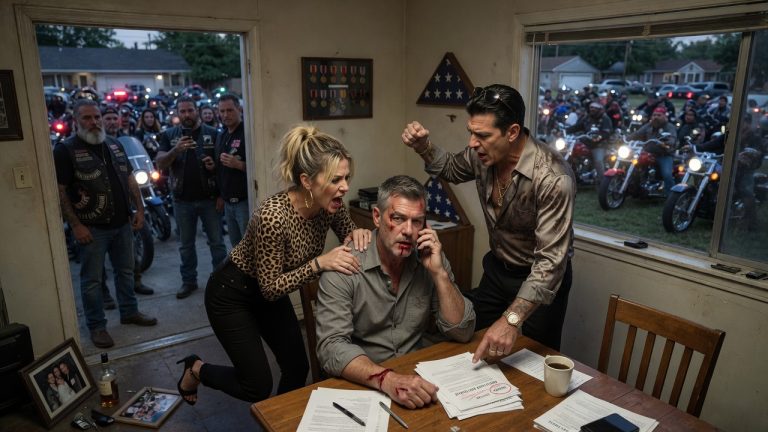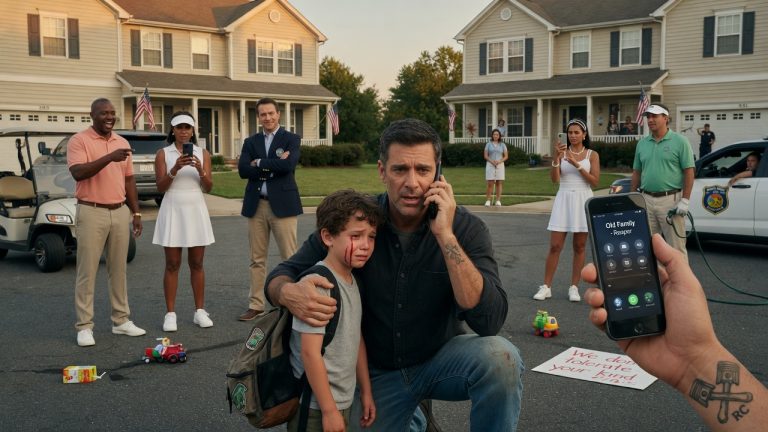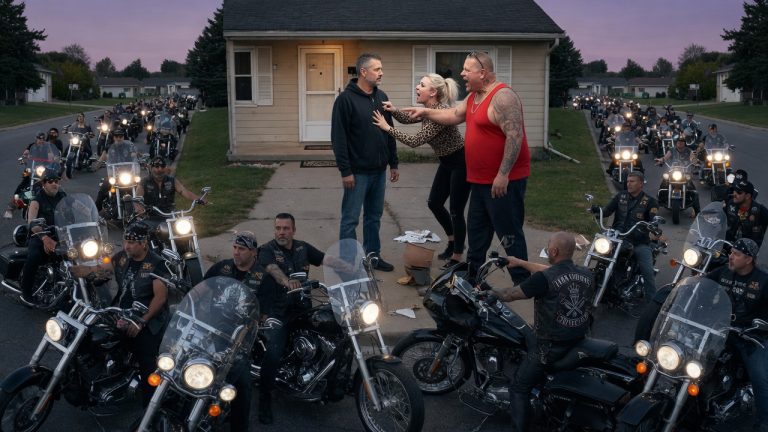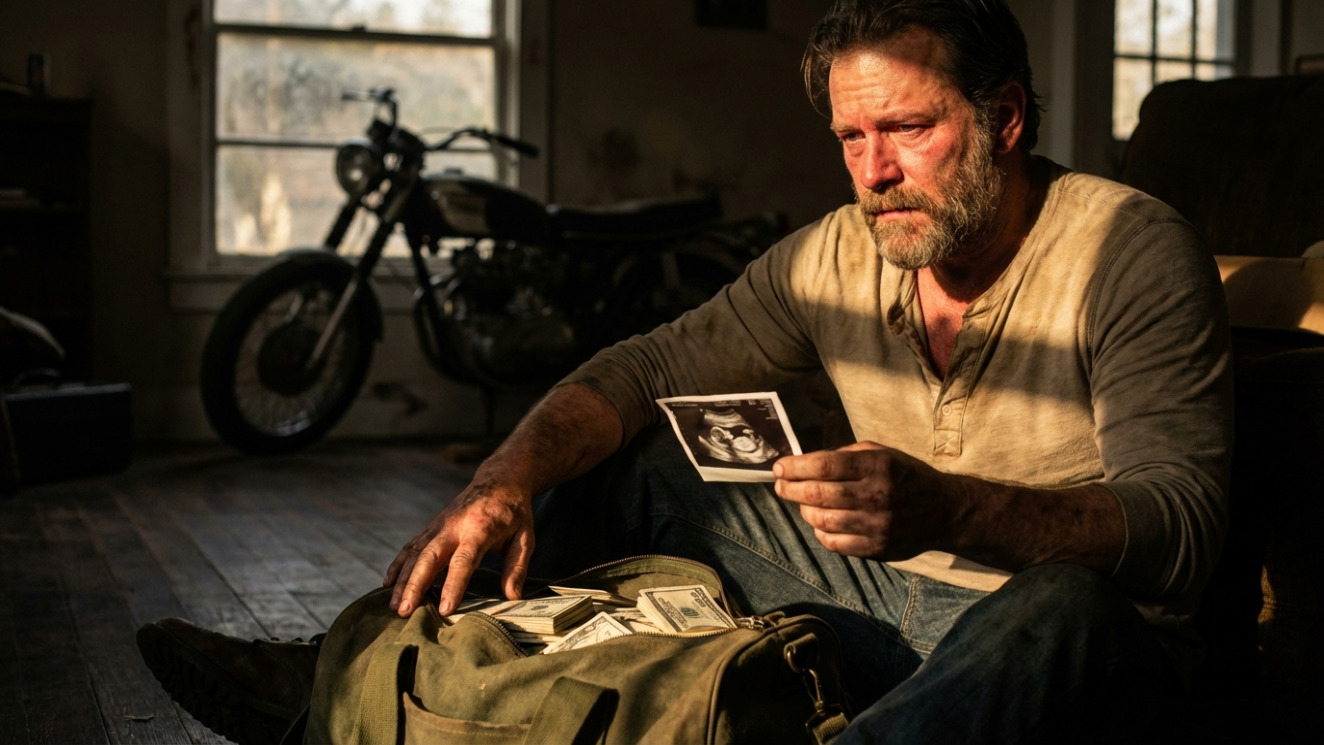
Beau Dalton spent his whole life running from the ghost of a Texas gas station where his father left him thirty years ago. He thought he’d finally found a place to park his bike for good. He thought Cassie was the anchor he’d been searching for through every mile of blacktop.
Then he came home from a three-month haul and found the one thing that could never belong to him.
A positive test. An ultrasound with a heartbeat. And a calendar that proved the child growing inside his wife wasn’t his.
Now, with the MC breathing down his neck for money he doesn’t have and a duffel bag of “getaway” cash hidden under the floorboards, Beau has to make the hardest choice of his life. Does he stay and raise another man’s shadow, or does he become the man who walked away, just like his father did?
FULL STORY
Chapter 1
The heat in West Texas doesn’t just sit on you; it sinks in. It gets under the skin and stays there like a low-grade fever. Beau Dalton felt it radiating off the blacktop of Highway 80, the shimmering waves of distortion making the horizon look like a lake that didn’t exist. He shifted his weight on the seat of the ’98 Heritage Softail, feeling the vibration of the Evolution engine through his thighs. It was a steady, mechanical heartbeat—the only thing in his life that never lied to him.
He’d been gone ninety-two days. Three months of hauling freight, sleeping in roadside motels that smelled of industrial cleaner and stale cigarettes, and eating lukewarm chili at truck stops. He’d done it for the money. The Iron Cross MC didn’t care about his personal life, but they cared very much about the “protection” dues he owed for the shop space in Odessa. Every mile he’d covered was another twenty dollars toward a debt that never seemed to get shorter.
Beau pulled into the gravel driveway of the small, wood-sided house on the edge of town. The paint was peeling in long, brittle strips, curling away from the wood like dead skin. It was a rental, a place they’d meant to leave two years ago, but the desert had a way of holding onto people.
He shut off the engine. The sudden silence was heavy. He sat there for a moment, his gloved hands still gripping the bars. Hanging from the center of the handlebars was an old brass compass, the glass cracked across the face. It didn’t point North. It just wobbled, reacting to the metal of the bike. It was the only thing his old man had left him at that Texaco station in 1996. A broken tool for a lost kid.
“Beau?”
The screen door creaked. Cassie stood there, shielding her eyes from the afternoon sun. She looked thinner than he remembered. Her blonde hair was pulled back in a messy knot, and she was wearing one of his old flannel shirts, the sleeves rolled up past her elbows.
“Hey, Cass,” he said, his voice gravelly from the road.
He climbed off the bike, his boots crunching on the sun-baked caliche. His knees popped. At thirty-five, he felt fifty. He walked toward her, expecting the usual rush, the hug that smelled like vanilla and laundry detergent, the relief of being home.
But Cassie didn’t move from the porch. She stayed behind the mesh of the screen door, her hands shoved deep into the pockets of the flannel shirt.
“You’re early,” she said.
“Traffic was light through Abilene,” Beau replied. He stopped at the bottom of the three wooden steps. “You okay?”
“Yeah. Just… it’s hot. I wasn’t expecting you until tonight.”
She finally pushed the door open, but there was a hesitation in her movement, a stiffness that hadn’t been there three months ago. When he reached the top step, she let him kiss her cheek, but her body felt like a coiled spring.
“I missed you,” he said, though the words felt suddenly heavy in the air.
“I missed you too, Beau. Come on in. I’ll fix some tea.”
The house was dim, the curtains drawn tight against the Texas sun. It smelled of Pine-Sol and something else—something sweet and metallic. Beau dropped his gear bag by the door. The floorboards groaned under his weight. He’d lived here four years, but today, the walls felt like they were leaning in.
He walked into the kitchen to wash the road grime off his hands. The sink was cluttered with a few unwashed dishes—a cereal bowl, a coffee mug. On the small laminate table sat a stack of mail. Most of it had “Urgent” or “Final Notice” printed in red ink.
“Club been by?” Beau asked, nodding toward the bills.
Cassie was at the fridge, her back to him. “Doc came by last Tuesday. He wasn’t mean about it. Just said the books were open and your name was at the bottom of the page.”
“Doc’s never mean until he has to be,” Beau muttered. He dried his hands on a rag. “I got the cash, Cass. Most of it, anyway. I can clear the dues and have enough left over for the back rent.”
“That’s good,” she said. She didn’t sound relieved. She sounded tired.
Beau moved to the table to sort through the mail, looking for the specific notice from the landlord. He pushed aside a circular for a local grocery store and a flyer for a church bake sale. Underneath them, tucked partially under the edge of the napkin holder, was a small, rectangular piece of plastic.
It was white. It had two pink lines.
Beau stared at it. He didn’t pick it up. He just looked at it while the refrigerator hummed in the corner. The world didn’t stop turning, and the floor didn’t fall out from under him. It was a slow, cold realization, like water seeping into a basement.
He looked at the calendar hanging on the pantry door. It was a promotional one from the local hardware store. He looked at the date he’d left—June 12th. He looked at today’s date—September 14th.
Ninety-four days.
He looked at the test again. The pink lines were bold, undeniable.
“Beau?” Cassie’s voice was small.
He didn’t turn around. “How long?”
The silence that followed was the loudest thing he’d ever heard. It wasn’t the “deafening silence” people wrote about in books; it was the sound of a woman holding her breath, the sound of a man’s pulse thumping in his ears like a drum.
“Six weeks,” she whispered. “The doctor said… about six weeks.”
Beau finally turned. Cassie was leaning against the counter, her face pale, her knuckles white where she gripped the edge of the laminate. She wasn’t crying. She looked terrified, like she was waiting for a blow that she knew she deserved.
Beau felt a strange, detached calmness. He’d been in motorcycle wrecks where everything slowed down—the sight of the pavement coming up to meet him, the sound of metal scraping sparks. This felt like that.
“Six weeks,” he repeated. “I’ve been in El Paso and New Mexico for twelve.”
“Beau, I—”
“Who?”
“It doesn’t matter,” she said, her voice cracking. “It was… I was lonely, Beau. You’re always gone. The bills were piling up, and the power got cut, and I just… I went to the Maverick for a drink, and he was there, and I—”
“Who, Cassie?” His voice wasn’t loud. It was flat. Dangerous.
“Danny,” she choked out. “Danny from the shop.”
Danny. A kid. Twenty-four years old, worked the parts counter at the local Harley dealership. A kid who’d never spent a night in the rain on the side of a highway. A kid who didn’t have a debt to a club or a scar on his soul.
Beau looked at her. He wanted to feel rage. He wanted to break something. But all he felt was the familiar, hollow ache of the gas station in 1996. The feeling of watching a set of taillights disappear into the dark, leaving him with nothing but a broken compass.
“I’m sorry,” she said, the tears finally starting to track through the dust on her cheeks. “Beau, please. I didn’t mean for it to happen. It was one night. I was scared. I didn’t think…”
“You didn’t think I’d come home?”
“No! I didn’t think… I didn’t think I’d get pregnant. We tried for three years, Beau. We tried and nothing happened. I thought… I thought it was you. Or me. I didn’t think it was possible.”
“So it’s a miracle,” Beau said, the sarcasm tasting like copper in his mouth. “A Texas miracle.”
He walked past her, his shoulder brushing hers. He didn’t stop. He went out the back door into the small, dirt-caked yard. The heat hit him again, but he welcomed it. He went into the leaning tool shed that served as his workshop.
In the corner, under a pile of old tarps and rusted chain, was a loose floorboard. He knelt, his joints groaning, and pried it up. Inside was a black nylon duffel bag.
He opened it. Stacks of twenties and fifties, bound with rubber bands. It was five thousand dollars. Money he’d skimmed over the last two years, money the MC didn’t know about, money Cassie didn’t know about. It was his “getaway” fund. His “just in case” insurance. Because a kid who gets left at a gas station never truly believes he’s found a home. He always keeps his shoes by the door and his tank full.
He looked at the money. It was enough to get to California. Enough to start over.
He heard the shed door creak. Cassie stood in the opening, her silhouette framed by the blinding light of the yard.
“What are you doing?” she asked.
Beau didn’t hide the bag. He let her see it. “I’m looking at my options, Cass.”
“Are you leaving?”
“I don’t know,” he said. And it was the truth. “But the math says I should have left three months ago.”
He stood up, clutching the bag. The MC debt was still there. Doc would be coming back. The landlord would be coming back. And now, there was a ghost in the room—a child that would have Danny’s eyes and Beau’s last name.
“I can’t do this alone,” she said, her voice trembling. “Beau, I have nothing. If you go… I have nothing.”
“You have Danny,” Beau said.
“He doesn’t want this! He’s a kid. He ran the second I told him.”
Beau looked at her—really looked at her. She was a woman who had made a terrible, desperate mistake because she was married to a man who was already half-gone before he ever left the driveway. He saw the fear in her, and it mirrored the fear he’d carried since he was seven years old. The fear of being the one left behind.
He walked past her, back toward the house, the bag of money heavy in his hand.
“I’m going to the shop,” he said. “Don’t wait up.”
“Beau—”
He didn’t answer. He kicked the Softail to life, the roar of the pipes drowning out whatever she said next. He didn’t look back. He just watched the needle on the broken compass wobble as he turned toward the center of town, where the neon sign of the Iron Cross clubhouse was already flickering against the approaching dusk.
Chapter 2
The clubhouse was a converted warehouse on the industrial skirt of Odessa, a place where the smell of diesel and hot grease never quite went away. The neon sign—a jagged iron cross wrapped in barbed wire—hummed with a low-frequency buzz that set Beau’s teeth on edge. He parked his bike in the designated row, between a battered Dyna and a chromed-out Road King that belonged to someone with more money than sense.
He didn’t go inside immediately. He sat on the bike, feeling the heat bleed out of the engine. His mind was a mess of numbers: ninety-four days, six weeks, five thousand dollars, three years of trying. The math was simple, but the weight of it was crushing.
The heavy steel door of the warehouse creaked open, throwing a shaft of yellow light across the gravel. A man stepped out, silhouetted against the haze of cigarette smoke inside. He was tall, leaning on a cane made from a motorcycle fork, his white hair tied back in a thin ponytail.
“Beau,” the man said. His voice was like two pieces of sandpaper rubbing together.
“Doc.”
Doc walked over, his limp pronounced. He was the oldest member of the Iron Cross, the man who kept the books and, occasionally, the peace. He’d been around since the days when the club was more about brotherhood and less about the “logistics” of the local meth trade. He looked at Beau’s bike, then at the nylon bag strapped to the sissy bar.
“You look like a man who’s been riding for three days and hasn’t slept for four,” Doc said, stopping a few feet away.
“Something like that.”
“You got the money?”
Beau reached into the bag and pulled out a thick envelope. He handed it over. Doc didn’t count it. He just felt the weight of it and tucked it into his vest.
“That clears your dues through the end of the year,” Doc said. “The Sergeant at Arms was getting restless. He doesn’t like it when the younger guys see a senior member sliding on his obligations.”
“I’m not sliding,” Beau said. “I was working.”
“I know you were. But the road’s a long way from home, Beau. Things happen when a man stays away too long. Dust settles. People change.”
Beau looked at the old man. Doc had a way of saying things that made you wonder if he’d been listening at your windows. “What’s that supposed to mean?”
“It means I saw Cassie at the clinic yesterday. She didn’t see me. I was there getting my hip adjusted.” Doc paused, lighting a generic-brand cigarette. The flare of the match illuminated the deep canyons in his face. “She looked like she’d seen a ghost, Beau. Or like she was about to become one.”
Beau felt a spike of irritation. “Stay out of my house, Doc.”
“I’m not in your house. I’m in your business, because your business is club business. If you’re distracted, you’re a liability. If you’re a liability, you’re a problem.” Doc leaned in closer, the smell of tobacco and menthol rub thick on him. “I know the math doesn’t work out. I can count as well as you can.”
Beau stiffened. “Is it all over town?”
“Not yet. But this is a small pond, and people love to watch the ripples. What are you going to do?”
“I don’t know.”
“There’s two kinds of men in this world, Beau,” Doc said, exhaling a cloud of blue smoke. “There’s the kind that stays and burns, and there’s the kind that leaves and freezes. Your old man was the second kind. I remember him. He left you at that gas station because he was a coward who couldn’t handle the heat.”
“Don’t talk about my father,” Beau snapped.
“Why not? He’s the reason you’re still carrying that broken compass. He’s the reason you think you’re always one step away from being discarded. And now, life’s handed you a mirror. You going to do what he did? Or are you going to be something else?”
“It’s not my kid, Doc.”
“I know it ain’t. But is she your wife?”
Beau didn’t answer. He looked past Doc at the clubhouse door. Inside, he could hear the heavy bass of a rock song and the raucous laughter of men who called him “brother” but wouldn’t hesitate to strip his bike if his dues fell short again.
“Danny from the shop,” Beau said quietly.
Doc spat on the gravel. “A boy. A soft boy. He’ll be gone by morning if he has any sense. He’s already scared to death of you.”
“He should be.”
“Why? Because he took something you weren’t there to guard? That’s pride talking, Beau. Pride doesn’t pay the rent. Pride doesn’t fill a house.” Doc patted the envelope in his vest. “You paid your debt to the club. Now go figure out what you owe yourself.”
Doc turned and limped back toward the warehouse, leaving Beau in the dark.
Beau started the bike. He didn’t want to go home, but he didn’t have anywhere else to go. He rode aimlessly for an hour, circling the outskirts of Odessa where the oil derricks bobbed like giant, prehistoric birds in the moonlight. He ended up at a 24-hour diner near the interstate—a place called The Rusty Spoon.
He walked in and sat at the counter. The place was nearly empty, save for a tired-looking waitress and a man sitting in a booth near the back, nursing a cup of black coffee.
The man was younger than Beau, maybe late twenties. He wore a grease-stained work shirt with the name “Elias” embroidered over the pocket. Next to him, curled up on the vinyl seat, were two small children—a girl about five and a boy no older than three. They were both asleep, their heads resting on a folded-up denim jacket.
Beau ordered a coffee and watched the man. Elias looked exhausted. His eyes were rimmed with red, and his hands, thick and calloused, were trembling slightly as he held his mug.
“Long night?” Beau asked, nodding toward the kids.
Elias looked up, startled. He saw Beau’s vest—the Iron Cross patch—and his posture tightened for a second. Then he saw the exhaustion in Beau’s own face and relaxed.
“Moving night,” Elias said. “Packed the truck. Just taking a breather before we hit the road for San Antonio.”
“Wife waiting for you there?”
Elias looked down at his coffee. “Wife’s gone. Cancer took her in June. It’s just us now. I got a job waiting at a garage down there. My sister’s going to help with the kids.”
Beau looked at the sleeping children. They looked peaceful, unaware that their world had been torn apart. “Tough break. Sorry for your loss.”
“Thanks,” Elias said. He looked at the kids with a mixture of intense love and absolute terror. “I don’t know what I’m doing, to be honest. Every time the boy cries for her, I feel like I’m failing. But I can’t leave ’em. They’re all I got.”
“You ever think about just… walking away?” Beau asked. The question felt heavy, a confession disguised as a query. “Starting over where nobody knows your name?”
Elias looked Beau dead in the eye. “Every damn morning. I look at the keys to the truck and I think, I could just drive. I could be in Mexico by sunset. I could be free.”
“Why don’t you?”
Elias smiled, but there was no joy in it. It was the smile of a man who had accepted his fate. “Because then I’d just be another ghost, wouldn’t I? And they’d grow up wondering what was so wrong with them that their own father couldn’t stand the sight of ’em. I can’t do that to ’em. I’d rather drown than let ’em think they weren’t worth the struggle.”
He stood up, reaching out to gently shake the little girl’s shoulder. “Come on, Mia. Time to go.”
Beau watched them leave. He watched Elias carry the sleeping boy to an old, rusted Ford F-150 parked under the streetlamp. The truck was piled high with boxes and a stained mattress. It looked like a stiff breeze could knock it over, but Elias climbed into the driver’s seat with a purpose that Beau realized he’d never felt in his entire life.
Beau looked down at his hands. They were steady, but they felt empty. He thought about the five thousand dollars in his bag. He thought about the highway.
He paid for his coffee and walked out. The Texas wind had picked up, blowing grit against his face. He climbed back on the Softail and looked at the compass.
North. South. East. West.
The needle didn’t care. It just spun.
He didn’t head for the interstate. He turned back toward the peeling house and the woman who was waiting for a blow that might never come.
Chapter 3
When Beau walked back into the house, the air felt different. The Pine-Sol scent had faded, replaced by the smell of burnt toast and the sharp, acidic tang of morning sickness. It was 3:00 AM.
Cassie was sitting at the kitchen table. She hadn’t moved. The pregnancy test was gone, but the stack of unpaid bills remained. She looked up when he entered, her eyes searching his face for a sign, a verdict.
“I paid the club,” Beau said. He sat down opposite her. He didn’t take off his vest.
“Thank you,” she whispered.
“We need to talk about the money, Cass. And we need to talk about the kid.”
She flinched at the word kid. “What about them?”
“I met a man tonight,” Beau said, his voice flat. “A man whose wife died. He’s hauling two kids across the state in a truck that’s held together by prayer and duct tape. He’s terrified. He wants to run every day. But he doesn’t.”
Cassie wiped her nose with the back of her hand. “Is that what you want to do? Run?”
“It’s what I’ve always done. It’s what I was taught.” Beau leaned forward, his elbows on the laminate. “My old man left me at a Texaco in 1996. He told me he was going in for a pack of Luckies. I watched his truck pull out onto the blacktop and I waited. I waited for six hours before the cashier called the cops.”
“I know, Beau. You told me.”
“No, I told you the story. I didn’t tell you the feeling.” He looked at the shadows on the wall. “The feeling is like being hollowed out. Like you’re a shell and the wind is blowing through you. You spend the rest of your life trying to fill that hole with bikes, and booze, and women, and miles. But the hole just gets bigger.”
“I’m sorry,” she said. “I’m so sorry I added to it.”
“You didn’t just add to it, Cassie. You tore the scab off.”
He stood up and went to the back door, looking out at the dark yard. “I have five thousand dollars hidden in the shed. I was going to use it to leave. Before I knew about the kid, I was going to leave because the debt was too high and the walls were too close.”
The confession hung in the air like smoke. Cassie stood up, her chair scraping harshly against the floor. “You were going to leave me anyway?”
“I was thinking about it,” Beau admitted. “The road calls me, Cass. It always has. Being here… trying to be a husband, trying to be ‘normal’… it feels like wearing a suit that’s three sizes too small. It itches. It chokes.”
“Then go,” she said, her voice rising. “Go! Take your money and your bike and your broken compass and get out! If you were already halfway out the door, why does this matter? Why are you still here judging me?”
“Because now there’s a kid!” Beau shouted, turning to face her. “A kid who’s going to grow up with that same hollow feeling! Whether it’s because I leave or because Danny left, or because his ‘father’ looks at him and sees another man’s face—he’s going to be a ghost, Cassie! Just like me!”
The silence returned, heavier this time. Cassie’s anger evaporated, replaced by a devastating slump of her shoulders. She sat back down, burying her face in her hands.
“I didn’t think about that,” she sobbed. “I just… I was so lonely, Beau. You don’t know what it’s like to sit in this house for weeks without a word. To watch the dust settle on everything. To feel like you’re disappearing.”
“I do know,” Beau said quietly. “That’s why I ride.”
He walked over to her and, for the first time since he’d returned, he touched her. He placed a hand on her shoulder. She was shaking.
“I’m not a good man, Cassie. I’m a biker with a bad attitude and a mountain of debt. I don’t know how to be a father. Especially not to a kid that isn’t mine.”
“You don’t have to be,” she whispered into her hands. “I can go to my mother’s in Plano. I can figure it out.”
“Your mother hates you. And Plano is just another version of this, only with more traffic.”
He pulled a chair out and sat next to her. “The club is going to find out. Doc already knows. Once the rest of them know, they’ll see me as a joke. ‘Beau Dalton, the man who’s raising Danny’s bastard.’ My life in the MC is over the second I decide to stay.”
Cassie looked up, her eyes wide. “You’d leave the club?”
“I’d have to. There’s no respect in it anymore. And without respect, you’re just a target.”
He looked at his hands, the grease stained deep into the creases of his knuckles. He thought about Elias and his rusted Ford. He thought about the five thousand dollars.
“If I stay,” Beau said, his voice trembling slightly, “if I stay, we’re leaving Odessa. We take the money and we go somewhere where nobody knows about the ninety-four days. We go somewhere where the kid can just be a kid, and not a mistake.”
“Why?” Cassie asked. “Why would you do that for me? After what I did?”
Beau looked at the compass on the table. He’d brought it in from the bike without realizing it. He picked it up, feeling the cool brass.
“Because I’m tired of watching taillights,” he said. “And because maybe, if I can stop one kid from feeling like a ghost, maybe the hole in me will stop growing.”
“But you don’t love it,” she said. “The kid. You can’t.”
“No,” Beau said honestly. “I don’t. Maybe I never will. But I know what it’s like when nobody shows up. And I’m not going to be the man who doesn’t show up.”
He stood up and walked toward the bedroom. “Pack your things, Cassie. We leave at dawn.”
“Where are we going?”
Beau looked at the cracked face of the compass. The needle was pointing toward the refrigerator, but he didn’t care.
“Nowhere,” he said. “And everywhere. Just away from here.”
As he lay in the dark a few minutes later, listening to Cassie move around the kitchen, packing boxes and crying softly, Beau felt a strange sensation. It wasn’t happiness. It wasn’t peace. It was just the feeling of a kickstand being tucked up. The feeling of the road beginning.
But for the first time, he wasn’t riding toward a destination. He was just riding.
Chapter 4
The dawn was a bruised purple over the Texas scrub. Beau stood in the driveway, the Softail loaded down with two leather saddlebags and a duffel strapped to the sissy bar. He’d spent the last three hours doing the “math” of a different kind—calculating fuel stops, mapping out backroads to avoid club territory, and wondering how long five thousand dollars would last for three people.
Cassie’s old Honda Civic was parked behind his bike, crammed with the few belongings she refused to leave behind: a box of photos, some clothes, a slow cooker she’d gotten for their wedding. She stood by the driver’s side door, her face pale in the pre-dawn light.
“You’re sure about this?” she asked. Her voice was thin, catching on the dry morning air.
“I’m sure the rent is due tomorrow and the club doesn’t like losing members who know where the bodies are buried,” Beau said. He adjusted the strap on his duffel. “We don’t have a lot of ‘sure’ in our lives right now, Cass. We just have ‘gone’.”
He’d left a note on the kitchen table for Doc. It was short. Paid in full. Moving on. He knew it wouldn’t be enough to stop them if they really wanted to find him, but the Iron Cross wasn’t the Mafia. They were a collection of aging outlaws and desperate young men. As long as the money was right, they usually let the ghosts go.
Beau swung his leg over the bike. His back ached, a sharp reminder of his years on the road. He looked at the compass. He’d taped it firmly to the center of the bars. It still didn’t point North, but it gave him something to look at besides the empty road ahead.
“Follow me,” he told Cassie. “Keep about three car lengths back. If I tap my brake light twice, you pull over immediately. You understand?”
She nodded, her hands gripping the steering wheel so hard the skin was translucent. “I understand.”
They pulled out of the gravel driveway as the sun began to peek over the horizon, a sliver of fire that promised another brutal day. Beau led the way, his eyes scanning the mirrors, the ditches, the overpasses. He felt a familiar itch between his shoulder blades—the feeling of being watched.
They were twenty miles outside of Odessa, passing a derelict cotton gin, when he saw the headlights in his mirror.
Two bikes. Riding in staggered formation.
Beau didn’t panic. He shifted down, feeling the engine roar in protest. He tapped his brakes—twice. Cassie slowed down, her Honda drifting toward the shoulder. Beau didn’t stop. He slowed enough to let the two bikes pull alongside him.
It was “Rat” and “Snake,” two of the younger prospects. They were wearing their colors, their faces obscured by bandanas and dark goggles. They didn’t look like they were out for a morning cruise.
Rat, the one on the left, gestured for Beau to pull over. He was waving a chrome-plated 9mm, the sun reflecting off the barrel.
Beau didn’t pull over. He twisted the throttle, the Softail leaping forward. He knew he couldn’t outrun them forever—his bike was heavy, loaded for a long haul—but he wasn’t going to die in a ditch without a fight.
The chase lasted for three miles. The wind whipped at Beau’s face, the roar of the pipes drowning out everything but the sound of his own heart. He looked back once. Cassie had stopped the car a mile back, a small, dark speck against the vastness of the desert.
Good, he thought. Stay back.
Rat pulled ahead, trying to cut him off. Beau leaned the bike hard to the right, the floorboards scraping sparks against the pavement. He saw an opening—a dirt access road leading into an oil field. He braked hard, the back tire fishtailing, and swung the heavy machine onto the gravel.
The prospects followed, their lighter bikes kicking up plumes of dust. Beau navigated the rutted road with a desperation he hadn’t felt since he was a teenager running from the cops. He reached a clearing near a rusted-out pump jack and slammed on the brakes, sliding the bike into a broadside stop.
He was off the bike before the kickstand hit the dirt. He reached into his vest and pulled out a heavy, snub-nosed .38.
Rat and Snake skidded to a halt twenty feet away. They didn’t get off their bikes.
“Doc said you might try to skip,” Rat shouted, his voice muffled by the bandana. “He said you owed more than just dues, Beau. He said you owed the club your loyalty.”
“I paid my dues!” Beau yelled back. “Go home, kids. This isn’t your fight.”
“Everything’s our fight when we’re wearing the patch,” Snake said, stepping off his bike. He was younger, thinner, his eyes wide with a mixture of adrenaline and fear. “You can’t just walk away, man. That’s not how this works.”
“It is today,” Beau said. He leveled the .38 at Rat’s chest. “I’ve got five thousand dollars and a woman who needs me. You’ve got a patch that’ll be worth nothing in five years and a boss who doesn’t know your last names. Which one of us has more to lose?”
The two prospects hesitated. They looked at each other, then at the gun in Beau’s hand. They were kids playing at a game Beau had been living for two decades. They wanted the glory, but they didn’t want the lead.
“Doc’s going to hear about this,” Rat spat, but he didn’t raise his weapon.
“Tell him,” Beau said. “Tell him I’m finally following my own compass.”
He didn’t wait for an answer. He backed toward his bike, the gun still leveled at them. He climbed on, kicked it into gear, and roared back toward the highway. He didn’t look back until he saw the silhouette of the Honda Civic waiting on the shoulder.
He pulled up alongside Cassie. She was shaking, her face streaked with tears.
“Are you okay?” she screamed over the engine. “What happened? Who were they?”
“Just some ghosts,” Beau said, his voice surprisingly calm. “They’re gone now.”
He looked at her—really looked at her. She looked small, fragile, and utterly dependent on him. The weight of it was terrifying. It was heavier than any MC debt, more demanding than any road haul.
“We keep going,” he said. “We don’t stop until we hit the border.”
“Beau…”
“Drive, Cassie.”
As they pulled back onto the highway, the sun finally cleared the horizon, bathing the desert in a harsh, unforgiving gold. Beau looked at the compass. The needle had finally settled. It wasn’t pointing North, but it was pointing forward.
And for now, that was enough.