“Chapter 5
The celebration at The Foghorn lasted well into the night. The townspeople brought out crates of beer and piles of sandwiches. The bikers, usually viewed with suspicion, were being treated like returning heroes. Jax was holding court at a corner table, telling exaggerated stories of the “”stand-off”” with the Sheriff, while Sarge sat quietly with the old-timers, talking about the “”Good Old Days”” that weren’t actually all that good.
Mack stayed on the periphery. He spent the evening checking the perimeter, adjusting a loose hinge, or refilling water pitchers. He avoided Elena’s gaze until the crowd started to thin out.
Around midnight, the bikers started heading to the local motels or setting up tents in the field behind Mack’s shop. The town went quiet, the only sound the distant crash of the surf and the occasional crackle of a dying fire.
Elena was in the kitchen, wiping down the new stainless-steel prep table. Mack walked in, his footsteps heavy on the clean floor.
“”It’s a good look for you,”” Mack said. “”The new kitchen.””
She didn’t turn around. Her shoulders were tense. “”Miller called. Or rather, his lawyer did. The mortgage is cleared. The city dropped the violations. He’s ‘retiring’ for health reasons.””
“”Good.””
“”How did you do it, Mack?”” she asked, turning to face him. Her eyes were red-rimmed, tired, but sharp. “”How does a man who fixes bikes in a garage take down a Judge in forty-eight hours?””
“”He was sloppy,”” Mack said. “”Bad men usually are. They think they’re smarter than everyone else.””
“”And the money? Thirty thousand dollars? Your friends are generous, but that’s a lot of money for people who don’t know me.””
“”We look out for our own,”” Mack said.
“”I’m not one of your ‘own,’ Mack. I’m a widow who runs a diner.”” She stepped closer, into the harsh light of the new overhead fixtures. “”And I did some thinking tonight. About the money orders. The ones I’ve been getting for ten years.””
Mack’s heart hammered against his ribs like a trapped bird.
“”I called the lawyer in Portland tonight,”” she said. “”The one who handles the ‘trust.’ I told him I was going to call the police and report him for money laundering if he didn’t tell me where the funds came from. He’s a coward, Mack. He cracked in five minutes.””
The silence in the kitchen became unbearable. It felt like the air had been sucked out of the room.
“”Why, Mack?”” she whispered. “”Why did you send me half your life for a decade? And why did you come here, to this town, three years ago? You didn’t just stumble into Coos Bay.””
Mack looked at his hands. They were clean for once, but they felt heavier than they ever had when they were covered in grease.
“”His name was Elias,”” Mack said, his voice barely audible. “”Your husband.””
Elena flinched as if he’d slapped her.
“”He was at a market in a village called Sangin,”” Mack continued. He wasn’t looking at her now. He was looking at the floor, seeing the thermal feed in his mind. “”There was a target—a high-level courier. We had been tracking him for weeks. He stopped at a stall. Elias was standing next to him, buying fruit. Or maybe just talking. I didn’t see a civilian. I saw a ‘collateral variable.'””
He looked up then, and the pain in his eyes was so raw it made Elena take a step back.
“”I was the one who gave the order,”” Mack said. “”I sat in a climate-controlled room in Nevada and I pushed a button. I watched the screen turn white. And when the smoke cleared, I saw what I’d done. I saw a man who wasn’t a terrorist. I saw a man who was just… there.””
Elena’s hand went to her throat. Her breath came in short, jagged gasps. “”You… you killed him.””
“”Yes.””
“”And you came here… you sent the money… to what? To feel better? To buy your way out of hell?”” Her voice rose, becoming a jagged edge of grief and rage. “”You watched me struggle for years! You watched me cry over my daughter’s tuition! You sat in my diner and ate my food while you were the reason my husband is a handful of dust in a country I can’t even find on a map!””
“”I didn’t do it to feel better,”” Mack said, his voice breaking. “”I did it because I didn’t know how to die, and I didn’t know how to live with what I’d done. I thought if I could just… keep you standing. If I could make sure you didn’t disappear too… then maybe the world wouldn’t be quite as dark.””
“”It’s darker now,”” she spat. “”Every time I looked at you, I thought you were a friend. I thought you were the one person in this town who didn’t want anything from me. But you were just a vulture circling the mess you made.””
She picked up a heavy glass pitcher and threw it. It shattered against the wall next to Mack’s head, shards of glass spraying across his shirt. He didn’t move. He didn’t blink.
“”Get out,”” she screamed. “”Get out of my diner! Get out of this town! I don’t want your money! I don’t want your protection! I want my husband back!””
“”I know,”” Mack said, his voice a ghost of a sound. “”I’m sorry, Elena. I’m so sorry.””
“”Sorry doesn’t fix it!”” she shrieked. “”Nothing fixes it!””
Mack turned and walked out. He walked through the dark diner, past the booths where his brothers had sat and laughed, out into the cold Oregon night.
The bikers were quiet. They had heard the screaming. Jax was standing by the door, his face uncharacteristically solemn. He looked at Mack, waiting for an order, for a reaction, for the “”soldier”” to return.
Mack didn’t look at him. He walked to his bike, kicked it to life, and rode.
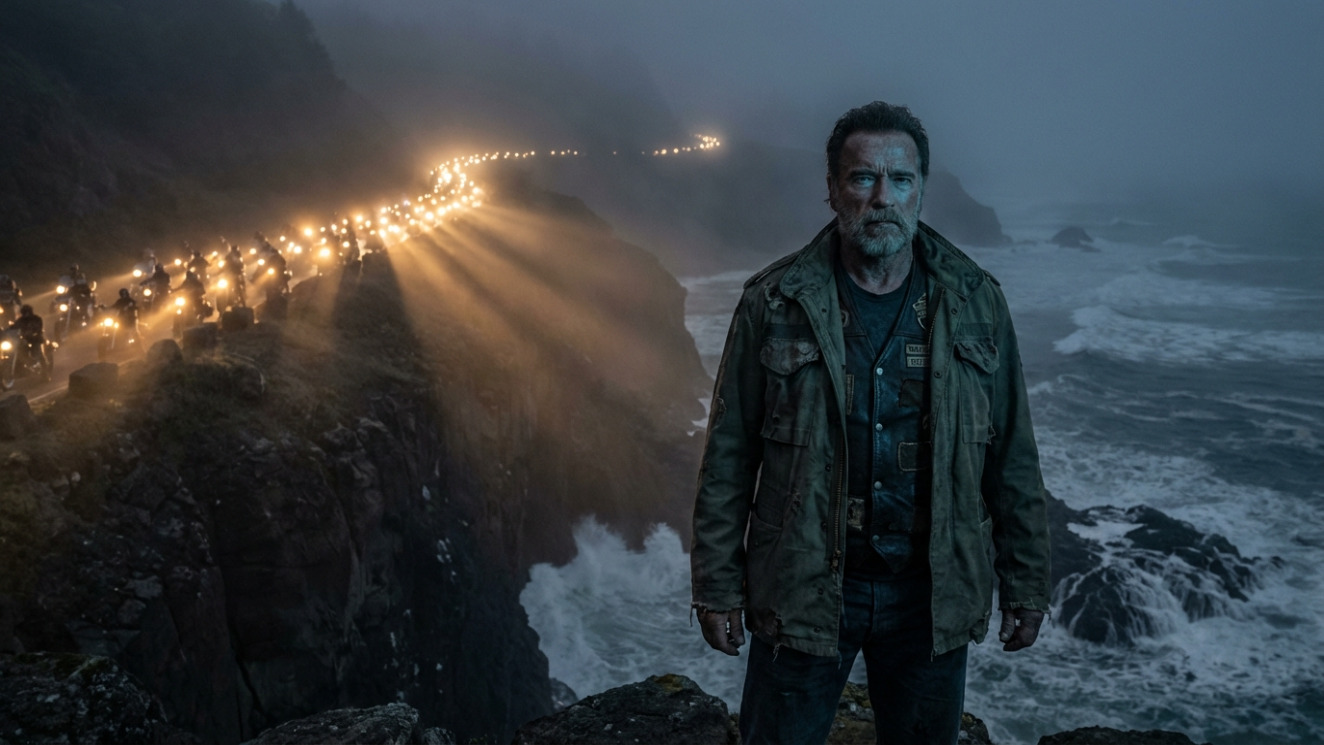
He didn’t head toward his shop. He headed toward the cliffs, toward the place where the road ended and the ocean began. The wind tore at his face, cold and biting, but he didn’t feel it. He only felt the void—the ten-year debt that had finally been called due, and the realization that even a five-hundred-man army couldn’t hold back the tide of the truth.
Chapter 6
The cliffside pull-off was deserted, the air thick with the spray of the Pacific. Mack stood at the edge, the black water churning hundreds of feet below. He thought about how easy it would be to just keep going. To let the bike carry him into the surf, to let the silence finally take him.
But then he thought of Sarge. He thought of the five hundred men sleeping in tents because he’d asked them to. He thought of the town—people who had finally seen that they didn’t have to live under Miller’s thumb.
He realized that his guilt was a form of vanity. He had spent ten years making the story all about his own penance, his own secret, his own cross to bear. He had tried to control the outcome of a tragedy that was beyond his control.
He sat on the ground, leaning against his front tire, and watched the sun crawl up over the pines.
When he rode back into town two hours later, the bikers were already breaking down the camp. There was no fanfare. They were men of action; the job was done, and they had lives to return to.
Sarge was waiting for him at the shop. He was holding a cup of lukewarm coffee.
“”She’s still there,”” Sarge said. “”Elena. She’s been sitting on the porch of the diner since dawn. Just staring at the road.””
“”I have to leave, Sarge,”” Mack said. “”I can’t stay here now.””
“”Maybe,”” Sarge said. “”But you aren’t leaving today. You’ve got five hundred guys who need to be led out of town. And you’ve got a shop full of bikes that won’t fix themselves.””
Mack looked at the older man. “”She hates me, Sarge. She has every right to.””
“”Of course she does. Forgiveness isn’t a gift you get for doing a good deed, Mack. It’s a choice she has to make every single morning for the rest of her life. And she might never make it. But you didn’t build that roof for her forgiveness. You built it because it needed building.””
Mack spent the morning coordinating the departure. He shook hands with men from four states. He thanked Jax, who looked at Mack with a new kind of respect—not for the violence, but for the weight he had carried without breaking.
“”If you ever need a place to ride, Mack,”” Jax said, “”the road’s open.””
“”Thanks, Jax. Keep the boys in line.””
By noon, the roar of the engines had faded into the distance. The town was quiet again, but it was a different kind of quiet. It was the silence of a place that had been scrubbed clean.
Mack walked across the highway. He didn’t go into the diner. He stopped at the edge of the gravel.
Elena was sitting on the top step. The new blue paint of the diner glowed in the afternoon sun. She looked exhausted, her eyes sunken and her skin pale.
“”I’m leaving the shop to Sarge,”” Mack said. “”I’ll be gone by tonight.””
Elena didn’t look at him. She looked at the horizon. “”I went to the bank this morning. I tried to give the money back.””
“”They won’t take it. It’s already been processed. The debt is settled.””
“”I know,”” she said. “”I hate you for that. I hate that I’m sitting in a building that you paid for with the blood of the man I loved.””
“”I know.””
“”But my daughter called me this morning,”” Elena said, her voice trembling. “”She’s graduating from college in June. She told me she was worried about where I’d live if I lost the diner. She told me she wanted to come home and help me run it.””
She finally looked at him. There was no forgiveness in her eyes, but there was a flicker of something else. A weary, practical acceptance.
“”I can’t forgive you, Mack,”” she said. “”Maybe I never will. Every time I see you, I’ll see that explosion. I’ll see the hole in my life.””
“”I understand.””
“”But if you leave… if you run away now… then the only thing left of Elias in this town is a ghost. If you stay… if you keep fixing those bikes… if you keep being the man who stood up to Miller…”” She paused, wiping a tear away with the back of her hand. “”Then at least something good came out of the fire.””
Mack felt a lump in his throat that he couldn’t swallow. “”You want me to stay?””
“”I want you to stop being a ghost,”” she said. “”I want you to be a man. A man who lives with what he did, instead of a man who hides from it.””
She stood up and walked toward the door. Before she went inside, she stopped. “”And Mack?””
“”Yeah?””
“”Don’t send any more money. If you want to help, you pay for your coffee like everyone else. And you leave a decent tip.””
She went inside, the bell jingling as the door closed.
Mack stood in the gravel for a long time. The salt air stung his eyes. He looked at his hands—the grease was already starting to come back, a thin line of black under his nails.
He walked back across the highway to his shop. He picked up a wrench. He didn’t feel light. He didn’t feel redeemed. The weight was still there, and it always would be. But as he started to work on an old, battered engine, the rhythm of the metal on metal felt like a heartbeat.
He wasn’t a hero. He wasn’t a soldier anymore. He was just a man in a small town, trying to build something that wouldn’t break.
And for now, that was enough.”