“Chapter 5: The Aftermath of Thunder
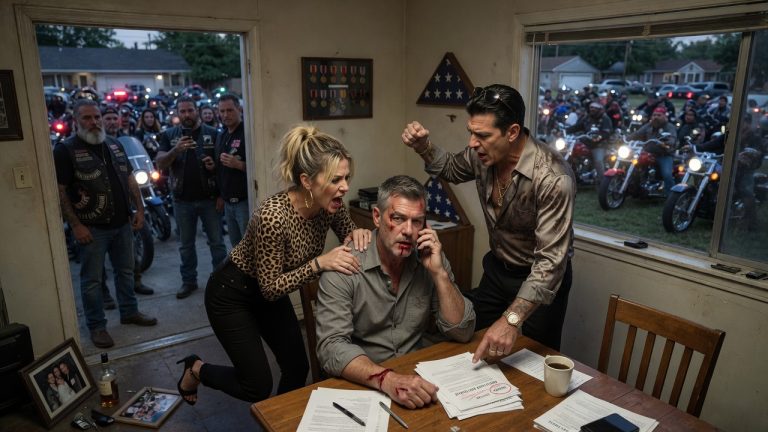
The sun rose over New Orleans with a brutal, unforgiving clarity. By 8:00 AM, the Third Precinct was a hive of activity, but it was a different kind of buzz. The blue uniforms of the State Police were everywhere, their faces grim as they moved through the building, seizing files, hard drives, and the contents of lockers.
Vaughn and Miller had been taken away in the back of a state transport van, their faces shielded from the cameras of the news crews that had swarmed the perimeter. The story was already breaking—a massive corruption scandal involving Internal Affairs and a heroin ring that stretched from the docks to the suburbs.
Captain Thibodeaux sat in his office, the door open for the first time in years. He was being questioned by a young, sharp-eyed attorney from the Department of Justice. He looked tired—older than he had the night before—but there was a peace in his eyes that hadn’t been there for a decade.
Deacon and Cade were at a small, roadside diner ten miles outside the city. It was a place the club had used for years—a “”neutral ground”” where the coffee was strong and the waitresses didn’t ask questions.
The Five Hundred had dispersed into the bayou, melting away like the morning mist. Only Whisper and a few of the old guard remained, sitting at a corner table, their eyes on the door.
Deacon sat across from Cade. They were both eating breakfast—steak and eggs, the kind of meal men eat when they aren’t sure where their next one is coming from.
Cade looked better. He’d cleaned the blood off his face, and the swelling in his eye had gone down. But he was still shaking—a fine, persistent tremor in his hands that he couldn’t quite hide.
“”You really did it, Deac,”” Cade whispered, his voice still raspy. “”You brought the whole house down. I thought I was dead. I really did.””
Deacon pushed a piece of paper across the table. He’d written a message on it.
THE LEDGER IS SAFE. THE FEDS HAVE THE BLUE ACCOUNT. THE CLUB IS CLEAN… FOR NOW.
Cade nodded, a small, sad smile touching his lips. “”For now. But you know how it is. Nature abhors a vacuum. Someone will try to fill the hole Vaughn left. Someone always does.””
He looked out the window at the highway. “”I’m leaving, Deac. I’m heading west. I’ve got a cousin in Arizona who runs a ranch. I’m done with the patch. I’m done with the road.””
Deacon reached out and put his hand over Cade’s. A silent blessing.
“”What about you?”” Cade asked. “”The club… they want you back. Whisper told me. They want the Wall back. They’re talking about making you Vice President.””
Deacon looked at his hands. They were stained with the dust of the precinct and the grease of a hundred machines. He thought about the leather vest, the weight of the patch, and the constant, vibrating roar of the engines.
He picked up the pen and wrote another message.
I’M STICKING WITH THE BROOM.
Cade blinked, confused. “”What? You’re going back to the precinct? After everything?””
Deacon shook his head. He pointed to a small, hand-painted sign on the wall of the diner. JANITOR WANTED. INQUIRE WITHIN.
Cade started to laugh—a deep, genuine sound that turned into a cough. “”A janitor? Here? Deac, you could be a king. You could have whatever you want.””
Deacon picked up the pen one last time.
I LIKE BEING INVISIBLE. YOU SEE MORE THAT WAY.
He stood up and walked to the counter. He pulled a small, silver coin from his pocket—the one with the bridge on it—and laid it on the Formica. He looked at the waitress, a tired-looking woman with a nametag that said MABEL.
He pointed to the coin, then to the sign on the wall.
Mabel looked at the coin, then at Deacon. She saw the scar on his throat, the hard, quiet strength in his eyes, and the way he carried himself like a man who had already survived the worst the world could throw at him.
“”You looking for the job, honey?”” she asked, her voice softening.
Deacon nodded once.
“”Can you start now?”” she asked, gesturing to a spill near the coffee station. “”The morning rush just hit, and the boys are making a mess.””
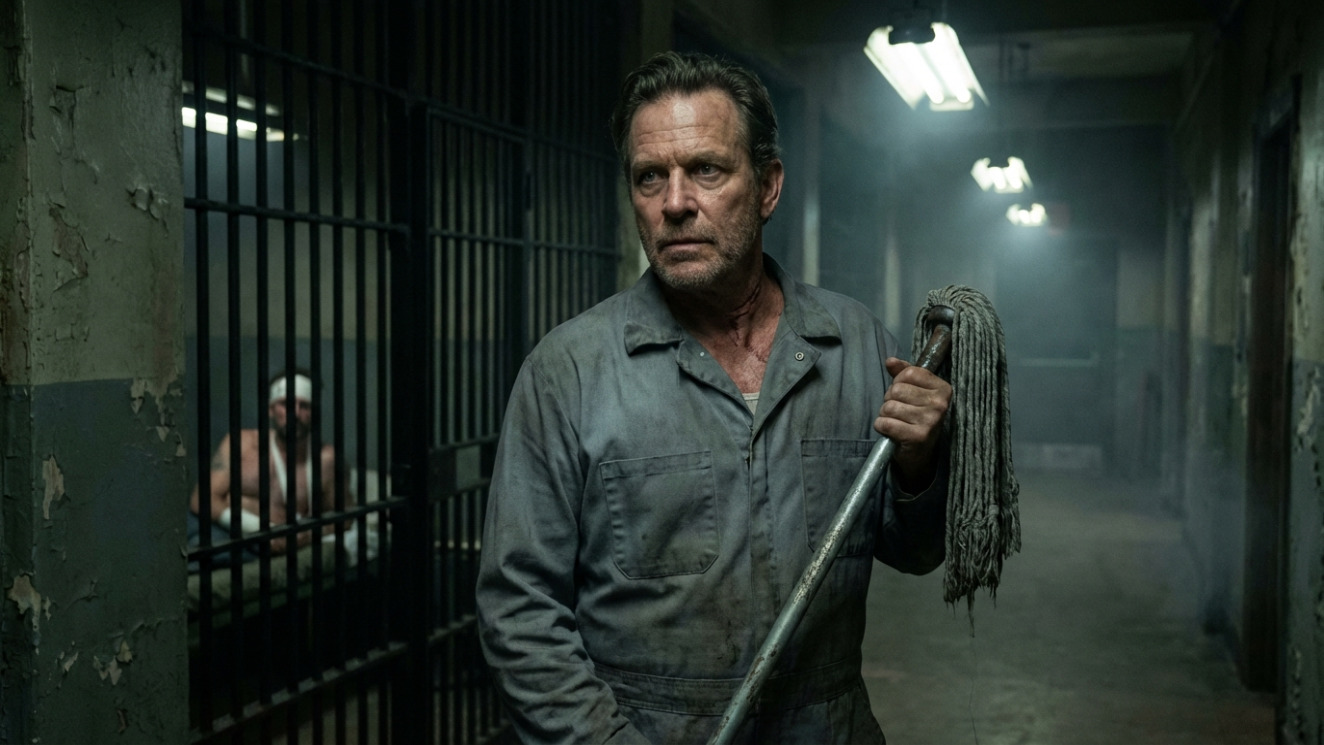
Deacon didn’t say a word. He walked behind the counter, grabbed a mop and a bucket, and started to work.
Outside, the sun was high and hot, baking the Louisiana soil. The roar of the Five Hundred had faded into a memory, a ghost of thunder that would haunt the city for a long time to come.
But in the quiet of the diner, the only sound was the rhythmic, high-pitched protest of a mop bucket’s wheels.
Deacon Cross was back in his element. He was invisible. He was silent. And he was watching.
Because in a world full of noise, the man who listens is the only one who truly knows the score.
Chapter 6: The Quiet King of the Dust
Six months later, the Third Precinct scandal had faded from the headlines, replaced by the usual churn of local politics and sports. Detective Vaughn was serving twenty years in a federal penitentiary, and Miller had turned state’s evidence, trading his partners for a reduced sentence.
Captain Thibodeaux had retired to a small house in the Garden District. He spent his days sitting on his porch, drinking iced tea and watching the streetcars go by. He occasionally got a visit from a massive man in a grey work shirt, who would help him fix a leaky faucet or trim the hedges. They never spoke, but they understood each other perfectly.
At the roadside diner, the “”Janitor”” had become a local legend. The regulars knew him as “”The Mute,”” a man who never said a word but who always seemed to know when someone needed a refill or a kind word. He was the one who kept the place spotless, the one who fixed the broken neon sign, and the one who made sure the stray dogs in the parking lot never went hungry.
One evening, a young man walked into the diner. He was wearing a new, stiff leather vest with a “”Five Hundred”” patch on the back. He looked nervous, his eyes darting around the room as if he were looking for something he was afraid to find.
He saw Deacon mopping the floor in the back. He walked over, his boots clicking on the linoleum.
“”Excuse me,”” the young man said, his voice cracking slightly. “”I’m looking for a man named Cross. They told me I could find him here.””
Deacon didn’t look up. He kept mopping, the cotton head moving in wide, rhythmic figure-eights.
“”I’m the new Enforcer for the New Orleans chapter,”” the young man continued, trying to sound more confident than he felt. “”The President sent me. He wants to know if… if you’re coming to the rally tonight. It’s the anniversary of the Bridge.””
Deacon stopped. He leaned on the mop handle and looked the young man in the eye. He saw the hunger there—the desire to be part of something bigger, the need for the myth. He also saw the fear—the realization that the patch came with a price that most men couldn’t afford to pay.
Deacon reached into his pocket and pulled out a small, battered silver coin. He held it up for the young man to see.
The Enforcer’s eyes widened. “”The Bridge Coin. They said you had one.””
Deacon tossed the coin onto the floor. It landed in the center of the wet patch he’d just cleaned, the silver glinting in the fluorescent light.
He pointed to the coin, then to the door.
“”You… you want me to leave?”” the young man asked, confused.
Deacon didn’t respond. He just picked up his mop and started to clean around the coin.
The young man stood there for a moment, looking at the coin, then at the man in the grey work shirt. He realized, with a sudden, sharp clarity, that he was looking at the ghost of a king. A man who had seen the throne and decided the dust was more honest.
He reached down, picked up the coin, and tucked it into his pocket. He nodded once, a gesture of respect that went deeper than words.
“”Understood,”” he whispered.
The young man turned and walked out of the diner. A few seconds later, the roar of a single Harley engine echoed through the parking lot, then faded into the distance.
Deacon watched him go. He thought about the Five Hundred, the bridge, and the fifteen years of silence that had led him to this moment.
He felt a sudden, sharp pang of loneliness, a reminder of the life he’d left behind. But then he looked around the diner—at the people eating their dinner, the waitresses laughing behind the counter, and the quiet, simple dignity of a floor well-cleaned.
He reached up and touched the scar on his throat. It didn’t hurt anymore. It was just a mark, a record of a debt that had been paid in full.
He went back to work. He moved the bucket down the hall, the wheels squeaking—a rhythmic, high-pitched protest that echoed off the linoleum.
He was the janitor. He was the ghost. He was the king of the dust.
And in the humid, heavy air of Louisiana, that was more than enough.
The sun set over the bayou, casting long, dark shadows across the road. The world was full of noise—of engines, of arguments, of secrets and lies. But in the small, roadside diner, there was only the sound of a mop hitting the floor.
It was a beautiful sound.
It was the sound of a man who had finally found his voice.
And he didn’t have to say a single word.”