“Chapter 5: The Moral Compass
Dutch returned to Eli’s cabin with his boots caked in red clay. Skeeter was waiting there, sitting on his bike, looking nervous.
“Dutch, we got a problem,” Skeeter said. “Vane knows you’ve been poking around. He’s calling in favors. The Sheriff is coming for you tomorrow morning. Parole violation. They’re going to say you were seen with known criminals—namely, me.”
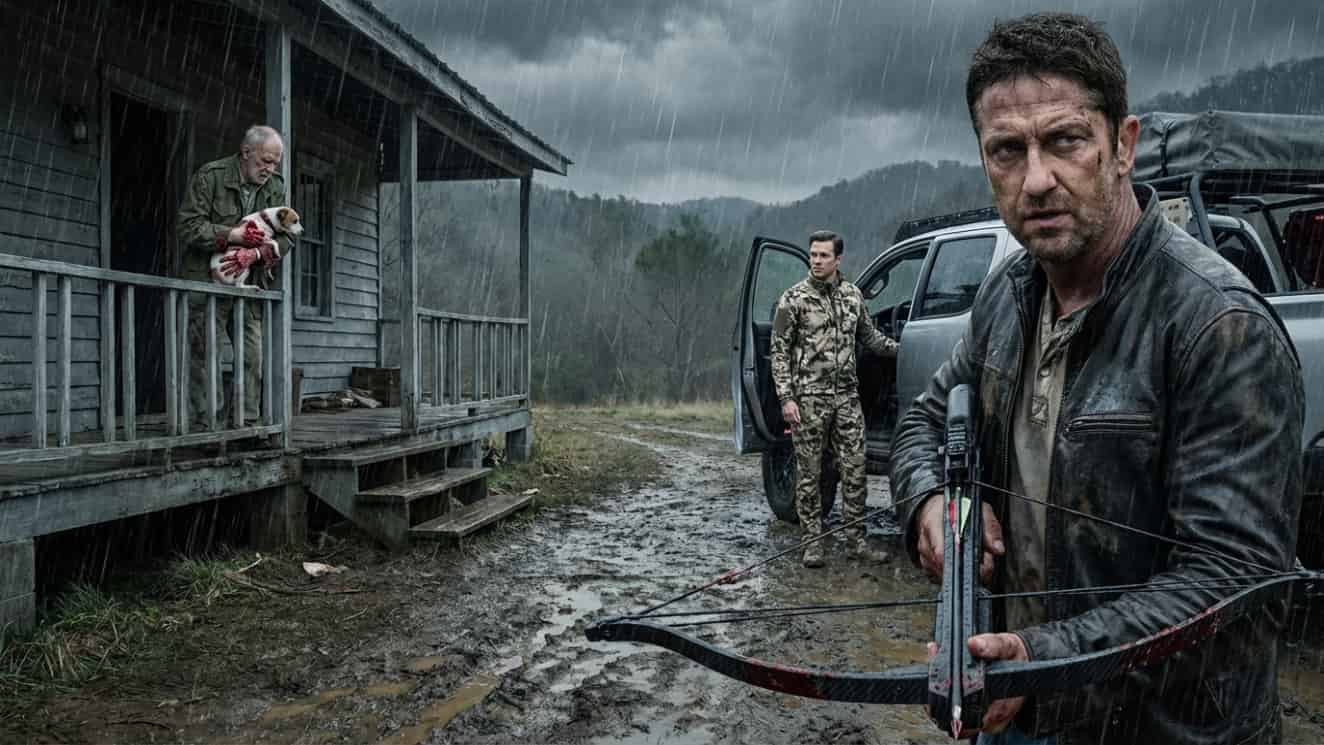
Dutch looked at the cabin. He looked at Lucky, who was finally standing on three legs, wagging his tail weakly at the sight of Dutch.
“He’s going to put me back,” Dutch said.
“Unless we go to his house tonight,” Skeeter said, his hand drifting toward the knife on his hip. “We take the boys. We burn that estate to the ground. We leave Vane in the ashes. It’s an eye for an eye, Dutch. That’s the code.”
Dutch looked at the Silver Star sitting on the kitchen table. He thought about the ten years he’d lost. He thought about the cold, hard man he’d become in prison. If he went to Vane’s house with a gun, he was proving the state right. He was proving Julian Vane right. He would be the monster they said he was.
“No,” Dutch said.
“No?” Skeeter spat. “The man ruined you! He shot the dog! He’s trying to bury Eli!”
“He wants me to be a killer,” Dutch said. “Because a killer is easy to lock away. But a man with the truth? That’s a different kind of problem.”
Dutch turned to Eli. “I need you to do something, Eli. I need you to put on that field coat. I need you to take that medal. And I need you to tell the story—not to a judge, but to the town.”
“They won’t listen,” Eli whispered.
“They will if they see what’s happening in the North Woods,” Dutch said. “Vane isn’t just a liar. He’s a thief. He’s stealing the mountain from under their feet.”
That night, Dutch didn’t take a gun. He took a camera and the ledger. He and Skeeter moved through the woods like ghosts, bypassing the guards, reaching the main transformer that powered Vane’s illegal logging camp.
Dutch didn’t blow it up. He just waited.
When the sun began to peek over the ridges, Vane arrived in his silver truck. He looked triumphant. He had the Sheriff with him. They were there to oversee the final clear-cut of the old-growth oak—the centerpiece of Vane’s latest contract.
Dutch stepped out from behind a tree. He was holding the ledger.
“Morning, Julian,” Dutch said.
Vane stopped, his hand going to his holster. The Sheriff, a man named Miller who looked like he’d rather be anywhere else, pulled his service weapon.
“Dutch Van Owen,” the Sheriff said. “You’re under arrest. Get on the ground.”
“You might want to read this first, Miller,” Dutch said, tossing the ledger into the dirt between them. “Check page forty-two. There’s a list of payments to a ‘Sheriff M.’ for the month of August. Seems you’ve been underpaid lately.”
The Sheriff froze. Vane’s face went from arrogant to ashen in a heartbeat.
“He’s lying!” Vane shouted. “He stole that! It’s forged!”
“Maybe,” Dutch said. “But the drones Skeeter just flew over your property aren’t lying. The footage of the illegal logging is already on its way to the State Forestry Division. And the footage of you shooting that dog? That’s going to the local news.”
Chapter 6: The Debt Paid
The fallout wasn’t immediate, but it was absolute.
The Sheriff, seeing the ship sinking, took the ledger and turned state’s evidence within forty-eight hours. The Forestry Division moved in with federal marshals, seizing Vane’s equipment and freezing his accounts. The “”Great Man”” was reduced to a man in a cheap suit, standing in front of a series of microphones, trying to explain why he was stealing from the very community that had supported his family for generations.
But the real blow came on the Sunday after the arrests.
Eli stood on the steps of the county courthouse. He wasn’t alone. He had Lucky on a leash, and he had the Silver Star pinned to his chest. Behind him stood Dutch, quiet and still, a shadow that refused to disappear.
Eli didn’t give a speech. He just told the truth. He told them how he’d been scared. He told them how Julian Vane had used his father’s sacrifice as a weapon. And he told them that Dutch Van Owen was an innocent man.
The town didn’t cheer. They watched in a heavy, shameful silence. They had all known, on some level, that Vane was a snake. They had just been too comfortable to notice the bite.
A month later, Dutch sat on Eli’s porch. The rain had stopped, and the air was filled with the scent of damp pine and woodsmoke. Lucky was sleeping in a patch of sunlight, his wound healed into a jagged scar that would always be there.
“You’re leaving,” Eli said, watching Dutch pack a small saddlebag on his bike.
“I have to,” Dutch said. “The city is where the parole office is. And I’ve got ten years of life to go find.”
“You could stay,” Eli said. “The cabin needs work. I’m not getting any younger.”
Dutch looked at the old man. The shame was gone from Eli’s eyes, replaced by a quiet peace. The debt had been paid—not in blood, but in the restoration of a man’s dignity.
“I’ll come back for the hunting season,” Dutch said, a small, rare smile touching his lips. “But keep the dog inside. I don’t want to have to chase down any more bolts.”
Dutch kicked the Shovelhead to life. The engine roared, a powerful, healthy sound that echoed off the ridges. He didn’t look back as he rode down the drive. He didn’t need to.
He wasn’t a ghost anymore. He wasn’t a convict. He was just a man riding toward a horizon that was finally wide enough to hold him.
The mountain stayed behind, scarred but standing. And in the silence of the holler, the only sound left was the slow, steady rhythm of a veteran’s rocking chair, moving in time with the world.”