“Chapter 5: The Reckoning at High Ridge
The fire started in the kitchen, but it loved the cedar walls.
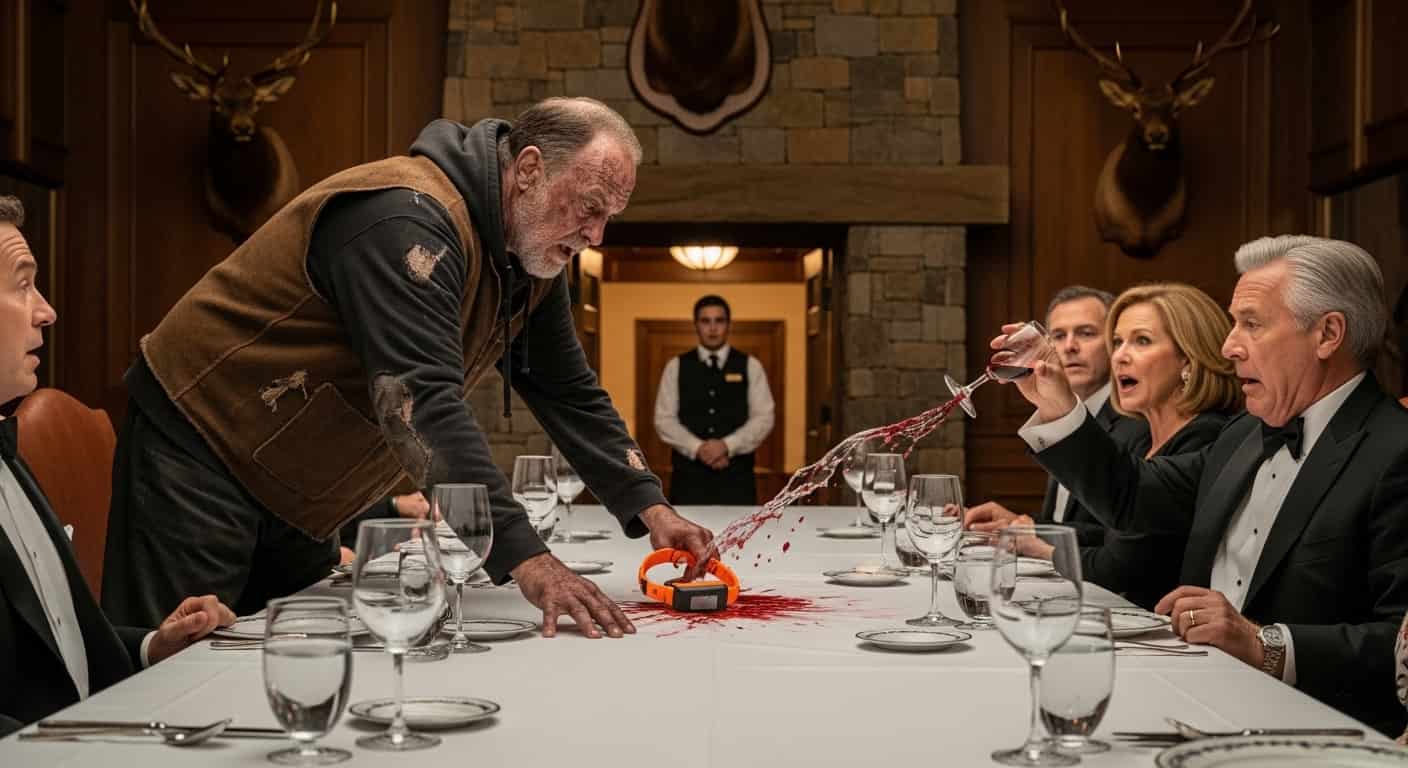
Steel stood on the lawn as the first orange flickers began to lick the underside of the lodge’s eaves. The guests were pouring out now, shouting, their expensive clothes smelling of smoke. Thorne was among them, screaming at his phone, his face contorted in a mask of impotent rage.
“”You’re dead!”” Thorne shouted, seeing Steel leaning against his bike. “”I’ll see you rot in a cage for this!””
“”The cage is already full, Vance,”” Steel said, tapping his chest. He coughed, and this time, the blood stayed on his hand. He didn’t wipe it. He showed it to Thorne. “”See this? This is what’s left of me. I’ve got maybe a week. You think I care about a cage?””
The fire roared louder. The trophies on the walls inside—the elk, the deer, the pride of the club—were being reclaimed by the heat.
“”Why?”” Thorne asked, his voice cracking as the reality of his loss sank in. “”Over a dog? Over three acres of dirt?””
“”Over the way you look at people,”” Steel said. “”You think because you have a name, you get to choose who matters. You don’t. You’re just a man with a match-head soul, and I’m the wind.””
Steel kicked the Harley over. He looked at the burning lodge—the symbol of everything that thought it was better than the dirt it sat on.
“”Tell the Sheriff I’ll be at my cabin,”” Steel said. “”If I’m still breathing when he gets there.””
He rode away. He didn’t go home. He rode to the top of the ridge, the place where they’d shot Daisy. He sat there in the dark, watching the glow of the fire in the valley. It was a beautiful, terrible light.
Chapter 6: No Peace for the Cruel
The morning was gray and silent. The snow had started to fall, a light dusting that covered the black scars of the fire.
Steel sat on his porch. Elias was there, sitting in the chair next to him. Daisy was at his feet, her head resting on her paws, her ears twitching at the sound of a distant bird.
“”They’re gone,”” Elias said. “”Thorne’s lawyers called this morning. They’re dropping the land claim. He’s got bigger problems. The insurance company found the accelerant. And they found the logs of those GPS collars. Turns out they were tracking more than just dogs. They were tracking the park ranger’s movements too. Privacy laws are a bitch for men like him.””
Steel nodded. He felt light. Every breath was still a battle, but the weight in his chest—the old, heavy weight of the Disciples and his father and the things he’d done—was gone.
“”You should go, Elias,”” Steel said. “”The Sheriff’ll be here soon.””
“”I’m staying,”” Elias said.
“”No. Go home. Take the dog.”” Steel looked at Daisy. She looked up at him, her tail giving a single, hesitant thump against the wood. “”She deserves a quiet day.””
Elias looked at Steel for a long time. He saw the gray in his skin and the way his hands were finally still. He stood up, whistled for Daisy, and walked down the drive. He didn’t say goodbye. In the woods, you don’t say goodbye to things that are already gone.
Steel reached into his pocket and pulled out a small, crumpled photo. It was Sarah, ten years ago, at her high school graduation. He’d watched it from the parking lot, never going inside.
He picked up his phone. He dialed the number he’d memorized weeks ago.
It rang three times.
“”Hello?”” A woman’s voice. Strong. Nervous.
“”Sarah,”” Steel said. His voice was a ghost.
There was a long silence on the other end. He could hear her breathing. “”Dad?””
“”I can’t make the wedding, honey,”” he said. He closed his eyes. The light was fading over the ridge. “”But I wanted you to know… I finally finished my work.””
“”Dad, what’s happening? Where are you?””
“”I’m home,”” he said. “”I’m just… I’m going to take a nap now. You be happy. You hear me? You be better than the rest of us.””
“”Dad—””
He set the phone down on the table. He didn’t hang up. He wanted to hear the sound of her voice as he drifted. It was a beautiful sound. It was the only thing in his life that hadn’t been earned with a fist or a flame.
The sirens were coming. He could hear them far off, echoing through the pines. But they were slow. The world was slow.
Steel Rossi leaned his head back against the cedar siding. The air smelled of winter and pine and the distant, fading scent of a fire that had done its job. He closed his eyes and, for the first time in sixty years, he wasn’t afraid of the dark.”