“Chapter 5: The Mountain Law
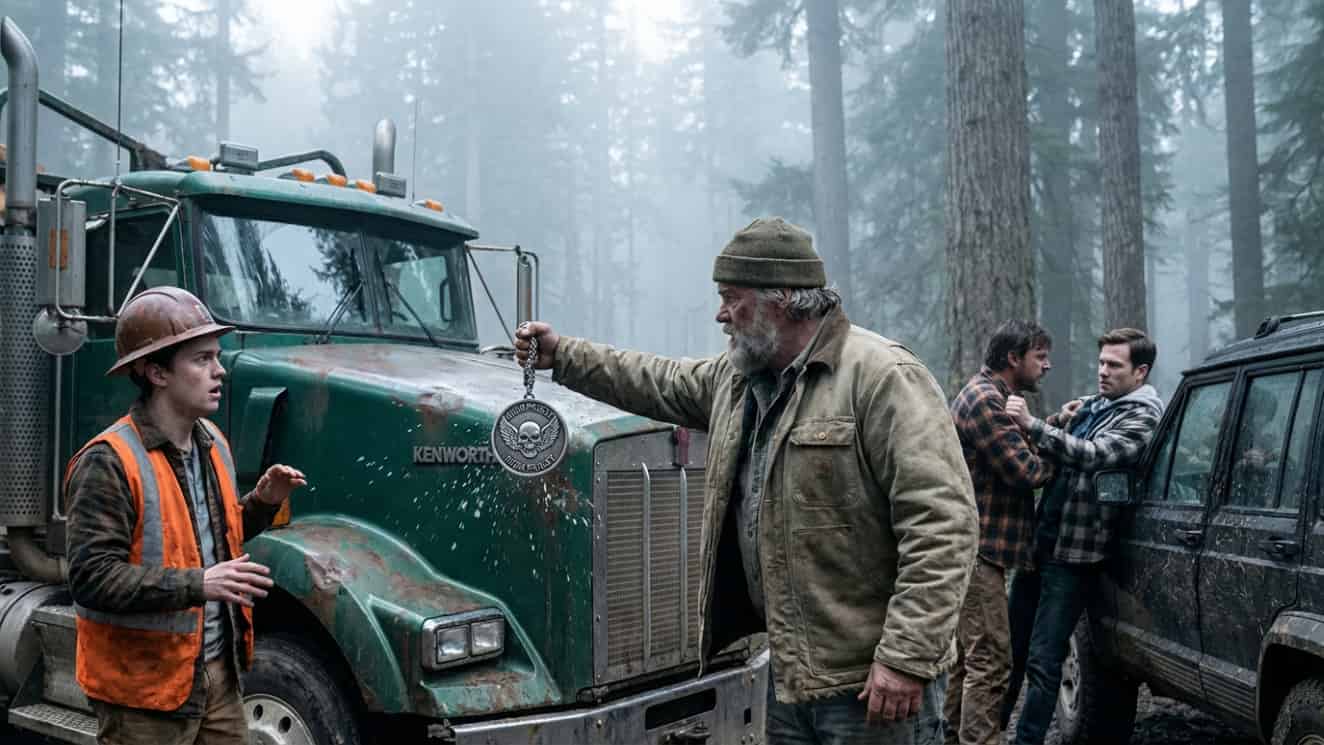
The clearing was a sea of black leather and cold steel. Five hundred bikers sat like statues on their machines, their eyes fixed on the six men in tactical gear. The loggers looked like children caught playing with matches. The rifles that had looked so intimidating a moment ago were now dangling at their sides, useless against the sheer scale of the brotherhood.
“”Where is he?”” I asked, walking toward Cutter. Each step was an agony in my joints, but I felt ten feet tall.
Cutter swallowed hard. “”He’s… he’s at the Ashford garage. My dad’s head of security has him. They were just gonna scare him, Grizzly! I swear!””
“”Scaring him was your first mistake,”” I said. I reached out and grabbed Cutter by the throat, pulling him close. “”Scaring me was your second.””
Vance stepped up beside me. “”What’s the call, High Priest? The ledger is open. You want the trucks in the ravine? You want the boys to take a walk into the deep woods and not come back?””
The loggers went pale. Miller, the one who knew the stories, actually dropped to his knees. “”Please,”” he whispered. “”I told him not to do it. I told him who you were.””
I looked at the men, then at the logging trucks. These weren’t soldiers. They were bullies who had never been told ‘no’ by someone who could back it up. I could feel the old rage—the “”High Priest”” darkness—tempting me to let Vance’s boys loose. It would be so easy. A few minutes of chaos, and the problem of the logging company would be gone forever.
But then I saw Ben’s face in my mind. Those blue eyes. He was looking for a hero, not a murderer. He was looking for the man his grandmother had promised him existed.
“”No,”” I said. “”No blood today. Not yet.””
Vance raised an eyebrow. “”You’re getting soft in your old age, Grizzly.””
“”I’m getting smart,”” I said. I turned back to Cutter. “”You’re going to get on your radio. You’re going to tell your people to bring Ben here. Right now. If there is a single scratch on him, I’m going to let these five hundred men dismantle your father’s company, piece by rusted piece, starting with your house.””
Cutter didn’t hesitate. He grabbed the radio from his belt, his hands trembling so much he almost dropped it. “”Bring him back! Bring the kid to the Outpost now! Don’t touch him, just get him here!””
We waited. For twenty minutes, the only sound was the wind in the trees and the occasional metallic click of a cooling engine. The bikers didn’t talk. They didn’t smoke. They just watched. It was the most terrifying display of discipline I’d ever seen, and I’d served in the 10th Mountain.
Finally, a black SUV sped up the drive. Two men in suits stepped out, looking confused and then instantly horrified as they saw the army of leather surrounding the cabin. They opened the back door, and Ben stepped out.
He looked shaken, his hair messy and his jacket torn, but he was standing tall. When he saw the bikes, his jaw dropped. He looked at the sea of men, then at Vance, and finally at me, standing at the front of the line in my old, dusty vest.
“”Grandpa?”” he whispered.
The word rippled through the bikers. I saw a few of the older guys—men who had ridden with me in the eighties—nod slowly. The “”Blood Day”” wasn’t just about a debt anymore. It was about a legacy.
Ben ran to me. I didn’t think I was a hugging man, but when he threw his arms around me, I held on like I was drowning.
“”I’m okay,”” he said into my shoulder. “”They didn’t do anything. They just kept asking about you. About who you were.””
I pulled back and looked at him. “”You okay, kid?””
“”I am now,”” he said. He looked at the silver medallion still clutched in my hand. “”That thing… it’s not just a souvenir, is it?””
“”It’s a promise,”” I said.
I turned to Vance. “”Take them to the highway. Make sure they keep driving until they hit the county line. Tell Cutter’s father that the Outpost is closed to his kind. Permanently.””
Vance grinned, a wolfish expression. “”With pleasure.””
He turned to his men and gave a sharp whistle. The five hundred engines roared back to life at once, a sound that shook the very foundation of the cabin. They circled the trucks and the SUV, forming a massive, growling escort that forced them back down the drive.
Within minutes, the clearing was quiet again, save for Vance and a few of the senior members.
“”You’re coming back to the city, Grizz?”” Vance asked, leaning on his bike. “”The club’s missed its High Priest.””
I looked at the cabin, then at the fog-covered peaks, and finally at Ben.
“”No,”” I said. “”I think I’ve spent enough time in the dark. I’ve got some stories to tell my grandson. And I think we’ve got some letters to answer.””
Vance nodded, tapped his helmet, and kicked his bike into gear. “”Stay safe, Thomas. The mountain’s yours again.””
Chapter 6: The Long Line of Chrome
The morning after the bikes left, the mountain felt different. The fog was still there, but it didn’t feel like a shroud anymore. It felt like a curtain.
Ben and I sat on the porch, two mugs of that battery-terminal coffee between us. He had his grandmother’s cedar box on his lap, filled with the yellowed envelopes I’d sent from a dozen different roadside stops during my years on the run.
“”She never stopped talking about you,”” Ben said, tracing the handwriting on one of the letters. “”Even when the family told her to let it go. Even when the Army sent those papers saying you were… well, you know.””
“”A traitor,”” I said. The word didn’t sting as much as it used to. “”The man who betrayed me, Ben… your other grandfather. Colonel Miller. He was my CO. He was the one who set up the fuel ring. I was just the sergeant who didn’t know when to keep his mouth shut.””
Ben looked up, his eyes sharp. “”I know. I found his journals. Before he died last year, he wrote it all down. He felt guilty. That’s why I came looking for you. I wanted to give you the proof.””
He reached into his bag and pulled out a small, leather-bound book. He opened it to a marked page. There it was—a full confession, signed and notarized, detailing the frame-up.
I stared at the ink. Thirty years of hiding. Thirty years of being a ghost. And the truth had been sitting in a dead man’s drawer all along.
“”Why didn’t you go to the authorities?”” I asked.
“”I didn’t know if you were alive,”” Ben said. “”And I didn’t know if you’d want the truth out. But after last night… seeing those men come for you… I realized you already have a family. A different kind, maybe, but they didn’t need a journal to know you were a good man.””
I looked out at the road. The logging company had officially pulled their equipment out at dawn. Cutter’s father had issued a brief statement about “”environmental concerns,”” but we all knew the truth. Five hundred bikers are a lot harder to lobby than a county commissioner.
“”What are you going to do now?”” Ben asked.
I stood up, my joints still aching but my heart feeling lighter than it had since 1994. I looked at the old leather vest hanging on the porch rail.
“”I’m going to take a ride,”” I said. “”I’ve got a bike in the shed that hasn’t seen the sun in a decade. I think it’s time to see if the road still remembers me.””
“”Can I come?”” Ben asked.
I looked at him—the grandson I never knew I had, the boy who had risked everything to find a man the world had forgotten.
“”You ever ridden a Harley, kid?””
“”No,”” he said, grinning.
“”Well,”” I said, grabbing my keys. “”Then you’d better hold on tight. The High Priest has a lot of ground to cover.””
We spent the afternoon working on the old shovelhead. We cleaned the carb, changed the oil, and polished the chrome until it shone like a mirror. When the engine finally turned over, a deep, rhythmic thrum that echoed through the trees, it felt like the mountain itself was breathing again.
As we rode down the pass, the sun finally breaking through the clouds to hit the towering firs, I looked in the rearview mirror. Ben was behind me, his orange parka a bright spark against the green.
I wasn’t a ghost anymore. I wasn’t a traitor. I was just a man on a road, heading toward a future that was no longer a secret.
The High Priest was back. But this time, he wasn’t looking for judgment. He was just looking for home.”