PART 1
CHAPTER 1
The lunchroom hummed with the aggressive energy of three thousand high schoolers. It was the standard ecosystem: cliques formed islands, social outcasts drifted in the shallows, and the noise was a physical wall. I was at the center table, right next to Brad, who was currently holding court as the varsity quarterback and undisputed king of our social hierarchy.
“Look at this ghost,” Brad sneered. He wasn’t talking to me; he was talking through me, projecting his voice for the surrounding tables.
I looked up from my lukewarm tater tots just in time to see Silas.
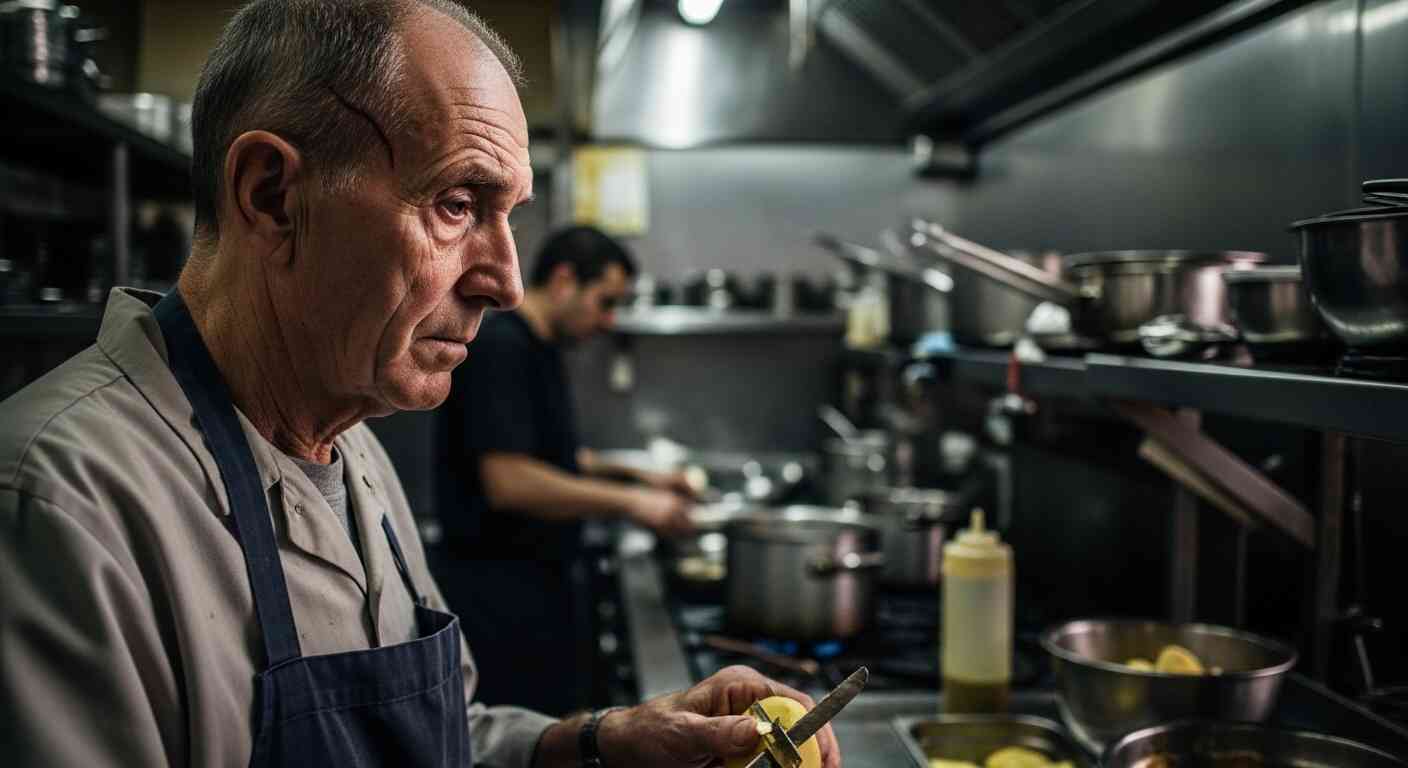
Silas was the quietest human being I’d ever met. He was sixty-something, wire-thin, with skin like cracked leather and a gaze that always seemed focused on something twenty miles past the wall. He was our school’s floating custodian, a veteran of some war nobody bothered to ask about. He moved with a subtle, efficient grace that only I, with my useless obsession with martial arts films, seemed to notice. To everyone else, he was furniture.
Silas was walking past our table, pushing a grey cart loaded with trash.
Brad, motivated by a toxic cocktail of adrenaline from morning practice and a desperate need for a laugh from his sycophants, stood up. He didn’t just stand; he performed.
He stepped right into Silas’s path. Silas stopped instantly, his cart halting with mechanical precision.
“You dropped something, Pops,” Brad said, his smile full of teeth.
There was nothing on the floor.
Silas said nothing. He simply waited. His quiet tolerance was what enraged Brad the most. Brad needed a reaction. He needed resistance to feel powerful. He got nothing but a calm, patient stare.
Brad’s eyes flashed. He lifted his massive Nikes and drove them down, hard, right onto the edge of an abandoned lunch tray sitting on Silas’s cart.
The physics was instantaneous. The tray flipped. Half-eaten chili, an untouched milk carton, and a sloppy pile of green beans flew upward in a disgusting arc, showering the front of Silas’s faded grey coveralls. The metal tray clattered loudly onto the linoleum.
The lunchroom went silent.
Silas stood there, Chili dripping slowly off his shoulder. He didn’t flinch. He didn’t raise his hands. He just looked at Brad, and in that moment, I saw something in the old man’s eyes that wasn’t fear. It wasn’t even anger. It was a cold, calculating analysis. He looked like he was dissecting Brad with his mind.
Brad, feeling the silence, doubled down. “Oops. You missed a spot, old timer. Looks like you got a messy afternoon.”
One of Brad’s sycophants, a scrawny junior named Leo, laughed, but it was nervous. The atmosphere had changed. The casual cruelty had crossed a line, leaving a bad taste even in the mouths of those who usually cheered it on.
Silas quietly pulled a rag from his pocket and began to wipe the chili from his front, unbothered.
That was too much for Brad. He needed to own the moment. He turned his predatory smile on me.
“And look at you,” Brad said, grabbing me by the shoulder. “My loyal assistant. Why don’t you help him? In fact, why don’t you do his job? Clean that up, ghost. I want this floor spotless. Show the old man how we do it.”
It was a test. A public humiliation designed to make me choose. I looked at Brad’s grip on my shoulder, at his challenging sneer. I looked at the mess on the floor, and I looked at Silas, who was still calmly wiping his coveralls, watching me.
I could refuse. I could walk away. I would be ostracized, my social capital erased, and Brad would make the next two years a living hell. Or I could comply. I could kneel on that sticky, chili-covered floor and do as I was told, accepting my place at his feet.
I looked down at the puddle of chili. I felt the heat rising in my face. I knew what I was going to do, and I hated myself for it. I was weak. I was afraid. And Brad knew it.
FULL STORY
CHAPTER 1 (Repeat of Facebook Chapter for Part 1 output)
The lunchroom hummed with the aggressive energy of three thousand high schoolers. It was the standard ecosystem: cliques formed islands, social outcasts drifted in the shallows, and the noise was a physical wall. I was at the center table, right next to Brad, who was currently holding court as the varsity quarterback and undisputed king of our social hierarchy.
“Look at this ghost,” Brad sneered. He wasn’t talking to me; he was talking through me, projecting his voice for the surrounding tables.
I looked up from my lukewarm tater tots just in time to see Silas.
Silas was the quietest human being I’d ever met. He was sixty-something, wire-thin, with skin like cracked leather and a gaze that always seemed focused on something twenty miles past the wall. He was our school’s floating custodian, a veteran of some war nobody bothered to ask about. He moved with a subtle, efficient grace that only I, with my useless obsession with martial arts films, seemed to notice. To everyone else, he was furniture.
Silas was walking past our table, pushing a grey cart loaded with trash.
Brad, motivated by a toxic cocktail of adrenaline from morning practice and a desperate need for a laugh from his sycophants, stood up. He didn’t just stand; he performed.
He stepped right into Silas’s path. Silas stopped instantly, his cart halting with mechanical precision.
“You dropped something, Pops,” Brad said, his smile full of teeth.
There was nothing on the floor.
Silas said nothing. He simply waited. His quiet tolerance was what enraged Brad the most. Brad needed a reaction. He needed resistance to feel powerful. He got nothing but a calm, patient stare.
Brad’s eyes flashed. He lifted his massive Nikes and drove them down, hard, right onto the edge of an abandoned lunch tray sitting on Silas’s cart.
The physics was instantaneous. The tray flipped. Half-eaten chili, an untouched milk carton, and a sloppy pile of green beans flew upward in a disgusting arc, showering the front of Silas’s faded grey coveralls. The metal tray clattered loudly onto the linoleum.
The lunchroom went silent.
Silas stood there, Chili dripping slowly off his shoulder. He didn’t flinch. He didn’t raise his hands. He just looked at Brad, and in that moment, I saw something in the old man’s eyes that wasn’t fear. It wasn’t even anger. It was a cold, calculating analysis. He looked like he was dissecting Brad with his mind.
Brad, feeling the silence, doubled down. “Oops. You missed a spot, old timer. Looks like you got a messy afternoon.”
One of Brad’s sycophants, a scrawny junior named Leo, laughed, but it was nervous. The atmosphere had changed. The casual cruelty had crossed a line, leaving a bad taste even in the mouths of those who usually cheered it on.
Silas quietly pulled a rag from his pocket and began to wipe the chili from his front, unbothered.
That was too much for Brad. He needed to own the moment. He turned his predatory smile on me.
“And look at you,” Brad said, grabbing me by the shoulder. “My loyal assistant. Why don’t you help him? In fact, why don’t you do his job? Clean that up, ghost. I want this floor spotless. Show the old man how we do it.”
It was a test. A public humiliation designed to make me choose. I looked at Brad’s grip on my shoulder, at his challenging sneer. I looked at the mess on the floor, and I looked at Silas, who was still calmly wiping his coveralls, watching me.
I could refuse. I could walk away. I would be ostracized, my social capital erased, and Brad would make the next two years a living hell. Or I could comply. I could kneel on that sticky, chili-covered floor and do as I was told, accepting my place at his feet.
I looked down at the puddle of chili. I felt the heat rising in my face. I knew what I was going to do, and I hated myself for it. I was weak. I was afraid. And Brad knew it.
CHAPTER 2
The chili was cold, greasy, and smelled like regret.
I was on my knees, a wad of thin, brown paper towels already disintegrating in my hand, desperately wiping the floor. Every movement felt like an admission of defeat. I could feel the collective gaze of the cafeteria—some mocking, some pitiful, all burning into my back. Above me, Brad was making a show of inspecting my work, his Nike sneaker just inches from my hand.
Silas hadn’t said a word. He’d gone back to the other side of his cart, retrieving the metal tray with a calm efficiency that was infuriating. Why wasn’t he angry? Why wasn’t he fighting? He’d served in a war, for Christ’s sake, and he was letting a seventeen-year-old bully treat him like garbage.
My hand was trembling as I scooped up the last glob of chili. When I looked up, I met Silas’s eyes again. He wasn’t looking at the floor or at my pathetic efforts. He was looking at Brad. It was that same gaze—flat, analytical, and unsettlingly cold. In any other setting, I might have found it reassuring. Here, it just felt like he was cataloging a future victim.
“You’re making a spectacle of yourself, Bradley,” a voice said, low and dangerous.
We all froze. Even Brad stopped preening. Standing right behind him was Mrs. Henderson, the assistant principal who ran the school’s discipline with an iron fist. She was in her late fifties, with graying hair pulled back into a bun so tight it seemed to pull her skin back. She didn’t have kids, and rumor was she slept with a ruler and an attendance sheet.
Brad’s arrogance evaporated instantly. “Just helping the old timer out, Mrs. Henderson. The guy… dropped something.”
Mrs. Henderson looked from Brad to Silas (still calm, though now smelling strongly of chili) to me (still kneeling on the floor like a medieval peasant). Her gaze settled on me.
“You,” she said, her voice like a whip. “Get up. The custodian’s cart is not a charity event. And you,” she turned to Brad, “my office. Now.”
The cafeteria exploded into whispers as Brad was marched away. Leo, his sycophant, immediately tried to disappear into the crowd. I stood up, my knees stiff, my soul crushed. I tried not to look at Silas as I scrambled back to the table, but I felt his gaze following me.
The rest of the day was a blur of humiliation. Brad got detention, which he’d wear as a badge of honor. I got… I got nothing. Just the memory of my weakness and the smell of chili that I couldn’t seem to wash off my hands.
After school, I was the last one to leave the locker room, procrastinating the long, lonely walk home. When I finally emerged into the quiet hallway, the sun was low, casting long, bloody-red bars of light across the linoleum. The building was almost empty, just the rhythmic hum of the HVAC and the echo of my own footsteps.
As I rounded the corner by the janitor’s closet, I stopped.
The door was ajar. A single, low light was on inside, revealing the cramped space filled with mop buckets, industrial-sized chemical jugs, and stacks of brown paper towels. And in the center, Silas was kneeling.
He was in front of a heavy industrial washing machine, which was running on an aggressive spin cycle. He was folding a freshly laundered pair of coveralls. But it wasn’t the uniform that caught my eye. It was his arm.
Silas had rolled up his sleeves. His forearms were a map of ropy muscles and old, faint scars, suggesting a lifetime of hard physical labor. But on his left forearm, near the wrist, there was something else. A small, subtle tattoo. It was an abstract, stylized design of what looked like two interlocking rings breaking a third. I didn’t recognize it, but the precision and placement suggested something specific, not just a random design.
I was still staring when he spoke, his voice quiet, without him even looking up.
“Chili’s all gone.”
I jumped, my backpack slipping from my shoulder. “Yeah. Sorry. Again.”
He stood up, the movement effortless and silent. He looked at me, not with the coldness I saw earlier, but with a weary tolerance. He rolled down his sleeve, concealing the tattoo.
“Mrs. Henderson is strict,” I said, desperate to fill the silence. “Brad usually gets away with murder.”
“People like Bradley,” Silas said, folding the coveralls with meticulous precision, “they thrive on noise. The louder they are, the more they think they exist.”
“He was… he was making an example of me.” I admitted, the shame raw in my throat.
Silas looked at me for a long, silent moment. “He only saw weakness because you showed him weakness. Fear is a powerful fuel, son. It makes you move, but it doesn’t make you smart.”
“What would you have done?” I asked, the words tumbling out before I could stop them. “In the cafeteria? You were just… there.”
Silas didn’t answer right away. He finished folding the uniform, his fingers smoothed a wrinkle that wasn’t there. He picked up his mop bucket, the metal handle clinking softly.
“Sometimes,” he said, turning the closet light out, his eyes glinting in the twilight, “the best thing you can do is remind them that a ghost… well, a ghost is the thing you can’t catch, and you definitely can’t fight. It’s the thing that waits until you’ve forgotten to look.”
He walked past me, his footsteps silent on the linoleum, a whisper in the large, echoing hall.
CHAPTER 3
Brad didn’t let the detention dampen his spirits; it only fueled them. When he returned, he was louder, more obnoxious, and more desperate for a victim than ever. And I was the convenient scapegoat.
“What’s wrong, chili-boy?” Brad sneered, bumping me with his shoulder as we walked between classes. “Need a mop?”
His sycophants laughed, an empty, performative sound that nonetheless scraped at my nerves. I kept my head down, my breath tight. I was done trying. Done pretending I was anything but the bottom of his social hierarchy.
But Silas… Silas had changed. He was no longer the invisible furniture. The quiet hum of his movement seemed louder, his presence heavier. He still didn’t speak, still didn’t react, but now, when he passed Brad’s table, he didn’t even look at Brad. It was as if Brad had become, effectively, a ghost.
This infuriated Brad more than resistance ever could. He needed the validation of reaction. He needed to be seen.
The week dragged on. The school felt like a pressure cooker. Everyone was waiting for the other shoe to drop, and everyone knew it would involve Silas and Brad. The only variable was when, where, and how far Brad would push.
The answer came on Friday night, after the varsity football game. We’d lost, 14-7, a close game that had left everyone—especially Brad, the quarterback who’d thrown two interceptions—simmering with frustration.
I was leaving the field, my spirit low, the weight of the week heavy on my shoulders. I was the last one out of the stadium, procrastinating the walk to the parking lot. The only light was from the flickering overhead lamps, casting deep, erratic shadows across the black asphalt.
When I rounded the corner of the concessions stand, I stopped.
Brad was there, standing over a kneeling Silas.
They were in a small alcove by the dumpster, a place where the light was weak and the shadows were thick. Brad looked wild. His jersey was torn, his face was streaked with dirt and sweat, and his eyes were manic.
He wasn’t holding his helmet. He was holding a metal folding chair.
Silas was kneeling. He hadn’t fought back. He wasn’t resisting. He was just… waiting. He looked weary, not afraid, his gaze fixed on a point far past Brad.
“I’m done!” Brad was screaming, his voice breaking with frustration. “You think you can just ignore me? You think you’re better than me, old man? I own this school! I’m the QB! And you’re just a piece of trash I’m gonna crush!”
Brad swung the chair.
It was a clumsy, desperate swing, fueled by anger, not skill. He aimed for Silas’s head.
Silas didn’t move. He didn’t raise his hands, didn’t flinch. He just watched the chair descend, and in that split-second before impact, I saw his eyes.
They weren’t flat anymore. They were on fire. A cold, primal, and incredibly ancient rage.
The chair struck the side of Silas’s shoulder with a sickening clack. The force of the blow drove Silas to the ground, the cart tilting precariously before he collapsed onto his side.
Silence. Heavy and absolute.
Brad stood there, the chair still clutched in his hands, breathing hard. He looked horrified, not triumphant. His hands were shaking. He hadn’t meant to… he hadn’t thought…
“Silas!” I was running, screaming, my voice swallowed by the night. I skidded to my knees beside him. Silas was lying on his side, his eyes closed, the breath a ragged sound in his throat. His coveralls were torn, and blood was already blooming in a crimson starburst across his white undershirt, mixing with the grease and chili stain that was still faintly visible.
“Look what you did!” I screamed at Brad, the words tasting like copper. “You’re insane!”
Brad looked at the chair, at Silas, at me. The panic was taking over, his breathing shallow, his face white. “I… he… I didn’t mean…”
He dropped the chair. The metal rang loudly against the pavement. And then, he turned and ran. He bolted into the darkness, his footsteps echoing a frantic rhythm into the night.
I was left alone in the shadows, with a bleeding, unconscious old man and a clattering metal chair, the distant, festive sounds of the departing stadium feeling like a cruel joke. I felt the wetness of the blood on my hand, and for the first time, I felt a rage of my own. A primal, powerful rage that had nothing to do with weakness.
It was time to remind someone what a ghost was made of.
CHAPTER 4
The hospital smell was always the same: a harsh blend of industrial sanitizer and existential dread. I was sitting in the ER waiting room, a cramped space with plastic chairs and outdated magazines, my hands still sticky with Silas’s dried blood.
“Mrs. Henderson,” I said, standing up as she walked in. She looked tired, her standard armor slightly cracked. She didn’t have her clipboard, which was more terrifying than if she had a knife.
“He’s stable,” she said, her voice flat. “Fractured clavicle, severe bruising. He’ll live. Lucky Brad didn’t aim lower.”
“Lucky for who?” The words tumbled out, sharp with frustration.
She looked at me for a long moment, the hardness back in her eyes. “This is not the time for philosophy. Where is Brad?”
“He ran. I… I didn’t see where.”
Mrs. Henderson sighed, a sound like a tire losing air. She looked around the waiting room, as if the answer were hidden behind a stack of magazines. “This is a mess. The district is going to crucify us. A student attacking a staff member… and you… where you a witness?”
“I was.” I said, my voice firmer than I expected. “I saw him swing the chair.”
“They’ll take your statement. And then you are going home.” She turned to leave, but stopped. She looked back at me, her gaze almost soft. “Silas… he has no family. No emergency contact. Did he… did he ever mention anyone? Anything?”
I thought about the tattoo. The interlocking rings breaking the third. The subtle grace. The analytical gaze. I thought about the ghost that waits.
“No,” I said, looking down at my hands. “Just… the noise.”
She left. I was alone in the plastic chair, with the hum of the ER and the copper tang in my throat.
Silas was in a hospital bed on the fifth floor. His left arm was in a sling, and his skin looked the color of ash. He was awake, his gaze fixed on the ceiling.
“They said I can leave,” I said, stepping into the room.
He looked at me, not with gratitude, but with the same weary tolerance he’d shown in the janitor’s closet. “Noise will get you in trouble, son.”
“You… you let him hit you,” I said, the accusation slipping out. “You could have moved. I saw your eyes. You… you were analyzing it.”
Silas didn’t speak right away. He looked out the window, where the city lights were a blurry mess against the black night. “A ghost doesn’t fight the wind, son. It just… endures. It lets the wind howl, lets it rage, lets it think it’s won. Because when the wind finally stops… the ghost is still there. But the wind… the wind is just empty air.”
“Enduring isn’t enough,” I said, feeling the heat rising. “He’s a monster. Someone has to stop him. If you won’t… then… who will?”
Silas looked at me again, his gaze analyzing me, not the room. He seemed to be weighing something. Then, he raised his left hand, the one not in the sling, and weakly pointed to his wrist.
“INTERLOCKING,” he said, the word a rasp. “BREAKING.”
I stared at his wrist. The tattoo was visible. The two interlocking rings, the third one broken. “What… what does it mean?”
He closed his eyes, the fatigue taking over. “Ghosts aren’t born, son. They are made. And sometimes… sometimes a ghost has to remind the world that even empty air can have teeth.”
He fell into a fitful sleep. I stood by his bed, watching the slow, rhythmic beat of his heart on the monitor. Interlocking. Breaking. Teeth. It wasn’t a tattoo. It was a message. And I had a feeling the next time Brad opened his mouth, he was going to regret the noise.
CHAPTER 5
The school was in a state of hyper-vigilance. Mrs. Henderson was on a warpath, the police were taking statements, and the atmosphere in the cafeteria was taut enough to snap. Brad was conspicuously absent, suspended indefinitely while the investigation into the “football field incident” continued.
The student body, usually so quick to rally around their king, was quiet. Fear had a new face, and it wasn’t Brad’s arrogant grin. It was the memory of a metal chair clattering onto the asphalt and the sight of an old man refusing to fight back.
Silas returned to work on Thursday.
He was back in his faded grey coveralls, his left arm in a sling. He was pale, his movements even slower, but he was there. He went back to pushing his grey cart, his gaze still fixed on that far-off point past the wall.
Mrs. Henderson, in a move that I found both admirable and slightly opportunistic, assigned me to “assist” Silas for the remainder of the week. My duties were simple: push the cart, hold the door, and absorb the collective shock and pity of the student body.
Silas said nothing to me. But on Thursday afternoon, as we were cleaning the janitor’s closet (a task that Silas insisted on, even with one arm), he stopped. He looked at me, not with the weary tolerance, but with that cold, analytical fire.
“Bradley’s back tomorrow,” he said, the word a statement of fact.
My heart hammered in my chest. “He is? How do you know?”
Silas didn’t answer. He just looked at his covered forearm, near the wrist. “Noise likes a stage.”
On Friday, Brad returned.
He was different. He didn’t stroll into the cafeteria with his usual performative swagger. He walked in quickly, his head down, Leo and the other sycophants a nervous shield around him. He took his usual seat, but he didn’t talk. He just stared at his untouched lunch, his hands clenched into fists.
The silence in the cafeteria was deafening. Everyone was watching.
Silas was working the lunch rush, as always. He was near the center tables, wiping an abandoned tray. His sling was off, his arm moving with that same efficient, subtle grace. He was pale, but he was upright.
He stopped, his gaze falling directly onto Brad.
They were only ten feet apart. The distance might as well have been a chasm.
Brad didn’t look up. But he knew Silas was there. His whole body went rigid. He knew the ghost was watching.
And then, Silas did something he had never done before. He spoke.
“Bradley,” he said, his voice quiet, almost conversational, but it carried to every corner of the silent cafeteria.
Brad’s head snapped up. His eyes were wide with panic. His mouth opened, but no sound came out. He looked like a deer caught in the headlights.
“The noise is done, Bradley,” Silas said, still calm, still analytical. “The wind is over. All that’s left is… empty air.”
He didn’t smile. He didn’t threaten. He just… made a statement. And in that statement, he exposed Brad’s whole existence—the performative arrogance, the desperate need for validation, the toxic cocktail of adrenaline and fear—as nothing more than a howl that had finally run out of steam.
Brad looked around the silent cafeteria. He saw the shock, the pity, the realization in everyone’s eyes. He saw himself as they saw him: not a king, but a bully whose kingdom had just crumbled into dust.
He stood up, his chair scraping loudly against the floor. He didn’t say a word. He didn’t even look at Leo. He turned and ran. He bolted out of the cafeteria, his frantic footsteps echoing in the large, echoing hall, a mirror image of the night on the football field.
This time, nobody laughed. This time, nobody cheered. We all just watched him go, with a sense of relief and a profound, unsettling knowledge. The ghost hadn’t fought the wind. He hadn’t had to. He’d just waited for the howl to end, and in that silence, we finally saw the true ghost: the emptiness of a boy who needed noise to feel alive.
CHAPTER 6
The silence was the thing.
It wasn’t the silence of fear, the heavy, oppressive silence of Brad’s reign. This was the quiet humming of a world reset. The cafeteria noise returned, but it was different now, lighter. Brad didn’t come back. We heard he transferred to a private school three counties over, desperate to escape the shadow of his own collapse. Leo and the others became invisible, social ghosts clinging to the edges of cliques that no longer had use for them.
Silas stayed. He finished out the year, quiet as always, his gaze fixed on that far-off point past the wall. I worked with him until graduation, mostly in silent proximity, pushing the cart and holding the door. We never spoke of the night on the football field, the interlocking rings, or the teeth.
I graduated and left for college, a large state school where nobody cared about high school social orders. I studied history and philosophy, obsessed with the quiet patterns of time, the way ghosts of the past shape the actions of the present. I never saw Silas again.
But sometimes, on a quiet Friday night, when the light is low and the shadows are thick, I think about the janitor’s closet and the smell of chili. I think about the man who was a ghost because he chose to be. I think about the interlocking rings breaking the third. And I understand.
A ghost isn’t just empty air. It’s memory. It’s consequence. It’s the thing that Waits. And when the noise finally stops, when the howl has ended and the stage is empty, the ghost is always the only thing still standing.
It’s not just the things we did that haunt us. It’s the things we chose to endure.
And some silences are louder than any scream.