
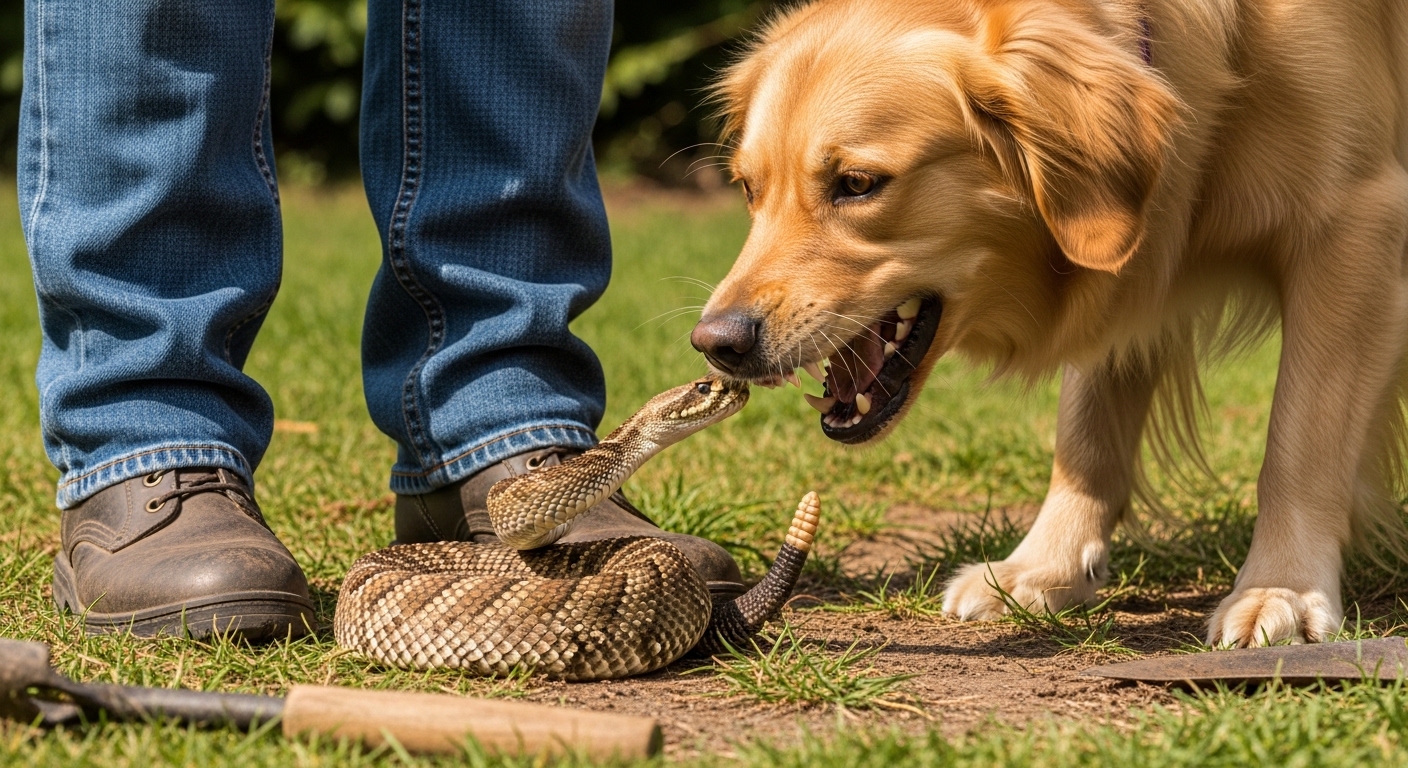
The fire alarm failed, but the dog didn’t. He jumped on my bed, clawing at my face and pulling the blankets off until I woke up to a room filled with deadly gas.
The last thing I remember was a dream about walking through a field of lavender. It was peaceful. Too peaceful.
I didn’t know that the “lavender” was actually the smell of my own life slipping away.
In the quiet of a Tuesday night, the silent killer entered my home. A hairline fracture in the furnace pipe. No smoke. No sound. And, as the investigators would later tell me, a faulty battery in a “top-of-the-line” alarm that was supposed to be my fail-safe.
I was minutes away from never waking up.
But Buster knew.
He didn’t just bark. He didn’t just whine at the door. When he realized I wasn’t responding, he became a “monster.” He jumped on my chest, his 70-pound frame knocking the wind out of me. He clawed at my cheeks until I felt the sting of his nails. He ripped the blankets off me with a fury I’d never seen.
I woke up angry. I woke up ready to yell at him for ruining my sleep.
Then I tried to breathe.
That sting on my cheek was the most beautiful thing I’ve ever felt, because it meant I was still alive to feel it. If it wasn’t for his persistence, I would have died in my sleep without ever knowing why.
Chapter 1: The Weight of the Air
The silence of a suburban Michigan winter is a heavy thing. It’s a silence made of packed snow, triple-paned glass, and the rhythmic, artificial hum of a high-efficiency furnace. For Leo Vance, that hum had always been the sound of comfort. It was the sound that meant the world outside—the biting ten-degree winds and the slushy streets of Grand Rapids—couldn’t reach him.
Leo was a man of routines and safety nets. He worked as a safety inspector for a local manufacturing plant; his life was built on checklists and “what-if” scenarios. His house was a fortress of modern technology: smart locks, ring cameras, and the crowning jewel—the “Aegis 5000” fire and gas detector. It was supposed to be the best on the market.
“I’m tellin’ you, Sarah,” Leo had told his sister over the phone that evening. “It’s peace of mind. If there’s even a whiff of carbon monoxide or methane, the whole house lights up like a Christmas tree and calls the fire department automatically.”
“You always did like your gadgets, Leo,” Sarah had laughed. “Just don’t forget to give Buster his heartworm pill. Tech won’t save a dog from a mosquito.”
Leo had looked down at Buster, a hulking, soot-colored Pitbull-Lab mix he’d rescued from a high-kill shelter three years ago. Buster was a “special case”—a dog that had been returned twice for being “overly reactive.” To Leo, Buster wasn’t reactive; he was just vigilant.
Leo fell asleep at 11:30 PM. He didn’t hear the subtle hiss in the basement. He didn’t see the tiny crack in the aged iron pipe that fed the furnace.
Carbon monoxide is often called the silent killer, but methane is the boisterous cousin that waits for a spark. On this night, it was a slow, creeping leak of natural gas. It didn’t smell like lavender—that was just Leo’s brain misfiring as the oxygen levels began to drop. It smelled like nothing at all until it was too late.
In the dark, Buster’s ears perked up. He was sleeping on his orthopedic bed at the foot of Leo’s mattress. He didn’t have a sensor or a battery. He had an ancestral instinct that told him the air was changing. It felt “heavy” in his lungs. It tasted bitter.
Buster stood up. He walked to the side of Leo’s bed and let out a soft whine.
Nothing. Leo was deep in the first stage of gas-induced narcosis. His breathing was shallow, his face a pale, sickly grey in the moonlight.
Buster whined louder. He nudged Leo’s hanging hand with his wet nose. Leo didn’t stir.
The dog’s panic began to rise. He knew this room—this safe, warm space—was becoming a trap. He looked at the Aegis 5000 on the ceiling. It was dark. A manufacturing defect, a tiny soldered wire that had snapped during a cold snap, had rendered the “peace of mind” useless.
Buster didn’t have time for checklists.
He launched himself onto the bed. All seventy pounds of him landed on Leo’s stomach, forcing a sharp oof of air from the man’s lungs. Buster began to dig. He used his front paws to claw at Leo’s shoulders, then his neck, and finally his face.
Scratch. Rip. Pull.
Leo’s eyes flew open, but they were glassy. He saw a shadow over him, felt the sharp sting of nails on his cheek. His first thought was that he was being attacked.
“Buster… get off…” Leo’s voice was a croak. His head felt like it was being squeezed in a vise.
Buster didn’t stop. He grabbed the corner of the heavy wool duvet in his teeth and backed up, dragging the blanket onto the floor with a violent, snapping motion. He barked—a loud, piercing sound that shattered the stillness of the house.
Leo sat up, his heart racing. He felt the cold air of the room hit his skin, but it didn’t feel fresh. It felt thick. Disoriented and angry, he reached for the lamp on the nightstand.
“What is wrong with you?” Leo yelled, his voice cracking.
Buster didn’t back down. He stood on the floor, his hackles raised, staring at the door to the hallway. He barked again, then ran to the window and began to paw at the glass.
Leo took a deep breath to yell again, and that’s when he smelled it. Not the gas itself—the additive, that rotten-egg scent of mercaptan that the utility company puts in to give the invisible a smell. It was faint, but it was there.
His inspectors’ brain finally clicked into gear, slicing through the fog of sleep.
Failed alarm. Heavy head. Bitter smell. Buster.
“Oh god,” Leo whispered. He tried to stand, but his legs were like jelly. He collapsed back onto the bed.
Buster was back instantly, licking Leo’s face, nudging him, literally pushing his weight against Leo’s side to keep him upright.
“Okay, boy. Okay. We have to go.”
Leo didn’t reach for his phone. He didn’t grab his wallet. He grabbed Buster’s collar. Together, they crawled toward the bedroom window. Leo fumbled with the lock, his fingers feeling like wooden pegs. He slammed the sash upward, and the rush of sub-zero Michigan air hit them like a physical blow.
It was the most beautiful thing Leo had ever felt. He leaned out, gasping, while Buster stood beside him, his head out the window, drawing in the life-saving cold.
Behind them, the Aegis 5000 remained silent and dark. The checklist had failed. The safety net had snapped. But the “special case” from the shelter was standing guard, his tail giving a single, shaky thump against the wall.
Chapter 2: The Aftermath of Silence
The fire department arrived six minutes after Leo tumbled out of his first-floor window and crawled onto the snow-covered lawn. He had managed to dial 911 from his cell phone, which he’d snagged off the nightstand in a moment of survivalist clarity.
Grand Rapids Fire Station 4 responded. Chief Miller, a man who had seen thirty years of preventable tragedies, was the first off the truck. He found Leo huddled in the snow, wearing only a t-shirt and boxers, clutching a massive grey dog to his chest.
“Easy, son. Don’t go back in,” Miller commanded, seeing Leo trying to stand.
“The gas…” Leo wheezed, pointing toward the house. “My dog… he woke me up.”
The firefighters moved with practiced, rhythmic speed. They entered with oxygen tanks and gas sniffers. Within seconds, the meters were screaming.
“Lethal levels in the master bedroom,” one firefighter called out over the radio. “If they’d been in there another ten minutes, we’d be calling the coroner, not the ambulance.”
Leo was loaded into the back of the ambulance. They tried to separate him from Buster, but the dog let out a low, guttural rumble that suggested he wasn’t going anywhere without his person.
“Let the dog in,” Chief Miller said, his voice soft. “He’s the only reason that man is breathing.”
In the back of the rig, Leo sat with an oxygen mask pressed to his face. The “lavender” fog was clearing, replaced by a sharp, cold reality. He looked down at his hands—they were covered in small, red scratches. He looked at the blood on Buster’s paws.
“You really lit me up, didn’t you?” Leo whispered behind the mask.
Buster just rested his heavy head on Leo’s knee, his eyes finally closing. The adrenaline was fading, leaving behind an exhaustion that only a hero can truly understand.
The next morning, the sun rose over a quiet street. The gas had been shut off, the house vented. But for Leo, the “peace of mind” he’d bragged about was gone. He stood on the sidewalk with Chief Miller, looking at the Aegis 5000 sitting on the hood of the fire truck.
Miller had opened the unit. He pointed to a tiny, scorched circuit board.
“Battery was full, Leo,” Miller said, shaking his head. “But the sensor itself had a hardware failure. Probably happened months ago. No self-test would have caught it. It was a paperweight.”
Leo felt a chill that had nothing to do with the Michigan wind. “I checked the app every day. It said ‘All Systems Normal.'”
“Apps don’t have noses, Leo,” Miller said. He looked over at Buster, who was currently sniffing a fire hydrant. “And they don’t have hearts. That dog didn’t need a sensor. He just needed to know you weren’t moving.”
Sarah arrived an hour later, her car skidding to a halt in the slush. She ran to Leo, pulling him into a fierce hug.
“I saw the news,” she sobbed. “Leo, I almost lost you.”
“I know,” Leo said, his voice shaky. He looked at Buster. “I almost gave him back, Sarah. Remember? When I first got him and he chewed up the sofa? I told the shelter he was ‘too much.’ I said I couldn’t handle his energy.”
Sarah looked at the dog, then at the scratches on Leo’s face. “I guess he was just saving it up for when it mattered.”
But as the news crews began to circle the block, attracted by the “Hero Dog” story, a different shadow began to fall. Mrs. Gable, the neighbor from across the street, was talking to a reporter.
“I heard the dog screaming last night,” she said, her voice thin and accusatory. “I thought he was attacking Leo. He’s a dangerous breed, you know. I’ve been telling the HOA for months that he shouldn’t be here.”
Leo heard her. He looked at Buster, who was currently wagging his tail at a passing toddler. The world was already trying to turn his savior back into a monster. And Leo knew then that the fight wasn’t over. He’d survived the gas, but now he had to survive the neighborhood.
Chapter 3: The Label of the Beast
Oak Ridge Estates was the kind of neighborhood that valued “conformity” above all else. The lawns had to be exactly three inches high, the houses had to be shades of beige or “eggshell,” and the dogs were expected to be seen and not heard.
Buster was neither beige nor quiet.
A week after the leak, Leo was back in his house. The furnace was replaced, the pipes were reinforced, and the Aegis 5000 had been replaced by three different brands of sensors—none of which Leo fully trusted.
He was sitting on his porch, drinking a coffee and watching Buster sniff the melting snow, when a black SUV pulled up. Out stepped Richard Sterling, the president of the Oak Ridge Homeowners Association. Richard was a man who viewed life through the lens of liability and property values.
“Leo,” Richard said, not stepping onto the lawn. “Glad to see you’re recovering. Terrible business with the gas.”
“Thanks, Richard,” Leo said, his hand instinctively dropping to Buster’s collar.
“We had a board meeting last night,” Richard said, his tone shifting into something clinical. “The reports from that night… the noise, the aggression. Mrs. Gable was very shaken. She witnessed the dog jumping on you through the window. She believes he was attacking.”
“He was waking me up, Richard! He saved my life.”
“That may be,” Richard sighed, “but the HOA bylaws are clear about ‘dangerous and nuisance animals.’ We’ve had three complaints about Buster’s barking in the past year. Coupled with the ‘violent’ behavior reported on the night of the incident… the board has decided to issue a removal order.”
Leo felt the air leave his lungs again, but this time it wasn’t gas. It was pure, unadulterated rage. “You’re kidding. You’re trying to evict the dog that kept me from being carried out in a body bag?”
“It’s not an eviction of you, Leo. Just the animal. You have fourteen days to relocate him, or we will begin fines of five hundred dollars a day.”
Richard turned to leave, but he stopped. “It’s for the safety of the community, Leo. We can’t have ‘special cases’ like that in a family neighborhood.”
Leo watched the SUV drive away. He looked at the scratches on his face, now fading into pink scars. He looked at Buster, who was currently lying in a patch of sun, oblivious to the fact that his world was being stolen.
“Not happening, boy,” Leo whispered.
He called Sarah. She was a vet tech and had worked with several local rescues.
“They’re coming for him, Sarah,” Leo said, his voice trembling. “They’re using the night he saved me as proof that he’s dangerous.”
“It’s a classic move, Leo,” Sarah said, her voice hard. “They label the breed, they label the energy, and they ignore the heart. But you have an ally. Chief Miller.”
Leo drove to the fire station that afternoon. He found Miller in the garage, polishing the chrome on the engine.
“They’re trying to take him, Chief,” Leo said, handing him the HOA letter.
Miller read the letter, his brow furrowing. “Safety of the community? I saw the gas levels, Leo. If that dog hadn’t woken you up, you’d have been a vegetable in twenty minutes. If you’d tried to leave and turned on a light switch… the spark would have leveled half the block. Buster didn’t just save you. He saved Mrs. Gable, too.”
Miller looked at the “Hero Dog” plaque the local VFW was preparing for Buster. “I think it’s time the neighborhood learned what ‘dangerous’ actually looks like.”
That evening, Leo didn’t hide Buster in the backyard. He took him for a walk through the center of Oak Ridge. He didn’t use a muzzle. He used a sturdy harness and a pocket full of treats.
Every time Mrs. Gable glared from her window, Leo waved. Every time a neighbor crossed the street to avoid them, Leo stopped and called out a friendly “Good evening!”
He wasn’t just walking a dog. He was walking a witness. And as the fourteen-day clock began to tick, Leo realized that saving Buster was going to be much harder than Buster saving him. Because gas was simple; it followed the laws of physics. People followed the laws of fear.
Chapter 4: The Scent of the Past
To understand why Buster was so “reactive,” you had to look at the three years before Leo found him.
His name wasn’t always Buster. In a concrete kennel in Detroit, he was “Subject 44.” He had been seized from a dog-fighting ring, though he hadn’t been a fighter. He’d been a “bait dog”—the one meant to take the hits so the champions could get their blood up.
He’d been bitten, scarred, and left for dead in a dumpster. When the rescue found him, he didn’t trust humans. He didn’t trust the wind. He viewed the world as a series of threats that had to be neutralized before they touched him.
Leo had been his fifth “trial.” The first four families had brought him back within forty-eight hours.
“He’s too much,” they’d say. “He jumps on the kids. He won’t stop staring at the door. He’s always… on.”
Leo, a man who spent his days looking for structural cracks and fire hazards, recognized a kindred spirit. He didn’t see an aggressive dog; he saw a dog that was perpetually doing a safety inspection of the world.
On the eighth day of the HOA countdown, Leo was in his basement, checking the new furnace pipes for the tenth time that morning. He was obsessed. He couldn’t sleep without checking the stove knobs three times. The trauma of the “Silent Killer” had left him with a hyper-vigilance that mirrored Buster’s.
Buster was with him, sitting at the bottom of the stairs.
“We’re okay, boy,” Leo whispered, his hand shaking as he touched the iron pipe. “It’s solid.”
A knock came at the door. Not the front door—the side door that led to the garage.
It was Jackson, the nineteen-year-old son of the HOA president, Richard Sterling. Jackson was a quiet kid, usually seen wearing headphones and avoiding his father’s “perfectionist” gaze.
“Leo?” Jackson whispered, looking over his shoulder. “I… I have something.”
He handed Leo a USB drive.
“My dad… he’s not just doing this because of the complaints,” Jackson said, his voice trembling. “The gas company, ‘Lumina Power’… they’re the ones pushing the HOA. My dad’s law firm handles their local liability. If the story of the dog saving you stays local, it’s fine. But if it goes national—if it proves the gas leak was a result of their faulty infrastructure maintenance—they’re looking at millions in lawsuits.”
Leo felt a cold realization wash over him. “They want the dog gone because he’s the evidence.”
“If the dog is labeled ‘aggressive’ and ‘unreliable,’ his ‘rescue’ looks like an accident,” Jackson explained. “My dad’s been coached by their PR team. They’re trying to discredit the hero to save the company.”
Leo looked at the USB drive. “What’s on here, Jackson?”
“Emails,” Jackson said. “Between the gas company and my dad. And a maintenance report for our block that was filed a month before your leak. They knew the pipes were corroding, Leo. They just didn’t want to pay to dig up the street.”
Leo looked at Buster. The dog was sitting at Jackson’s feet, his tail giving a single, tentative wag. Buster didn’t see a “liability.” He saw a kid who was scared.
“Why are you helping me, Jackson?”
“Because Buster didn’t just wake you up,” Jackson said, his eyes tearing up. “That night… I was in my room, right across the street. I was smoking a cigarette by the window. If the gas had reached the street—if it had sparked—I’d have been the first one to go. Your dog saved me, too. And my dad… he’s just too busy looking at his billables to notice.”
Leo gripped the drive. The “Silent Killer” wasn’t just the methane. it was the corporate greed and the neighborhood politics. It was the silence of people who knew the truth but were too afraid to speak.
“Thanks, Jackson,” Leo said. “Go home. I’ll take it from here.”
As Jackson disappeared into the Michigan dusk, Leo sat on his porch. He had six days left. He had a dog who was a hero, a neighbor who was a spy, and a mountain of evidence that was about to blow Oak Ridge Estates wide open.
He looked at Buster. “Get ready, boy. We’re going to the board meeting.”
Chapter 5: The Spark in the Room
The Oak Ridge Community Hall was a room filled with the scent of lavender-scented floor wax and the low hum of nervous conversation. It was the night of the final hearing.
Richard Sterling sat at the center of the mahogany table, looking like a man who had already won. Mrs. Gable sat in the front row, clutching her purse and looking at Buster—who was sitting calmly at Leo’s side—with a mixture of fear and disdain.
“This meeting is called to order,” Richard said, his gavel hitting the block with a sharp clack. “The issue is the permanent removal of the animal known as ‘Buster’ from the premises of 114 Maple Drive.”
Leo stood up. He wasn’t wearing his usual flannel shirt. He was wearing a suit. Beside him stood Chief Miller and Sarah.
“Richard, before you vote,” Leo said, his voice echoing in the hall, “I think there are a few people who would like to speak. Not about Buster’s barking, but about his service.”
“We’ve heard the ‘rescue’ story, Leo,” Richard sighed. “It’s very touching, but it doesn’t change the breed’s inherent risks or the violence witnessed that night.”
“Violence?” Chief Miller stepped forward. He was in full uniform, his medals glinting. “Let’s talk about violence. Let’s talk about what happens when a gas main under 114 Maple Drive reaches a saturation of five percent in an enclosed space.”
Miller pulled out a tablet and projected a video onto the wall. It was a simulation—a house exploding into a million pieces of kindling.
“This is what Buster prevented,” Miller said. “He didn’t ‘attack’ Leo. He performed an emergency extraction. He used his body to break a sleep cycle that was being chemically induced by methane. If he hadn’t, the spark from Leo’s furnace cycling on would have leveled this hall and every house within two hundred yards.”
The room went silent. Mrs. Gable shifted in her seat.
“That’s just speculation,” Richard countered, his voice tight.
“Is it?” Leo stepped forward. He plugged Jackson’s USB drive into the podium’s laptop.
“Let’s look at the Lumina Power maintenance report from October,” Leo said.
A document appeared on the wall. It was highlighted in red. Sector 4: Oak Ridge Estates. Critical corrosion detected in main feed pipes. Immediate replacement recommended. Estimated cost: $1.2 million. Action: Deferred to Q3 next year.
The gasps in the room were audible.
“And here,” Leo continued, opening an email thread, “is a message from Lumina’s legal team to Sterling & Associates. ‘We need the Vance incident suppressed. If the dog is seen as a hero, the failure of the Aegis alarm and the pipe corrosion will become the story. Discredit the animal. Use the HOA.'”
The silence that followed was absolute. Richard Sterling looked at the screen, then at the crowd of neighbors who were now looking at him as if he were a stranger.
Jackson was standing in the back of the room. He met Leo’s eyes and gave a small, almost invisible nod.
Leo looked at Mrs. Gable. “Mrs. Gable, you said you were shaken that night. You said you saw Buster ‘attacking’ me. Did you also see him drag the blanket off me? Did you see him push me toward the window?”
The old woman looked at Buster. The dog wasn’t growling. He was sitting with his head tilted, his tail giving a soft, rhythmic thump against the floor. He looked… tired. He looked like a dog that had spent his whole life trying to keep people safe and was wondering why they were still so angry.
“I… I saw him,” she whispered. “I thought… I was just so scared. The noise…”
“We were all scared, Mrs. Gable,” Leo said softly. “But Buster was the only one who did something about it.”
A man from the back of the room stood up—the father of the toddler Buster had wagged his tail at a week ago. “I’m not voting to remove that dog. My kid plays in the yard next to Leo’s. If that gas had blown, my son wouldn’t be here. Buster’s a better neighbor than most of the people at this table.”
One by one, the hands went up. Not to evict, but to stay.
Richard Sterling didn’t even call for a vote. He knew the “Silent Killer” had been exposed. He gathered his papers and walked out of the hall without looking at his son.
Leo knelt down and buried his face in Buster’s fur. The dog let out a long, contented sigh. The fourteen days were over. The removals were cancelled. The “monster” was finally, officially, home.
Chapter 4: The Sound of Breath
Spring finally arrived in Grand Rapids. The snow melted into the soil, the tulips began to poke through the mulch in Leo’s garden, and the smell of fresh mud replaced the lingering scent of mercaptan.
Leo was sitting on his porch, a book in his lap that he hadn’t read a single page of. He was too busy watching the world.
Buster was lying at his feet, his grey fur warm from the afternoon sun. He wasn’t “on duty” today. He was just a dog. He was watching a bumblebee hover over a dandelion, his ears twitching with curiosity instead of fear.
Lumina Power had been hit with a record-setting fine. The Aegis 5000 had been recalled nationwide. And Richard Sterling had “resigned” from the HOA to spend more time with his family—though Jackson spent most of his time at Leo’s house, helping him build a new, reinforced fence.
Leo looked at the scratches on his arms. They had turned into thin, white lines. He called them his “Buster tattoos.”
“You want to go for a walk, boy?” Leo asked.
Buster didn’t explode with energy. He stood up slowly, stretched his massive limbs, and gave Leo’s hand a single, wet lick.
They walked through Oak Ridge Estates. They passed Mrs. Gable’s house. She was on her porch, and for the first time, she didn’t duck inside. She waved. She even had a small box of dog biscuits sitting on her railing.
“Good afternoon, Leo,” she called out. “Good afternoon, Buster.”
Leo waved back, a lump forming in his throat.
They reached the park at the end of the block. Leo let Buster off his lead in the designated area. The dog didn’t run to the gate to guard it. He ran into the grass, rolling onto his back and kicking his legs in the air with a goofy, unbridled joy.
Leo sat on a bench and watched him. He thought about the night of the leak. He thought about the lavender dream and the violent awakening.
He realized that survival isn’t just about breathing. It’s about being willing to claw through the silence to find the people you love. It’s about recognizing that the things we label “too much” or “broken” are often the only things strong enough to hold us together when the world starts to shimmer with gas.
Leo took a deep breath. The air was clear. It was crisp. It was perfect.
He looked at his dog—the “special case” who had become his soul.
“Thanks for the wake-up call, Buster,” Leo whispered.
Buster stopped rolling, sat up, and looked at Leo. He didn’t bark. He didn’t lunge. He just gave a single, slow wag of his tail, the white tip flickering like a flame in the Michigan sun.
The most dangerous things in this world are the ones that make no sound, but the most powerful thing is the heart that refuses to let the silence win.


