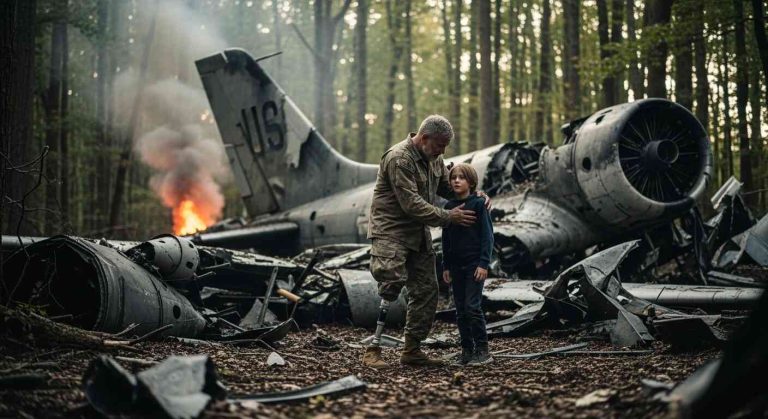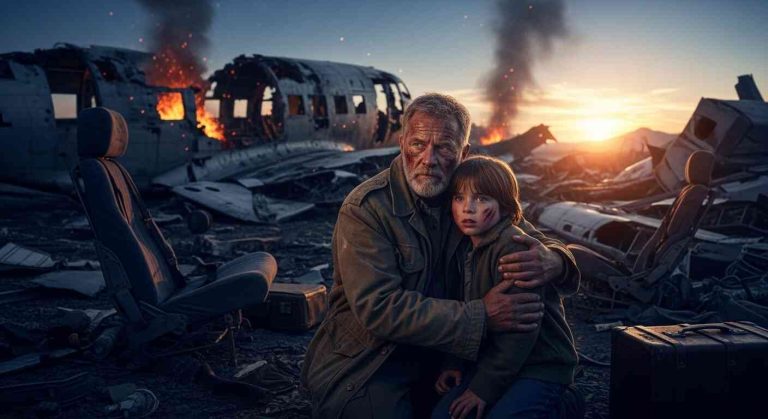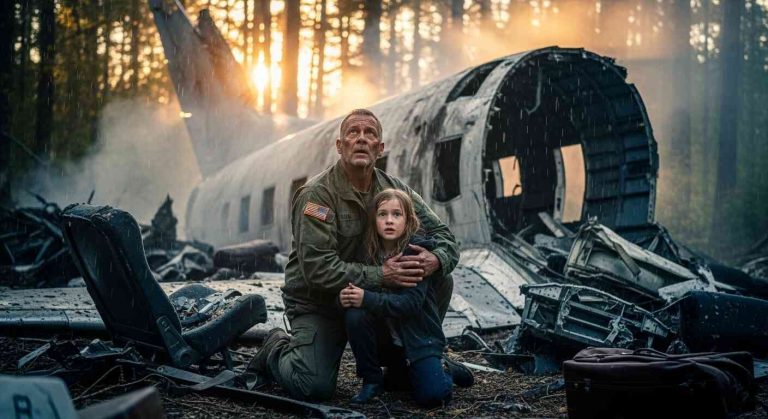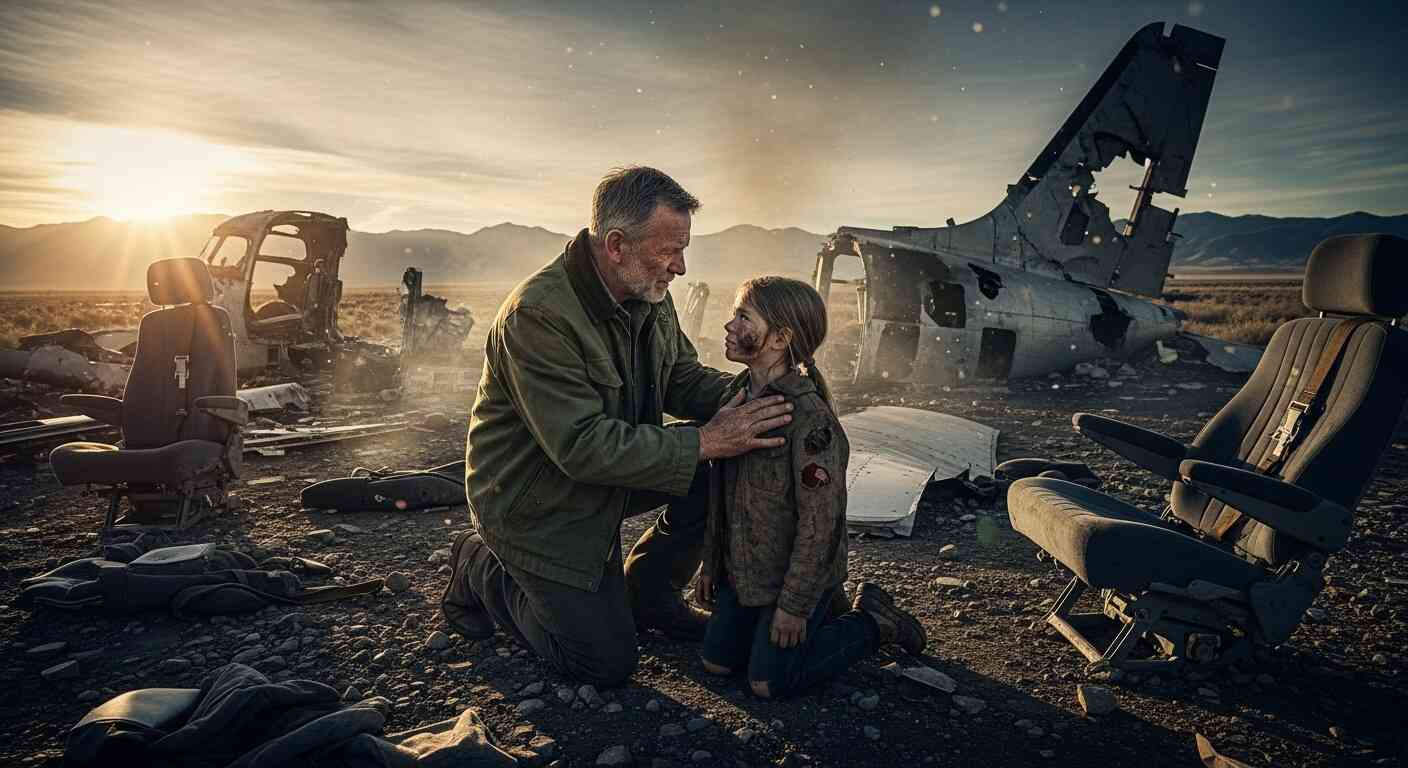
“Look at the clock, kid. Time just stopped for everyone but us.”
I’m sitting in 12B. Across from me is a boy named Leo. He’s seven, has his mother’s eyes, and a piece of hardware in his chest that’s currently programmed to kill him.
The woman next to him, Sarah, thinks I’m just a grumpy veteran who wants a quiet flight. She doesn’t see the black box in my lap. She doesn’t know that in exactly four minutes, this plane will cross a specific GPS coordinate—a digital “tripwire” that will send a surge through Leo’s pacemaker and stop his heart forever.
I’m not a hijacker. I’m an Electronic Warfare specialist who spent twenty years learning how to break things that fly. And right now, I have to break this plane to keep that boy alive.
When I flipped the switch, the cabin lights died. The seatback screens went black. The hum of the engines changed to a terrifying whine as the navigation system threw a fit.
Sarah screamed. The Air Marshal pulled his Glock. People are calling me a terrorist. They’re crying, praying, and reaching for their loved ones.
They think we’re going down. They don’t realize I’m the only thing keeping us up.
“Elias, what are you doing?” the Air Marshal roars, his red dot dancing on my forehead.
I looked at Leo. The boy wasn’t scared. He was finally breathing.
“I’m stopping the signal, Mike,” I whispered. “And I’m not turning it back on until we’re out of the dead zone.”
PART 2
CHAPTER 1: THE SIGNAL
The air in the cabin of Flight 1042 tasted like recycled anxiety and burnt coffee. It’s a specific smell you only find on red-eyes over the Atlantic—a mix of three hundred people trying to pretend they aren’t hurtling through a void in a pressurized tin can.
I sat in 12B, my knees jammed against the seat in front of me. At sixty-four, my joints don’t handle coach like they used to. My name is Elias Thorne, and for three decades, I was the man the Army sent when they needed the airwaves to go silent. I’ve jammed insurgent IED triggers in Fallujah and scrambled high-altitude surveillance in places that don’t exist on maps. I’m retired now. Or I was, until a dead man’s burner phone rang in my kitchen three days ago.
“Elias,” the voice had crackled. It was Vance, a guy I’d worked with in the shadows of the defense industry. He sounded like he was breathing through a throat full of glass. “They’re using the MedTech-7 line. The pacemakers. It’s a targeted hit, Elias. A kid. Flight 1042. They’ve set a GPS trigger. When the plane hits the mid-Atlantic corridor, the signal pings the satellite, the satellite pings the device, and… click. It looks like a tragic failure of a faulty heart.”
Vance died two hours later. “Car accident.”
So here I was. Sitting next to a seven-year-old boy named Leo and his mother, Sarah.
Leo was a quiet kid. He was wearing a faded Captain America t-shirt and clutching a tablet that was low on battery. Every few minutes, he’d rub his chest—right over the small, rectangular bump beneath his collarbone. The MedTech-7 “LifeSync” Pacemaker. The most advanced cardiac device on the market. And currently, a remote-detonated bomb.
“You okay, buddy?” I asked, my voice gravelly.
Leo looked up at me. He had dark circles under his eyes. “It feels hot,” he whispered. “Like a bee is buzzing inside me.”
Sarah, a woman who looked like she hadn’t slept since the Obama administration, gave me a polite, tired smile. “He’s just nervous about the flight. It’s been a long year for him.”
I looked at my watch. 2:14 AM. In six minutes, we would hit the trigger coordinates.
I reached into my carry-on and pulled out the “black box”—a modified signal jammer I’d built in my garage using parts that would get me twenty years in Leavenworth just for owning.
“Ma’am,” I said, looking Sarah dead in the eye. “I need you to hold onto Leo’s hand. Tight.”
“What? Why?”
I didn’t answer. I flipped the first toggle.
A high-pitched whine, barely audible to the human ear but agonizing to electronics, began to ripple through the cabin. The Wi-Fi cut out first. A teenager three rows back groaned as his movie froze.
Then I flipped the second toggle.
The cabin lights flickered and plunged into darkness. The emergency floor lights kicked on, casting a sickly red glow over the panicked faces of the passengers. The hum of the jet engines shifted—not because they were failing, but because the flight computer was suddenly blind, screaming for a signal that no longer existed.
“Look at the clock, kid,” I whispered to Leo as the world around us began to scream. “Time just stopped for everyone but us.”
CHAPTER 2: THE HUNTER AND THE SHADOW
To understand why a man like me would risk a federal life sentence and the lives of three hundred passengers, you have to understand the “accident” at Blackwood Creek.
Ten years ago, I was a consultant for a firm called Aegis Electronics. We were testing a new type of localized jamming field. My supervisor was a man named Marcus Vane—a suit with the soul of a shark. He wanted to see if we could “selectively” disable medical devices in a crowd. Assassination without a trace.
I told him it was murder. I told him it was a violation of every treaty ever signed. He told me to shut up and take the paycheck. I quit. Six months later, my wife’s car went off a bridge. “Brake failure,” they said. But I found the remains of a small electronic override in the wreckage.
Since then, I’ve been a ghost. I lived in the woods of Montana, waiting for the world to catch up to the monsters I helped create.
When Vance called me about Leo, he didn’t just give me a flight number. He gave me a name: The Clarion Group. They were the parent company of the pacemaker manufacturer. Leo’s father had been a whistleblower—a lead engineer who found out they were selling refurbished, faulty hardware to Medicaid patients while pocketing the difference.
Leo’s father “disappeared” in a boating accident last month. Leo was the last piece of evidence. The “faulty” pacemaker in his chest was a masterpiece of cruelty—a device that could be programmed to malfunction at a specific time and place, making it look like the very heart defect he was being treated for finally took him.
Now, sitting in the dark of Flight 1042, I felt the familiar weight of the world on my shoulders.
“Elias?”
I looked up. Standing in the aisle was Mike Vance—no relation to my dead friend, but a man I knew nonetheless. He was an Air Marshal. We’d shared a few drinks in a VA lounge in DC years ago.
He had his gun out. It wasn’t pointed at the ceiling. It was pointed at my chest.
“Put it down, Elias,” Mike said, his voice trembling with a mix of fear and professional discipline. “I don’t know what you’re doing with that jammer, but the pilots are losing the glide slope. We’re over the ocean, man. You’re going to kill us all.”
“Mike, look at the boy,” I said, my hands steady on the dials.
“I don’t care about the boy! I care about the three hundred people on this plane! Shut that thing off or I will put a round through your skull!”
Behind Mike, Sarah was sobbing, clutching Leo to her chest. Leo was staring at me, his eyes wide.
“The bee stopped buzzing,” Leo said.
His voice was small, but in the sudden silence of the cabin—a silence where only the wind and the sobbing remained—it sounded like a shout.
I looked at the monitor on the jammer. We were directly over the trigger coordinates. A massive burst of encrypted data was hitting my shield, clawing to get through. It was a kill command, sent from a satellite 20,000 miles up, looking for the MAC address of the device inside Leo’s chest.
“One minute, Mike,” I said, staring into the barrel of the Glock. “Give me one minute, or the boy dies.”
“The plane is dropping altitude, Elias!”
“Then let it drop,” I growled. “I’ve survived worse crashes than this. But I won’t survive watching another child die because I was too afraid to flip a switch.”
FULL STORY
PART 3
CHAPTER 3: THE COCKPIT WAR
The pressure in the cabin was physical. It wasn’t just the altitude—the pilots were fighting to level out—it was the weight of two hundred people’s terror.
Captain Miller’s voice crackled over the emergency intercom, sounding frantic. “This is the flight deck. We are experiencing a total systems interference. All passengers must remain seated and braced. Air Marshal, report!”
Mike didn’t report. He was sweating, his eyes darting between me and the screaming passengers. He was a good man, but he was trained for hijackers with knives, not a veteran with a suitcase full of physics.
“He’s got a bomb!” a man in 14C yelled, lunging forward.
“Get back!” Mike barked, but he didn’t look away from me.
“It’s not a bomb!” Sarah screamed, though she didn’t know if she believed it. She looked at me, her face a mask of pure, primal agony. “Elias… what is happening to my son?”
I didn’t answer. I couldn’t. I was watching the spectrum analyzer on my screen. The Clarion Group wasn’t giving up. They were widening the broadcast. They were trying to overpower my jammer by brute-forcing the signal.
“They’re hitting the whole sector,” I muttered.
Suddenly, Leo let out a sharp cry. He slumped against his mother, his face turning a terrifying shade of gray.
“Leo! Leo!” Sarah shrieked.
I looked at the jammer. The signal was leaking. The sheer power of the satellite array was starting to bleed through the edges of my shield.
“The cockpit,” I said, standing up.
“Sit down!” Mike yelled, his finger tightening on the trigger.
“The cockpit has a hardened copper mesh in the bulkhead,” I said, my voice cold and focused. “If I can get this device behind the cockpit shield and tie it into the plane’s internal antenna, I can create a feedback loop. It’ll fry the satellite’s local receiver. It’s the only way to kill the signal for good.”
“You’re not going near that cockpit,” Mike said.
“Then shoot me,” I said, taking a step forward. “Because if I stay here, that boy has thirty seconds of life left. Look at him, Mike! Look at his chest!”
Under Leo’s shirt, the blue light was no longer pulsing. It was strobe-lighting—a frantic, jagged rhythm that signaled the device was in “overdrive” mode. It was literally trying to cook his heart from the inside out.
Mike looked. He saw the light. He saw the boy’s eyes rolling back in his head.
“God help me,” Mike whispered. He lowered his gun. “Move. Now.”
CHAPTER 4: ZERO HOUR
We moved through the aisle like ghosts in a nightmare. People reached out to grab me, thinking I was the devil himself. Mike shoved them back, his badge held high, though it meant little in the dark.
We reached the cockpit door.
“Miller! Open up! It’s Vance!” Mike pounded on the reinforced door.
“We’re in a dive, Mike! I can’t open the door!” Miller’s voice was a scream.
The plane tilted. Hard. We were thrown against the bulkhead. I felt my ribs crack against the metal, but I kept my grip on the black box.
“Leo!” Sarah’s voice echoed from the back of the plane—a sound of pure, unadulterated loss.
I didn’t have time for a keycode. I reached into my pocket and pulled out a small, heavy-duty capacitor. I jammed it into the electronic lock’s service port and triggered a short.
The door hissed and swung open.
Captain Miller and his co-pilot, a young woman named Jules, turned around, their faces pale in the glow of the emergency instruments. They looked like they were seeing a ghost.
“Get out!” Miller yelled, fighting the yoke. “We’re losing airspeed!”
“I’m saving your lives!” I yelled back.
I dived for the avionics bay beneath the center console. I ripped open the panel, exposing a nest of fiber-optic cables and copper wiring.
“What are you doing?” Jules screamed. “That’s the flight management system!”
“I’m giving this plane a heart,” I said.
I began stripping wires with my teeth. My hands were shaking, but the muscle memory was there. I bypassed the main bus, routed my jammer’s output directly into the plane’s external skin—turning the entire fuselage of the Boeing 747 into one massive, shimmering electromagnetic shield.
The feedback was instantaneous.
A roar of static filled the cockpit. The flight displays didn’t just go dark—they turned a brilliant, blinding white.
“We’re blind!” Miller yelled.
“But he’s safe,” I whispered, looking at the jammer’s screen.
The signal from the satellite hit the plane and bounced. It didn’t just bounce—the feedback loop I’d created traveled back up the beam. Somewhere in the ionosphere, a multi-million dollar Clarion Group satellite’s receiver just turned into molten silicon.
The “kill command” was dead.
But we were still at 20,000 feet, in a dark plane, with no navigation, falling toward the cold Atlantic.
FULL STORY
PART 4
CHAPTER 5: THE DESCENT
The silence was the worst part.
When you’re in a plane, you’re used to the constant, comforting roar of the engines. But when the systems go into “safe mode” to protect the engines from electromagnetic interference, everything gets quiet. Just the whistle of the wind over the wings.
“We’re gliders now,” Jules whispered, her hands white on the controls.
“Bring the systems back, Elias,” Mike said, his gun finally holstered, his hand on my shoulder. “You did it. The boy is breathing. I saw him. Now bring the plane back.”
I looked at the mess of wires. “If I turn it off too soon, they might have a backup satellite. I have to stay shielded until we’re out of the footprint.”
“We don’t have time for a footprint!” Miller roared. “We’re at 12,000 feet! If I don’t get the flight computers back in the next sixty seconds, we won’t have enough altitude to pull out of the stall!”
I looked at the jammer. The feedback loop was holding. I checked the coordinates on my handheld GPS. We were clear.
I ripped the wires out.
The cockpit lights slammed back to life. The screens flickered, rebooted, and filled with a glorious, messy array of numbers and maps.
“Engines responding!” Miller yelled, his voice cracking with relief. “Throttles to full!”
The roar returned. The plane leveled out so hard I was thrown into the ceiling, then slammed back onto the floor. I didn’t care. I crawled out of the cockpit, past Mike, and ran down the aisle.
I reached Row 12.
Sarah was cradling Leo. The blue light under his shirt was gone. He was pale, exhausted, but his eyes were open. He was looking at his mother.
“Mom?” he whispered. “The bee went away.”
Sarah looked up at me. She didn’t see a monster anymore. She saw a man who looked like he’d just walked through hell to bring her son back.
“What did you do?” she whispered.
“I just stopped the clock, Sarah,” I said, falling into the empty seat across from her. “I just stopped the clock.”
CHAPTER 6: THE LONG ROAD HOME
We landed at Gander, Newfoundland. It wasn’t the destination on the ticket, but it was the closest strip of tarmac that could hold us.
The FBI was waiting. So was the RCMP.
They took me off the plane in handcuffs. As they led me down the stairs, the cool night air felt like a benediction. I saw the ambulances, the flashing lights, and the crowd of passengers—some angry, some crying, all alive.
I saw Sarah and Leo. They were being loaded into a separate van.
“Elias!” Sarah yelled, breaking away from an EMT.
She ran to me, the officers trying to block her. She didn’t care. She reached through the gap and grabbed my hand.
“They told me what was in his chest,” she sobbed. “The doctors… they found the override code. You were telling the truth.”
I looked at Leo, who was watching me from the van. He gave me a small, weak wave.
“Keep him away from the tech, Sarah,” I said. “Get him a heart that belongs to him, not a corporation.”
“Who are you?” she asked, her eyes searching mine.
“Just a man who’s tired of the silence,” I said.
They put me in the back of a black SUV.
The trial was a circus. The Clarion Group tried to bury me, but they couldn’t bury the evidence I’d fried into their own satellite. Mike Vance stood up in court and told the world what he saw. He told them about the boy who was dying of a signal, and the man who broke the world to save him.
I’m in a minimum-security facility now. I’ll probably be here until I die. But every month, I get a letter.
It’s usually a drawing. Sometimes it’s a picture of a soccer game. Sometimes it’s just a stick figure of a man with a black box.
And at the bottom of every letter, in messy seven-year-old handwriting, it says the same thing.
I can still hear my heart beating, Elias. Thank you for making the world stay quiet so I could listen to it.
I sit in my cell, and I close my eyes, and I listen to the silence. It’s finally a good kind of quiet.
The most expensive thing in this world isn’t power or gold; it’s the heartbeat of a child who was never supposed to make it to tomorrow.