Chapter 5: The Aftermath of the Storm
The lights didn’t go out for a long time. When they finally did, the theater stayed in a state of suspended animation. The police arrived twenty minutes later—not for me, but because someone had called in a report of the assault on Sarah Jenkins, citing new evidence.
The showcase was canceled, of course. But the “show” had already gone viral. A dozen students had recorded the entire thing on their phones. By midnight, #TheCrystalMask was trending. People weren’t talking about the acting; they were talking about the systemic bullying and the corruption of the St. Jude’s elite.
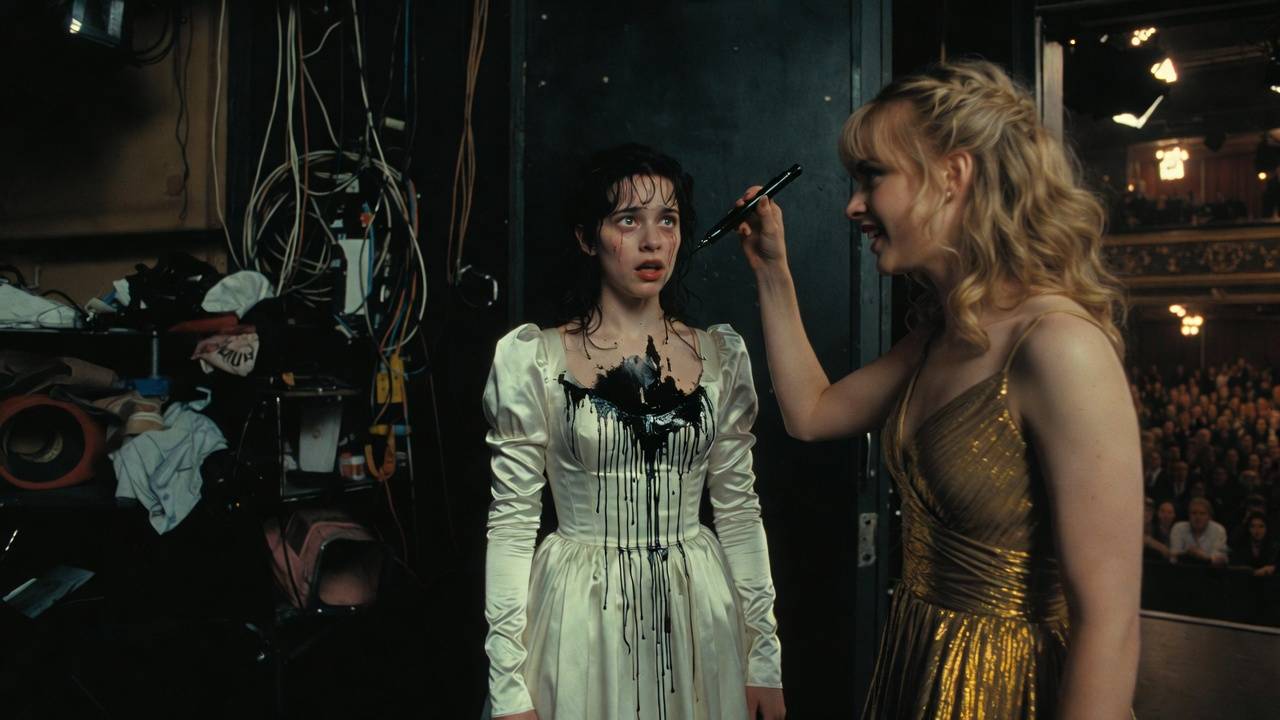
I sat in the dressing room, the ink-stained dress still on my body. My mother was there, her face a mixture of terror and pride.
“Elara,” she whispered, wiping a smudge of black from my cheek. “What have we done?”
“We told the truth, Ma,” I said. “Whatever happens next, at least we don’t have to carry it anymore.”
The consequences were swift. The Vanderbilt family attempted to sue for defamation, but the thumb drive—which I actually delivered to the authorities that night—was irrefutable. The “accident” was reclassified as a criminal assault. Tiffany was expelled, and the Senator was forced to resign his seat three weeks later amidst a broader investigation into his business dealings.
St. Jude’s lost half its board of directors. The school had to undergo a massive restructuring.
I was expelled too. “Conduct unbecoming of a student,” they called it. Mrs. Gable from Juilliard called me the next day.
“You won’t be coming to St. Jude’s anymore,” she said over the phone. “But I’d like you to come to Lincoln Center on Monday. We don’t care about the dress you wear, Elara. We care about the voice you use.”
I looked at my hands. The ink had stained my cuticles; it would take weeks to fully fade. But I didn’t mind. Every time I looked at them, I remembered the moment the mask slipped.
I went back to the theater one last time to clear out my locker. The place felt different. The “queen bees” were gone, replaced by a quiet, uncertain atmosphere. The students who remained looked at me with a mix of awe and fear.
I found a note taped to my locker. It was from Sarah.
I watched the video, it read. I’m practicing the cello again. My wrist still hurts, but my heart doesn’t. Thank you for wearing the ink.
Chapter 6: The Final Curtain
They say that New York has a short memory, but some stories leave scars that the city refuses to heal.
A year has passed since that night at the Lyceum. I’m standing backstage again, but this time it’s different. I’m at Juilliard. The air still smells of hairspray and dust, but there’s no fear in my throat.
Tiffany Vanderbilt is in a private treatment facility in Connecticut. Her parents are fighting a legal battle that will likely leave them with nothing but their names and a few empty estates. Sometimes I feel a flicker of pity for her—a girl who was taught that her only value was in stepping on others. But then I remember Sarah’s face the day she left school, and the pity evaporates like mist.
My mother doesn’t clean offices anymore. She works as a coordinator for a non-profit that helps inner-city kids get into the arts. She still has the ruined white dress. She keeps it in a box in the back of her closet.
“Why don’t you throw it away?” I asked her once.
“Because,” she said, “it’s the most expensive thing I ever bought. It bought your freedom.”
Tonight is my debut. I’m playing a role I chose—not a princess, but a woman who builds a world out of the wreckage of her past. I’m wearing a dress that is dark, bold, and intentionally messy. It’s a design that has become my trademark.
As I wait for my cue, I look at the stage manager. It’s not Marcus, but a young woman who looks a lot like Sarah used to. She smiles at me and gives a thumbs-up.
I step out onto the stage. The spotlight hits me, and for a second, I’m back at St. Jude’s. I’m that terrified girl with ink on her chest. But then I look at the audience. They aren’t looking for a perfect doll. They’re looking for a person.
I realize then that the world doesn’t need more Cinderellas; it needs people brave enough to show their stains.
I take a breath, the stage lights warming my skin. I am no longer a slave to their spotlight; I am the one who controls the light.
The ink didn’t ruin my life; it simply gave me the courage to write a better story.