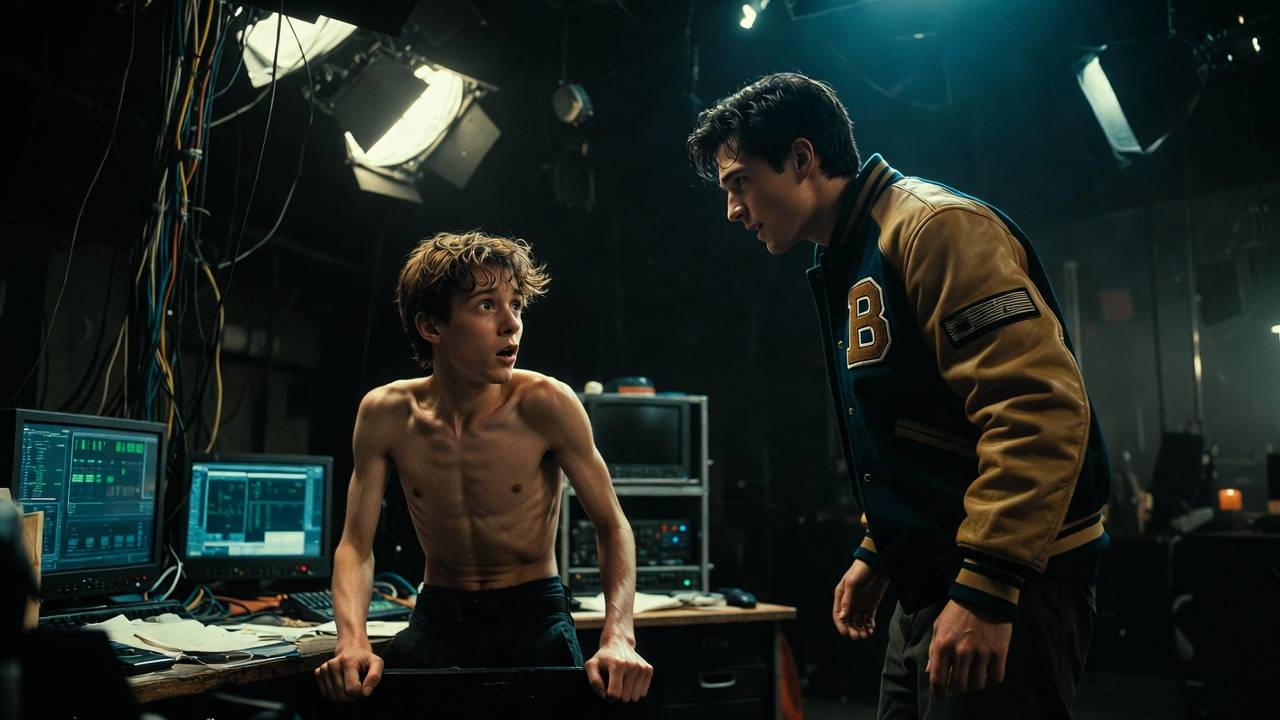
Chapter 5: The Fall of the King
The aftermath was a blur of blue and red lights. The school parking lot, usually quiet at this hour, was swarming with patrol cars and news vans. It turned out that when a top-tier investigative journalist brings a folder full of evidence to the State Police, they move very, very quickly.
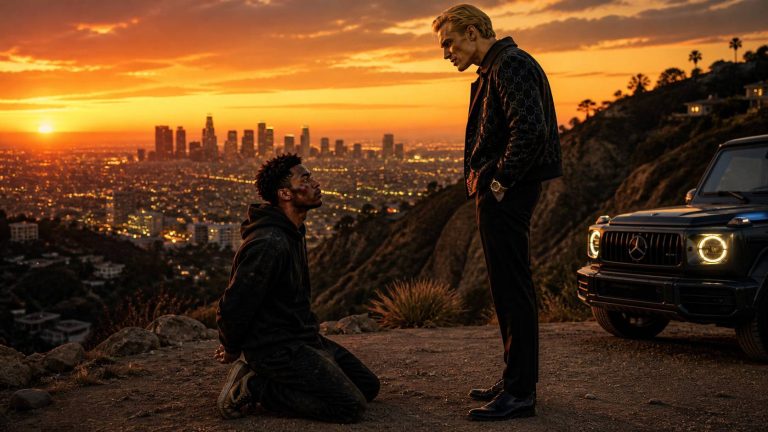
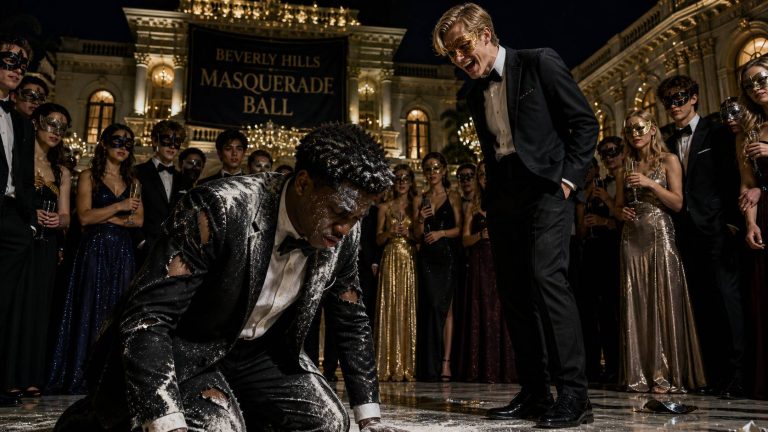
Julian was led out in handcuffs. He didn’t look like a king anymore. He looked like a child—small, pale, and terrified. His varsity jacket, the symbol of his untouchable status, was rumpled and stained with sweat.
His father arrived thirty minutes later in a black Mercedes. Arthur Vance didn’t go to his son. He went straight to the cameras, his face a mask of PR-ready concern. But he didn’t know that my mother had more than just Julian on tape. She had the emails. She had the records of the “donations” Arthur had made to the school board to cover up his son’s previous “mistakes.”
I sat on the back of an ambulance, a shock blanket draped over my shoulders. My mother walked over to me, leaving her crew to interview the arriving principal. She didn’t say anything at first. She just sat down next to me and pulled me into a hug that smelled like home and safety.
“I’m sorry, Leo,” she whispered into my hair. “I’m so sorry I let it get this far.”
“You didn’t let it,” I said, my voice cracking. “I wanted to handle it. I wanted to show him.”
“You did,” she said, pulling back to look me in the eyes. Her eyes were fierce, the same eyes that had stared down corrupt politicians and mobsters. “You used the truth. There’s no weapon more powerful than that.”
I looked over at the school building. The “On-Air” light in the studio window was finally dark. For the first time in four years, I didn’t feel like I was holding my breath.
Chapter 6: The Final Broadcast
The trial of the Vance family became the biggest story the state had seen in a decade. It wasn’t just about stolen cameras; it was about the rot at the heart of a small town that had let a bully run wild because his last name had weight.
Julian was sentenced to community service and a permanent expulsion, his “bright future” extinguished by a few minutes of live-streamed truth. His father faced racketeering charges that stripped him of his company and his influence.
I graduated two months later. I didn’t give a valedictorian speech, though my grades would have allowed it. I didn’t need a stage.
On my last day, I went back to the media lab. It was quiet. The equipment had been replaced, the room scrubbed of Julian’s presence. I stood behind the desk one last time.
I thought about the “Late News.” Julian had been right about one thing: I was born for the media. But not to be a joke. I was born to be the one who turns on the light when the monsters think they’re hidden in the dark.
I picked up my backpack and walked toward the door. I saw a new freshman standing there, looking nervous, holding a camera he clearly didn’t know how to use. He looked at me with wide, uncertain eyes.
“Is this where the news happens?” he asked.
I smiled, and for the first time, it was a warm, genuine thing. I reached out and patted his shoulder, the same way I wished someone had done for me.
“Yeah,” I said, stepping out into the sunlight. “Just remember—the most important story you’ll ever tell is the one where you refuse to stay silent.”
I walked down the hallway, the sound of my own footsteps echoing with a new kind of confidence, knowing that the world was finally listening.