CHAPTER 5: THE SIGNATURE
We went into the kitchen. My mother was standing by the stove, clutching a dish towel, her eyes wide as she looked at the “suits” sitting at our scarred wooden table.
“Mom, this is Mr. Thorne. He’s here to help us.”
“We’re here to partner with you, Mrs. Miller,” Thorne said gently. He laid out a thick stack of papers. “The initial signing bonus is three million dollars. That will be wired to your account the moment these papers are filed. Following that, you will receive five percent of the gross extraction value. Based on our estimates of the lithium vein… you’ll never have to worry about a bank again. Your grandchildren’s grandchildren won’t have to worry about a bank.”
My mother sat down heavily. “Three million?”
“It’s a fair price for what lies beneath,” Thorne said.
I looked at the pen. It was heavy, silver, and cold.
“There’s one condition,” I said.
Thorne narrowed his eyes. “Which is?”
“The mining. I want it done right. No open pits near the creek. No poisoning the water. And the hill where my father is buried… that stays untouched. Forever.”
Thorne looked at me for a long beat. He wasn’t used to people making demands when three million dollars was on the table. But he saw something in my eyes—the same thing that had kept me shoveling manure for eighteen hours a day while the world laughed.
“You have my word,” Thorne said. “We’ll put it in the contract. We use a deep-vein extraction method. The surface remains yours. You can keep the cows if you want.”
I looked at my mother. She nodded, her eyes swimming with tears.
I signed the paper.
As the ink dried, I felt a weight lift off my chest—a weight I hadn’t even realized I was carrying. It was the weight of every “no” we’d ever heard. The weight of every late notice. The weight of the Sterlings’ laughter.
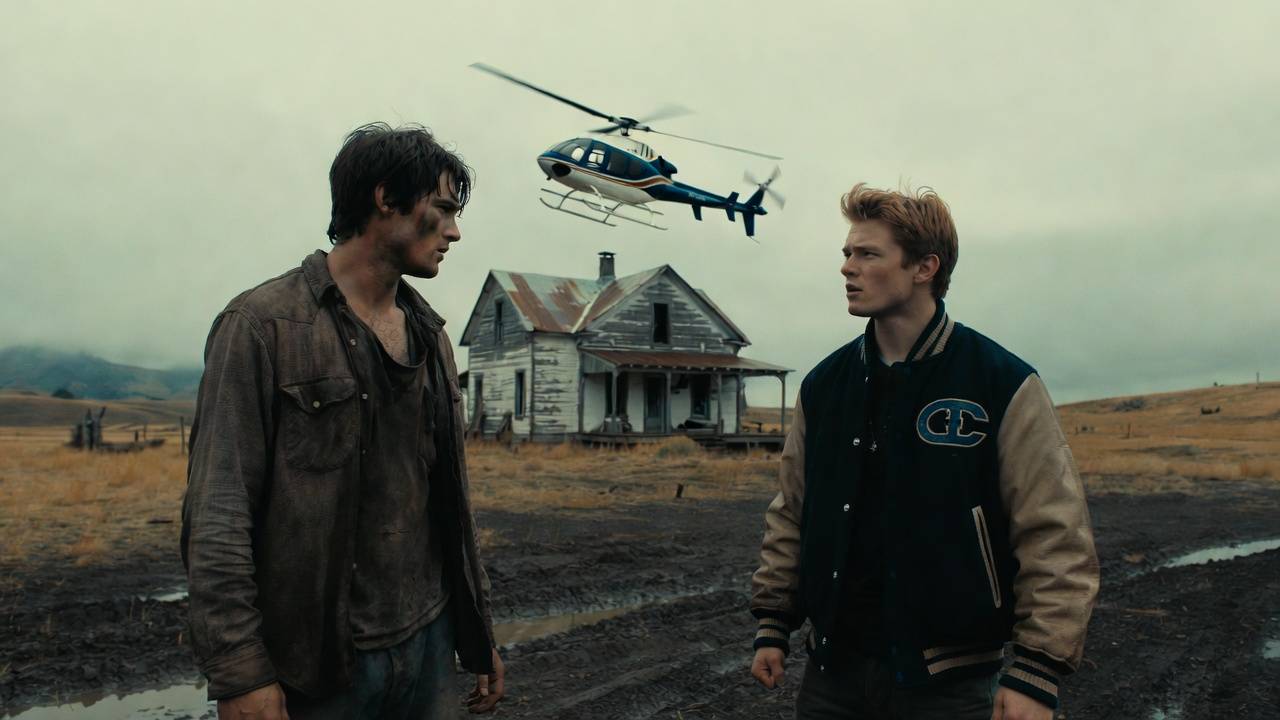
I walked the executives back to the helicopter. The wind had picked up, and a light rain began to fall—the rain Mr. Sterling had predicted.
“What are you going to do first, Caleb?” Sarah Jenkins asked, pausing at the door of the aircraft. “Buy a new car? A house in the city?”
I looked at the barn, the rusted roof, the leaning fences, and the vast, beautiful, unforgiving Montana sky. I smelled the rain hitting the dry earth—that scent of petrichor and ancient dust.
“I’m going to buy my mother a new hip,” I said. “And then I’m going to buy a new tractor. A big one. The kind that doesn’t break down when the world gets cold.”
She smiled and stepped inside. The helicopter roared to life, a whirlwind of power that flattened the tall grass for hundreds of yards. As it rose into the grey sky, disappearing toward the mountains, I stood there in the rain.
I was covered in mud. My boots were ruined. I smelled like the stables.
But for the first time in my life, I didn’t feel like the dirt was trying to bury me. I felt like it was holding me up.
CHAPTER 6: BLOOD AND SOIL
The news traveled through Bitterroot Valley faster than a forest fire.
By the next morning, the “Mud Boy” was the most famous man in three counties. People who hadn’t spoken to my mother in ten years were suddenly dropping by with casseroles. The bank manager called three times, his voice dripping with a greasy kind of friendliness that made me want to wash my ears out.
But I didn’t answer the door.
I spent the day on the porch with Old Man Halloway. I’d given him a check for fifty thousand dollars that morning. He’d tried to refuse it, his hands shaking, but I told him it was his “consultant fee.”
“You did good, kid,” Halloway said, sipping a beer. “Your dad… he would have hated the noise of the drills. But he would have loved seeing you stand up to that Sterling vulture.”
“It’s not about the money, Halloway,” I said, looking out at the North Hill. “Not really.”
“I know. It’s about who owns the story. For a long time, the Sterlings owned the story of this valley. Now, the story belongs to the man who actually worked the ground.”
That evening, I drove into town. I was still driving the old, beat-up Chevy. I pulled into the gas station—the one where Bryce and his friends usually hung out.
They were there. But they weren’t laughing.
Bryce was standing by his Raptor, looking at his phone. When he saw my truck, he froze. His friends shuffled uncomfortably, looking at their feet. The power dynamic had shifted so violently it had left a vacuum in the air.
I got out and walked toward the convenience store. I had to pass right by them.
“Caleb,” Bryce said. It wasn’t a taunt. It was a plea. “Hey, look… my dad… he’s real sorry about the foreclosure talk. He wants to invite you and your mom over for dinner. Talk about… you know… local investment.”
I stopped. I looked at Bryce. He looked so clean. So fragile.
“Tell your dad thanks,” I said. “But we’re busy. We’ve got a lot of work to do on the farm.”
“Work?” Bryce blinked. “But you’re rich now. Why would you still work?”
I looked down at my hands. The dirt was still under my fingernails. It would probably always be there. It was in my blood, just like it was in the soil.
“Because, Bryce,” I said, stepping closer until he had to lean back against his shiny truck. “The difference between you and me isn’t the money in our pockets. It’s that I know the value of the dirt, even when there’s no gold in it. You only like the land when it gives you something. I love it even when it takes.”
I walked into the store, bought a gallon of milk and a chocolate bar for my mom, and walked back out.
As I drove home, the sun was setting, casting long, purple shadows across the valley. I thought about the drills that would soon be humming beneath the earth. I thought about the change that was coming.
But as I pulled into my driveway and saw the light on in the kitchen window—the light that would stay on now, because the bill was paid—I realized something.
They thought the mud was my shame. They thought the smell of the earth was a sign of failure. They didn’t realize that the hardest lives produce the strongest hearts, and that sometimes, the treasure isn’t what you find at the end of the road, but the strength you found while you were walking through the muck.
I stepped out of the truck and felt the Montana soil beneath my boots. It felt solid. It felt like home.
The world may judge you by the dirt on your clothes, but remember—the same earth that buries the weak is the foundation upon which the strong build their empires.