Chapter 5
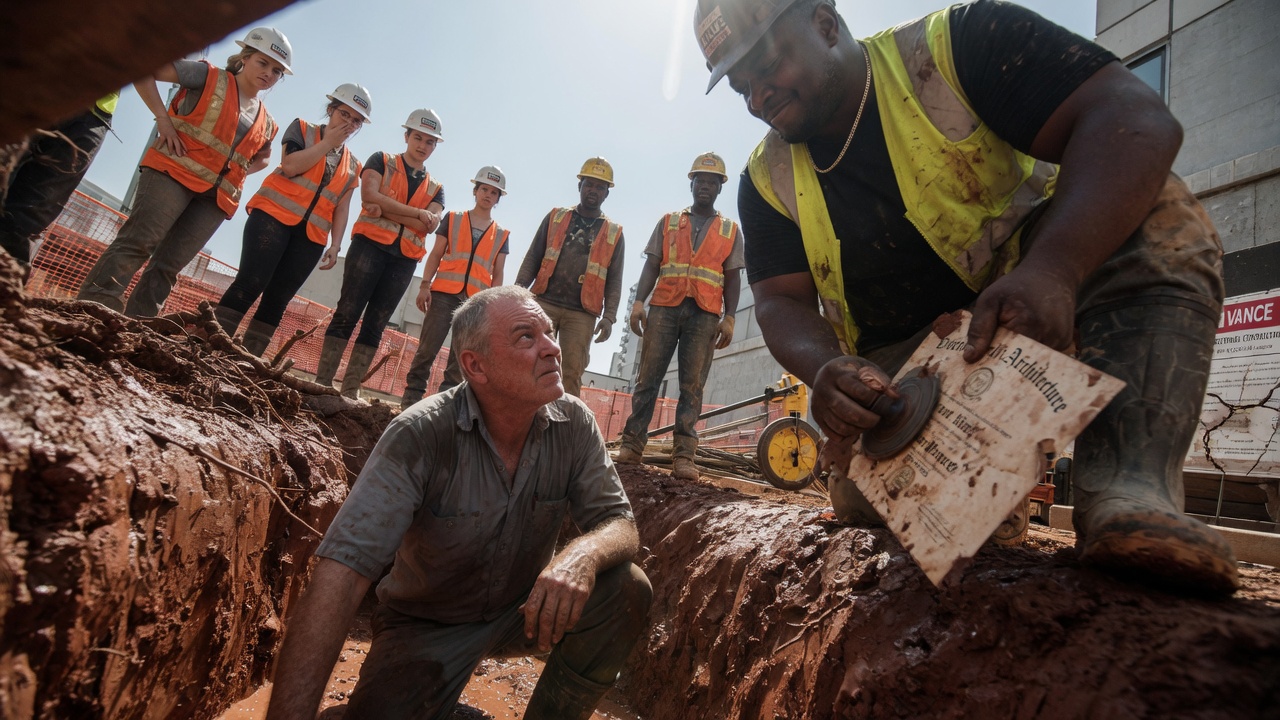
The drive home from the site felt like a slow-motion descent into a different kind of vacuum. The air conditioning in Arthur’s old Ford Ranger had given up somewhere around July, so he rode with the windows down, the humid Atlanta air whipping through the cab, smelling of hot asphalt and the impending rain that never seemed to actually arrive. His knuckles were swollen, a dull, rhythmic throb beginning to settle into the bones of his right hand. He kept his eyes on the road, but his mind was still back in that trench, replaying the moment Bear’s arm had snapped off-line and the hollow thud of the palm strike landing against the man’s sternum.
It wasn’t the satisfaction of the hit that haunted him; it was the precision. After years of intellectual abstraction, his body had remembered exactly how to be a physical thing. He had grown up in a house where silence was a survival skill and his father’s hands were the primary language, but he had spent three decades burying that version of himself under layers of tenure, tweed, and Greek ethics. One afternoon in a Georgia mud pit had stripped it all away.
When he pulled into the gravel driveway of the small, sagging bungalow he now called home, he sat in the truck for a long time, watching a single wasp bounce against the windshield. He looked at his hands—grimy, calloused, and now stained with Bear’s blood where the foreman’s lip had caught his knuckle.
“Arthur?”
The voice came from the porch. It was Mrs. Gable, the evening nurse. She was a stout woman with a face that seemed perpetually tired but never unkind. She was wiping her hands on a floral apron, her expression tightening as she looked at him.
“You’re home early,” she said as he stepped out of the truck. She paused, her eyes traveling from his mud-caked boots to the damp, grey shirt clinging to his ribs. “And you look like you’ve been through a thresher.”
“Just a rough day on the site,” Arthur said, his voice sounding thin even to his own ears. He tried to hide his hand, but Mrs. Gable was too sharp for that.
“Let me see it,” she commanded, stepping down the stairs. She took his wrist with the practiced firmness of someone who had spent thirty years in an ER. She hissed through her teeth as she inspected the swelling. “That’s not from a shovel, Arthur Vance. I know what a punch looks like.”
“I tripped,” he lied. It was a weak lie, the kind he would have failed a student for.
Mrs. Gable looked at him for a long moment, her eyes softening into something that felt uncomfortably like pity. “I won’t ask. But I need the rest of the payment for this week. My daughter’s car needs a new alternator, and I can’t be waiting until Friday.”
Arthur felt a cold stone drop in his stomach. He had eighty dollars in his pocket—his pay from the day before—but he had just walked off the job. There would be no Friday paycheck. No insurance bridge. Nothing.
“I’ll have it for you tonight,” he said, the words feeling like ash. “I just need to… I need to clean up and check on Diane.”
“She’s having a clear afternoon,” Mrs. Gable said, stepping aside. “Talk to her while she’s still with us. The morphine is keeping the pain back, but the fog is getting thicker.”
Arthur nodded and walked past her, the screen door groaning on its hinges. The house smelled of lavender, bleach, and the metallic tang of illness. He went to the bathroom first, scrubbing his hands until they were raw, watching the red clay swirl down the drain. He looked at himself in the cracked mirror. He looked like a stranger—a man with deep-set shadows under his eyes and a jawline that had hardened into a permanent grimace.
He changed into a clean linen shirt, one of the few pieces of his old life he hadn’t sold or ruined, and walked into the bedroom. Diane was propped up on the pillows, the light from the setting sun catching the grey in her hair. She looked fragile, like a piece of spun glass that would shatter if he breathed too hard.
“Arthur,” she whispered, her eyes fluttering open. She reached out a hand, her fingers trembling. “You smell like the outdoors.”
“It was a busy day,” he said, sitting on the edge of the bed and taking her hand. He kissed her knuckles, avoiding the bruised spots where the IV had been. “The project is moving fast.”
“You work too hard,” she said, her voice drifting. “I miss the university. I miss the way you’d come home and talk about your students. Remember that boy? The one who thought he could disprove Plato using a deck of cards?”
Arthur forced a smile. “Young Mr. Henderson. Yes, I remember.”
Mentioning Henderson felt like touching an open nerve. Henderson, the man who was currently sitting in Arthur’s old office, probably drinking the expensive scotch Arthur had left behind, while Diane lay here fading away. The plagiarism evidence sat in a locked drawer in the hallway, a stack of papers that could end Henderson’s career in forty-eight hours. But it would also name Maya, the student whose work Henderson had stolen. Maya, who had just started a fellowship in London. If Arthur used the proof, the scandal would follow her, too. The academic world didn’t distinguish between the predator and the prey once the blood hit the water.
“Did you… did you finish the chapter?” Diane asked, her grip on his hand tightening slightly.
“Almost,” he said. He was secretly writing his magnum opus—a critique of the modern collapse of institutional integrity—on the back of discarded blueprints he took from the site. It was a desperate, feverish work, written in the margins of plumbing diagrams and electrical layouts. “It’s coming along, Dee.”
“Good,” she sighed, her eyes closing again. “You were meant for the light, Arthur. Not the dark.”
He stayed with her until she drifted back into a morphine-induced sleep, then he walked out to the kitchen. His phone, which he usually kept on silent, was vibrating on the counter. He picked it up and saw twelve missed calls and a string of text messages.
The first was from Julian Thorne, a former colleague who had been the only one to send a card after the “cancellation.”
Arthur, for the love of God, tell me that isn’t you on Twitter.
Arthur’s heart skipped. He opened the link Julian had sent.
The video was raw, shaky, and already had two million views. It was the “viral” perspective of the fight. It started with Bear stepping on the diploma, the sound of his laughter amplified by the phone’s microphone. Then the water dump. And then, the explosion.
Watching himself from the outside was jarring. He looked smaller than he felt, a lean, grey-haired man standing in a pit. But when he moved, he moved with a terrifying efficiency. The arm snap, the palm strike, the push kick—it happened in less than three seconds. The camera caught the moment Bear hit the mud, the sound of the crew’s collective gasp, and the way Arthur stood over him, looking not like a laborer, but like a judge.
The comments were a chaotic mix of “Instant Karma” and “Who is this guy?” But some had already started to put the pieces together. Wait, is that Dr. Vance? The guy from the Ivy League scandal?
The phone rang in his hand. It was an unknown number with a New York area code. Then another from a local Atlanta firm.
Arthur put the phone face-down on the table. He felt a wave of nausea. This wasn’t justice. This was a spectacle. He had tried to disappear, to protect Diane’s peace and Maya’s future, but the world had reached into his trench and pulled him out by the throat.
There was a heavy knock at the door.
Arthur walked to the front of the house, his legs feeling like lead. He opened the door to find two men in dark suits standing on the porch. Behind them, a white SUV with the logo of the construction firm was idling at the curb.
“Dr. Vance?” the taller one asked. He didn’t look like a cop. He looked like a lawyer—the kind that costs five hundred dollars an hour.
“I don’t work for you anymore,” Arthur said, his voice cold.
“We’re not here about your employment, Arthur,” the man said, stepping forward without being invited. “We’re here about the video. And the fact that our lead foreman is currently in the hospital with two broken ribs and a collapsed lung.”
Arthur didn’t move. “He stepped on my property. He assaulted me with a bucket of contaminated water. I gave him a warning.”
“The law doesn’t care much for warnings when a PhD-holding intellectual puts a laborer in the ICU,” the lawyer said, a thin, predatory smile touching his lips. “The company is facing a massive PR nightmare, and the owner is looking for a scapegoat. You have twenty-four hours to sign a non-disclosure agreement and a statement admitting you instigated the violence. If you don’t, we’ll press charges for aggravated assault. And we’ll make sure the university insurance company knows exactly why you were fired for cause. They’ll claw back every cent they paid for your wife’s care.”
Arthur felt the world narrowing. The air in the room felt thin.
“Get off my porch,” Arthur whispered.
“Think about it, Arthur,” the lawyer said, stepping back. “You’re a man who values the truth. But the truth is very expensive. Can you afford to be right when your wife needs to breathe?”
They left, the SUV kicking up gravel as it sped away. Arthur stood in the doorway, the sound of the cicadas in the trees rising to a deafening roar. He looked at the drawer where the evidence against Henderson was kept.
He was a man of ethics. He had spent his life teaching that the moral choice is the only one that matters. But as he looked back toward the bedroom where Diane lay dying, he realized that he was being asked to choose between his soul and her life.
He walked to the desk, pulled out the blueprints he’d been writing on, and stared at the lines of neat, academic prose. It was a masterpiece on the death of honor. And it was written on the ruins of his own.
Chapter 6
The rain finally came at four in the morning—a violent, bruising downpour that turned the dusty Georgia streets into rivers. Arthur sat in the dark of his living room, the blueprints spread out on the coffee table like a map of a country he no longer recognized. He hadn’t slept. Every time he closed his eyes, he saw the lawyer’s thin smile and the way Bear’s ribs had felt under his hand.
He was trapped. If he signed the NDA, he would be admitting to a lie that would permanently cement his reputation as a violent, unstable man. If he didn’t, the construction firm would destroy what was left of Diane’s comfort. It was the kind of moral trap he used to set for his graduate students, a hypothetical exercise in the weight of utility versus principle. Only now, the stakes weren’t a grade; they were the morphine in the pump and the nurse in the hallway.
A soft light flickered from the bedroom. Arthur stood up, his joints popping, and walked to the door.
Diane was awake. Her eyes were clear, a rare moment of lucidity that sometimes preceded the end. She was looking at the window, watching the rain lash against the glass.
“Arthur,” she said, her voice stronger than it had been in days. “Come here.”
He sat beside her, the smell of the damp earth outside drifting through the screen. “I’m here, Dee.”
“I saw the paper,” she said.
Arthur’s heart stopped. “What paper?”
“The one in the laundry,” she whispered. “The medical bill. The one that said ‘Uninsured.’ Why didn’t you tell me?”
Arthur looked away, the shame hot and thick in his throat. “I didn’t want you to worry. I thought I could handle it. I was… I was working.”
“Digging holes,” she said. It wasn’t a question. “Mrs. Gable told me. She thought I knew. She said you were a hero to the men on the site.”
“I’m not a hero, Diane. I’m a man who couldn’t protect his wife.”
“Look at me,” she commanded. He turned, and she reached up, her thumb brushing the dark circles under his eyes. “You spent your whole life trying to be a good man by the world’s standards. You followed the rules. You protected people who didn’t deserve it. You stayed silent for that girl, Maya, even when it cost you everything.”
“She was just a kid,” Arthur said. “She didn’t know what Henderson was.”
“And look what it did to you,” Diane said, a flash of her old fire returning to her eyes. “You’re dying with me, Arthur. Bit by bit, you’re letting them bury you. I won’t have it. I won’t let my legacy be the reason you let those small, mean men win.”
“The insurance, Dee… the lawyer came by. They’ll take the care away.”
“Let them,” she said, her voice steady. “I’m ready, Arthur. We’ve had thirty years. I don’t need another month of medicine if the price is your soul. I want you to go to that desk. I want you to take that folder. And I want you to burn that world down.”
She gripped his hand with a strength that shouldn’t have been possible. “Promise me. Don’t let the last thing I see be you hiding in a hole.”
Arthur felt a sob catch in his chest, a jagged thing that he had been holding back for a year. He leaned his forehead against hers, the two of them breathing in the same stale, hospital-scented air.
“I promise,” he whispered.
He stayed with her until the sun began to bleed through the clouds, a pale, sickly yellow. Then, he stood up. He walked to the hallway, opened the locked drawer, and pulled out the manila folder. He also took the blueprints—his unfinished book.
He didn’t call the lawyer. He didn’t call the university.
He called Sarah, the architecture intern.
They met at a small diner three miles from the site. The place was nearly empty, the air smelling of burnt coffee and grease. Sarah was sitting in a corner booth, her white hardhat on the seat beside her. She looked nervous, her eyes darting to the door as Arthur walked in.
“I wasn’t sure you’d come,” she said, her voice low.
“You’re the only person on that site who looked at me like a human being,” Arthur said, sliding into the booth.
“The video is everywhere, Dr. Vance,” she said. “The company is terrified. They’re already scrubbing your name from the payroll, but it’s too late. The interns… we all know. We looked up your lectures. We read your 2018 paper on ‘The Architecture of Deception.'” She looked down at her coffee. “My father is the Dean of Students at the university you left. He’s the one who signed your termination papers.”
Arthur felt a cold laugh bubble up. “The world is smaller than I thought.”
“He’s a good man, but he was scared,” Sarah said. “He was told there were emails. He was told there was proof.”
“There was,” Arthur said. He slid the folder across the table. “But not the kind they thought. Inside this folder is the original manuscript for Henderson’s tenure project. It’s written in Maya’s hand. There are date-stamped digital receipts from the university server that show Henderson accessed her private drive six months before the book was published.”
Sarah opened the folder, her eyes widening as she scanned the pages. “Why didn’t you show this? You could have stopped it.”
“Because Maya was twenty-one and terrified,” Arthur said. “Henderson told her that if she spoke up, he’d make sure she never worked in academia again. I thought I could handle the fallout. I thought I was strong enough to be the scapegoat.” He paused, his voice cracking. “I was wrong. I was arrogant. I thought my dignity was something I could keep in a lunchbox. But dignity isn’t a possession. It’s a practice.”
He looked at Sarah, his eyes hard and bright. “I need you to give this to your father. Not as a plea for my job. I don’t want that job back. I want the truth in the record. And I want Maya protected. There’s a contact for a lawyer in London in there—someone who has already agreed to represent her pro bono if this goes public.”
Sarah took the folder, her hands trembling. “And what about you? The construction company… Bear’s family is talking about a lawsuit.”
Arthur stood up. He reached into his pocket and pulled out the crumpled, mud-stained remains of his PhD diploma. He laid it on the table.
“Tell them I’ll see them in court,” Arthur said. “And tell Bear that if he ever steps on another man’s life again, I won’t just push him. I’ll finish the job.”
He walked out of the diner and into the cool morning air. The rain had stopped, leaving the world looking polished and raw.
He drove back to the house, but he didn’t go inside immediately. He went to the backyard, to the small shed where he kept his tools. He pulled out a metal trash can and a box of matches.
One by one, he began to feed the blueprints into the fire. The pages of his magnum opus—the brilliant, bitter critique of a world that had rejected him—curled and blackened in the heat. He watched the words disappear, the ink turning to ash and rising into the Atlanta sky.
He didn’t need the book. He didn’t need the tenure. He didn’t even need the diploma.
He went back into the house. Mrs. Gable was sitting in the kitchen, a cup of tea in her hands. She looked up as he entered, her expression grave.
“Arthur,” she said softly.
He didn’t need her to finish the sentence. He felt the silence in the house—a new kind of silence, one that wasn’t heavy or pressurized, but vast.
He walked into the bedroom. Diane’s face was peaceful, the light from the window catching the stillness of her features. She looked like she was finally resting, the weight of the world no longer hers to carry.
Arthur sat by her bed. He didn’t cry. He felt a strange, quiet power settled into his bones. He had lost his career, his reputation, and now the love of his life. But as he looked at his hands—dirty, scarred, and strong—he realized he had finally become the man he had spent thirty years teaching about.
He wasn’t a professor. He wasn’t a laborer. He was Arthur Vance.
An hour later, the phone on the kitchen table began to ring. It was a reporter from the Atlanta Journal-Constitution. Then a call from the University Board.
Arthur didn’t answer. He walked to the porch and sat in the old wooden rocker. He watched the sun climb higher, burning the last of the mist off the red clay of the Georgia hills. He looked at the gravel driveway where his truck sat, a small, battered vessel that had carried him through the storm.
He knew the fire was coming. The scandal would break, Henderson would fall, and the construction company would try to bury him in legal fees. But as he sat there in the quiet morning, Arthur Vance felt a dangerous, boiling dignity.
He had spent his life in the ivory tower, looking down at the world. He had spent his last year in a trench, looking up at it.
Now, for the first time, he was standing on his own two feet, right in the middle of the dirt. And he wasn’t going anywhere.