The desert sun was beating down on my back like a whip, and my throat felt like it was filled with broken glass. I was only twelve years old, but my hands were already rough and bleeding from carrying heavy limestone blocks in the scorching heat of the Pharaoh’s quarries.
I didn’t know who my real parents were. I only knew the cruelty of the overseers and the heavy weight of the chains around my ankles. My mother, a kind-hearted elderly slave woman who had raised me in the mud brick huts by the Nile, had always told me to keep my head down. “Do not let them notice you, Kem,” she would whisper at night, washing my wounds with dirty river water. “The powerful people of Egypt do not see us as humans. To them, we are just dust under their sandals.”
But that day, I couldn’t help it. I was so thirsty, so completely exhausted, that my legs gave out. I collapsed right in front of the royal pavilion during the Great Festival of Ra.
And that was my greatest mistake. Because standing right there was Lord Haremhab, the most ruthless noble in the entire desert kingdom.
He didn’t see a starving child. He saw an annoyance. He saw a bug that needed to be crushed.
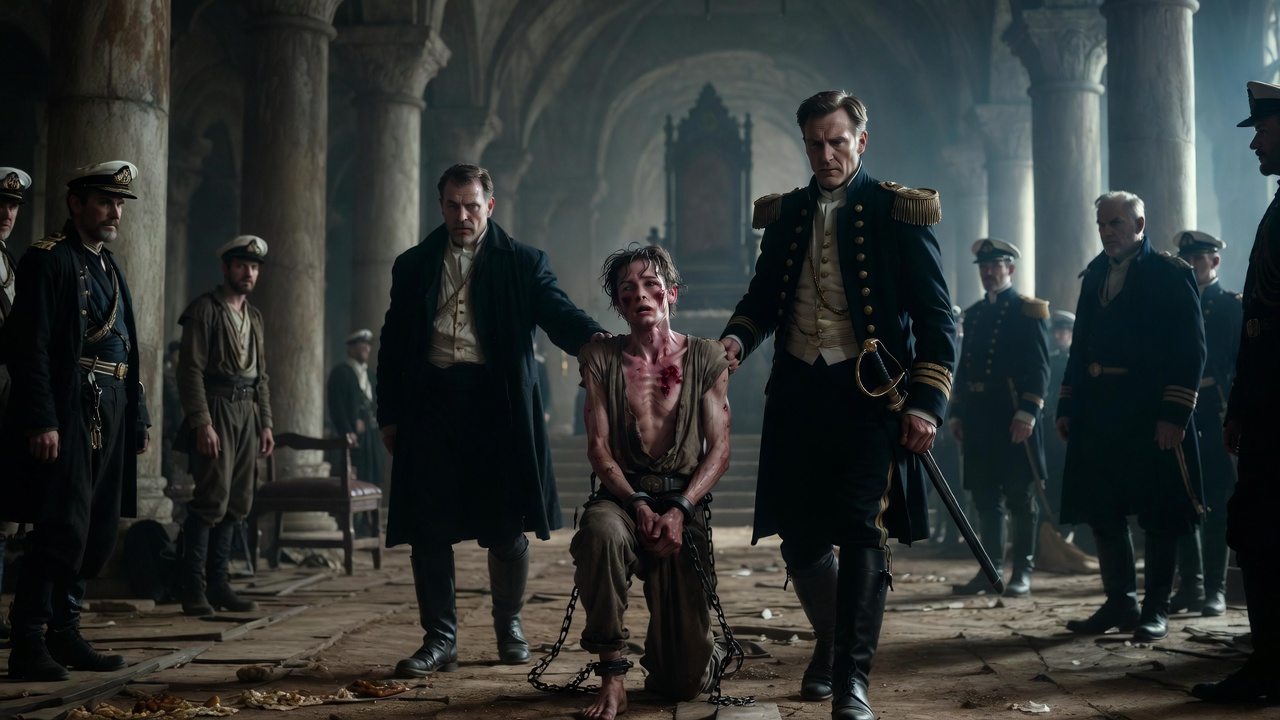
Lord Haremhab stepped forward, his fine white linen robes gleaming in the harsh sunlight. He didn’t hesitate. He kicked me squarely in the ribs, sending my fragile body rolling into the center of the Great Desert Arena. The crowd of wealthy nobles up in the balconies gasped, and then they began to laugh.
“Look at this filthy rat,” Lord Haremhab mocked, his voice echoing across the stone walls. “You dare pollute the sacred grounds with your worthless blood?”
I tried to crawl away, my tears mixing with the dust on my face. But he wasn’t done. He walked over and slammed his heavy, leather-bound boot directly onto my left hand, pinning it to the burning sand. I let out a piercing scream of pure agony as I heard the tiny bones in my fingers crack.
“Please, my lord!” I begged, looking up at his cruel, grinning face. “Mercy! I was only dizzy!”
“Mercy is for humans, slave,” he sneered. He turned toward the royal box, where the high guards held the chains of a massive, roaring desert sphinx—a terrifying beast captured from the deep wastes, its claws tearing at the earth. “Let us see if the gods think your life is worth saving. Shove him closer!”
The guards grabbed me, forcing me toward the snarling beast. I was terrified. I closed my eyes, preparing for the end.
But as Lord Haremhab pushed me down into the dirt right below the Pharaoh’s throne, my ragged linen tunic tore completely open at the shoulder.
High Pharaoh Amenhotep, who had been watching the festival with cold, bored eyes, suddenly froze. He leaned so far forward over the golden balcony that his royal crown nearly slipped from his head. His face turned completely pale, as white as the desert limestone.
The Pharaoh rose to his feet, his hands trembling so hard he knocked his golden wine chalice to the floor. It clattered loudly down the stone steps.
“Stop!” the Pharaoh’s voice boomed like thunder across the entire arena. “Nobody move a single muscle!”
Lord Haremhab froze, his hand still gripping my torn collar. The entire crowd went dead silent. You could hear the wind blowing off the Nile.
The Pharaoh wasn’t looking at the noble lord. He was staring directly at my exposed shoulder, his eyes wide with an emotion I had never seen on a ruler’s face before. Pure, unadulterated shock.
I know you’re curious about what happens next—Read the full story in the comments.
CHAPTER 1
The desert sun was beating down on my back like a whip, and my throat felt like it was filled with broken glass. I was only twelve years old, but my hands were already rough and bleeding from carrying heavy limestone blocks in the scorching heat of the Pharaoh’s quarries.
I didn’t know who my real parents were. I only knew the cruelty of the overseers and the heavy weight of the chains around my ankles. My mother, a kind-hearted elderly slave woman named Merit who had raised me in the mud-brick huts by the Nile, had always told me to keep my head down.
“Do not let them notice you, Kem,” she would whisper at night, washing my wounds with dirty river water in the dark. “The powerful people of Egypt do not see us as humans. To them, we are just dust under their sandals. Keep your eyes on the ground, and stay alive.”
I tried to follow her advice. I really did. But the human body can only take so much abuse before it breaks.
That day was the Great Festival of Ra. The entire city of Thebes was alive with music, the smell of burning incense, and the loud cheers of wealthy citizens. The high nobles, the military commanders, and the royal family had gathered in the massive Great Desert Arena, a giant stone structure built into the side of a red sandstone cliff.
We, the slaves, were forced to haul massive jars of water and heavy platters of roasted meats up the steep stone steps to feed the wealthy guests. I hadn’t eaten a single scrap of food in two days. My water ration had been stolen by a larger slave the night before. My vision was swimming, and every step felt like I was lifting a mountain.
As I carried a heavy bronze tray loaded with golden chalices near the royal pavilion, my legs simply gave out. My knees buckled.
The heavy bronze tray flew out of my hands, crashing loudly against the stone floor. Wine spilled everywhere, staining the pristine white steps. I collapsed into the dirt, panting for air, my heart hammering against my ribs like a trapped bird.
I knew immediately that I was in terrible danger. In ancient Egypt, interrupting a royal festival was a crime punishable by death.
“You filthy, clumsy animal!” a voice roared.
Before I could even look up, a heavy, leather-bound boot slammed into my ribs. The force of the kick sent my fragile body rolling down the steps, tumbling directly into the center of the hot sand of the arena floor.
The crowd of thousands of wealthy nobles up in the balconies gasped in surprise, and then, a horrific sound followed. They began to laugh. To them, a slave boy rolling in the dirt was just a pre-show entertainment.
I gasped for air, clutching my chest as the pain flared through my body. Through my blurred vision, I saw the man who had kicked me. It was Lord Haremhab. He was the most ruthless noble in the entire desert kingdom, a man who owned thousands of slaves and treated them worse than cattle. He was a close advisor to the court, and he believed he was a god among men.
Lord Haremhab stepped down into the arena sand, his fine white linen robes gleaming in the harsh afternoon light. He wore massive gold cuffs on his wrists and a heavy collar of turquoise and lapis lazuli around his neck. His face was twisted in disgust as he looked down at me.
“Look at this starving rat,” Lord Haremhab mocked, his voice echoing across the stone walls so everyone could hear. “You dare pollute the sacred grounds of the Pharaoh with your worthless, wretched presence? You dare ruin the wine of the gods?”
“Please, my lord…” I whimpered, my tears mixing with the thick dust on my face. I tried to push myself up onto my hands and knees to beg for mercy. “Mercy, please. I was only dizzy. I haven’t had water… I did not mean to fall.”
“Silence!” he screamed.
He walked over and slammed his heavy boot directly onto my left hand, pinning my fingers into the burning sand. He pressed down with all his weight, grinding his heel into my flesh.
I let out a piercing, agonizing scream that echoed off the high stone walls. I could hear the tiny bones in my fingers cracking under his boot. Tears poured down my face as I begged him to stop, but my pain only seemed to amuse him. The nobles in the stands cheered, waving their silk fans.
“Mercy is for humans, slave,” Haremhab sneered, leaning down closer to me. “To me, you are less than the dirt beneath my heel. And today, you will serve a purpose. You will entertain the High Pharaoh.”
He turned toward the far side of the arena, where a massive iron cage stood. Inside the cage was a terrifying desert beast—a legendary, starving sphinx-like lion captured from the deep, lawless wastes of the south. Its roars shook the very foundation of the stone walls, and its massive claws tore at the earth, desperate for blood.
“The beast is hungry,” Haremhab shouted to the royal guards. “Let us see if the gods think this trash is worth saving. Drag him to the cage! Let the beast have its meal!”
Two massive royal guards marched forward, their bronze armor clanking. They grabbed me by my thin arms, dragging my body across the hot sand toward the iron bars of the snarling beast. The lion snapped its jaws, its hot, foul breath washing over my face. I screamed, kicking my legs, looking frantically at the crowd for anyone who might show pity. But I saw only cold, laughing faces.
They shoved me down into the dirt right below the main royal pavilion, directly beneath the high throne of the Pharaoh himself. Lord Haremhab walked over, grabbing the back of my torn, ragged linen tunic to force me to my knees right in front of the beast’s cage.
But as Haremhab violently ripped at my collar to force my head down into the sand, the fragile, old fabric of my tunic tore completely open, exposing my bare back and shoulder to the glaring sun.
Up on the golden throne, High Pharaoh Amenhotep had been watching the scene with cold, bored eyes. He was an older man, his face lined with deep sorrow, a ruler who had checked out from the world ever since a great tragedy had struck his house twelve years ago.
But the moment my shoulder was exposed, the Pharaoh suddenly froze.
His eyes widened so large it looked as if he had seen a ghost. His breath caught in his throat. He leaned so far forward over the golden balcony rail that his heavy royal headdress nearly slipped from his head. His face turned completely pale, the color draining from his skin until he looked like stone.
The Pharaoh rose to his feet so violently that his hands slammed into his golden wine chalice. The heavy cup tumbled over, pouring dark red wine down the stone steps like a stream of blood. It clattered loudly against the floor, but nobody cared about the wine anymore.
“Stop!” the Pharaoh’s voice boomed like thunder, shaking the entire arena. “Nobody move a single muscle!”
Lord Haremhab’s hand froze mid-air, his fingers still gripping my torn collar. He blinked, completely confused, looking up at the royal pavilion. The two guards immediately stepped back, dropping to their knees in respect.
The entire crowd of thousands went dead silent. The laughter died instantly. The only sound left was the panting of the wild beast in its cage and the wind howling off the Nile.
The Pharaoh wasn’t looking at Lord Haremhab. He wasn’t looking at the guards. He was staring directly at my exposed left shoulder.
There, etched deeply into my skin, was a very specific, raised birthmark shaped exactly like a sacred golden scarab, surrounded by three tiny, perfectly symmetrical white scars—the mark of a sacred childhood ritual that had only ever been performed on one child in the history of the current dynasty.
I lay there in the dust, cradling my broken hand, shivering despite the intense desert heat. I didn’t understand why the Pharaoh was looking at me like that. I didn’t know what was happening. I only knew that the most powerful man in the world was staring at me as if I held the keys to his very soul.
The Pharaoh’s chest heaved. He looked at his high priest, then back down at me. His lips trembled, and when he spoke, his voice was no longer that of a powerful ruler, but of a broken, desperate father.
“Bring that boy closer to me,” the Pharaoh whispered, though in the silence, it carried to every ear. “Bring him to the foot of my throne. Right now.”
Lord Haremhab swallowed hard, his arrogance faltering for just a brief second before his cruel smile returned. He assumed the Pharaoh simply wanted to deliver a more poetic execution himself.
“Of course, Your Majesty,” Haremhab said smoothly, bowing low. “I will personally drag this garbage to your feet so you may watch him suffer.”
Haremhab reached down to grab my hair, but before his fingers could touch me, a bronze spear flew through the air, embedding itself deeply into the sand just an inch away from Haremhab’s boot.
“Do not touch him!” the Pharaoh roared, his eyes flashing with a terrifying rage. “If you lay one more finger on that child, Haremhab, I will have your hands severed and fed to the river.”
Lord Haremhab stumbled backward, his face turning pale as the sand beneath him. He looked up at the throne, his mouth hanging open in absolute shock. The crowd gasped.
I lay there, bleeding, completely terrified, wondering why the king of all Egypt was defending a worthless quarry slave.
CHAPTER 2
The silence in the Great Desert Arena was heavy, suffocating, and absolute. Thousands of eyes shifted from the magnificent golden pavilion of the Pharaoh down to my broken, trembling body in the dirt.
I could hear my own ragged breathing. Every gasp hurt my ribs, and my left hand throbbed with a blinding, white-hot agony where Lord Haremhab had crushed it. I looked at my fingers, covered in red sand and blood, and wondered if I was already dead and walking through the underworld.
“Guards,” the Pharaoh commanded, his voice trembling with an emotion that sent chills down my spine. “Lift him. Gently. If you harm a hair on his head, your lives are forfeit.”
The two massive royal guards who had just been ready to throw me to the beast now approached me as if I were made of fragile glass. They exchanged terrified glances. They carefully reached down, avoiding my injured hand, and lifted me to my feet. My legs were like water; I couldn’t stand on my own. They had to support my weight, carrying me slowly up the stone steps toward the royal pavilion.
Lord Haremhab followed closely behind, his eyes darting back and forth, trying to understand what was happening. The arrogance had left his face, replaced by a tense, nervous confusion. He kept adjusting his heavy gold collar, his forehead suddenly sweating profusely under the harsh sun.
“Your Majesty,” Haremhab spoke up, his voice forced and overly polite as we reached the top of the stairs. “I do not understand. This is merely a wretched slave boy from the eastern quarries. He is a thief, a clumsy disruptor of the sacred festival. Why do you waste your divine gaze on such filth?”
Pharaoh Amenhotep did not answer him. He didn’t even look at Haremhab.
The ruler of Egypt stepped down from his golden throne. His long, ceremonial robes swept across the stone floor. As he came closer to me, I saw the deep lines of grief on his face. He looked ancient, burdened by years of sorrow. But right now, his eyes were burning with a desperate, wild hope.
He stopped just two feet away from me. The royal guards bowed their heads, holding me steady. I was terrified. I kept my eyes firmly fixed on the Pharaoh’s golden sandals, remembering my mother Merit’s warning: Never look them in the eye.
“Look at me, child,” the Pharaoh whispered. His voice was cracked, completely devoid of the royal authority he usually carried. It sounded like a plea.
I hesitated, shiver running down my spine. Slowly, fearfully, I tilted my head up. I looked into the eyes of the High Pharaoh. They were filled with tears.
The Pharaoh reached out a trembling hand. He didn’t care that I was covered in filth, sweat, and quarry dust. He bypassed my face and gently, reverently, pushed the torn linen of my tunic further down my left shoulder.
His fingertips lightly brushed the crimson birthmark shaped like a scarab. Then, his thumb traced the three distinct white scars that surrounded it.
A loud gasp escaped the Pharaoh’s throat. He stumbled back a step, covering his mouth with both hands.
“By the gods,” the high priest muttered from behind the throne, his eyes widening in horror. “The Seal of Anubis. The marks of the protection ritual. It cannot be.”
“What is the meaning of this?” Lord Haremhab demanded, stepping forward aggressively, his anxiety making him reckless. “Your Majesty, this is a trick! The boy is a slave! He probably got those scars from an overseer’s whip in the quarries! He is nothing!”
“Silence, Haremhab!” the high priest snapped, turning a fierce gaze on the noble. “You speak of things you do not comprehend!”
The Pharaoh ignored their bickering. He sank to his knees right there on the stone floor, directly in front of me. The king of all Egypt, a man considered a living god by millions, was kneeling in the dirt before a starving slave boy. The crowd in the balconies broke into a frantic whisper, a wave of confusion washing over the entire arena.
“Tell me your name, boy,” the Pharaoh commanded softly, his eyes searching my face, scanning every feature—my jawline, the shape of my eyes, the structure of my brow.
“My… my name is Kem, Your Majesty,” I stammered, my voice barely audible. “I am just a slave. I work the limestone blocks. Please, I did not mean to ruin the festival.”
“Who gave you that name?” the Pharaoh asked, his voice shaking. “Who raised you?”
“My mother, Merit,” I replied, tears leaking from my eyes from the sheer terror of the situation. “She is an old woman in the slave quarters near the river. She… she found me when I was a baby.”
The Pharaoh closed his eyes, and a single, heavy tear rolled down his cheek. He looked up at the sky, his hands clenched into fists. “Twelve years,” he whispered to himself. “Twelve years of darkness.”
He stood up, his posture suddenly changing. The broken, grieving father vanished, and the absolute ruler of Egypt returned with a terrifying intensity. He turned his gaze upon Lord Haremhab, and the look in his eyes was so cold it could have frozen the Nile.
“Haremhab,” the Pharaoh said, his voice dangerously calm. “Where did you find the slaves that you brought to the quarries twelve years ago, after the great raid on the western border?”
Lord Haremhab swallowed hard, his face pale. “I… I do not recall, Your Majesty. My men handle the acquisition of labor. We take them from the borders, from the outcasts, from the conquered lands. Why does this matter?”
“It matters,” the Pharaoh said, stepping closer to Haremhab, “because twelve years ago, my royal palace was infiltrated. My infant son and heir, Prince Thutmose, was stolen from his cradle. The guards were slaughtered. The only clue left behind was the blood of the kidnappers, who were tracked to the western border before the trail went cold.”
A collective shout of shock erupted from the court nobles who were close enough to hear.
Haremhab’s eyes darted wildly. “Your Majesty! You cannot possibly think this… this street rat is the lost prince! Prince Thutmose had a royal birthmark, yes, but any slave could have a scar! This is a coincidence! A cruel trick played by the dark gods to mock your grief!”
“It is no coincidence,” the high priest spoke up, his voice echoing with authority. “Before the infant prince vanished, I personally performed the sacred Protection of Anubis upon his shoulder. I used a silver needle dipped in the sacred oils to create three specific scars surrounding his scarab birthmark. No one in Egypt knew of this ritual except the royal family, myself, and…” The priest paused, his eyes narrowing as he stared at Haremhab. “…and the members of the High Council.”
Haremhab backed away, his hands shaking. “This is absurd! I am a loyal noble of the court! I have served you for decades!”
“If you are so loyal, Haremhab,” the Pharaoh said, his voice dropping to a deadly whisper, “then why do you look so terrified?”
The Pharaoh turned back to me. The love in his eyes was overwhelming, but I was still so confused, my mind spinning from the pain and the sheer madness of what they were saying. Me? A prince? I was a boy who slept in the mud. I was a boy who was beaten for sport.
“Kem,” the Pharaoh said gently. “Your mother Merit. Is she still alive?”
“Yes, Your Majesty,” I nodded, coughing weakly. “She is at the river camp. She is very sick, but she is there.”
“Bring her,” the Pharaoh ordered the captain of the guard. “Bring the woman Merit to the throne hall immediately. Use the swiftest chariots. If she is sick, carry her on a royal litter. Go!”
The captain bowed and ran from the pavilion, his cape billowing behind him.
The Pharaoh then looked at Lord Haremhab, who was trying to subtly retreat toward the exit of the pavilion.
“And as for you, Lord Haremhab,” the Pharaoh growled. “You will not leave this arena. You will wait in the center of the sand, under the guard of my personal executioners. We will get to the bottom of this truth today. In front of all of Egypt.”
“Your Majesty, you cannot humiliate me like this based on the word of a slave!” Haremhab protested, his voice cracking with desperation.
“He is no longer a slave,” the Pharaoh declared, reaching out and gently taking my uninjured hand, lifting it for the entire arena to see. “He is under my protection. Guards, take Haremhab down into the dirt.”
The heavy royal executioners stepped forward, their massive bronze axes gleaming. They seized Lord Haremhab, stripping him of his gold chains and shoving him down the stone steps. The very man who had just crushed my hand under his boot was now forced into the center of the burning sand, surrounded by spears.
The crowd gasped and whispered, a storm of tension hanging over the arena.
The Pharaoh turned to me, his eyes filled with a mixture of joy and deep pain. He called for the royal physicians to tend to my broken hand. But as the physician approached with soothing ointments, I looked out across the arena, my mind racing.
If I really was the lost prince, it meant my entire life of suffering had been a lie. It meant someone inside the palace had stolen me. And as I looked down at Lord Haremhab sweating in the sand, I saw a look of pure, murderous hatred in his eyes—not just the anger of a noble being humiliated, but the panic of a guilty man whose darkest secret was about to be dragged into the light.
But the mystery was far from solved. As I waited for my mother Merit to arrive, a high guard approached the Pharaoh, whispering something in his ear that made the king’s face turn completely dark. The guard held a small item in his hand, wrapped in blood-stained linen, recovered from Haremhab’s private quarters just moments ago.