
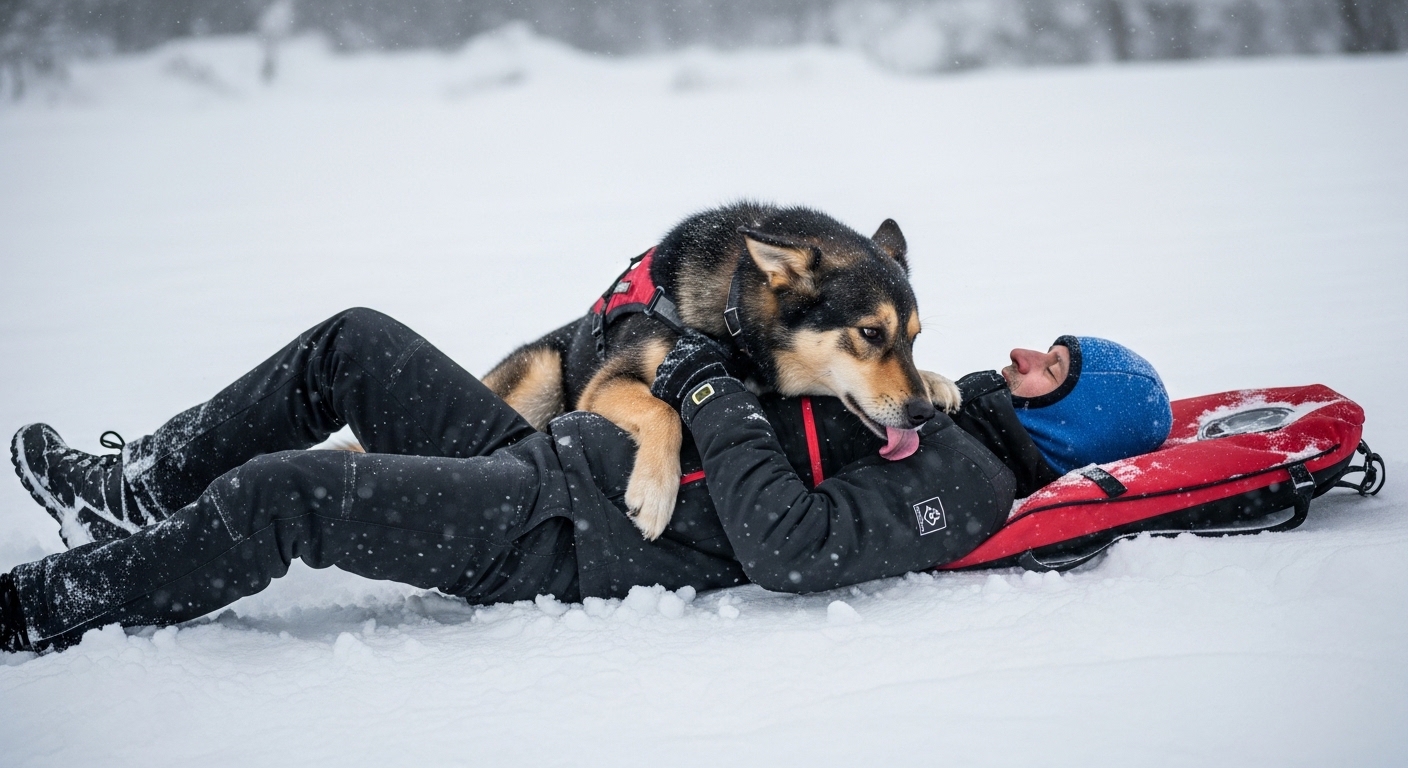
“He’s half-dead, leave him!” the man yelled, pointing at the dog pinned under the twisted construction beams. I didn’t listen. I crawled into that narrow, shifting gap, feeling the jagged metal tear at my skin. I pulled him out just seconds before the entire structure collapsed into a pile of dust and steel. He wasn’t half-dead—he was just waiting for someone to care.
Chapter 1: The Screech of Steel
The construction site on 4th and Main was a skeleton of rust and broken promises, a project abandoned when the economy dipped. It was a playground for the brave and a death trap for the unwary.
I was fourteen, old enough to know better but young enough to still believe I was invincible. I was walking past the site with my uncle when we heard it—a high-pitched, desperate yelp that sounded like a child’s whistle caught in a gale.
Under a leaning stack of I-beams, a stray—a scruffy mutt with eyes the color of old pennies—was trapped. A massive cross-beam had shifted during the night’s rain, pinning his hind legs.
“Forget it, Leo,” my uncle barked, grabbing my shoulder. “That whole pile is unstable. One wrong move and you’re both pancakes. He’s half-dead anyway. Leave him.”
I looked at the dog. He wasn’t screaming. He was just looking at me, his chest heaving with shallow, panicked breaths. He wasn’t a “lost cause.” He was a living creature staring at the person who might be his last chance.
I shrugged off my uncle’s hand and dropped to my stomach.
Chapter 2: The Narrow Path
The gap was barely eighteen inches wide. The air inside smelled of wet rust and old oil. Every time I moved, the structure above me let out a low, vibrating hum—the sound of gravity fighting the friction of the beams.
“Leo! Get out of there! That’s an order!” my uncle’s voice was distant, muffled by the tons of steel above me.
I ignored him. I pushed deeper, the jagged edge of a piece of rebar slicing through my t-shirt and into my shoulder. I didn’t feel the pain; I only felt the heat of the dog’s breath as I reached his head.
“Hey, buddy,” I whispered, my voice thick with the dust of the site. “I’ve got you. Just don’t move.”
The dog’s tail gave a single, weak wag against the concrete. He knew. Even in the darkness of that steel grave, he knew he wasn’t alone anymore.
Chapter 3: The Weight of the World
The cross-beam wasn’t just heavy; it was settled. I had to use a discarded crowbar I’d found in the dirt to create a fraction of an inch of clearance.
Creeeeak.
The sound echoed through the gap, a warning from the building itself. The pile shifted. A shower of rust flakes fell into my eyes, blinding me for a second. I didn’t pull back. I shoved the crowbar down with everything I had, my muscles screaming, and grabbed the dog by his scruff.
I hauled him forward. He let out a sharp yelp as his legs cleared the beam, but he didn’t fight me. He crawled with me, his front paws digging into the dirt as we scrambled backward through the maze of metal.
We were six feet from the opening when the big beam at the top of the pile finally gave way.
Chapter 4: The Dust and the Silence
It wasn’t a slow collapse. It was an explosion of sound.
I felt the rush of air as the structure pancaked behind us. I dove for the light, the dog clutched to my chest, my face hitting the gravel of the sidewalk just as the last of the steel hit the ground.
The sound was deafening, a roar of metal on metal that seemed to last forever. Then, silence. A thick, grey cloud of dust rolled over us, coating everything in a layer of fine silt.
I lay there for a moment, waiting for the pain, waiting to see if I was still whole. I felt a warm, wet sensation on my ear. I opened my eyes to see the dog—shaking, limping, but very much alive—licking the dust off my face.
My uncle was standing over us, his face pale, his mouth hanging open. He didn’t yell. He just looked at the pile of rubble where I had been standing seconds before, and then at the dog in my arms.
Chapter 5: The Cost of Compassion
The vet said the dog, whom I named ‘Rusty,’ had two broken ribs and a fractured leg, but no internal bleeding. He was lucky.
My uncle paid the bill. He didn’t say much on the way home, but he kept looking at the bandages on my shoulder.
“You’re a fool, Leo,” he said as we pulled into the driveway. But then he reached over and ruffled my hair. “But you’re the kind of fool this world needs more of. Don’t tell your mother I said that.”
Rusty didn’t stay a stray. He became the shadow I never knew I needed. He walked with a slight limp, a permanent reminder of the day the world tried to crush him, but his spirit was untouched. He looked at me with a devotion that felt like a weight—a good weight.
Chapter 6: The Structure of a Life
The construction site was eventually cleared and turned into a park. There’s a bench there now, right where the old pile of beams used to be.
I sit there sometimes with Rusty. He’s an old dog now, his muzzle white, but he still likes to watch the kids playing on the grass.
I think about what my uncle said that day. “He’s half-dead, leave him.” It’s what the world says about a lot of things. It’s what people say when they’re afraid to get their hands dirty or their skin torn. They see a “lost cause” because it’s easier than seeing a life worth saving.
But I know the truth. Nothing is “half-dead” as long as there’s someone willing to crawl into the gap. Justice isn’t just about what’s right; it’s about who shows up when the structure starts to groan.
Rusty leaned his head against my knee, a long, contented sigh escaping him. I ran my fingers over the scar on my shoulder, then over the soft fur of his ears. We were survivors, the boy and the beast, forever bound by the few seconds when the steel didn’t win.
Final sentence: I pulled him out just seconds before it all came down, and in that dust-filled silence, I realized that the only things truly worth having are the ones you have to fight the world to keep.


