
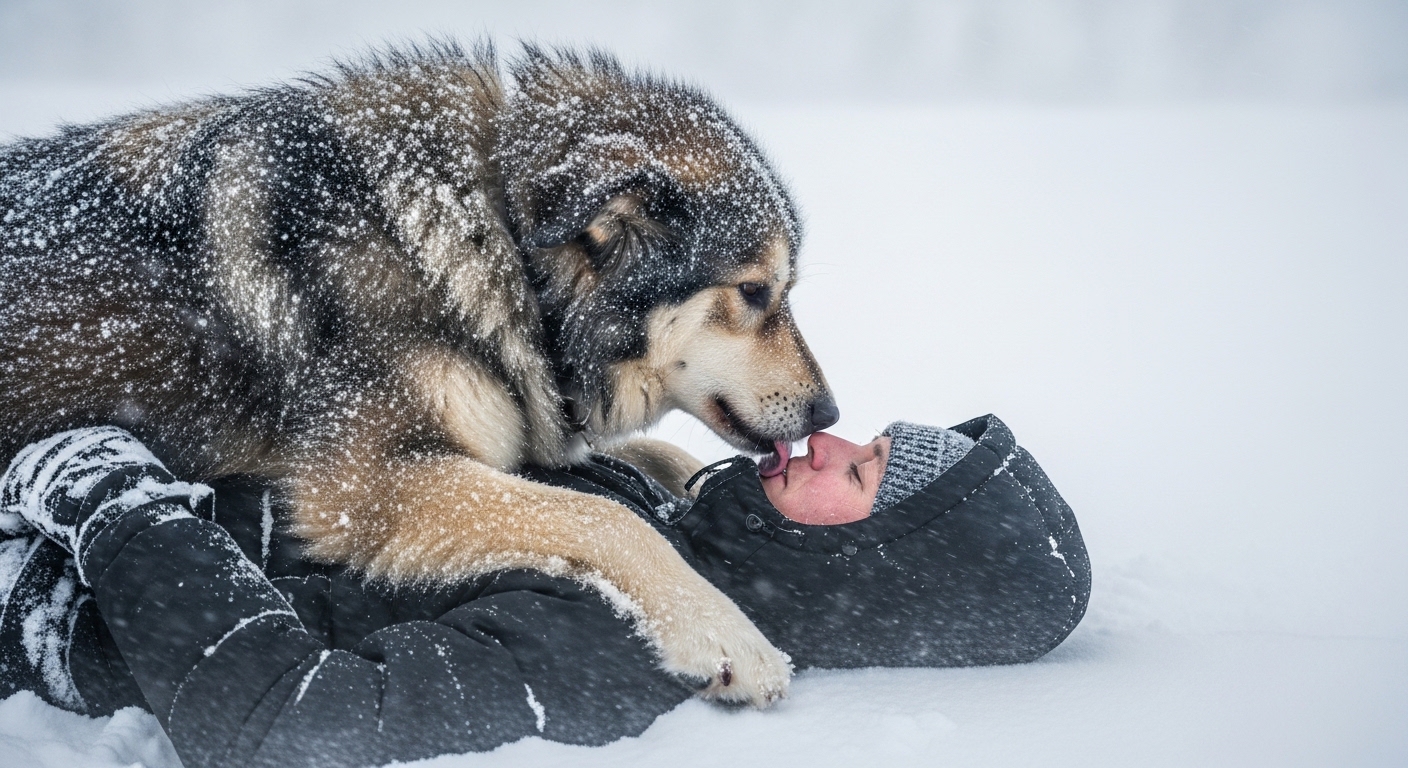
The Shattered Glass of July: I Broke the Law to Save a Life, and the Monster Who Left Him to Die is About to Learn What True Protection Means.
July in the Midwest isn’t just hot; it’s a slow-motion furnace. Inside a locked car, with the windows up and the sun beating down, that furnace becomes a tomb.
I saw him in the back of a black Mercedes. He wasn’t barking anymore. He was just lying there, his chest heaving, his eyes pleading through the glass for a mercy that wasn’t coming. The owner was inside the air-conditioned mall, probably worried about his lattes while his “best friend” was baking alive.
I didn’t call the police. I didn’t wait for a locksmith. I took my $800 helmet and I turned that window into diamonds.
When the owner came back screaming about his “property,” I didn’t say a word. I just pointed to the patch on my vest. I’m a biker, and people think that means I’m a criminal. But that day, the only crime was the man standing in front of me with a set of car keys and an empty soul.
Chapter 1: The Greenhouse Effect
The heat in the parking lot was a physical entity, a shimmering, gasoline-scented weight that made the air feel like it was being squeezed out of your lungs. It was 102 degrees in the shade, but there was no shade to be found at the Oakridge Commons. I was pushing my 1996 Road King toward the exit when the reflection of a black sedan caught my eye.
It was a beautiful car, the kind that says the owner values status over substance. But as I pulled alongside, I saw something that made my blood run cold despite the heat.
A Golden Retriever. He was collapsed on the leather backseat, his tongue a dark, swollen purple. He was gasping, a shallow, desperate rhythmic thumping against the upholstery. The windows were cracked less than an inch—a death trap disguised as a gesture.
My name is Jax. I’ve spent my life in the gray areas of the law, but my moral compass has always been pinned to one direction: protect those who can’t protect themselves. I’ve worn the “Support Your Local Rescue” patch for ten years, ever since I pulled my own dog, Tank, out of a fighting pit in Detroit.
I looked at the dashboard. 115 degrees. Inside that car, it was probably 140.
I didn’t hesitate. I didn’t look for a security guard. I took off my Shoei helmet, gripped it by the chin bar, and swung.
The sound of the glass shattering was the most satisfying thing I’d heard all year. It wasn’t just a window breaking; it was the sound of a cage opening. I reached in, pulled the lock, and hauled the dog out. He was hot to the touch—burning, like he’d been pulled from an oven.
I laid him on the pavement, ignoring the way the asphalt bit into my own knees. I grabbed my water bottle, soaked my bandana, and started cooling his belly and paws.
“Stay with me, big guy,” I whispered, my own sweat dripping onto his fur. “You’re out. You’re safe.”
He let out a long, shuddering sigh, his eyes flickering open for a split second. He didn’t know who I was, but he knew the air was finally moving.
Chapter 2: The Owner and the Outrage
“WHAT THE HELL ARE YOU DOING?!”
The voice was high-pitched, entitled, and vibrating with a misplaced sense of victimhood. I didn’t look up. I continued to dab the dog’s head with the wet cloth.
Derek, a man in his thirties wearing a crisp white polo and carrying three bags from a high-end clothing store, was sprinting across the lot. He didn’t look at the dog. He looked at the shattered glass glittering on his leather seats.
“You smashed my window! Do you have any idea how much this car costs?!” he shrieked, standing over me.
I stood up slowly. I’m six-foot-two, and when I stand, the sun usually disappears behind my shoulders. I saw the moment Derek realized he wasn’t talking to another suburbanite. He was looking at a man covered in road grime, oil, and a cold, quiet fury.
“His name?” I asked, my voice low and dangerous.
“What? Who cares! You’re paying for this! I’m calling the cops!”
“The dog,” I said, stepping into his personal space. I could smell the expensive cologne on him, a sickening contrast to the smell of the dying animal at our feet. “What is his name?”
“It’s… it’s Cooper. Now get away from my car!”
“Cooper was five minutes from a heart attack, Derek,” I said. I pointed to my chest, to the rescue patch stitched over my heart. “I’m not paying for your window. But you? You’re going to pay for every second he spent suffocating in there.”
The crowd had gathered now. In the age of the smartphone, Derek’s shame was being recorded by a dozen different lenses. A woman in a sundress stepped forward, her eyes wet. “I saw him! He’s been in there for at least forty minutes! I was looking for security!”
Derek’s face went from a mottled red to a pale, translucent gray. He looked at the cameras, then at the dog, then at me. The entitlement was still there, but it was being suffocated by the realization that he was the villain of the day.
“He… he was fine when I left him,” Derek stammered, his voice losing its volume.
“He’ll never be ‘fine’ with you again,” I said.
Chapter 3: The Supporting Cast of Mercy
The arrival of the police was a blur of blue lights and the smell of ozone. Officer Miller, a man who looked like he’d spent thirty years seeing the worst of humanity, stepped out of his cruiser. He looked at the shattered window, then at Derek, then at me.
“He’s the one! He’s a vigilante!” Derek shouted, pointing a shaking finger at me. “I want him arrested for vandalism!”
Miller walked over to Cooper. The dog was sitting up now, leaning his heavy head against my thigh. Miller knelt, petted the dog’s ears, and then looked at the thermometer I’d pulled from my saddlebag.
“118 degrees on the interior surfaces,” Miller noted. He looked at Derek. “In this state, Derek, a person is legally protected when they use force to rescue an animal from a vehicle in life-threatening conditions. But you? You’re not protected from the animal cruelty charges I’m about to file.”
I felt a hand on my shoulder. It was Sarah, a local vet tech who had been in the crowd. She’d stayed to help me monitor Cooper’s heart rate.
“I can take him to the clinic, Jax,” she whispered. “He needs an IV and some blood work to make sure his kidneys are okay.”
“He’s not going back to him, Sarah,” I said, my voice like iron.
“He won’t,” Miller interjected, standing up. “We’re seizing the animal as evidence in a felony cruelty case. He’ll go to the county shelter for now.”
The word shelter hit me like a punch. I knew the county shelter. It was loud, it was cold, and for a dog who had just been traumatized, it was another cage.
“No,” I said. “I’ll foster him. I have the space. I have the references.”
Miller looked at my vest. He looked at the way Cooper wouldn’t let go of my leg. “I know who you are, Jax. I know the work you do with the Iron Guardians. If the vet clears him, and the Sheriff signs off… he’s yours for the duration of the trial.”
Derek started to protest, but Miller just held up a hand. “Save it for the judge, Derek. Right now, you’re just a man with a broken window and a very long afternoon ahead of you.”
Chapter 4: The Moral Choice and the Old Wound
Cooper came home to my garage two days later. He walked with a slight limp—a remnant of the heat-induced muscle tremors—but his spirit was starting to spark.
But as the trial date approached, a different kind of storm began to brew.
Derek wasn’t just a guy with a polo shirt. His father was a high-powered attorney with connections that reached into the city council. A week before the hearing, a man in a charcoal suit showed up at my shop.
“Mr. Thorne,” the man said, sliding a manila envelope across my workbench. “My client is willing to drop all civil claims and even pay for the repairs to your… motorcycle… if you simply lose the ‘evidence’ regarding the temperature. And, of course, return the dog.”
I looked at the envelope. I knew what was in there. Enough money to pay off the mortgage on the shop. Enough to fix every bike in the lot.
“He’s a dog, Jax,” the man said, his voice smooth and oily. “He’s property. My client just wants his property back. We can make this very easy for you, or we can make the next ten years very hard.”
I looked at Cooper. He was sleeping in the corner, his head resting on my old leather boots. He’d spent his whole life being “property.” He’d been an accessory to a lifestyle, a living ornament that Derek had forgotten the second it became inconvenient.
The old wound in my chest—the memory of my younger brother being “traded” away by our father to pay a gambling debt—flared up like a fresh burn. I’d seen what happens when people are treated like property.
I took the envelope and walked over to the shop’s industrial shredder. I dropped it in without breaking eye contact with the man in the suit.
“Tell Derek the window was just the beginning,” I said. “If he wants to fight, tell him I’ve been fighting since I was six years old. And I’ve never lost a round when I was standing in the right.”
The man’s smug expression didn’t just flicker; it died. He turned on his heel and walked out, but I knew it wasn’t over. People like Derek don’t understand mercy; they only understand winning.
Chapter 5: The Climax: The Truth in the Glass
The hearing was held in a small courtroom that smelled of floor wax and stale secrets. Derek was there, looking polished and victimized, flanked by three lawyers. I was in the back, wearing my best flannel and the same leather vest.
“Your Honor,” Derek’s lead attorney began, “my client was away for less than ten minutes. This vigilante—a man with a documented history of ‘aggressive’ animal rescues—terrorized my client and destroyed a fifty-thousand-dollar vehicle. We have the mall security footage.”
They played the video. It showed me swinging the helmet. It showed the glass exploding. It showed me pulling Cooper out.
“As you can see,” the attorney continued, “the dog was moving. He wasn’t ‘dying.’ This was a calculated act of vandalism by a man who thinks he is above the law.”
The judge looked at me. “Mr. Thorne? Do you have anything to add?”
I didn’t have a lawyer. I had a secret.
“I don’t have a legal degree, Your Honor,” I said, standing up. “But I have the one thing the mall cameras didn’t capture. The glass.”
I reached into my pocket and pulled out a small, clear jar. Inside were the shards of the window I’d swept up after the rescue.
“When glass sits in a car at 140 degrees, it changes,” I said. “And the leather it lands on? It sears. Sarah, the vet, took samples of Cooper’s fur the day of the rescue. The fur on his left side wasn’t just hot. It was singed. He had second-degree burns from the upholstery.”
I handed the jar to the bailiff.
“Derek says he was gone for ten minutes. But the mall’s own HVAC records for that afternoon show a power surge in the parking lot sensors. It shows his car sat in that spot for fifty-eight minutes. Fifty-eight minutes in a black car with no shade.”
The courtroom went silent. Derek looked at his lawyers. They were looking at the floor.
“He’s a dog to you,” I said, looking directly at Derek. “But to me, he’s a witness to the kind of person you are when you think nobody’s watching. You didn’t leave him in a car; you left him in a coffin.”
The judge didn’t even need to deliberate. The animal cruelty charges were upheld. Derek was ordered to pay a twenty-thousand-dollar fine to the local rescue, and—most importantly—he was permanently banned from owning another animal.
As we walked out of the courthouse, Derek’s father approached me. He didn’t look angry; he looked defeated. “How did you know about the HVAC records?”
“I’m a biker,” I said. “We spend a lot of time looking at the things other people ignore.”
Chapter 6: The Final Ride
Six months later, the heat of July was a distant memory. The air was crisp, smelling of woodsmoke and the promise of snow.
I was at the shop, but the “Support Your Local Rescue” patch was no longer just a decoration. We’d turned the back half of the garage into a temporary foster station. We had three dogs there now, all of them “broken” things that were being put back together with a little grease and a lot of patience.
I walked to my bike. Cooper was already waiting, his tail thumping against the sidecar I’d built for him. He had his own pair of “doggles” and a leather vest that matched mine.
Sarah was there, too, handing me a thermos of coffee. “Heading out for the Toy Run?”
“Cooper wouldn’t miss it,” I said. “He likes the wind.”
I mounted the Road King and kicked the engine over. The roar was a familiar, comforting thunder. I looked at the spot on the pavement where I’d stood with Derek six months ago.
I realized then that I hadn’t just smashed a window. I’d smashed the idea that I had to be a ghost. I’d found a way to be a man who stands his ground, not just for the brothers on the road, but for the silent ones who can’t ask for a drink of water.
Cooper let out a sharp, happy bark, leaning into the sidecar as we pulled out of the lot.
The glass was long gone. The car was probably repaired and sold to someone else. But the soul we saved? He was right where he belonged.
In the wind. In the light. In the home he’d finally found between the roar of the engine and the heart of a biker.
The end.


