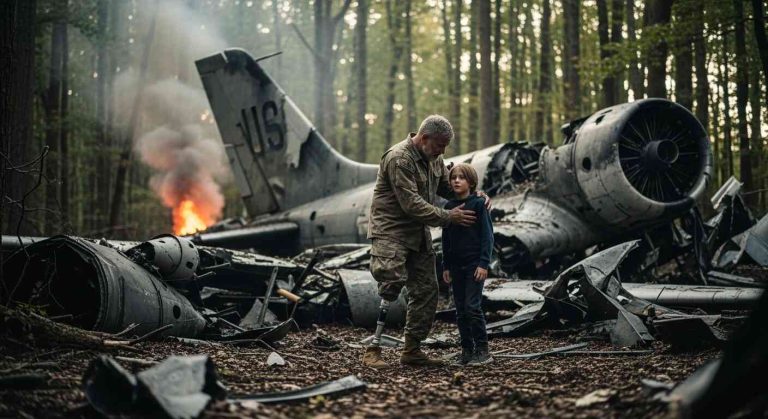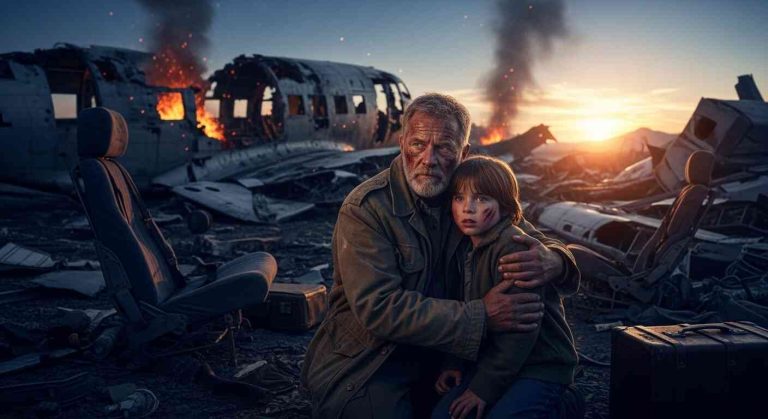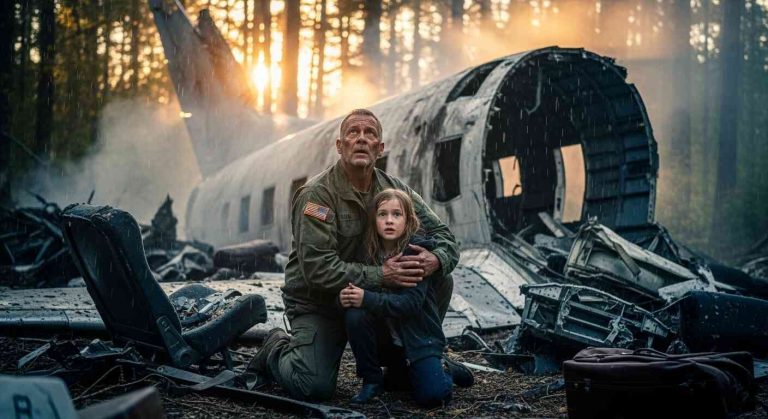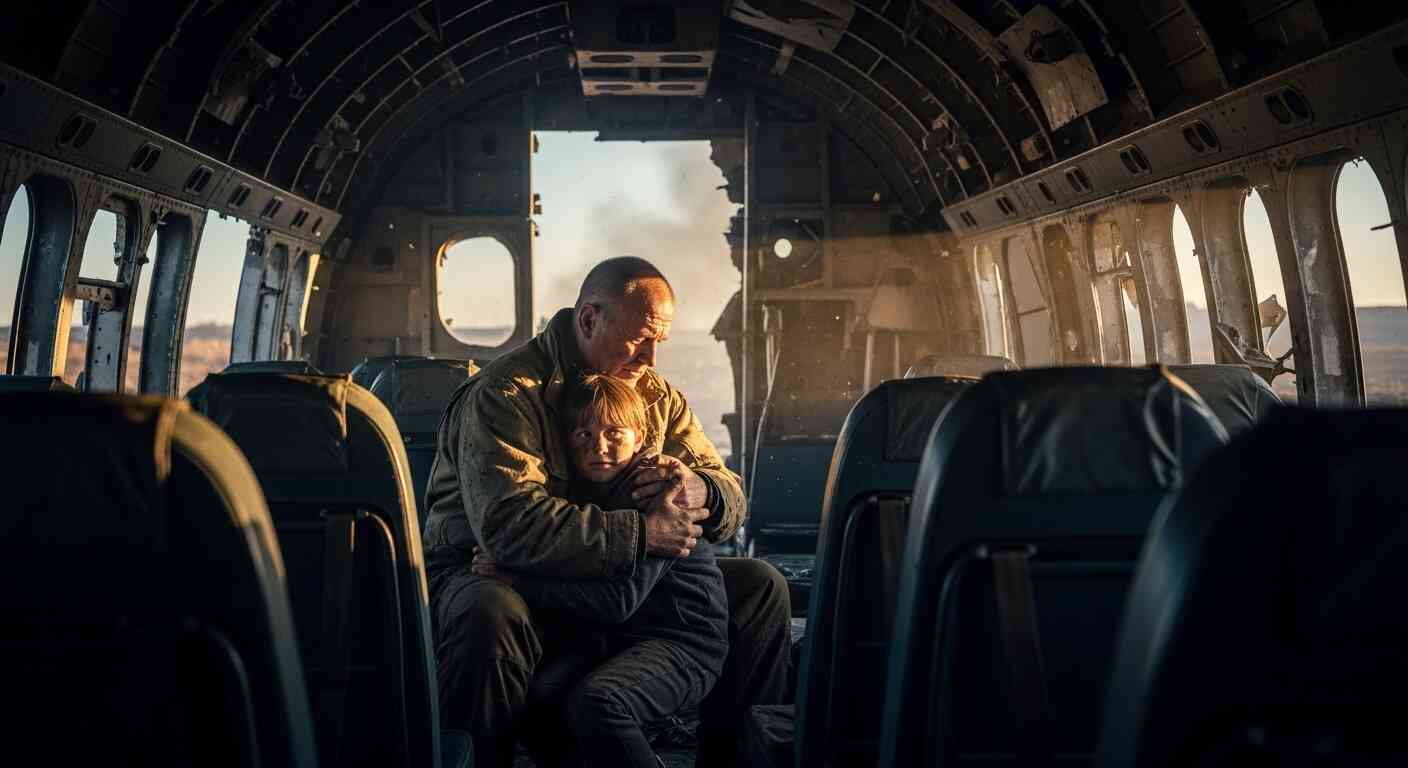
They called me a terrorist. They called me a madman. They’ll probably spend the next ten years dissecting the black box and wondering why a decorated veteran suddenly decided to rip a hole in a plane at thirty thousand feet.
But they weren’t there. They didn’t smell the bitter almonds coming through the vents. They didn’t see the pilot’s eyes go vacant in the cockpit reflection.
I had forty seconds to become the villain in everyone’s story so that one little boy could live to see his seventh birthday.
This isn’t a story about a plane crash. It’s a story about the terrifying price of a second chance.
CHAPTER 1: THE SMELL OF BITTER ALMONDS
The recycled air in Cabin 4B always tasted like stale coffee and disappointment, but today, it was different. It was sweet. Too sweet.
My name is Elias Thorne. I spent twelve years in the Air Force as a Pararescue Jumper, which is just a fancy way of saying I jumped out of perfectly good planes to fix broken people in places God forgot. I know what death smells like. It’s usually metallic, like old pennies, or heavy, like wet earth. But this? This was Maraschino cherries. This was cyanide.
“Sir? Are you alright?”
I looked up. A flight attendant—Sarah, her badge said—was hovering over me. She had that practiced, plastic smile that they teach in training, but her hands were shaking. She knew. Or her body knew, even if her brain hadn’t caught up yet.
“The ventilation,” I rasped. My throat felt like it had been scraped with steel wool. “When did the Captain change the mix?”
“I… I’m sure it’s just the de-icing fluid, sir,” she stammered.
I didn’t look at her. I looked at the boy across the aisle. Leo. He was seven, traveling alone with a “Unaccompanied Minor” tag dangling from his neck like a death warrant. He was clutching a tattered stuffed wolf, his small chest hitching in shallow, desperate bursts. His fingernails were already turning a soft, bruised purple.
“He’s not breathing right, Sarah,” I said, my voice dropping into that low, tactical frequency that used to make my squad go silent.
“He’s just nervous about the turbulence,” she insisted, though the plane was as steady as a church.
I stood up. My knees popped—a gift from a hard landing in Kandahar—and the world tilted. The toxin was moving fast. It wasn’t a gas leak. It was a delivery. Someone had rigged the canisters.
“Listen to me,” I whispered, leaning close enough to see the terror in her pupils. “In three minutes, everyone on this flight will be unconscious. In five, your heart will stop. There is no oxygen mask coming down that isn’t already laced with the same silent killer.”
“You’re crazy,” she breathed, backing away.
I didn’t argue. I didn’t have time. I reached across the aisle and unbuckled Leo’s seatbelt. The boy didn’t even fight me. He was too limp, his head lolling against my shoulder.
“Hey, buddy,” I whispered into his hair. “We’re going to take a shortcut.”
I headed for the back of the plane. I could feel the eyes of the passengers on me—the tech executive in 3A, the elderly couple in the back row. To them, I was just a large, scarred man kidnapping a child in the middle of a flight.
“Stop him!” someone yelled.
I didn’t stop. I ran. I ran toward the only part of the plane that had its own independent structural seal. The luggage chute.
I could hear the alarms starting to chime. Not the fire alarm. The “unauthorized access” alarm. Sarah was screaming for the Air Marshal.
I reached the hatch. My hands found the manual override. Behind me, the cabin was a blur of rising panic and falling bodies. People were slumped in their seats, drifting into a sleep they would never wake from.
“Oxygen is a luxury, Leo,” I said, tucking him into the reinforced cargo container I’d scoped out during boarding. “But survival? Survival is a habit.”
I grabbed the red lever. The one that was never supposed to be pulled at altitude. The one that would rip the plane’s heart out.
I looked at Sarah, who was crawling toward me, gasping, her plastic smile finally gone.
“I’m sorry,” I said.
And then, I pulled.
FULL STORY
PART 2: CHAPTER 1 & 2
(Chapter 1 as written above)
CHAPTER 2: THE EJECTION
The sound wasn’t a bang. It was a roar—a physical weight that slammed into my chest and tried to suck the marrow from my bones.
The cabin didn’t just lose pressure; it exploded. The structural integrity of the Boeing 737 was designed to withstand a lot, but not a deliberate, localized breach of the luggage bay while the internal pressure was being spiked by a compromised HVAC system.
I shoved Leo deep into the “Guardian” crate—a high-spec, carbon-fiber shipping container meant for sensitive electronics. It was airtight. It was padded. And most importantly, it was heavy enough to drop like a stone.
“Hold the wolf, Leo! Hold it tight!” I screamed over the hurricane-force wind.
The boy’s eyes were wide, reflecting the strobe lights of the dying plane. He didn’t cry. He was past crying. He just gripped that stuffed animal like it was the only thing keeping him tethered to the earth.
I climbed in after him. It was a tight fit. My boots kicked against the latch. Outside, through the widening gap in the fuselage, I saw the world. We were over the Atlantic, a vast, churning sheet of slate-gray water.
“Sir! Please!”
It was Sarah. She had grabbed onto a fixed galley handle, her body horizontal, flapping like a flag in the wind. Her oxygen mask had fallen, but she wasn’t putting it on. She saw me. She saw what I was doing.
I had a choice. I could try to reach for her, but the physics were impossible. If I opened the crate, Leo would die. The toxin was already thick in the cabin air, visible now as a faint, oily mist.
“Close it!” I roared at myself.
I slammed the lid of the Guardian crate. The locks engaged with a mechanical clack that sounded like a coffin closing. For a second, there was total silence. No wind. No screaming. Just the sound of my own ragged breathing and the soft, terrified whimpering of the boy beside me.
Then, the floor vanished.
The crate tumbled. I felt the sickening lurch of zero-G as the luggage chute disintegrated under the stress. We were falling.
I pulled the manual release for the crate’s internal stabilizers. If this thing hit the water at the wrong angle, we’d be crushed into a pulp.
“Elias?” Leo’s voice was tiny, muffled by the padding. “Are we dead?”
“Not today, kid,” I said, though my heart was hammering against my ribs like a trapped bird. “We’re just taking the scenic route.”
Through the small, thick plexiglass port in the crate, I saw the plane. Flight 824 wasn’t exploding. It was just… drifting. It looked like a ghost ship in the sky, its lights flickering out one by one as the engines choked on the debris I’d created.
I knew what they’d find when that plane eventually landed—if it landed. A cabin full of “sleeping” people. A missing veteran. A missing boy. They’d think I did it. They’d think I hijacked the plane and threw us out to our deaths.
The ocean rushed up to meet us. Blue turned to gray, then to white foam.
“Brace!” I yelled, wrapping my arms around Leo.
The impact felt like being hit by a freight train.
FULL STORY
PART 3: CHAPTER 3 & 4
CHAPTER 3: THE COLD DARK
Water is harder than concrete if you hit it fast enough. The Guardian crate groaned, the carbon fiber screeching as it absorbed the kinetic energy of a thirty-thousand-foot drop. We went deep—so deep the light from the surface vanished into a murky, suffocating green.
Then, the buoyancy kicked in. The crate bobbed upward, swaying violently.
I checked Leo first. His nose was bleeding, and his eyes were rolled back, but his chest was moving. The air inside the crate was clean. Filtered. I’d spent six thousand dollars of my disability back-pay to ensure this specific crate was on this specific flight.
Why? Because I’d seen the chatter on the dark-web forums. I’d heard the whispers in the VA hallways from guys who still had ears in the Pentagon. Someone was testing a new delivery system for a nerve agent. Commercial flights were the perfect petri dish.
I’d tracked the shipments. I’d followed the trail to Flight 824. I couldn’t stop the takeoff—no one listens to a “Section 8” vet with a history of night terrors. So I bought a ticket.
“Elias… it’s dark,” Leo whispered.
“I know, buddy. I’ve got a light.” I clicked on my tactical pen-light. The small beam illuminated the cramped space. Leo’s face was pale, his “Unaccompanied Minor” tag torn.
“Where’s the plane? Where’s Sarah?”
I looked away. I couldn’t tell him that Sarah was likely a statue of ice and poison by now, drifting toward the Azores.
“The plane had to go on without us, Leo. We’re on a boat now. Sort of.”
The crate rocked. I checked the GPS tracker on my wrist. We were three hundred miles off the coast of Maine. The water temperature was forty-two degrees. If the seal on this crate held, we had twelve hours of air. If it didn’t, we had three minutes of life.
I reached into my jacket and pulled out a satellite phone. It was a rugged, military-grade brick. I dialed the only number I knew by heart.
“Miller,” a voice answered. Sharp. Tired.
“It’s Thorne. I’m in the water. Coordinates coming to you now.”
“Elias? What the hell did you do? The FAA is screaming. They say you blew a hole in the hull.”
“I saved the boy, Miller. The air was hot. Bitter almonds. You tell the cleaners to get to that plane before the evidence evaporates.”
There was a long silence on the other end. “Elias… the ‘cleaners’ are already on their way. But they aren’t coming for the plane. They’re coming for you.”
My blood turned to ice. “Who sent them?”
“The people who own the airline, Elias. You didn’t just save a boy. You stole their data.”
CHAPTER 4: THE HUNTER AND THE PREY
The first sound wasn’t the rescue chopper. It was the low, rhythmic thrum of a high-speed submersible.
They weren’t coming to pick us up. They were coming to sink us.
“Leo, I need you to be a soldier for a minute,” I said, my voice steady despite the adrenaline dumping into my system. “I’m going to open the small vent. It’s going to get cold. Very cold.”
“Are the bad men coming?”
“Yeah,” I said, pulling a serrated combat knife from my boot. “But they forgot one thing.”
“What?”
“I’m the guy who taught the bad men how to bleed.”
I felt the clunk of something metallic hitting the side of the crate. A magnetic tether. They were going to drag us down. If they took us below a hundred feet, the pressure would implode the crate, and the evidence of the toxin—and us—would be erased forever.
I didn’t wait. I hit the manual override on the hatch.
The Atlantic Ocean poured in, a freezing, violent torrent that stole my breath. Leo screamed as the water rose to his waist. I grabbed him, pulling him out into the open sea.
The moon was a sliver of bone in the sky. Twenty yards away, a black, sleek boat—no lights, no markings—idled in the swells. Two men in tactical gear were leaning over the rail, reaching for the crate’s tether.
They didn’t see me in the water. I was just a shadow among shadows.
I swam with one arm, holding Leo’s collar with the other. The boy was shivering so hard his teeth were clicking like castanets.
“Stay quiet,” I hissed into his ear. “Just like the wolf.”
I reached the side of the boat. I could hear the men talking.
“The crate’s empty! The vet jumped!”
“Find him. We can’t let him talk to the press. The contract is worth fifty billion.”
Fifty billion. That was the price of a plane full of people.
I reached up, found a mounting bracket, and hauled myself upward. My muscles screamed, the cold water making my limbs feel like lead. I deposited Leo into a life-raft tethered to the stern.
“Stay here,” I whispered.
I climbed over the rail. The first man turned just as I hit the deck. He was young, clean-shaven, probably an ex-Ranger looking for a private security paycheck.
He didn’t even get his rifle up. I hit him in the throat, a short, brutal strike that crushed his windpipe. As he went down, I took his sidearm—a suppressed P226.
The second man came around the cabin. He saw his partner on the deck and reached for his radio.
I didn’t give him the chance. Thwip. Thwip. Two rounds to the chest. He fell overboard, a dark splash in the darker water.
I stood there, dripping, the gun heavy in my hand. I was a hero five minutes ago. Now, I was a double-homicide suspect on a stolen boat in the middle of the ocean.
But Leo was alive.
FULL STORY
PART 4: CHAPTER 5 & 6
CHAPTER 5: THE PRICE OF TRUTH
The boat was a treasure trove of evidence. Laptops, flight manifests, and three canisters of the “cherry-scented” toxin sitting in a temperature-controlled safe.
I steered the boat toward the coast, the engines screaming. Behind us, I could see the lights of a Coast Guard cutter. Miller had done his job—or at least, he’d tried. But I knew the Coast Guard wouldn’t be the ones to board us. It would be the “specialists.”
“Elias?” Leo was sitting in the captain’s chair, wrapped in a discarded wool coat. “Are we going home now?”
I looked at the boy. He had a bruise on his forehead and his eyes looked ten years older. He was the only witness. He was the only thing that made my story more than the delusions of a broken soldier.
“We’re going to get you to your mom, Leo. I promise.”
The radio crackled. “Vessel Night-Stalker, this is Commander Vance. Heave to and prepare to be boarded. We have orders to use lethal force.”
Vance. I knew that name. He was a “consultant” for the airline’s parent company. The fox was guarding the hen house.
I looked at the canisters of toxin. Then I looked at the fuel tanks.
If I surrendered, Leo and I would “disappear” during transport. If I fought, we’d both die in a hail of gunfire.
There was a third option. The Pararescue option.
“Leo, do you remember what I said about survival?”
“It’s a habit,” he whispered.
“Good boy. I’m going to put you in the life-raft. It has a GPS beacon. The Coast Guard—the real Coast Guard—will find you in twenty minutes.”
“What about you?”
I smiled, and for the first time in years, it didn’t feel like a mask. “I have to stay and finish the paperwork.”
I lowered the raft into the water. I gave him the stuffed wolf and the satellite phone. “When a man named Miller calls, you tell him the ‘cherries’ are on the boat. Can you do that?”
Leo nodded, his eyes welling with tears. “You’re coming back, right?”
I didn’t answer. I just pushed the raft away into the fog.
I watched him go until he was just a speck. Then, I turned back to the controls. I dialed the boat’s speed to max and pointed it directly at the approaching black silhouette of Vance’s interceptor.
I picked up the radio. “Vance? This is Elias Thorne. I’ve got fifty billion dollars worth of evidence and a very short fuse. I suggest you start swimming.”
CHAPTER 6: THE FINAL DESCENT
The explosion lit up the Atlantic for miles.
The news called it a “tragic accident.” They said a rogue veteran had hijacked a private vessel and perished in a fuel-line fire. They tried to bury the story of Flight 824, claiming a “mechanical failure” caused the tragic loss of life.
But they forgot about the boy.
Six months later, a small house in suburban Ohio.
Leo sat on the porch, clutching a tattered stuffed wolf. His mother was inside, finally home from the hospital after the “mysterious illness” that had swept through the airline passengers had been treated with an “experimental” antidote that had appeared anonymously at the CDC.
A black sedan pulled up to the curb. A man in a suit—Detective Miller—stepped out. He walked up to the porch and handed Leo a small, weathered wooden box.
“A friend of yours asked me to hold onto this until things calmed down,” Miller said softly.
Leo opened the box. Inside was a silver set of jump wings. The metal was scratched, worn thin by years of being rubbed between a thumb and forefinger.
On the back, a simple inscription was engraved: For those who follow.
Leo looked up at the detective. “Is he really gone?”
Miller looked out at the horizon, where the sun was setting in a bruise of purple and gold. “A man like Elias Thorne? He doesn’t go away, Leo. He just changes altitude.”
Leo tucked the wings into his pocket and stood up. He felt the weight of the metal against his leg—a reminder of the man who became a monster so a child could stay a child.
He walked into the house, the door clicking shut behind him.
The world would never know the name of the man who saved them, but as the stars began to poke through the darkening sky, one thing was certain.
Somewhere, in the silence of the night, a soldier was watching, making sure the air stayed sweet, and the children stayed safe.
True heroes don’t need a monument; they just need to know you made it home.