Chapter 5: The Truth in the Deep
The water was a shock of ice that tried to crush the air from my lungs. I was wearing a specialized rebreather, but nothing can prepare you for the absolute darkness of the deep ocean.
I descended, guided by the glowing HUD in my mask. Below me, a massive robotic submersible was gnawing at the thick, armored data cables that lay on the ocean floor like the veins of a god.
This was the “”Old Wound.”” Three years ago, I had predicted this exact scenario. I had written a paper on the vulnerability of the undersea infrastructure. My superiors had laughed. They said the ocean was too big, the cables too deep.
Now, I was the only thing standing between the modern world and a new Dark Age.
I swam toward the submersible, my heart hammering against my ribs. I had a single magnetic charge. I had to place it on the robot’s primary processor.
But as I got closer, I saw a second figure in the water.
A diver. Not a mercenary. A specialist.
We collided in the silent, pressurized gloom. It wasn’t a movie fight; it was a desperate, clumsy struggle for survival. He tried to cut my air hose; I tried to jam my combat knife into his buoyancy compensator.
As we rolled in the darkness, my mask light illuminated his face for a split second.
I froze.
It was Victor. One of the men from the photo.
He was supposed to be dead. He was supposed to have died in that valley.
The shock was enough for him to gain the upper hand. He kicked me away, his eyes full of a strange, twisted madness. He pointed at the cable and then at his own chest, making a “”cutting”” motion.
He wanted this. He wanted the world that had abandoned us to suffer the same silence we had felt in that valley.
“”Victor, no!”” I screamed into my comms, hoping he was on the same frequency.
“”They left us, Eli!”” his voice crackled in my ear, distorted and haunted. “”They watched us die on a satellite feed and didn’t send the birds! Now they get to see what it’s like to be alone in the dark!””
“”I’m sorry!”” I cried out, the pressure of the water and the guilt of the past crushing me. “”I failed you! But this isn’t the way!””
“”It’s the only way!””
He lunged at me with a jagged piece of metal. I dodged, but the magnetic charge slipped from my hand, drifting toward the abyss.
I had one choice.
I grabbed Victor, pinning his arms to his sides. We were both sinking.
“”I’m not letting you go again,”” I whispered.
I triggered the manual override on my rebreather, causing a massive burst of compressed air. The force of it propelled us both upward, toward the surface, away from the cable.
The submersible, deprived of its operator’s guidance, drifted off course, its cutting arm snapping against a rock formation.
We breached the surface like a pair of drowning ghosts.
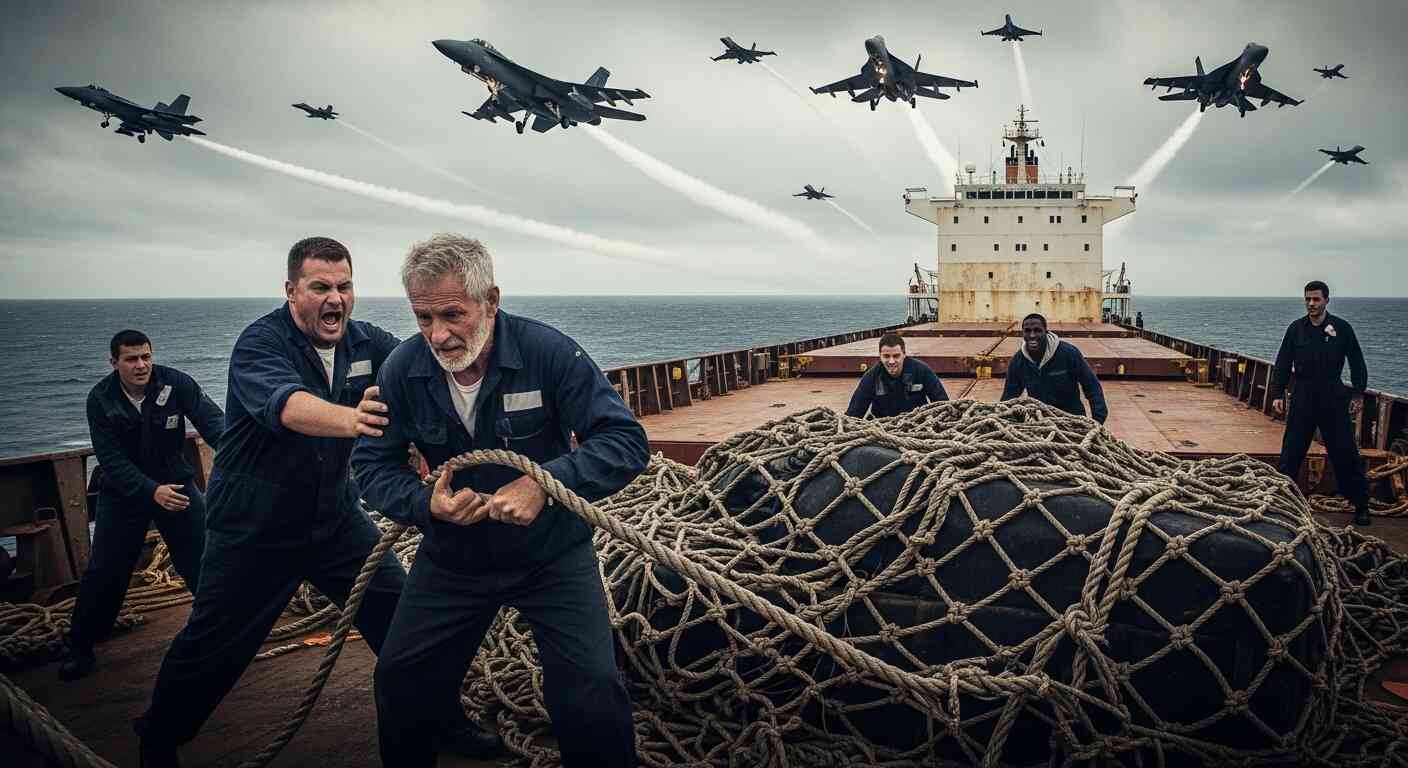
The SS Ironwood was leaning heavily to port, orange flames licking the night sky. The Osprey was hovering above, its searchlight cutting through the mist.
I held onto Victor’s collar as we bobbed in the waves. He was sobbing—a sound more painful than any explosion.
“”I thought I was the only one left,”” he choked out.
“”You’re not,”” I said, my voice breaking. “”We’re going home.””
Chapter 6: The Architect’s Peace
The morning sun rose over the Chesapeake Bay, painting the water in shades of gold and copper. I sat on a wooden pier, far away from the Pentagon, far away from the rusted decks of the Atlantic.
Beside me sat a man with hollow eyes and scarred hands. Victor. He was in a witness protection program now, getting the psychological help the military had denied him years ago.
“”They’re calling you a hero again,”” Victor said, nodding toward a newspaper on the bench.
“”I’m just a guy who did his job,”” I replied.
I looked at the front page. There was a photo of the SS Ironwood being towed into port. There was also a small blurb about Captain Miller, who was facing twenty years for maritime negligence and aiding a terrorist organization.
But the article I cared about was on page five. “Local Woman Receives Full Scholarship to Naval Academy.” There was a picture of Sarah, grinning ear to ear, holding the challenge coin I’d given her.
I reached into my pocket. I pulled out a new photograph.
General Vance had kept his word. It was a high-resolution print of the original. Caleb, Victor, me, and the others. We were all there, young and convinced we were invincible.
I looked at Caleb’s face. For the first time in three years, I didn’t feel the crushing weight of his death. I felt the warmth of his life.
Vance pulled up in a black SUV behind us. He didn’t get out. He just rolled down the window.
“”The President wants to see you, Elias. There’s a seat on the National Security Council with your name on it.””
I looked at the water. I looked at Victor. I looked at the horizon where the Ironwood had once been my prison and my sanctuary.
“”Tell him I’m busy,”” I said.
“”Doing what?”” Vance asked with a smirk.
“”Living,”” I said.
Vance nodded, a look of genuine respect on his face, and drove away.
I stood up and walked to the end of the pier. I took a deep breath of the salt air. It didn’t smell like diesel or blood anymore. It just smelled like the sea.
I realized then that the Captain was right about one thing: I was a ghost. But ghosts don’t have to haunt the past. They can choose to protect the future.
I pulled out my phone and sent a single text to the number I’d given Sarah.
“Fair winds and following seas, Midshipman. See you on the wall.”
I tucked the photo of my brothers back into my pocket, right against my heart, and started walking. I wasn’t running anymore. I was just going home.
The greatest strength isn’t found in the orders we give, but in the promises we keep to those who can no longer ask for them.”