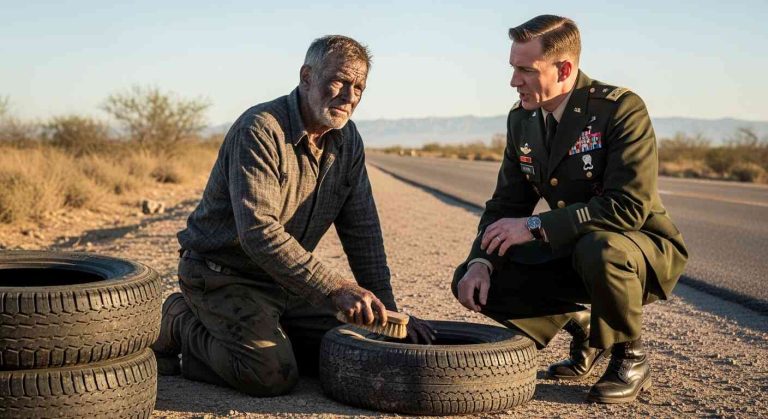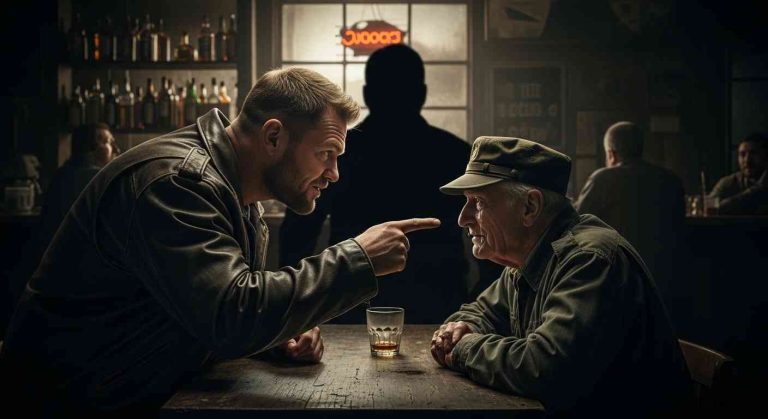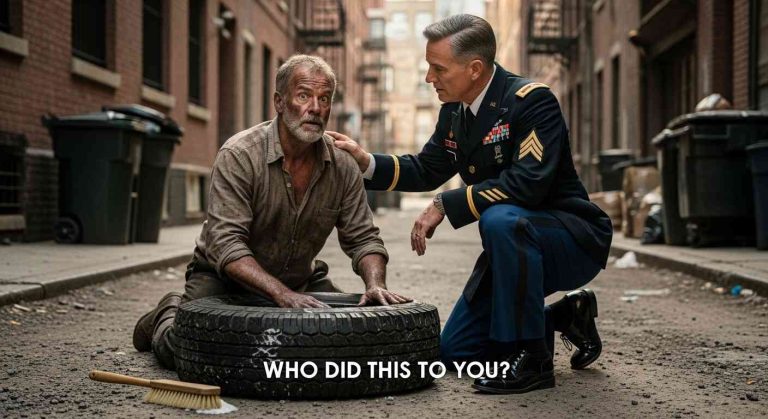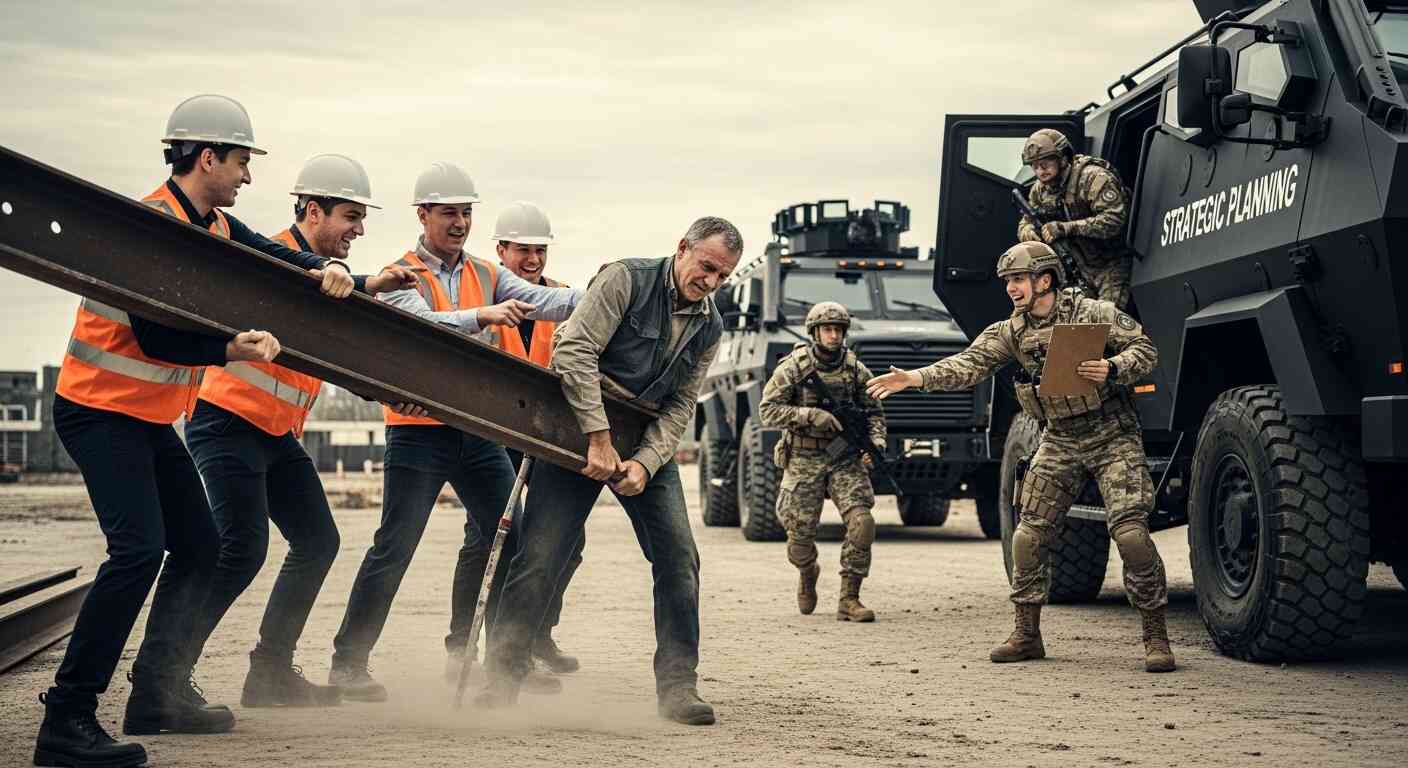
The wind didn’t just howl in Northern Minnesota; it screamed. It was -20 degrees, the kind of cold that turns breath into ice and hope into a memory. I was sixty-five years old, my hands were numb inside my threadbare gloves, and for the third time that morning, I dropped the heavy steel coupling.
“You’re a useless old dog, Thorne!”
The voice belonged to Miller. He was thirty-two, fueled by protein shakes and a desperate need to feel powerful. He didn’t just walk over; he stalked. Before I could even mutter an apology, his heavy work boot connected with my chest.
I went down hard. The frozen gravel tore at my cheek. I felt the warm splash of blood against the sub-zero slush.
“Look at him,” Miller hissed, his voice carrying over the roar of the generators. He looked back at the ten other guys on the crew. “This is what happens when the company hires charity cases. You’re a liability, Elias. You’re a waste of oxygen.”
I tried to push myself up, my joints screaming. I’ve survived three tours in deserts that would melt Miller’s soul, but here, in the mud of a corporate construction site, I was nothing.
Miller stepped closer, his boot hovering over my face. “Maybe if I grind some sense into you, you’ll remember how to use your hands.” He pressed down. The grit of his sole dug into my skin. “Stay down. Dogs belong in the dirt.”
The guys laughed. Some out of cruelty, others out of fear that they’d be next. Only Sarah, the young crane op, looked away, her eyes glistening with tears she couldn’t afford to shed.
They didn’t see the black dots appearing on the horizon. They didn’t hear the low, rhythmic thrum of rotors over the storm.
“Miller,” I whispered, my voice raspy from the cold and the blood in my mouth. “You should walk away.”
He laughed, a sharp, ugly sound. “Or what? You’ll bite me, old man?”
He had no idea. He thought he was bullying a janitor with a bad back. He didn’t know that three miles away, a private army was tracking my biometric signature. He didn’t know that the “useless dog” he was kicking was the only man alive who could prevent the collapse of the Western power grid.
The war room was calling. And God help them when I answered.
“FULL STORY
Chapter 1: The Weight of Silence
The cold in Minnesota doesn’t just sit on your skin; it hunts for your bones. At sixty-five, my bones were an easy target. I stood on the edge of the North Star Logistics yard, a sprawling graveyard of shipping containers and heavy machinery, feeling every year of my life. My name is Elias Thorne, though for the last five years, I’ve just been “Number 402” or “Old Man” or, as Miller preferred, “Useless.”
I was carrying a fifty-pound pneumatic coupling toward the main generator line. The wind gusted at fifty miles per hour, a whiteout veil that obscured the world. My footing slipped on a patch of black ice. The coupling hit the ground with a resonant, metallic clack that seemed to echo across the entire valley.
I stared at it, my breath coming in ragged, white plumes. My fingers wouldn’t move. They were locked in a claw-like grip, frozen into the shape of the heavy steel I had just dropped.
“”Thorne!””
The shout was like a whip crack. Miller, the site supervisor, was already stomping toward me. Miller was a man who wore his insecurity like armor. He had the latest tactical winter gear, a shiny clipboard, and a heart that had been replaced by corporate quotas long ago.
“”That’s the third time, you senile bastard!”” Miller yelled, his face inches from mine. His skin was flushed red from the cold and rage.
“”The ice… my hands are frozen, Miller,”” I said, trying to keep my voice steady. I didn’t want him to hear the tremor. Not from fear, but from the sheer physical effort of staying upright.
“”I don’t care if your hands fall off and shatter on the ground,”” Miller hissed. He looked around at the rest of the crew, who had stopped their work to watch. “”Hey! Everyone look! See what happens when we hire the ‘economically displaced’? We get a guy who can’t even hold a piece of pipe!””
I looked at the men. Most of them were young, in their twenties, hardened by the oil fields and the rough life of the Midwest. They looked at me with a mix of pity and annoyance. I was the guy slowing down their bonus.
“”Pick it up,”” Miller ordered.
I reached down, my back screaming in protest. My fingers brushed the cold steel, but I couldn’t get a grip. My nerves were deadened by the sub-zero air.
“”I can’t… I need a minute in the warming hut,”” I whispered.
Miller’s eyes turned into slits. Without a word, he lunged forward. He didn’t punch me—that would be too clean. He shoved me with both hands, a powerful, violent burst of energy. I flew backward, my boots sliding on the ice, and crashed into a pile of rusted rebar and frozen mud.
The impact knocked the wind out of me. I lay there, gasping, staring up at the grey, oppressive sky.
“”You’re a useless old dog,”” Miller hissed, walking over and standing over me like a conqueror. He lifted his heavy, steel-toed boot and ground it into the side of my face. The taste of copper filled my mouth instantly. “”Look at you. Bleeding in the dirt. You’re nothing. You’ve probably been nothing your whole life.””
Ten of them watched. Some smirked. One guy, Jax, a kid no older than twenty-two with a tattoo of a hawk on his neck, spat on the ground near my head. “”Just die already, Pops. Save us the trouble of carrying you.””
I closed my eyes. The pain in my face was nothing compared to the cold fire burning in my chest. For five years, I had lived this lie. I had lived in a trailer with a leaking roof, eating canned soup, hiding from a world that had betrayed me. I had been the Supreme Strategic Advisor to the Joint Chiefs. I had mapped out wars before they started. I had been the shadow in the room when presidents made decisions that changed history.
But a betrayal in the high ranks—a “”cleansing”” of the old guard—had sent me into the shadows. I chose this. I chose to be forgotten.
But as Miller’s boot pressed harder, crushing my cheek against the frozen earth, something inside that had been dormant for half a decade began to stir. It wasn’t anger. It was the cold, calculating precision of a man who knew exactly how to dismantle an enemy.
“”Miller,”” I said, the word muffled by the mud. “”Take your foot off me.””
“”Oh? Or what?”” Miller laughed, looking at his audience. “”You gonna call your grandkids? You gonna sue me? You’re a ghost, Thorne. Nobody knows you exist. You could die in this storm and I’d just tag you as ‘workplace accident’ and have your body hauled to the dump.””
I didn’t answer. I didn’t have to.
Deep in my pocket, the small, encrypted transponder I had carried for five years—the one I promised I would never use unless the world was burning—began to vibrate. It was a silent, rhythmic pulse.
S.O.S. Received. Origin: General Marcus Vance. Status: Priority Red.
The world wasn’t burning yet. But it was about to. And they had found me.
“”Get up and get to the gate,”” Miller barked, finally removing his boot. “”You’re fired. Walk home. If you’re lucky, the wolves will get you before the frostbite does.””
I wiped the blood from my mouth and stood up slowly. I didn’t look at Miller. I looked past him, toward the treeline where the whiteout was beginning to part.
“”I’m going,”” I said quietly. “”But Miller? You should have stayed in the trailer today.””
Chapter 2: The Ghost and the Single Mom
The walk toward the main gate was nearly half a mile. My breath was a rhythmic rasp in the silence of the storm. Behind me, I could hear Miller’s muffled shouts as he returned to berating the other men.
“”Elias! Wait!””
I turned slightly. It was Sarah. She was thirty-four, a single mother who worked the night shift in the crane cab just to keep her daughter in a decent school district. She was the only person on this godforsaken site who treated me like a human being. She had shared her coffee with me last week when the heaters went out.
She ran up to me, her face obscured by a heavy scarf, her eyes wide with worry. She reached out and touched my bruised face, her gloved hand trembling.
“”He’s a monster, Elias. You can’t walk to town in this. It’s six miles. You’ll freeze,”” she said, her voice frantic.
“”I’ll be fine, Sarah,”” I said, trying to offer a smile that probably looked more like a grimace given the swelling of my jaw. “”I’ve walked through worse than this.””
“”Let me get my truck. I’ll drive you. I don’t care if he fires me too,”” she insisted.
I looked at her—really looked at her. She had so little, yet she was willing to risk it for a man she thought was a broken-down laborer. “”Stay here, Sarah. You need this job. Maddie needs those braces, remember?””
She froze. “”How do you know about Maddie’s braces? I only told you that once, months ago.””
“”I have a good memory for things that matter,”” I said. I reached into my pocket and pulled out a small, silver coin—a challenge coin from my time in the service, though I had filed the insignia off years ago. I pressed it into her hand. “”Hold onto this. If things get… loud… in the next few minutes, just stay in your cab. Don’t come out until it’s quiet.””
“”Elias, you’re scaring me. What are you talking about?””
I looked toward the horizon. The sound was faint at first—a low-frequency thrum that vibrated in the soles of my boots. It wasn’t the wind. It was the sound of heavy-lift turbines.
“”The world is a very small place, Sarah,”” I said. “”And sometimes, the people we think are lost are just waiting for the right moment to be found.””
I turned and continued toward the gate. I could hear Miller’s voice echoing through the yard’s intercom system. “”Thorne! I see you talking to the staff! Move your ass or I’m calling the sheriff for trespassing!””
I reached the gate. It was a heavy chain-link structure topped with concertina wire. The guard, a man named Dave who was usually asleep in his shack, was standing outside, looking up at the sky.
“”You hear that, Elias?”” Dave asked, his voice shaking. “”Sounds like a damn fleet of helicopters.””
“”It is a fleet, Dave,”” I said.
I stood in the center of the road, the snow swirling around me. I felt the old weight returning to my shoulders—the weight of command, the weight of lives, the weight of a million moving pieces on a global chessboard. I missed the quiet of the trailer already.
Suddenly, the grey sky was punctured by black shapes. Six Sikorsky heavy-duty transport helicopters, unmarked and lethal-looking, descended through the blizzard like predatory birds. They didn’t land; they hovered, their rotors kicking up a cyclonic storm of snow that blinded everyone in the yard.
Below them, on the road leading to the site, headlights pierced the whiteout. Six—no, eight—armored SUVs tore through the snow, drifting with practiced precision as they surrounded the gate.
The men from the construction site began to spill out of the trailers, Miller leading them, his face a mask of confusion and mounting dread.
“”What the hell is this?”” Miller shouted, shielding his eyes from the snow. “”This is private property! Who the hell are you?””
The lead SUV stopped exactly three feet from where I stood. The door opened.
A man stepped out. He was tall, wearing a charcoal grey overcoat that cost more than Miller made in a year. His hair was iron-grey, and his eyes were like flint. General Marcus Vance. The man who had sat across from me in a dozen bunkers.
Miller ran forward, his clipboard held up like a shield. “”Hey! You can’t be here! I’m the manager—””
General Vance didn’t even look at him. He walked straight to me. He stopped two feet away, snapped his heels together, and rendered a salute so crisp it seemed to cut through the wind.
“”Sir,”” Vance said, his voice booming. “”The situation in the Black Sea has escalated. The President has issued a Tier One override. We need the Architect.””
I looked at the blood on my sleeve. I looked at the mud on my boots. Then I looked at Miller, who had stopped ten feet away, his mouth hanging open, his face turning a shade of white that matched the snow.
“”I’m retired, Marcus,”” I said quietly.
“”The world doesn’t care about your retirement, Elias,”” Vance replied. “”We have a plane waiting in Duluth. Twelve minutes.””
I took a breath. The “”useless old dog”” was dead.
“”Give me your coat, Marcus,”” I said. “”It’s freezing out here.””
Chapter 3: The Shift of Power
The silence that fell over the North Star Logistics yard was heavier than the snow. The roar of the helicopter rotors provided a rhythmic backbeat to the collective shock of thirty men.
Miller was trembling. It wasn’t just the cold anymore; it was the visceral realization that he had spent the last six months physically and verbally abusing a man who held the ear of the most powerful people on the planet.
“”E-Elias?”” Miller stammered, taking a hesitant step forward. “”What… what is this? Who are these people?””
General Vance finally turned his head. His gaze was a physical weight. “”Who is this individual, Elias?””
I looked at Miller. I saw the fear in his eyes. I saw the way his hands shook as he gripped his useless clipboard. I could have ended him right there. One word to Vance, and Miller would be in a black site before the sun went down.
“”He’s the manager,”” I said simply. “”He was just informing me that I’m fired for being a ‘useless old dog.'””
Vance’s eyes narrowed. The soldiers standing near the SUVs shifted their weapons slightly. The tension was a wire stretched to the breaking point.
“”Is that so?”” Vance said. He looked at Miller. “”Do you have any idea who this man is? This man has received the Medal of Freedom in a ceremony so secret it doesn’t exist on paper. This man has saved more lives than you have ever met.””
Miller’s knees actually buckled. He sank into the slush—the same slush he had pushed me into minutes ago. “”I didn’t… I didn’t know. He was just… he was just the guy who dropped the couplings…””
“”He dropped the couplings because he spent thirty years carrying the weight of your security on his back,”” Vance snapped.
I stepped forward. The General’s overcoat was warm, lined with fur, a stark contrast to the thin denim jacket I’d been wearing. I looked down at Miller.
“”You told me dogs belong in the dirt, Miller,”” I said, my voice calm, devoid of the anger he expected. That was always my strength—calm in the center of the storm. “”But a dog is loyal. A dog protects. You? You’re just a bully who thinks a title makes him a leader.””
I looked at the other men. Jax, the kid who had spat on me, was trying to hide behind a shipping container.
“”Sarah!”” I called out.
Sarah stepped out from behind the gate, her eyes wide. She looked at the helicopters, then at me, then at the General.
“”Yes, Elias?”” she whispered.
“”Tell your daughter those braces are on me,”” I said. I looked at Vance. “”Marcus, make sure this woman is taken care of. Find her a position at the Duluth branch of the Defense Logistics Agency. Head of site safety. She’s the only one here who knows how to look after people.””
Vance nodded to an aide, who immediately began taking notes. “”Consider it done.””
“”As for Miller…”” I paused.
Miller looked up at me, tears streaming down his face, freezing on his cheeks. “”Please… I have a family… I’m sorry, I’m so sorry…””
“”You’re not sorry for what you did,”” I said. “”You’re sorry you got caught. That’s the difference between a man and a manager.”” I turned to the General. “”Leave him. He has to live with himself in this hole. That’s punishment enough.””
“”We need to move, sir,”” Vance said, checking his watch. “”The situation is deteriorating.””
I looked at the yard one last time. The rusted machinery, the grey sky, the life I had tried to build in the shadows. It was gone. The “”Architect”” was back.
“”Let’s go,”” I said.
I climbed into the back of the armored SUV. As we pulled away, I saw Miller still kneeling in the snow, a small, broken figure in a vast, white wilderness. He had been the king of his tiny, cruel world this morning. Now, he was just a man shivering in the tracks of a giant.
Chapter 4: The War Room
The transition was jarring. Within two hours, the sub-zero winds of Minnesota were replaced by the pressurized, sterile air of a Gulfstream G650. By hour four, I was being ushered through a side entrance of a non-descript building in Arlington, Virginia.
The “”War Room”” wasn’t like the movies. There were no giant glowing maps on the wall—just rows of analysts, flickering screens, and a heavy, oppressive sense of urgency.
When I walked in, the room went silent. These were the elite—the best intelligence minds in the country. Many of them were half my age. They looked at my bruised face, my rough, calloused hands, and the way I walked with a slight limp from the morning’s assault.
“”Thorne’s here,”” someone whispered.
A man in a navy suit, the National Security Advisor, rushed over. “”Elias. Thank God. We’ve lost contact with the carrier group in the Aegean. The cyber-attacks have blinded our early warning systems. We’re forty-five minutes away from a blind engagement.””
I didn’t say hello. I didn’t ask for coffee. I walked to the central table and stared at the raw data feeds. My mind, which had been focusing on steel couplings and diesel engines for years, snapped back into its true shape. The patterns began to emerge. The static wasn’t noise; it was a diversion.
“”You’re looking at the wrong coast,”” I said, my voice cutting through the frantic chatter of the room.
“”What? The signals are coming from the East,”” a young analyst argued.
I looked at him. I didn’t know his name, but I knew his type. “”They want you to think it’s the East. It’s a classic pincer movement using digital ghosting. They’re suppressing the sensors in the North to draw your fleet away from the choke point.””
I pointed to a dark spot on the map near the Greenland-Iceland-UK gap. “”There. That’s where the real threat is. If you don’t move the 5th Fleet now, you lose the Atlantic.””
The room erupted into debate.
“”He’s been out for five years!”” someone shouted. “”The tech has changed!””
“”The tech changes,”” I said, turning to face them, “”but human nature doesn’t. The man sitting on the other side of this screen is General Volkov. I fought him in the shadows for twenty years. He’s a chess player, and right now, he thinks he’s playing against a computer. Show him he’s playing against me.””
General Vance stepped forward. “”You heard him. Move the fleet. Re-task the satellites to the GIUK gap. Now!””
For the next six hours, I didn’t move. I lived in the data. I directed movements, anticipated counter-strikes, and wove a web of strategic deception that turned the tide without a single shot being fired.
As the sun began to rise over the Potomac, the screens turned green. The “”blind engagement”” had been avoided. The enemy fleet had pulled back, realizing their trap had been sprung from the inside.
The room broke into applause. People were hugging, crying, exhaling breaths they had been holding for a day.
I sat back in my chair, my muscles finally relaxing. The bruise on my face throbbed. My hands, still stained with the grease of the North Star Logistics yard, were steady.
General Vance walked over and handed me a glass of water. “”You haven’t lost a step, Elias.””
“”I lost a lot, Marcus,”” I said, looking at my hands. “”I lost the peace I thought I’d found.””
“”You were never meant for peace,”” Vance said quietly. “”Some men are built for the storm.””
I thought of Sarah. I thought of the way she had reached out to me in the snow. I thought of Miller, who was probably sitting in a bar right now, wondering how his life had ended in a single morning.
“”I want to go back,”” I said.
“”To the yard? Elias, you’re the Supreme Advisor again. You have a suite at the Hilton, a security detail—””
“”Not to the yard,”” I interrupted. “”But I want to finish what I started. I want to make sure the people who matter are safe. And I want to make sure the people who don’t… learn their lesson.””