Chapter 5: The Moral Choice
I went to my father’s office that night. The room smelled of old books and power. He was reviewing the blackball list—the families slated for “permanent removal” from our circles.
“I want to change the order,” I said.
My father looked up, a brow arched. “Change it?”
“Keep the ban on the kids. Make them do community service at the youth center downtown if they want to stay in the academy. But leave the parents out of it. Don’t pull the contracts.”
My father leaned back. “You realize they’ll think you’re weak? In this town, if you don’t finish the kill, people think you’ve lost your edge.”
“I don’t care about my edge,” I said. “I care about the fact that Sarah’s dad didn’t shove me. Chad did. If I punish everyone for the sins of one, I’m just a different version of Chad.”
My father stared at me for a long time. Then, he picked up a pen and drew a line through the family names, leaving only the teenagers’ names on the list.
“Go tell them,” he said. “But do it yourself.”
Chapter 6: The View From the Bottom
I found Chad at a dingy diner at the edge of the city. He wasn’t in his Ferrari; he was sitting in a booth, staring at a plate of cold fries. He looked smaller. Vulnerable.
I sat down across from him. He didn’t even look up. “Come to gloat? My dad says we’re moving to Ohio on Friday.”
“You’re not moving,” I said.
He finally looked up. “What?”
“The contracts stay. Your families stay. But you? You’re going to spend your weekends for the next year working at the shelter on 5th Street. If you miss a day, the ban goes back into effect. And if I ever see you make someone feel small again, I won’t use a radio. I’ll handle it myself.”
Chad stared at me. For the first time, I didn’t see the “rich kid” or the “bully.” I saw a scared boy who realized the ground beneath him wasn’t as solid as he thought.
“Why?” he whispered.
“Because the view from the top is lonely if you kick everyone else off the hill,” I said.
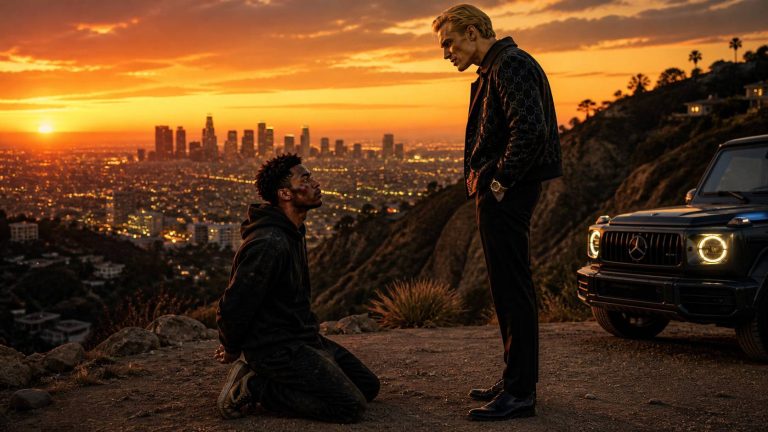
I stood up and walked out. I didn’t go back to the ridge that night. I stayed down in the valley, among the lights and the noise and the regular people. I looked up at the Hollywood sign, glowing white against the dark mountain.
The hill was mine, but I realized that true power isn’t about owning the land—it’s about having the strength to let others stand on it with you.
Being the king doesn’t mean much if you’ve forgotten how to be a neighbor.