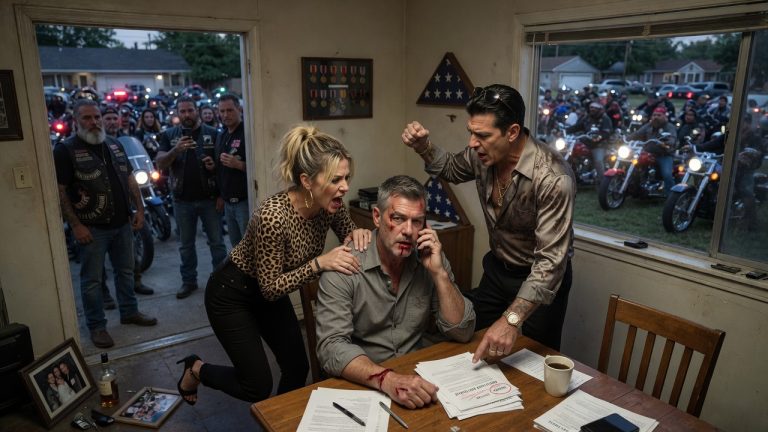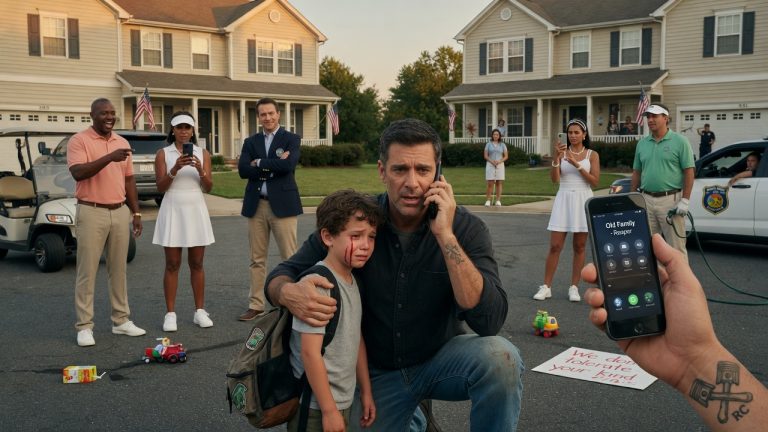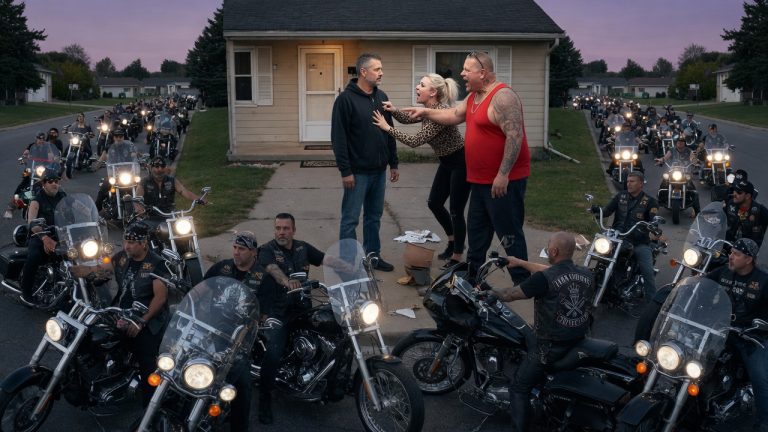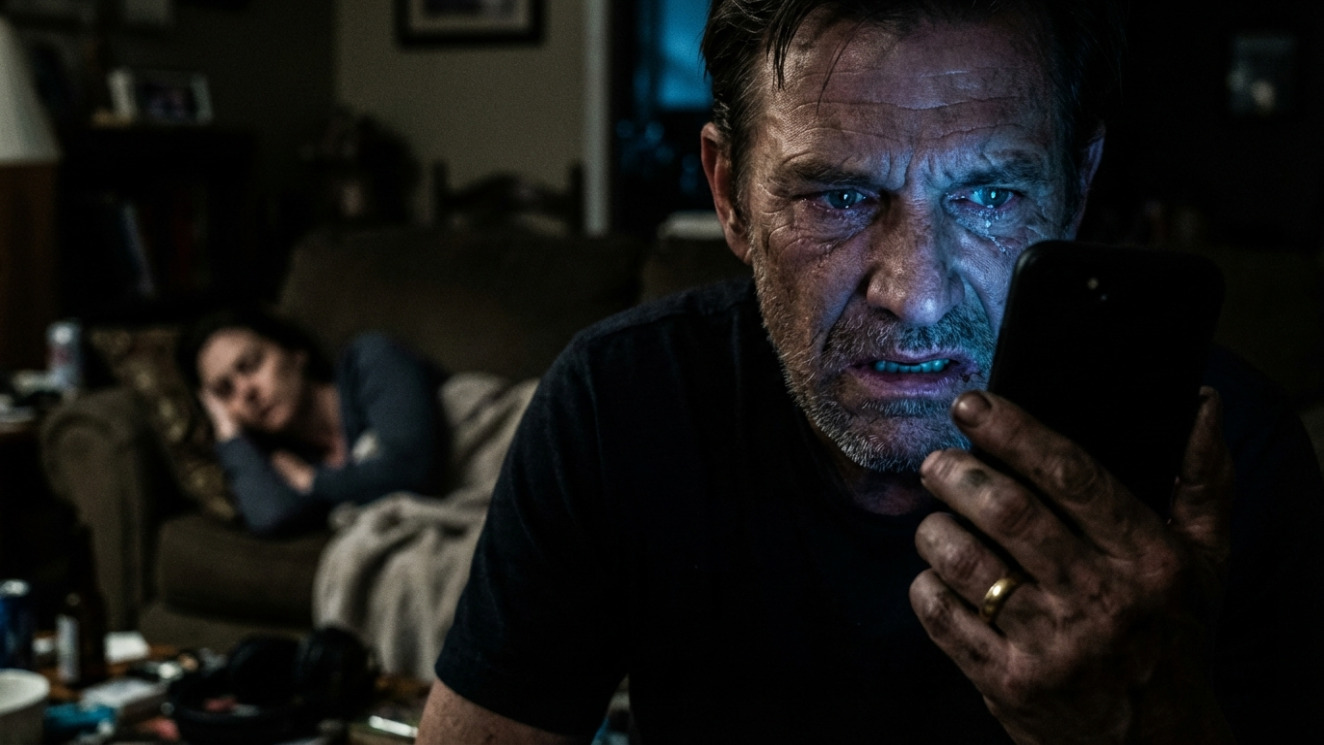
Garret Morgan came back from the desert with a hum in his ears that never went away. He thought the “Iron Saints” and the grease of the shop would be enough to drown out the ghosts.
He thought Megan was the one thing the war couldn’t touch.
Then he found the phone. The messages. The proof that while he was fighting for a life to come back to, she was building a different one without him.
Now, the man he tried to bury—the one who knows exactly how to make people disappear—is clawing his way out. And the local Sheriff is just waiting for Garret to pull the trigger.
FULL STORY
Chapter 1
The vibration of the Shovelhead engine was the only thing that kept the static in Garret’s brain from turning into a full-blown scream. It was a 1979 Harley, a temperamental beast of iron and oil that required constant attention, which was exactly why Garret loved it. If he wasn’t thinking about the timing or the primary chain, he was thinking about the Helmand Province. And thinking about the Helmand Province usually ended with him staring at a wall for three hours until the sun went down.
He pulled into the gravel driveway of his small, wood-sided house outside of Gauley Bridge. The West Virginia air was thick with the scent of damp pine and woodsmoke. It was a quiet place, or it was supposed to be. To Garret, the quiet felt like a trap.
He kicked the kickstand down and sat there for a second, his hands still buzzing from the ride. He looked at his knuckles. They were scarred, the skin thickened from years of mechanical work and the occasional bar fight that the Iron Saints MC considered “club business.” He wasn’t a violent man by nature—not anymore—but he was a man who knew how to use violence like a tool.
“Garret?”
Megan was standing on the porch. She looked tired. She was thirty-two, but in the gray evening light, she looked older. She was wearing an oversized flannel shirt that used to be his. She held a mug of coffee in both hands, the steam rising into the chilly air.
“Hey,” Garret said, swinging his leg over the bike. He walked up the porch steps, his heavy boots thudding on the wood. He went to kiss her, but she turned her head just enough so that his lips landed on her cheek. It was a small movement, practiced and subtle, but to a man trained to spot an IED by a slight disturbance in the dirt, it was as loud as a gunshot.
“You’re late,” she said, looking past him at the trees. “Work run over?”
“Club meeting,” he lied. He’d actually spent two hours sitting at a scenic overlook, watching the hawks circle the gorge and trying to remember how to feel like a husband. “Preach was having a hard time. Had to talk him down.”
“Preach is always having a hard time,” Megan said, her voice flat. She turned and went back inside, the screen door slapping shut behind her.
Garret followed her in. The house smelled like cinnamon and old floorboards. It was a good house, a “safe” house. He’d bought it with his reenlistment bonus and the money he’d saved while he was deployed. He wanted it to be a sanctuary for her, a reward for the three years she’d spent waiting for him, writing him letters that he still kept in a shoebox under the bed.
He sat at the kitchen table while Megan moved around the kitchen, tidying up things that didn’t need tidying. The silence between them wasn’t the comfortable kind. It was the kind of silence that happens when two people are holding their breath, waiting for the other one to break.
“I saw Miller today,” he said, trying to bridge the gap.
Megan paused, a plate in her hand. “The Sheriff? What did he want?”
“Just checking in. Told me to keep the boys in line. Said there’s been some talk about the Saints moving stuff across the county line.”
“Are you?” she asked, finally looking at him. Her eyes were searching for something—maybe the man he used to be, or maybe just a reason to leave.
“No. We’re a social club, Meg. You know that. We fix bikes and drink beer.”
“And carry guns,” she added.
“I’m a Marine. I’ve carried a gun since I was eighteen. It’s just part of the uniform.”
She didn’t answer. She put the plate in the cupboard and headed toward the hallway. “I’m going to bed. I have the early shift at the clinic tomorrow.”
“It’s only eight-thirty,” Garret said.
“I’m tired, Garret. Just… tired.”
He watched her go. He stayed at the table for a long time, listening to the house settle. The hum in his ears started to get louder. He reached into his pocket and pulled out a small, orange plastic bottle. He shouldn’t have it. The VA doctor had told him to taper off months ago. But the pills made the hum go away. They made the world feel like it was wrapped in wool.
He took two. Then, after a moment of hesitation, he took a third.
He went to the bedroom twenty minutes later. Megan was already asleep—or pretending to be. Her phone was sitting on the nightstand, face down. It vibrated. A short, sharp buzz.
Garret stood over it. He shouldn’t. He knew he shouldn’t. But the pills had lowered his guard, and the suspicion that had been festering in his gut for weeks finally boiled over. He picked up the phone.
It was locked. But the notification stayed on the screen for a few seconds.
Can’t wait for Friday. Same place?
No name. Just a string of numbers he didn’t recognize.
Garret felt a coldness spread through his chest that had nothing to do with the West Virginia winter. He looked at Megan’s sleeping form. She looked so innocent, her hair spread out across the pillow. This was the woman who had written him every week for three years. This was the woman who had promised to be his “bến đỗ an toàn”—his safe harbor.
He put the phone back exactly where it had been. He walked out of the room, through the kitchen, and out onto the back porch. He sat on the steps in the dark, the cold air biting at his skin. He didn’t feel the cold. He just felt the hum.
Friday was three days away.
The next morning, Garret went to the shop. He worked at “The Gearhead,” a small motorcycle repair shop owned by an old guy named Sal who didn’t ask questions about Garret’s past or why he sometimes had to step out back to catch his breath.
Around noon, a beat-up Ford F-150 pulled into the lot. A man climbed out, looking like he’d been dragged through a hedge backward. It was Preach. His real name was Elias, but everyone called him Preach because he used to quote scripture back in the sandbox before a roadside bomb took his leg and half his sanity.
Preach limped into the shop, his prosthetic clicking on the concrete.
“Guns,” Preach said, his eyes darting around the room. “You got a minute?”
Garret wiped his hands on a rag and stepped away from the bike he was working on. “What’s up, Elias?”
“The Sheriff. Miller. He was at my place this morning. Asking about the run to Huntington. Asking about you.”
Garret frowned. Miller was a local, a man who had known Garret’s father. He usually kept his distance as long as the Saints didn’t cause trouble in town. “What about me?”
“Asking if you’ve been ‘stable.’ Asking if Megan was ‘okay.’ He’s digging, Garret. I don’t like it.”
Garret felt a spike of irritation. Miller was overstepping. “I’ll talk to him. Don’t worry about it.”
“You okay?” Preach asked, squinting at him. “You look… thin. Like you’re vibrating.”
“I’m fine,” Garret said shortly.
“It’s the noise, right? The static?” Preach leaned in, his voice dropping to a whisper. “I found something that helps. Better than the VA stuff. You want some?”
Garret looked at the man. Preach was his mirror—the version of himself that had completely fallen apart. Preach lived in a trailer with three dogs and a collection of hollowed-out memories. Garret was trying so hard not to be that man.
“No,” Garret said. “I’m good.”
But he wasn’t good. As Preach drove away, Garret went into the small bathroom in the back of the shop. He peeled back the sleeve of his shirt. On his forearm, hidden under the dark ink of a Marine Corps tattoo, were three fresh, shallow cuts. He hadn’t even remembered doing them. He must have done it the night before, after finding the message on the phone.
He stared at the blood, bright and real against the grease on his skin. It was the only way he knew how to ground himself when the world felt like it was spinning out of control.
“Garret? You in there?” Sal called from the shop floor.
“Yeah,” Garret yelled back, his voice steady. “Just washing up.”
He bandaged the cuts with some electrical tape and gauze from the first aid kit. He pulled his sleeve down. He had to be careful. If Miller was watching, he couldn’t afford to look “unstable.”
But inside, the hum was turning into a roar. Can’t wait for Friday.
He spent the rest of the afternoon working on a clutch assembly, his mind miles away. He thought about the man Megan was meeting. He pictured him. Was he younger? More “normal”? Did he talk about his feelings instead of staring at the walls? Did he make her laugh?
The thought of Megan laughing with another man while he sat in the dark with his pills made Garret’s vision blur with a sudden, hot rage. He gripped the wrench so hard his hand cramped.
He wasn’t going to just sit there. He was a scout-sniper. He was trained to observe, to track, and to eliminate threats.
He closed the shop early. He didn’t go home. Instead, he drove his bike to the clinic where Megan worked. He parked a block away, in the shadows of an old warehouse. He waited.
At 5:00 PM, she walked out. She looked around, then headed toward her car. She didn’t look like a woman who was tired. She looked like a woman with a purpose. She got into her SUV and pulled out of the lot.
Garret followed her, staying three cars back. He knew how to do this. He’d done it in cities far more dangerous than this one.
She didn’t head home. She drove toward the outskirts of town, toward a small, secluded park by the river. She pulled into a spot near the back, under a weeping willow tree.
A silver sedan was already parked there.
Garret watched from behind a screen of brush as a man stepped out of the sedan. He was tall, clean-shaven, wearing a nice jacket. A “respectable” man. Megan got out of her car and walked toward him.
They didn’t hug. They didn’t kiss. They just stood there, talking. Megan looked upset. She was gesturing wildly, her face red. The man reached out and grabbed her arm—not roughly, but firmly.
Garret’s hand went to the small of his back, where his 9mm was tucked into his jeans. His heart was hammering against his ribs like a trapped bird. The “Marine” in his head was already calculating the distance, the wind, the shot.
But then, Megan pulled away. She shook her head and got back into her car. She sped out of the parking lot, leaving the man standing there.
Garret didn’t follow her this time. He stayed focused on the man. The man stood there for a minute, looking at the ground, then spit on the gravel and got back into his sedan.
Garret memorized the plate. WV-734-KPL.
He sat there in the dark long after the sedan had gone. The hum was gone now, replaced by a cold, sharp clarity. He knew who the man was. He’d seen him around town. His name was David Vance. He was a local contractor, a “pillar of the community” type.
Garret felt a strange sense of relief. It wasn’t a mystery anymore. It was a mission.
He drove home, his mind racing. When he walked into the kitchen, Megan was sitting at the table, staring at a stack of mail.
“Hey,” she said, not looking up.
“Hey,” he replied. He went to the fridge and pulled out a beer. “Long day?”
“The usual. People are sick. People are unhappy.” She finally looked at him. “You look different tonight, Garret.”
“How’s that?”
“I don’t know. Quiet. More than usual.”
“Just thinking about the future, Meg,” he said, taking a long pull of the beer. “About what we’re going to do.”
“What we’re going to do?” she echoed.
“Yeah. I want us to be happy. I really do.”
He saw a flicker of something in her eyes. Guilt? Fear? Hope? He couldn’t tell. She stood up and walked over to him, putting her hand on his chest.
“I want that too, Garret. I really do. But sometimes… sometimes wanting isn’t enough.”
She kissed him then. It was a real kiss, full of a desperate, clinging energy that felt more like a goodbye than a hello.
Garret held her, his chin resting on top of her head. He looked over her shoulder at the shoebox under the bed in the other room. The letters. The promises.
He wouldn’t let it go. He had lost too much already. He had lost his friends in the sand. He had lost his peace of mind. He wasn’t going to lose the one thing that made him feel like a human being.
He would fix this. Just like he fixed the Shovelhead. He would find the part that was broken, and he would remove it.
Even if it meant he had to become the monster he was so afraid of.
Chapter 2
The shoebox was covered in a thin layer of dust, tucked far back under the bed behind a pair of old boots Garret hadn’t worn since the day he’d processed out of Camp Lejeune. He pulled it out into the moonlight that slanted through the bedroom window. Megan was asleep—for real this time, her breathing heavy and rhythmic.
He sat on the floor, the floorboards cold against his thighs, and lifted the lid. The smell of old paper and the faint, lingering scent of Megan’s perfume from four years ago drifted up. These letters were his holy relics. They were the only reason he’d survived the 2021 deployment when the world was falling apart and his unit was catching hell in the mountains.
He picked one at random. The envelope was postmarked June 14, 2021.
“Garret, I saw a hawk today by the river and I thought of you. I know you’re in a place where the sun is too hot and the world feels empty, but remember there is a garden here waiting for you. I’m planting the tomatoes tomorrow. I’m keeping the bed warm. Come home to me, Guns. Just come home.”
Garret ran his thumb over the word home. Back then, he had a clear image of what that meant. It was a place without sirens. A place where he could sleep past dawn. A place where Megan’s smile was the first and last thing he saw every day.
He folded the letter back up, his hands shaking. The man who wrote those responses—the man who promised to be the husband she deserved—felt like a stranger now. That man hadn’t seen what happens when a Humvee hits a pressure plate. That man hadn’t felt the sickening “pop” of a human life ending through a long-range scope.
He looked at Megan’s silhouette in the bed. She had stayed for the man in the letters, but he had come back as a ghost. A ghost who spent his nights staring at the ceiling and his days scrubbing grease that never quite came off.
He stood up, tucked the box back under the bed, and walked into the kitchen. He didn’t turn on the lights. He didn’t need to. He knew this space by heart. He found his keys on the counter and headed out to the garage.
The garage was his true church. He sat on his stool and looked at the whiteboard where he kept track of bike builds. Under a list of parts for a Sportster, he wrote the license plate he’d memorized: WV-734-KPL.
David Vance.
He pulled up a laptop he kept in the shop for ordering parts. He wasn’t a hacker, but he knew how to use the internet. Vance Construction was easy to find. David Vance was a big deal in this part of the county. He did municipal contracts. He was in the Rotary Club. He had a wife and two kids in a house that cost three times what Garret’s did.
Garret felt a surge of cold, analytical disgust. Vance had everything, and yet he was reaching into Garret’s small, broken life to take the one thing that mattered.
The “Marine” took over. He stopped being a grieving husband and started being a hunter. He needed to know the routine. He needed to know the vulnerabilities.
The next three days were a blur of chemical numbness and tactical observation. Garret took his pills with mechanical regularity—just enough to keep the PTSD “buzz” at bay, but not enough to make him sloppy. He went to work at Sal’s, but his mind was on the silver sedan.
He followed Vance. He learned that the man stopped at a specific gas station every morning at 6:45 AM for coffee. He learned that Vance visited a job site out on County Road 12 every afternoon, a remote area where a new bridge was being reinforced. It was quiet out there. Just the river, the trees, and the sound of heavy machinery.
On Wednesday, Garret was at the shop when Sheriff Miller pulled in. He wasn’t in his cruiser; he was in a personal truck. He looked like a man who hadn’t slept well.
“Garret,” Miller said, stepping into the bay. He looked at the Shovelhead Garret was working on. “Nice bike. My brother had one like it. Leaked oil like a sieve.”
“They all do,” Garret said, not looking up. “What can I do for you, Sheriff? I’m on the clock.”
Miller walked around the bike, his hands in his pockets. “I saw your bike out by the river the other night. Near the old park.”
Garret’s heart did a slow, heavy roll in his chest. “I like the river. It’s quiet.”
“It is. But it’s also a place where people go when they’re looking for things they shouldn’t find.” Miller stopped and looked Garret directly in the eye. “I knew your dad, Garret. He was a good man, but he had a temper. He let it get the best of him after he got back from Nam. I’d hate to see history repeat itself.”
“I’m not my father,” Garret said, his voice dropping an octave.
“I hope not. Because I’m seeing things, Garret. I see you following people. I see you sitting in the dark. And I see those pills you’re taking.”
Garret froze. “I don’t know what you’re talking about.”
“Don’t lie to me. I’ve been a lawman for thirty years. I know the look of a man who’s trying to drown the noise. If you’re hurting, go to the VA. Get real help. Don’t let the club or the ghosts pull you under.”
Miller stepped closer, his voice softening. “Megan called me, Garret. She’s scared.”
The world tilted. Megan called him?
“Scared of what?” Garret asked, his voice cracking.
“Scared of you. She says you’re not there anymore. She says you’re like a statue that might fall over and crush her at any second. She doesn’t know how to reach you.”
Garret felt a wave of nausea. He wanted to tell Miller about the silver sedan. He wanted to scream that he wasn’t the one who was breaking the rules. But he couldn’t. If he admitted he knew about Vance, Miller would watch him even closer.
“I’m fine, Sheriff,” Garret said, his face a mask of granite. “Just a rough patch. Transitions are hard.”
Miller sighed, a long, weary sound. “Just remember, Garret. I can help you if you’re a veteran in trouble. I can’t help you if you’re a criminal. Don’t cross the line.”
Miller left, and Garret was alone in the shop. He went to the sink and splashed cold water on his face. He looked in the mirror. His eyes were bloodshot, the pupils dilated from the pills. He looked like a man on the edge of a cliff.
Megan is scared of me.
The thought gutted him. He had spent his whole life trying to be her protector. In the desert, he had imagined himself as a shield between her and the ugliness of the world. But now, he was the ugliness.
He went home that night and found Megan in the kitchen, making dinner. It was a normal scene—chicken, potatoes, the sound of the radio—but it felt like a stage play.
“You talked to Miller,” Garret said, standing in the doorway.
Megan flinched. She didn’t turn around. “He came by the clinic. He’s a friend, Garret. He’s worried about us.”
“You told him I was ‘unstable’.”
“I told him I was losing you!” she snapped, turning around. Her eyes were wet. “You’re like a ghost, Garret. You walk through this house and you don’t see me. You don’t touch me. You just… vibrate. I can feel the anger coming off you in waves, and I don’t even know what you’re angry at.”
“I’m not angry at you,” he said, and it was the truth. He was angry at the world. He was angry at the sand. He was angry at David Vance.
“Then tell me what’s happening! Talk to me!”
Garret opened his mouth to tell her. He wanted to say: I saw you at the park. I know about the silver sedan. I know you’re looking for an escape from the broken man I’ve become.
But the words died in his throat. If he said them, it would be over. The illusion of their marriage would shatter, and he would have nothing left. No anchor. No home.
“I’m trying, Meg,” he whispered. “I’m really trying.”
“Try harder,” she said, her voice breaking. She walked past him and locked herself in the bathroom.
Garret stood in the kitchen, the smell of burnt chicken filling the air. He reached into his pocket and pulled out the bottle. He took four. He didn’t even use water. He just swallowed them, feeling the bitter chalk of them on his tongue.
The hum began to recede. The world smoothed out.
He went to the garage and grabbed a length of heavy chain and a padlock. He put them in the saddlebag of his bike. He checked his 9mm, racking a round into the chamber and then engaging the safety.
Friday was coming. And Garret “Guns” Morgan had a mission to finish.
He didn’t care about being “stable” anymore. He didn’t care about Miller’s warnings. He only cared about the man in the silver sedan who had stolen the only thing that kept Garret’s soul from drifting away into the dark.
He sat on his bike in the dark garage, the engine cold, and pulled out the old letters one last time. He didn’t read them. He just held them against his chest, feeling the thin, fragile weight of the life he used to have.
“I’m coming home, Meg,” he whispered to the empty air. “I’m going to make it right.”
But as the pills took hold, his voice didn’t sound like his own. It sounded like the man from the desert. The man who didn’t know how to fix things. Only how to break them.
Chapter 3
The Iron Saints MC clubhouse was a converted warehouse on the edge of Gauley Bridge, tucked behind a scrap yard and a wall of overgrown kudzu. It smelled like stale beer, old leather, and the ozone of a welding torch. To most people, it was a den of thieves. To Garret, it was the only place where he didn’t have to explain why his hands shook or why he sat with his back to the wall.
Thursday night was “Church”—the weekly meeting where the club handled its business. Garret sat at the long wooden table, the “Guns” patch on his chest feeling heavier than usual.
At the head of the table sat Big Jack, a man who looked like he’d been carved out of a mountain. He was sixty, with a beard like a steel wool pad and eyes that had seen every bad thing a man can do in the hills of West Virginia.
“We got a problem,” Jack said, leaning forward. The table groaned under his weight. “The Sheriff is breathing down our necks. Miller’s been hitting our spots, asking questions about the Huntington run. He’s looking for a reason to shut us down.”
The men around the table grumbled. Preach, sitting next to Garret, tapped his prosthetic leg nervously against the floor.
“He’s looking at you specifically, Guns,” Jack said, his gaze landing on Garret. “Word is, he’s been following you. Why is the law interested in our Sergeant at Arms?”
Garret didn’t blink. “He’s an old friend of my dad’s. Thinks he can ‘save’ me.”
“Is there anything to save?” Jack asked. “Because if you’re bringing heat on this club for personal shit, we got a problem.”
“It’s under control,” Garret said, his voice flat and hard.
“Make sure it is,” Jack warned. “We got a shipment coming through the gorge tomorrow night. High-value stuff. I need you on point. No distractions.”
Garret nodded, but his mind was already miles away. Tomorrow night was Friday. Tomorrow was the day Megan was supposed to meet Vance.
As the meeting broke up, Preach caught Garret’s arm. “You’re lying, brother.”
“Go home, Elias,” Garret said, pulling away.
“You’re spiraling. I know the look. It’s the same look I had before I drove my truck into the river.” Preach’s eyes were wide, desperate. “Whatever you’re planning… don’t. It doesn’t fix the noise. It just makes it louder.”
“I’m not you,” Garret said, harsher than he intended. He saw the hurt in Preach’s eyes, but he couldn’t afford empathy right now. He was on a track, and the rails were greased.
He left the clubhouse and headed toward County Road 12. He needed to scout the location one last time.
The bridge construction site was deserted at 10:00 PM. The skeletal frame of the new bridge rose over the rushing water of the Gauley River, surrounded by orange mesh fencing and piles of gravel. Vance’s truck—the silver sedan was for “respectable” trips, the F-250 for work—wasn’t there, but Garret knew the schedule. Vance came here every Friday afternoon to check the progress before the crews left for the weekend. He usually stayed late, alone, doing paperwork in the site trailer.
Garret walked the perimeter, his boots crunching softly on the dirt. He found a spot on a ridge overlooking the trailer, hidden by a dense thicket of rhododendron. From here, he had a clear line of sight. He could see the door of the trailer, the parking area, and the steep drop-off to the river below.
It was a perfect “kill box.”
His phone buzzed in his pocket. He pulled it out. It was a text from Megan.
I’m going to stay at my mom’s tomorrow night. Just need some space to think. I’ll be back Saturday morning.
Another lie. Her mother lived two hours away in Charleston. She was going to Vance.
Garret felt a surge of white-hot adrenaline that cut right through the pills. He didn’t reply. He just stared at the phone until the screen went dark.
He drove home, but he didn’t go inside. He went straight to the garage. He needed to be busy. He started tearing down the carburetor on a client’s bike, his movements frantic and precise.
Around 2:00 AM, the garage door opened. He didn’t turn around. He knew the gait.
“You’re still up,” Megan said. She was leaning against the doorframe, wrapped in a blanket.
“Work to do,” Garret said, his back to her.
“Garret, look at me.”
He slowly turned around. She looked small in the cavernous garage, surrounded by the hulking shapes of motorcycles and the smell of gasoline.
“I’m leaving for Mom’s in the morning,” she said. Her voice was trembling. “I think… I think we should talk about a separation.”
The word hit him like a physical blow. Separation.
“Why?” he asked.
“Because you’re not here! I’m living with a ghost, Garret! I try to talk to you, and you look through me. I try to touch you, and you flinch. I can’t live like this anymore. I’m thirty-two years old, and I feel like I’m already dead.”
“I’m trying to fix it, Megan,” he said, his voice a low growl. “I’m doing everything I can.”
“You’re taking pills and hiding in the garage! That’s not fixing it! That’s just waiting for the end.” She stepped toward him, the blanket slipping from her shoulders. “Is there someone else, Garret? Is that what this is?”
The irony of the question nearly made him laugh. He looked at her—the woman he had carried a photo of in his helmet for a thousand miles of desert. The woman he had bled for.
“No,” he said. “There’s no one else. There’s only you. Always only you.”
“Then why can’t you just be here?” she cried.
He wanted to reach out and grab her. He wanted to tell her about the screams he heard when the room was quiet. He wanted to show her the scars on his arms. But he couldn’t. He was a Marine. He was a Saint. He was supposed to be the strong one.
“I’ll be better,” he said, the lie tasting like copper. “Just give me through the weekend. I have one more thing to settle, and then I’m all yours. I promise.”
She looked at him for a long time, searching his face for a sign of the man who had written those letters. She must have found a glimmer of him, because she nodded slowly.
“One weekend, Garret. That’s it.”
She turned and went back to the house.
Garret stood in the center of the garage, the silence closing in like a physical weight. He reached for the pill bottle on the workbench. He took three, then four, then a fifth. He didn’t care about the dosage anymore. He just wanted the world to stop moving.
He slumped against the workbench, his head in his hands. He felt the darkness pressing against the windows.
He wasn’t going to lose her. He was going to remove the cancer that was eating their marriage. He was going to take David Vance out of the equation, and then things would go back to the way they were. They had to.
But as the pills began to cloud his mind, a small, rational part of him—the part that hadn’t been killed in the war—whispered a terrifying truth.
You’re not fixing the marriage, Garret. You’re just making sure you’re the only ghost left in the house.
He ignored the voice. He focused on the hum. He focused on the bridge.
The next morning, Friday, Garret watched Megan drive away at 8:00 AM. She had a small suitcase in the back. She didn’t look back at the house.
Garret waited an hour, then he got on his Harley. He didn’t wear his cut today. He wore a plain black hoodie and jeans. He didn’t want to be “Guns.” He wanted to be a shadow.
He drove to the bridge site. He arrived at noon and hid his bike a mile away, hiking through the woods to his vantage point. He settled into the rhododendrons with a bottle of water, a bag of beef jerky, and his 9mm.
He waited.
The hours crawled by. The construction crew finished their shift at 3:30 PM. One by one, the trucks pulled out, leaving a cloud of red dust in their wake.
At 4:45 PM, the silver F-250 pulled into the lot.
David Vance got out. He was wearing high-end work boots and a pristine Carhartt jacket. He looked confident. Successful. He walked to the site trailer and unlocked the door.
Garret watched through the brush. His heart rate was steady, his breathing slow. This was the “zone.” The place where the world became simple. Targets and trajectories.
He waited for Megan. He knew she would come.
At 5:30 PM, her SUV pulled into the lot.
Garret felt a spike of pain so sharp it nearly took his breath away. Seeing her here, in this dusty, desolate place, confirmed everything.
She got out of the car. Vance met her at the door of the trailer. They didn’t kiss. Again, they just stood there. Megan looked like she had been crying. Vance was talking fast, his hands moving.
Then, they went inside the trailer.
Garret gripped the 9mm. He felt the cold steel against his palm. He could do it now. He could walk down there, kick the door in, and end it.
But he didn’t. He waited. He wanted to see. He needed to be sure.
Twenty minutes later, the trailer door opened. Megan walked out. She was wiping her eyes. Vance followed her, looking frustrated. He grabbed her arm, and this time, he didn’t let go. He pulled her back toward him.
Garret rose from the brush. His thumb flicked the safety off.
But then, he saw something that stopped him cold.
Vance wasn’t pulling her into an embrace. He was shaking her. He was shouting. Even from this distance, Garret could hear the jagged edges of the man’s voice.
“You don’t get to just walk away!” Vance screamed. “I put too much into this! You tell him, or I will!”
Megan pushed him away, her face a mask of terror. She scrambled into her car and peeled out, dirt spraying from her tires.
Vance stood in the lot, kicking at a pile of gravel and cursing. Then he turned and went back into the trailer.
Garret sat back down in the dirt. His head was spinning. You tell him, or I will.
It wasn’t a love affair. It was something else. It was a debt. Or a secret.
The hum in Garret’s ears suddenly changed frequency. It wasn’t a drone anymore. It was a siren.
He looked at the trailer. He looked at the gun in his hand.
He didn’t know the whole story. But he knew one thing for certain: David Vance was the reason his wife was afraid to come home.
And in Garret’s world, that was a death sentence.
Chapter 4
The sun dipped behind the jagged ridge of the Appalachian peaks, casting long, bruised shadows across the construction site. Garret stayed in the brush, motionless as a gargoyle. The pills were wearing off, and with their departure came a jagged, biting clarity. His skin felt too tight. Every sound—the rustle of a dry leaf, the distant rush of the river—felt like a needle prick.
In the trailer, a single light flickered on. David Vance was still inside.
Garret checked the magazine of his 9mm again. It was a nervous habit he’d picked up in the Corps. Seventeen rounds. More than enough for one man.
He began his descent. He didn’t take the path. He moved through the trees, staying low, his black hoodie blending into the deepening gloom. He reached the edge of the gravel lot and paused behind a stack of steel rebar.
The air was cold now, smelling of wet mud and diesel. He could hear the low hum of a generator nearby.
He reached the trailer. He didn’t knock. He put his shoulder to the door and gave it a sharp, practiced shove. The lock was cheap; it gave way with a splintering crack.
Vance was sitting at a folding table covered in blueprints and a half-empty bottle of bourbon. He jumped, knocking his chair over as Garret stepped into the cramped space.
“Who the hell—” Vance started, but the words died as he looked at Garret’s face. He didn’t recognize the husband, but he recognized the threat. “Garret Morgan. What are you doing here?”
Garret didn’t answer. He kicked the door shut behind him. He didn’t pull the gun yet. He wanted to see the man’s eyes first.
“Where is she?” Garret asked, his voice a low, vibrating rasp.
“Who? Megan? She left. You saw her, didn’t you? You’ve been following us.” Vance tried to puff out his chest, but his hands were shaking as he reached for the bourbon bottle. “Look, Garret, whatever you think is going on, it’s not—”
“I heard you screaming,” Garret said, stepping closer. The trailer felt tiny, the air thick with the smell of Vance’s sweat and expensive cologne. “I saw you grab her. You don’t grab my wife.”
Vance laughed, a high-pitched, nervous sound. “Your wife? You think you know her? You think those little letters she sent you mean anything?”
Garret felt a spike of heat in his gut. “What did you say?”
“She came to me for money, Garret! Two years ago, while you were still playing soldier in the dirt. She was drowning. This house, the bills, the ‘safe life’ you promised her? She couldn’t afford it on a nurse’s salary. She took a loan from me. A private loan.”
Garret froze. A loan?
“And then she couldn’t pay it back,” Vance continued, sensing he had the upper hand. He took a swig of the bourbon. “So we made an arrangement. She provided… information. About the clinic. About the pharmaceutical shipments. About who was getting what.”
“She’s a nurse,” Garret whispered. “She wouldn’t do that.”
“She’s a woman who was desperate! She was trying to keep your world from falling apart while you were busy losing your mind! And now, the Sheriff is asking questions. I told her she needs to keep her mouth shut. I told her if I go down, she goes down with me. And you? You’ll be back in a VA psych ward before the week is out.”
The world seemed to fracture around Garret. He saw Megan’s face—not the laughing girl from the letters, but the tired, haunted woman who had been carrying this weight alone for years. She hadn’t been cheating on him. She had been selling her soul to keep him in a home he wasn’t even mentally present for.
And Vance was the one holding the leash.
Garret pulled the gun.
The sight of the black barrel silenced Vance instantly. The man’s face went pale, his eyes bulging. “Wait… Garret, wait. Let’s be reasonable. I can pay you. Whatever she owes, I’ll double it. Just put the gun down.”
“It’s not about the money,” Garret said. He felt a strange, cold peace. The “noise” in his head had stopped. There was only the target.
“I’ll kill her, Garret! I swear to God, if you do this, my people will find her!”
Garret stepped into the man’s space, pressing the muzzle of the gun against Vance’s forehead. The cold metal left a ring on the man’s skin.
“No one is going to find her,” Garret said. “Because you’re going to go for a ride.”
He forced Vance out of the trailer and toward the edge of the construction site, where the new bridge deck ended in a jagged drop-off to the river sixty feet below. The water was high from the recent rains, white foam churning against the rocks.
“Get in the truck,” Garret ordered, gesturing toward Vance’s F-250.
“Garret, please… I have kids…”
“So did the people in the market in Kabul,” Garret said. “They didn’t have a choice either.”
He forced Vance into the driver’s seat. Garret sat in the passenger side, the gun pressed against Vance’s ribs.
“Drive to the edge,” Garret said.
“What?”
“Drive to the edge of the bridge deck. Now.”
Vance was sobbing now, a pathetic, wet sound. He started the truck, his foot trembling on the pedal. The heavy vehicle crawled across the gravel, then onto the concrete of the unfinished bridge. The headlights cut through the darkness, illuminating the empty air where the road simply stopped.
“Stop,” Garret said when the front tires were inches from the drop.
The truck idled, the engine a low growl. Below them, the river roared, a hungry, mindless sound.
“You’re going to write a note,” Garret said, handing him a piece of paper and a pen from the dashboard. “You’re going to say you couldn’t handle the pressure of the investigation. You’re going to apologize to your family. And you’re going to say Megan Morgan had nothing to do with your business.”
“They won’t believe it,” Vance blubbered.
“They will if the truck is at the bottom of the river and you’re inside it.”
Garret looked at the man—this pillar of the community, this “respectable” thief. He felt nothing. No anger, no joy. Just the cold requirement of the mission. He was removing the threat. He was protecting his home.
But as Vance began to write, his hand shaking so hard the pen tore the paper, Garret’s phone buzzed in his pocket.
He pulled it out with his free hand. It was a picture message from Megan.
It was a photo of the shoebox. The letters. They were scattered across their bed at home.
I didn’t go to Mom’s, the text read. I’m at the house. I read them all again, Garret. Every single one. I remember who you were. I’m not leaving. Please… just come home. We can fix this. I’ll tell you everything. Just come home.
Garret stared at the screen. The image of the letters—the “garden” she had promised him—clashed violently with the reality of the gun in his hand and the man crying beside him.
If he killed Vance, he would be protecting her, yes. But he would also be killing the man she wanted to come home to. He would be completing the transformation into the monster. He would be the ghost she was afraid of.
“I’m done,” Vance whispered, handing him the crumpled paper. “Please… let me go.”
Garret looked at the note. Then he looked at the river.
He thought about Miller. He thought about Preach. He thought about the three cuts on his arm, hidden under his sleeve.
The hum in his ears returned, but it wasn’t a siren this time. It was a question.
Who are you, Garret?
He reached over and turned off the truck’s ignition. The silence that followed was deafening.
“Get out,” Garret said.
Vance blinked, confused. “What?”
“Get out of the truck and start running. If I ever see you near my wife, or if you ever mention her name to the Sheriff, I won’t use a gun. Do you understand?”
Vance didn’t wait for a second invitation. He scrambled out of the truck and vanished into the darkness of the woods, stumbling and falling in his haste.
Garret sat in the silent cab of the truck for a long time. He took the note and tore it into a hundred tiny pieces, letting them flutter out the window like snow.
He got out of the truck and walked back to where he’d hidden his Harley. He didn’t feel like a hero. He felt exhausted. He felt old.
He drove home.
When he pulled into the driveway, the lights in the house were all on. He walked through the front door, his boots heavy on the floorboards.
Megan was sitting on the floor in the bedroom, surrounded by the letters. She looked up as he entered. She saw the dirt on his clothes, the hollow look in his eyes.
“Garret,” she whispered.
He sat down on the floor across from her. He reached out and took her hand. Her skin was warm, real.
“I know,” he said.
“I’m so sorry,” she sobbed, leaning into him. “I just wanted to keep the house. I wanted you to have something to come back to.”
“I know,” he repeated, stroking her hair.
They sat there for a long time, the ghosts of the past and the secrets of the present swirling around them.
But then, the front door burst open.
“Garret Morgan! Hands where I can see them!”
It was Miller. He was followed by two deputies, their flashlights cutting through the dim house.
Garret didn’t move. He didn’t reach for his gun. He just kept holding Megan.
“David Vance just called dispatch,” Miller said, his voice tight with anger and disappointment. “Said you tried to kill him. Said you kidnapped him at gunpoint.”
Miller walked into the bedroom, his eyes landing on the scattered letters, the weeping woman, and the man who looked like he’d finally stopped fighting.
“I told you, Garret,” Miller said softly, the handcuffs clicking as he pulled them from his belt. “I told you not to cross the line.”
Garret looked at Megan. He saw the terror in her eyes, the realization that the “fix” had only led to a different kind of ending.
“It’s okay,” Garret said to her. And for the first time in years, he meant it. “The noise… it’s gone.”
As Miller led him away, Garret looked back at the shoebox. The rust on the ring was still there, but the garden—the one Megan had promised—felt, for a fleeting second, like it might finally have a chance to grow.
Even if he wouldn’t be there to see it.