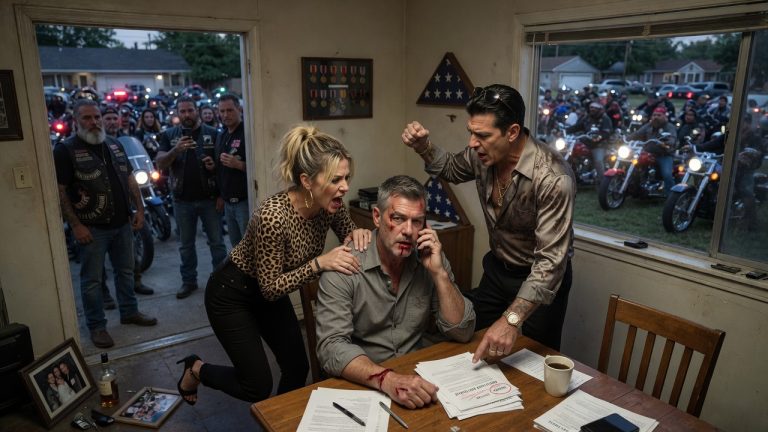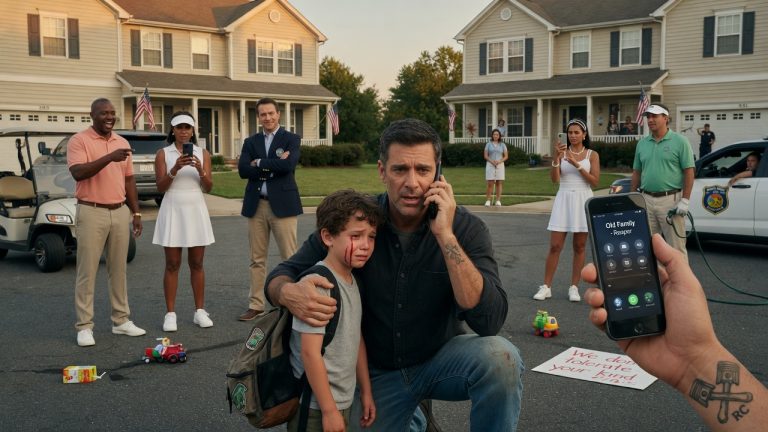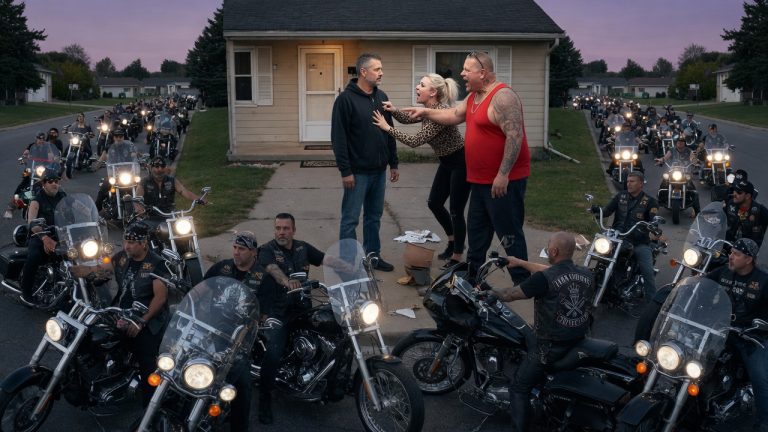
Marcus used to be famous for his hands. Now, they’re the only thing he can’t trust.
The “hum” in his head started after the light-heavyweight title fight three years ago. It’s a gray curtain that drops over his mind, leaving gaps where hours of his life used to be. Most days, he’s just an enforcer for the 500 MC, a man who moves crates and keeps his mouth shut.
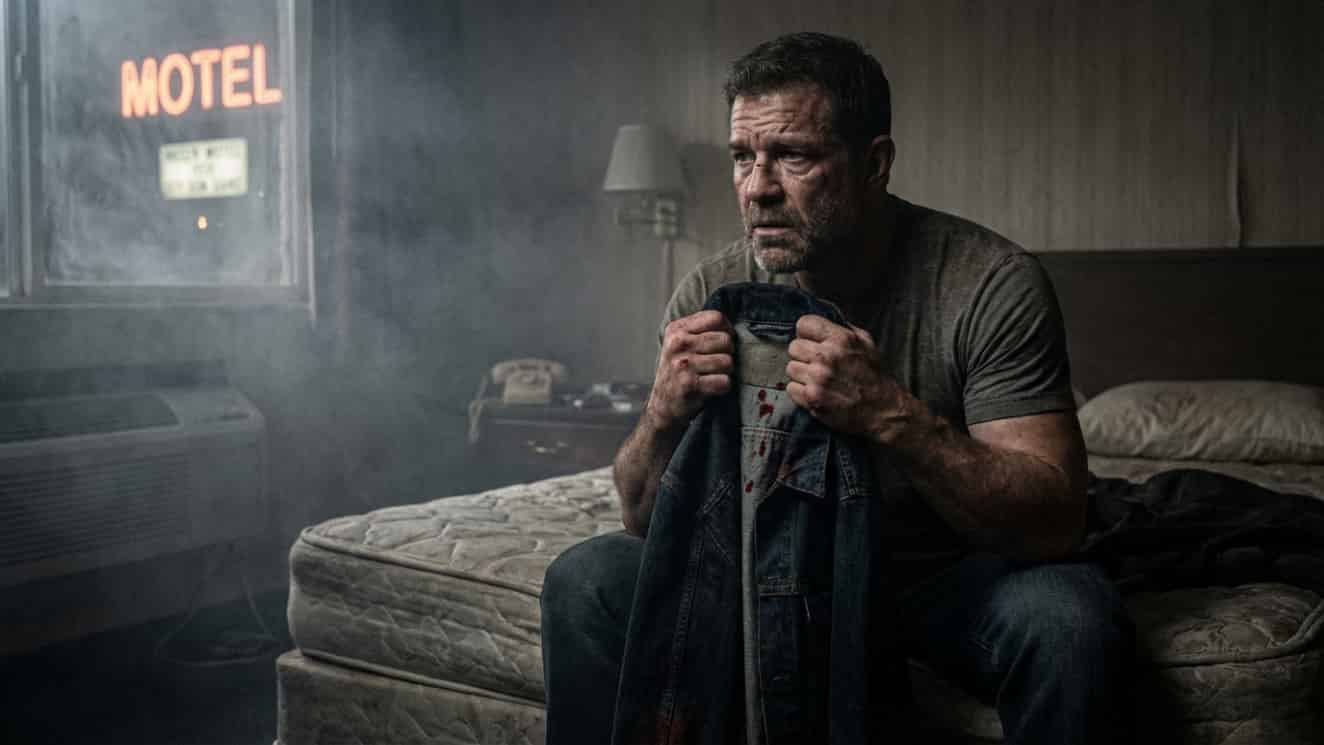
But then he found the jacket.
It was stuffed under his mattress, stiff with blood that wasn’t his. And the news is saying a politician’s son is missing after a bar fight that Marcus can’t quite remember.
Between the pressure from the club’s ruthless lawyer and the fading memories of his own life, Marcus is running out of time. His daughter is the only thing keeping him grounded, but even her face is starting to feel like a dream he’s about to wake up from.
FULL STORY
Chapter 1: The Weight Under the Springs
The rain in Seattle wasn’t a downpour; it was a persistent, gray haunting. It clung to the windows of Marcus’s studio apartment in Renton, blurring the neon sign of the Pho place across the street into a pink smear. Inside, the only light came from the digital clock on the microwave, which pulsed a steady, rhythmic 12:00. It had been blinking like that for three days, ever since the power flicker Marcus couldn’t remember fixing.
Marcus sat on the edge of his bed, his large, scarred hands resting on his knees. His knuckles were swollen, a dull purple hue deepening under the skin of his right index finger. He didn’t remember hitting anything. That was the problem. The “hum” was back—a low-frequency vibration in the base of his skull that felt like a hive of bees had taken up residence in his cerebellum.
“Think,” he whispered. The sound of his own voice was foreign, a gravelly rasp that barely cut through the hum.
He remembered the bar. The Tarmac. It was a 500 MC hangout, a place where the air always tasted like stale beer and chain-lube. There had been a celebration. Or maybe a wake. The details were slippery, like trying to catch minnows with bare hands. He remembered a face—young, entitled, shouting something about a father who owned the precinct. He remembered the kid’s shirt, a crisp white linen that looked absurd against the grease-stained walls of the bar.
Then, the gray curtain had dropped.
Marcus stood up, his knees popping. He felt a sudden, sharp spike of vertigo and had to grab the radiator to keep from toppling. When the room stopped spinning, he looked at the bed. The mattress was old, the floral pattern stained with years of sweat and spilled coffee. He reached under the corner, near the headboard, and his fingers brushed something that wasn’t the cold metal of the springs.
He pulled it out.
It was his club kutte, the heavy leather vest with the “500” patches. But wrapped inside it was a jacket. A light tan windbreaker, the kind expensive kids wore on sailboats. It was heavy. Damp.
Marcus unrolled it on the bed. The front of the tan fabric was mapped with dark, irregular continents of dried blood. It was a massacre in textile form. In the pocket, he found a wallet. He flipped it open with trembling fingers.
Julian Vane. The face in the ID was the one from the bar. The son of Senator Thomas Vane, a man whose face was currently plastered on every “Law and Order” billboard in the city.
The hum in Marcus’s head turned into a roar. He dropped the wallet as if it were white-hot.
He didn’t need a medical degree to know what the blood meant. He’d spent fifteen years in the ring. He knew what a focused, 220-pound hook could do to a human temple. He knew how a skull sounded when it hit concrete.
There was a knock at the door. Not a friendly knock. It was the rhythmic, authoritative rap of someone who didn’t care if you were sleeping.
Marcus shoved the jacket and the kutte back under the mattress, his heart hammering against his ribs like a trapped bird. He wiped his hands on his jeans—though they were clean of blood, they felt filthy—and walked to the door.
He looked through the peephole. It was Vance.
Vance wasn’t a biker. He was the “legal consultant” for the 500 MC, a man who wore four-thousand-dollar suits to dive bars and spoke in a voice that sounded like a paper shredder. He was the guy who made sure the club’s “imports” stayed off the manifest.
Marcus opened the door.
Vance stepped in without being invited, his eyes sweeping the room with clinical disgust. He smelled of expensive cologne and rain.
“You look like hell, Marcus,” Vance said, flicking a piece of lint off his sleeve. “The fog rolling in again?”
“I’m fine,” Marcus said, his voice steadier than he felt. “Just a headache.”
“A headache,” Vance repeated. He walked over to the small kitchen table, where a stack of overdue bills sat next to a photo of a young girl in a pink tutu. He picked up the photo. “How’s Lily? Ballet lessons getting expensive?”
“She’s fine. Leave the picture alone.”
Vance set it down gently, though the gesture felt like a threat. “The club has a problem. A big one. The Senator’s kid went missing two nights ago. Last seen at the Tarmac. The cops are going to be kicking in doors by morning. They’re looking for a scapegoat, and a bunch of guys with patches on their backs are the easiest targets in the world.”
Marcus felt the sweat cooling on his neck. “What’s that got to do with me?”
Vance turned, his eyes narrowing. “You were there, Marcus. People saw you talking to him. People saw you follow him out into the alley when he started making noise about his old man. And then, surprisingly, you didn’t come back in for an hour.”
“I don’t remember,” Marcus said. It wasn’t a lie, which made it worse.
“That’s the beauty of your condition, isn’t it? Plausible deniability. Or a one-way ticket to a state hospital.” Vance stepped closer, his voice dropping. “The President is worried. He likes you, Marcus. He remembers when you won the Golden Gloves. But the club comes first. If the kid turns up dead, someone has to be the one who did it. And it can’t be someone the club needs.”
“I didn’t do anything,” Marcus said, the words feeling hollow even to him.
“Check your mattress, Marcus,” Vance said, a small, cruel smile touching his lips. “I’m not the only one who knows your habits. If you have anything… incriminating… I suggest you let me handle it. For the sake of the girl.”
Vance walked to the door, stopping with his hand on the knob. “There’s a rehearsal today, right? Nutcracker? You shouldn’t miss that. It might be the last one you see for a while.”
The door clicked shut. Marcus stood in the center of the room, the silence of the apartment suddenly heavier than the rain outside. He looked at the bed. He looked at the photo of Lily.
He didn’t know if he was a murderer. He didn’t know if his brothers had framed him, or if he had truly snapped. But he knew one thing: in the world of the 500 MC, the man who couldn’t remember was the most dangerous man in the room.
Chapter 2: The Tutu and the Grime
The community center in Ballard smelled of floor wax and damp wool. It was a sharp contrast to the sour, metallic scent of Marcus’s apartment. He sat in the third row of the folding chairs, his large frame making the plastic seat groan. Around him, mothers in yoga pants whispered and sipped lattes, their eyes darting nervously toward the man with the tattooed neck and the trembling hands.
On the stage, a dozen seven-year-olds were attempting something that vaguely resembled a choreographed dance. In the center was Lily. She was smaller than the other girls, her limbs thin but surprisingly strong. When she moved, she had a grace that Marcus knew hadn’t come from him. She had her mother’s eyes—wide, observant, and full of a terrifyingly pure hope.
Marcus watched her, and for a moment, the hum in his head receded. He focused on the way her slippers hit the wooden floor. Thud-tap. Thud-tap. It was a rhythm. Like a heavy bag.
He felt a pang of guilt so sharp it physically hurt. He hadn’t paid the tuition for next month. He’d spent the money on a new set of tires for his bike—the club’s bike, really—because he was afraid of what the Sergeant at Arms would do if he showed up with cords showing. He was a forty-year-old man who lived in fear of a twenty-five-year-old with a chrome-plated ego.
After the rehearsal, Lily ran to him, her tutu fluttering like a wounded bird. “Daddy! Did you see? I did the turn!”
Marcus caught her, his rough hands gentle on her shoulders. “I saw, baby. You were the best one up there.”
“Mrs. Gable said I could be the lead if I practice more,” Lily said, her face glowing. “Can we get ice cream? You promised.”
Marcus checked his pocket. He had twelve dollars. “Maybe a small one, Lil. We gotta get you home. I have to go to the gym.”
“The gym? But you don’t fight anymore.”
“I’m helping Pop,” Marcus lied. “Just some training.”
As they walked to his battered Ford F-150, a black SUV with tinted windows was parked across the street. It didn’t belong in this neighborhood. Marcus felt the hair on the back of his neck rise. He didn’t look at it, but he felt the eyes through the glass.
He dropped Lily off at his ex-wife’s place. Sarah didn’t invite him in. She stood in the doorway, her arms crossed, looking at the bruise on his hand.
“You’re shaking again, Marc,” she said quietly.
“It’s just the cold,” he said.
“It’s the hits. You need to go back to the doctor. The VA said—”
“I know what the VA said. I’m fine, Sarah. I’m taking the meds.”
“Are you? Because you missed Lily’s birthday last month. You called me three times asking what day it was.”
Marcus looked at his boots. He remembered the phone calls, but they felt like scenes from a movie he’d watched years ago. “I’ll be better. I’m working on something.”
“Is it the club? Because I saw the news. That Senator’s son…” She trailed off, her eyes searching his face. “Stay away from that, Marc. For her.”
He drove away, the rain turning into a sleet that hissed against the windshield. He didn’t go home. He went to “The Doghouse,” a boxing gym that had seen its last champion in the Reagan era.
Pop was there, wrapping a kid’s hands. The old man was eighty if he was a day, with skin like cured leather and eyes that saw through every lie Marcus had ever told.
“You look like a bag of smashed crabs,” Pop said, not looking up.
“Need to hit something, Pop.”
“Hit the heavy bag in the back. Don’t break my equipment. And don’t go near the sparring ring. You take one more clip to the chin and you’ll be forgetting how to breathe.”
Marcus went to the back. He didn’t wrap his hands. He didn’t put on gloves. He just started hitting the bag. Left. Right. Hook. At first, it was controlled. But then the images started coming. The tan jacket. The Senator’s son screaming. The sound of a bike engine.
Left. Right. Left. He hit the bag until his knuckles split, the skin tearing over the old scars. He hit it until the hum in his head became a physical pain, a white-hot spike driven into his temple.
“Marcus! Stop!”
Pop was grabbing his arms. Marcus was breathing hard, his chest heaving. The heavy bag was swinging wildly, a smear of blood on the canvas.
“You’re going to kill yourself, son,” Pop said, his voice soft. “What happened?”
“I think I did something, Pop,” Marcus sobbed, the first time he’d let the wall crumble. “I think I did something bad and I can’t find the memory of it.”
“The mind is a tricky thing,” Pop said, leading him to a bench. “Sometimes it hides things to protect you. And sometimes it hides things because it’s broken.”
“If I go to the cops, they take Lily away. I’m a biker with a record and a brain like swiss cheese. They won’t see an accident. They’ll see a thug.”
“And if you don’t?”
“Then the 500 will make sure I’m the one who takes the fall anyway. Vance was at my place. He knows about the jacket.”
Pop looked at Marcus’s bloody hands. “Vance is a snake. He doesn’t find things unless he puts them there first, or unless he needs them for a trade. You sure that jacket is yours?”
Marcus froze. He remembered finding it. He remembered the blood. But did he remember putting it there?
He closed his eyes, trying to force the gray curtain back. He saw the alley. He saw the kid. He saw himself raising a fist.
But there was someone else there. A shadow. A man with a ring that caught the light—a heavy gold ring with a crest.
Vance wore a ring like that.
“I need to go,” Marcus said, standing up.
“Where?”
“To find a man who remembers things for a living.”
Chapter 3: The Reporter and the Ruin
Sloane was a woman who lived on cigarettes and spite. She worked for a tabloid that most people used to line birdcages, but she had a memory like a steel trap and a Rolodex that made the Chief of Police nervous.
Marcus met her in a diner in South Park where the coffee was strong enough to peel paint. She looked at his hands, then at his face.
“You look like you’ve been run over by a freight train, Marcus,” she said, lighting a cigarette despite the ‘No Smoking’ sign. “What does a 500 enforcer want with a bottom-feeder like me?”
“You’re covering the Vane kid,” Marcus said.
“Everyone is covering the Vane kid. The Senator is offering a hundred-thousand-dollar reward. Every crackhead in the city is trying to ‘remember’ seeing him.”
“I was at the Tarmac that night.”
Sloane’s eyes sharpened. She leaned in, the smoke from her cigarette curling around her head. “Go on.”
“There was a fight. I got involved. But I… I have these gaps, Sloane. You know about my head.”
“The ‘Slugger’s Syndrome.’ Yeah, I heard. You’re saying you might have killed him and forgotten?”
“I found his jacket in my room. Vance, the club lawyer, he knows it’s there. He’s pushing me to… I don’t know. To be the one.”
Sloane tapped her ash into a saucer. “Vance isn’t just a lawyer, Marcus. He’s the guy who manages the Vane family’s ‘discreet’ investments. Did you know that? The Senator and the 500 go way back. The club handles the union intimidation, the Senator handles the zoning laws. It’s a beautiful marriage.”
Marcus felt the room get colder. “You’re saying they’re working together?”
“I’m saying Julian Vane was a liability. A drug-addicted, loud-mouthed liability who was about to tank his father’s re-election. If he died at a biker bar, it’s a tragedy that earns the Senator a sympathy vote and gives the cops a reason to clean up a club that’s becoming too high-profile.”
“So they’re framing me?”
“Or you did it, and they’re just making sure you don’t forget to take the blame. Tell me about the night, Marcus. Everything you remember.”
Marcus closed his eyes. The hum started, but he pushed through it. “The kid was yelling. He hit a girl—one of the bartenders. I stepped in. We went outside. He swung at me. I blocked it. I hit him once. In the gut. He went down, but he was breathing. He was cursing at me.”
“And then?”
“And then… the light turned white. A car pulled up. Someone got out. I remember the smell of something sweet. Like… pipe tobacco.”
“The Senator smokes a pipe,” Sloane whispered. “But he wouldn’t be there. He’s too smart.”
“Not the Senator. Someone else. Someone who smelled like him.”
Marcus felt a sudden, violent throb in his head. The image of the gold ring flashed again. It wasn’t Vance’s ring. It was different.
Suddenly, the diner door swung open. Two men in leather vests walked in. They weren’t from the 500. They were “The Reapers,” a rival club that had been at war with the 500 for a decade.
“Marcus!” one of them shouted, pulling a short-barreled shotgun from under his coat.
“Get down!” Marcus tackled Sloane, shoving her under the laminate table just as the first blast shattered the front window.
Glass rained down like diamonds. Marcus felt a sting in his shoulder, but he didn’t stop. He was a boxer; he moved on instinct. He grabbed a heavy ceramic sugar shaker and hurled it at the first man, catching him in the throat. As the man gagged, Marcus was on him, a blur of motion despite the fog in his brain.
He didn’t use his fists. He used the man’s own momentum, slamming his head into the edge of the counter. The second man fired, the blast catching the coffee machine, sending a cloud of steam into the air.
Marcus dove through the steam. He felt a fist hit his ear—the “bad” side. The world tilted. The hum became a scream.
Fight or die.
He grabbed the second man’s wrist, twisting it until the bone snapped. The shotgun fell. Marcus didn’t pick it up. He just kept hitting. He hit the man until he wasn’t moving. He hit him until he saw the tan jacket again.
“Marcus! Stop! He’s done!”
It was Sloane. She was pulling at his vest.
Marcus backed away, his chest heaving. His hands were coated in fresh blood. The diner was a wreck.
“They were sent to kill you,” Sloane said, her voice shaking. “The 500 leaked your location. They want the Reapers to do their dirty work.”
“I need to go,” Marcus said, his voice a ghost.
“Where? You’re bleeding!”
“I remembered,” Marcus said, staring at the unconscious man on the floor. “The man in the alley. It wasn’t Vance. It was the Senator’s other son. The ‘good’ one. Thomas Jr.”
“The District Attorney?” Sloane gasped.
“He didn’t want a scandal,” Marcus said. “He didn’t want his brother ruining the family. He hit him with a tire iron while I was dazed. He killed him, Sloane. And he watched me watch him do it.”
The fog was gone. For the first time in years, the memory was crystal clear. And it was the most dangerous thing Marcus had ever owned.
Chapter 4: The Sound of the Iron
The clarity was a curse.
Now that Marcus remembered, the world felt too sharp, too loud. He was staying in a motel on the outskirts of Tukwila, a place where the sheets felt like sandpaper and the air smelled of bleach and despair. He’d patched his shoulder with duct tape and gauze. The wound was shallow, but the psychological ache was deep.
He sat on the floor, his back against the door, holding a burner phone Sloane had given him.
He’d called Sarah.
“Don’t take her to ballet tomorrow,” he’d said.
“Marcus? Where are you? The police were here. They said you’re a person of interest in a homicide.”
“I know. Just… take her to your mother’s in Olympia. Don’t tell anyone where you’re going. Please, Sarah. For once, just trust me.”
“Are you in trouble, Marc?” Her voice had softened, a trace of the woman who had loved him before the titles and the trauma.
“I’m the only one who knows the truth. And in this town, that’s a death sentence.”
He hung up. He looked at his hands. They were steady now. The hum was gone, replaced by a cold, hard resolve.
He knew how the game was played. Thomas Vane Jr., the golden boy, the man who was supposed to be the next Governor, had killed his brother in a fit of rage or calculation. He’d used the 500 MC—his father’s old allies—to clean it up. They’d found the most convenient fall guy: the broken-down boxer with the failing memory. They’d planted the jacket. They’d fed him the pills that made the fog worse.
They hadn’t counted on his brain misfiring in just the right way to hold onto the truth.
There was a soft knock on the door. Not the 500. Not the cops.
“It’s me,” Sloane’s voice came through the wood.
Marcus opened the door. She was pale, carrying a laptop and a folder.
“I ran the plates on the SUV that’s been following you,” she said, sitting on the unmade bed. “It’s registered to a shell company owned by Vane’s campaign. And I found something else. The autopsy on Julian Vane? It was handled by a coroner who just got a massive ‘donation’ to his retirement fund.”
“What did it say?”
“Blunt force trauma. Consistent with a heavy, rounded object. Like a tire iron. But the official report says ‘fist.’ They’re writing the narrative, Marcus. By tomorrow, there will be a warrant for your arrest. And once you’re in the system… you won’t make it to the first hearing.”
“I need to get to Thomas Jr.,” Marcus said.
“That’s suicide. He’s surrounded by security. And he’s a DA. You touch him, and you’re a cop-killer.”
“I don’t want to touch him,” Marcus said. “I want him to talk. I have a recording device?”
“On the phone I gave you. But you need to get him alone.”
Marcus looked at the wall. “I know where he’ll be. Tonight is the Senator’s gala. It’s at the museum. The ‘good’ son always sneaks out for a smoke by the loading docks. He hates the crowds. I remember that from the old days, when the club used to provide security for their fundraisers.”
“Marcus, look at yourself,” Sloane said, gesturing to his bruised face and taped shoulder. “You’re a mess. You can’t just walk into a gala.”
“I’m not walking in,” Marcus said. “I’m the ghost. That’s what they called me in the ring, right? The Ghost of Georgetown. Because they never saw the punch that finished them.”
He stood up, his joints protesting. He felt the weight of his life—the missed birthdays, the lost rounds, the blood on the leather. He wasn’t a good man. He’d hurt people for money. He’d let a patch define his worth. But he wouldn’t let them take the one thing he had left.
He wouldn’t let his daughter grow up thinking her father was a murderer.
“Sloane,” he said, “if I don’t come out of this… there’s a locker at the gym. Number 42. There’s a box of letters for Lily. Make sure she gets them when she’s eighteen.”
“Don’t talk like that.”
“I’m a realist. I’ve taken enough hits to know when the referee is looking for a reason to stop the fight.”
He left her there, stepping out into the cold Seattle night. He took his bike, the roar of the engine the only thing that could drown out the return of the hum. He rode toward the lights of the city, a man with a broken brain and a single, sharp memory, heading toward a collision he couldn’t avoid.