“Chapter 5
The aftermath was a blur of fluorescent lights and cold coffee.
They took Clint away in a separate car. He didn’t look at Beau as they handcuffed him. He didn’t thank him. He just complained about his wrist being sore and asked for a cigarette. Beau watched him go, feeling nothing but a profound, hollow relief. The burden wasn’t gone, but it had shifted. It was no longer a secret he carried; it was a fact the world had to deal with.
Beau sat in the back of a Trooper’s cruiser, a blanket over his shoulders. His badge was back in his pocket, a cold piece of metal that felt like a foreign object.
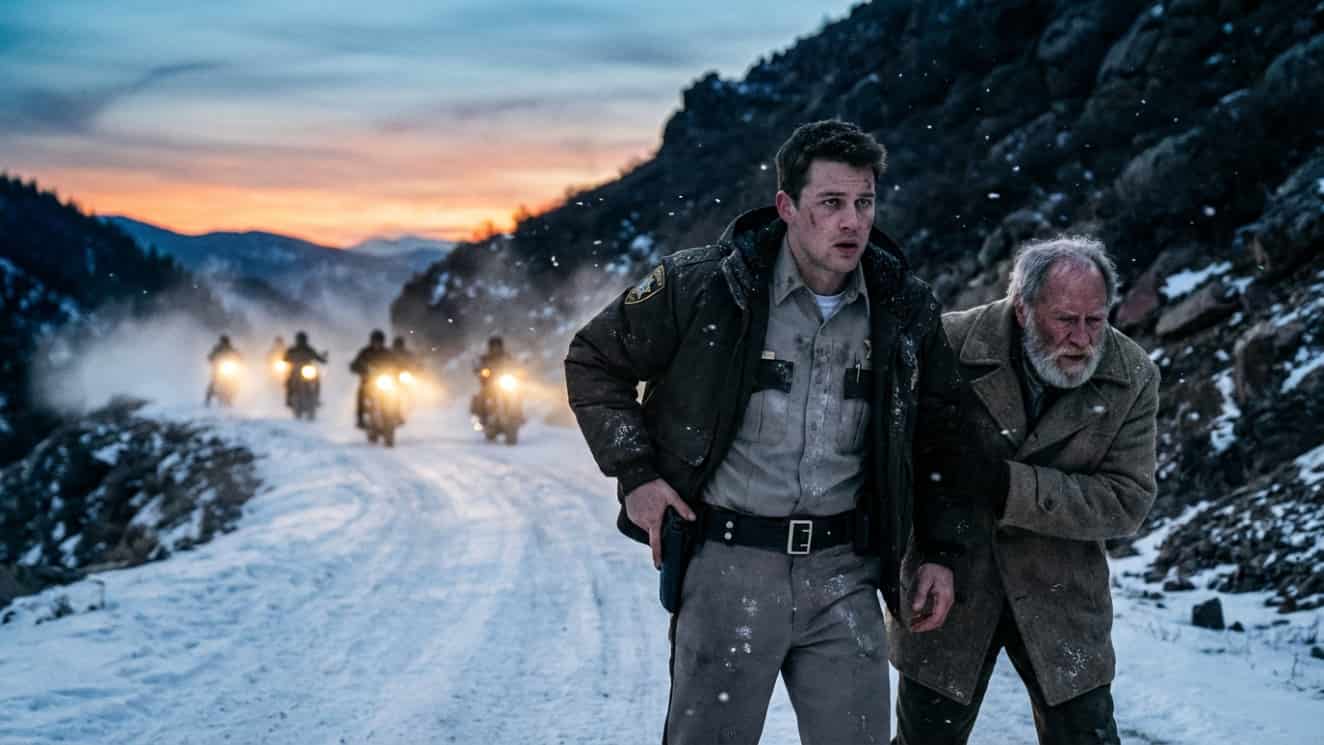
Sergeant Vance arrived an hour later. He didn’t look angry. He looked tired. He sat next to Beau on the bumper of the car, the mountain wind whipping his grey hair.
“”Miller is in custody,”” Vance said. “”The deputy, I mean. We found his car ditched near the trailhead. He tried to claim he was in pursuit, but his dashcam tells a different story. He’s done. Probably looking at ten years for the discharge of a weapon at an officer.””
“”And the bikers?”” Beau asked.
“”Vanished. We’ve got a BOL out, but they know how to disappear in these hills.”” Vance looked at Beau, his eyes searching. “”You did a hell of a thing, kid. You held off a hit squad and a rogue cop with a pump-action and a prayer.””
“”I broke a dozen laws, Sarge,”” Beau said. “”I harbored him. I obstructed Miller. I took him across county lines.””
“”You did what a man does when he’s backed into a corner,”” Vance said. “”The DA might want to have a talk, but the Sheriff and I… we’re going to make sure the paperwork reflects the reality of the situation. You brought in a high-value fugitive. That’s the headline.””
“”I don’t want the headline,”” Beau said. “”I just want to go home.””
But home wasn’t there anymore.
When Beau finally got back to his small house on the edge of town, the windows were broken. Someone had spray-painted “”RAT”” across the front door in jagged, black letters. The town hadn’t changed. The revelation of Clint’s true crimes—the fire, the deaths—had only deepened the hatred. To them, Beau wasn’t the hero who caught a killer; he was the son of a monster who had finally brought the nightmare back to their doorstep.
He stood in his driveway, looking at the wreckage of his life.
Elena pulled up a few minutes later in her Jeep. She got out, saw the house, and let out a long, low whistle.
“”They don’t waste time, do they?”” she said.
“”I guess not,”” Beau replied.
She walked over and stood next to him. She didn’t offer a hug or a platitude. She just leaned against the truck. “”What now?””
“”I don’t know. The department is going to put me on administrative leave. I’ll probably lose the badge anyway once the lawyers get finished with the details. And I can’t stay here.””
“”The mountains are big, Beau,”” Elena said. “”There are other towns. Other roads.””
“”The road doesn’t forget,”” Beau muttered, repeating the biker’s words.
“”Maybe not,”” Elena said. “”But you’re the one driving the car. You get to decide where it goes.””
She reached into her pocket and pulled out a small, heavy object. It was his badge. She had picked it up from the gas station parking lot after the troopers cleared the scene. She pressed it into his hand.
“”Keep it,”” she said. “”Not because of what it says you are. But because of what you did when you weren’t wearing it.””
Beau looked at the silver shield. It was scratched, the edges dulled by the gravel. It didn’t look like a symbol of authority anymore. It looked like a piece of salvaged metal.
He tucked it into his pocket and turned toward his house. He had a lot of glass to sweep up.
Chapter 6
Three months later, the snow had begun to melt, turning the mountain passes into a slurry of mud and hope.
Beau stood in the doorway of the county courthouse. The trial for Clint Miller had been short. Clint had taken a plea deal—life in prison in exchange for testifying against the remaining leaders of The 500. He had chosen the cell he had been so afraid of twenty years ago. It was the only place left where the road couldn’t reach him.
Beau had been the star witness. He had told the truth—about the mine, about the chase, and about the man who had lied to him for his entire life. He hadn’t looked at his father once during the testimony. He didn’t need to. He knew exactly who Clint was now.
As he walked down the courthouse steps, a familiar black motorcycle was parked at the curb.
The rider didn’t have his helmet on. It was the man from the gas station—the leader of The Pack. He was older than Beau had realized, his hair almost white at the temples. He was sitting on his bike, smoking a cigarette, watching the people come and go.
Beau stopped. His hand instinctively went to his waist, but he wasn’t wearing a belt. He was wearing a plain suit and a tie that felt like a noose.
The biker looked at him. There was no rage in his eyes. Only a grim, weary respect.
“”He’s going away,”” the biker said.
“”He is,”” Beau replied.
“”It’s not enough,”” the man said, flicking his ash onto the pavement. “”It’ll never be enough for the ones we lost in that fire. But it’s something.””
“”He’s your problem now,”” Beau said. “”The state will protect him for a while, but we both know how these things end.””
The biker nodded. He kicked his engine over, the roar of the V-twin drowning out the sounds of the town. “”You’re a hell of a cop, Miller. Too bad you won’t be one anymore.””
“”I’m still a cop,”” Beau said, his voice rising over the engine. “”Just not in this town.””
The biker offered a two-finger salute and pulled away, merging into the traffic. Beau watched him go until the sound faded into the distance.
He walked to his truck. Elena was waiting in the passenger seat. She had helped him pack his house the week before. They were heading north—up into the high country, toward a small town near the Canadian border where they needed a new deputy and a good mechanic.
He got in and started the engine. He looked in the rearview mirror, but he didn’t see the ghosts of the 500. He didn’t see the face of his father. He just saw the road behind him, winding back into the mountains.
He shifted into gear and pulled away from the curb.
The weight was still there—the history, the blood, the shame. It would always be there. But as he hit the highway and the speedometer climbed, Beau realized that for the first time in thirty-two years, he wasn’t running away. He was just moving forward.
The badge sat in the glove box, wrapped in a rag. Maybe he’d pin it on again. Maybe he wouldn’t.
As they crested the final ridge and the valley opened up before them, green and vast and indifferent to the sins of men, Beau reached over and took Elena’s hand.
The road didn’t forgive, and it didn’t forget. But the mountains were big enough to hide a man who was finally ready to be himself.
He stepped on the gas, and the Rockies disappeared into the mist behind them.”