Chapter 5: The Architect’s Gambit
“”A condition?”” Silas chuckled, the sound like dry leaves skittering across pavement. “”Most men would be on their knees thanking me for the keys to the kingdom. But you… you want to negotiate.””
“”I don’t want the kingdom, Silas,”” I said, standing up and walking to the floor-to-ceiling window. The lights of Vegas sparkled like a million diamonds scattered on black velvet, but all I saw were the shadows between them. “”I want the ‘Gilded Cage’ shut down. Not just under new management. Gone. I want every person who helped Victor Vance hurt my brother to be barred from ever touching a deck of cards again.””
Silas nodded slowly. “”Consider it done. Anything else?””
“”I want total autonomy,”” I continued. “”I’ll help you manage your interests, I’ll stabilize your territory, and I’ll deal with your ‘new competition.’ But I do it my way. No blood. No beatings in alleys. We beat them at the table, we beat them in the markets, and we leave them with nothing but their dignity—if they have any.””
Silas looked at me for a long time. I could see him weighing the options. He was a man of the old world, where violence was the primary currency. But he was smart enough to know that the world was changing.
“”You want to be a ‘gentleman’ gambler in a den of wolves,”” Silas said. “”It’s a dangerous game, Elias. The wolves will eventually get hungry.””
“”Then I’ll just have to make sure they’re too busy counting their losses to bite,”” I replied.
The deal was struck.
For the next six months, I lived a double life. By day, I was the devoted brother, sitting by Leo’s bed at the Mayo Clinic, watching as he slowly regained consciousness. By night, I was the “”Architect””—the man who moved Silas Vane’s pieces across the board with devastating precision.
I dismantled Victor Vance’s old associates one by one. I didn’t use guns. I used their own greed. I set up high-stakes games they couldn’t resist and used their own “”unbeatable”” systems against them. I leaked information to the SEC about their legitimate front businesses. I turned their investors against them.
By the time I was finished, the men who had hurt Leo were broke, disgraced, and fleeing the state.
But the biggest challenge was still coming. A new syndicate out of Chicago was trying to move into Vegas, and they weren’t playing by anyone’s rules. They had hired their own “”Architect””—a man known only as The Ghost.
“”He’s coming for the flagship, Elias,”” Silas warned me one night in the penthouse. “”The Bellagio high-roller suite. One game. No limits. If we lose, we lose the Strip.””
“”I know,”” I said, looking at a photo Sarah had sent me that morning. It was Leo. He was sitting up in a wheelchair, a weak but genuine smile on his face. He was talking again. He was coming back.
“”Are you ready?”” Silas asked.
“”I’ve been ready since the night I walked into that basement with a hundred dollars,”” I said.
The night of the game, the atmosphere at the Bellagio was electric. This wasn’t a backroom in a strip mall. This was the pinnacle. The Ghost was a young man, barely twenty-five, with cold eyes and a laptop that stayed closed but always present. He was the new breed—a digital shark.
“”Mr. Thorne,”” he said, his voice devoid of emotion. “”I’ve analyzed your play style. You’re a sentimentalist. You play for people. That’s a weakness.””
“”Is it?”” I asked, taking my seat. “”I always thought that having something to lose is what makes you play the hardest.””
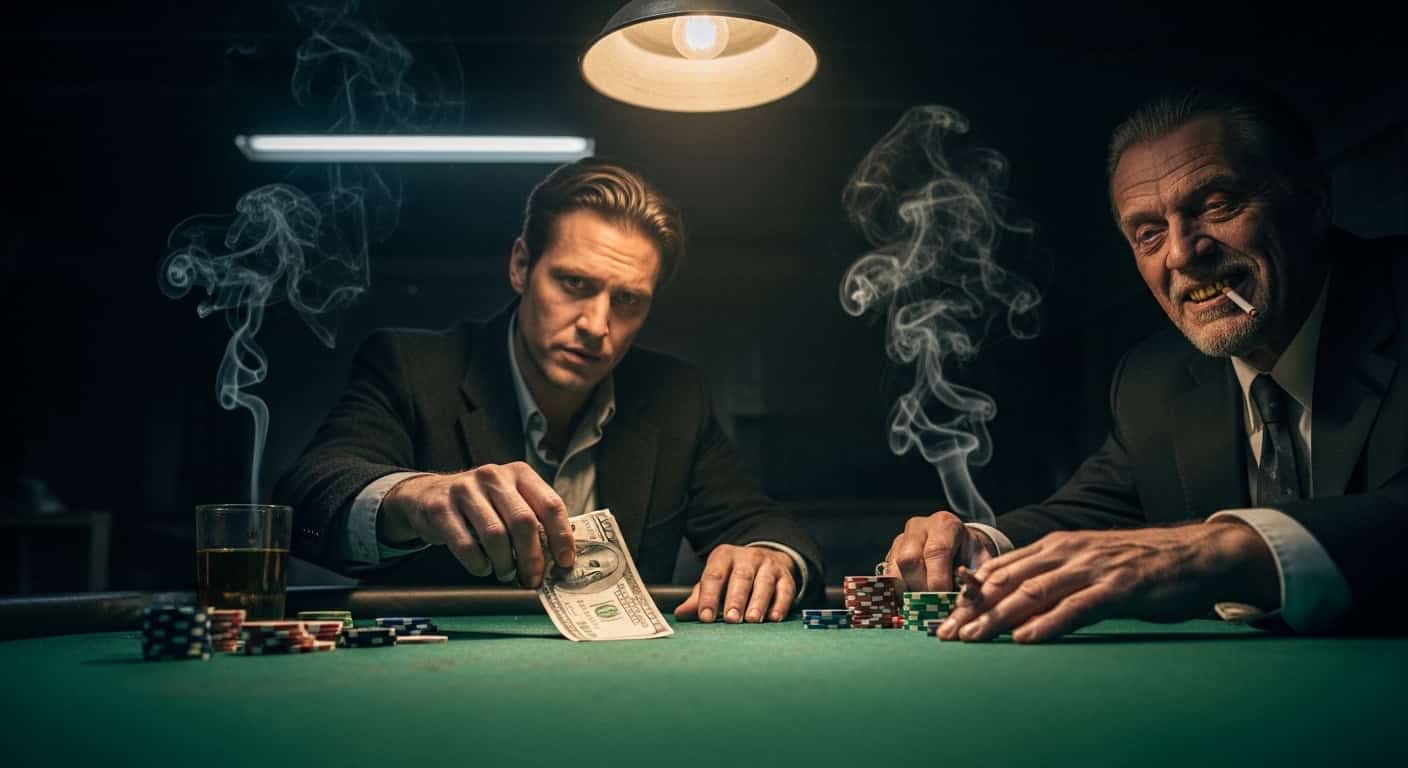
The game lasted twelve hours. It was a psychological marathon. The Ghost was perfect. He didn’t have a tell. He didn’t sweat. He was a machine.
But machines have one flaw: they rely on patterns. And I? I was fueled by something no algorithm could ever understand. I was fueled by the memory of a brother’s broken body and the promise of a sister’s future.
In the final hand, with fifty million dollars on the table, The Ghost pushed all in. He had a pair of Aces. The math said he was a 92% favorite.
I looked at my cards. A Seven and a Two of different suits. The worst hand in poker.
I looked him dead in the eye. I didn’t see a person. I saw the arrogance that had nearly killed my brother.
“”I call,”” I said.
The Ghost’s composure broke for a split second. “”You call? On a Seven-Two? That’s statistically impossible.””
“”Math isn’t everything,”” I said.
The dealer turned the cards. A Seven. Another Seven. And a Two.
A full house.
The room erupted. The Ghost sat frozen, staring at the board as if it were a glitch in the matrix.
I stood up, not even looking at the chips. I had won. Not for the money, but for the message.
“”The game is over,”” I said to the Chicago syndicate members standing in the shadows. “”Go back home. This city doesn’t belong to you. It belongs to people who remember what a debt really means.””
Chapter 6: The Long Walk Home
The morning sun was just beginning to peek over the desert horizon as I walked out of the Bellagio. The air was crisp, and the neon lights were finally dimming, replaced by the soft gold of a new day.
My phone buzzed in my pocket. A text from Sarah.
He walked today, Elias. Just a few steps, but he did it. He’s asking for you.
A lump formed in my throat, a physical weight I hadn’t realized I was carrying. I leaned against a marble pillar and let out a long, shaky breath. The ten million was still in the trust. The enemies were gone. The debt was paid in full.
I took the vintage flip-phone—the one I used to call Silas—and looked at it. It was a relic of a life I never wanted back. I walked to the edge of the fountain and dropped it into the water. It sank without a sound.
I drove back to the quiet suburb of Oak Creek one last time. I didn’t go to the strip mall. I went to the small, two-bedroom house where Leo and Sarah lived.
The lawn needed mowing. The mailbox was slightly crooked. It was perfectly, wonderfully ordinary.
I stepped inside, and the smell of breakfast hit me—bacon, coffee, and the scent of home. Leo was sitting at the kitchen table, his head still bandaged but his eyes bright and alert. Sarah was standing over the stove, her face glowing in the morning light.
“”Elias!”” Leo shouted, his voice a bit raspy but full of the old energy. “”Where have you been, man? Sarah said you were ‘handling things.'””
I walked over and pulled him into a hug, careful not to squeeze too hard. He felt solid. He felt alive.
“”I was just making sure the math checked out, Leo,”” I whispered.
“”You always were the smart one,”” Leo laughed, patting my back. “”Hey, did you hear? That guy Vance… he moved out in the middle of the night. Someone said he lost everything in a card game to a ghost.””
I caught Sarah’s eye. She knew. She didn’t know the details, but she knew that I had walked through fire to bring her man back. She gave me a small, knowing nod and placed a plate of eggs in front of me.
“”Eat, Elias,”” she said. “”You look like you haven’t slept in a decade.””
I sat down with my family. For the first time in years, I didn’t feel like a shark. I didn’t feel like an analyst. I didn’t feel like the Architect.
I felt like a brother.
Later that afternoon, I walked out to the porch. The sun was warm on my face. I reached into my pocket and found a single, crumpled piece of paper. It was the $100 bill I had taken back from Victor Vance. I hadn’t noticed, but the bloodstain had faded, leaving only the image of Benjamin Franklin staring back at me.
I looked at it for a long time. This bill had been a symbol of ruin, of pain, and of a life nearly lost. But now, it was just a piece of paper.
A young kid on a bicycle rode past, looking a bit downcast. He stopped at the end of the driveway, staring at a flat tire on his bike. He looked about twelve—the same age Leo was when I promised I’d always take care of him.
I walked down the driveway and handed him the bill.
“”Here you go, kid,”” I said. “”Go get yourself a new tire. And some ice cream. And maybe a gift for your mom.””
the boy’s eyes widened to the size of saucers. “”Is… is this real? Are you serious?””
“”It’s real,”” I said, smiling. “”But remember one thing: it’s just money. Don’t ever let it be more important than the people you love.””
The boy thanked me a dozen times and rode off, balancing his bike as he cheered.
I watched him go, feeling the last bit of the “”Architect”” slip away. I had turned a hundred dollars into a fortune, but in the end, the only thing that mattered was the peace I felt as I walked back inside to the sound of my brother’s laughter.
The house always wins, they say. But that day, in a quiet suburb miles away from the lights of Vegas, I finally realized that the only way to truly win is to know when to walk away from the table.
I realized then that vengeance can buy you justice, but only love can buy you a home.”