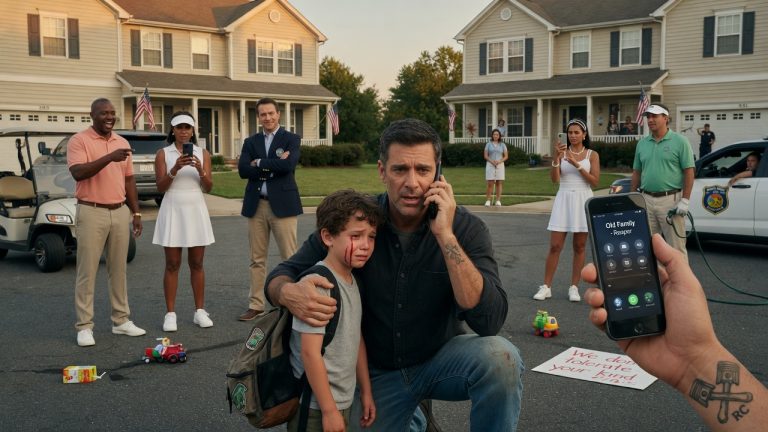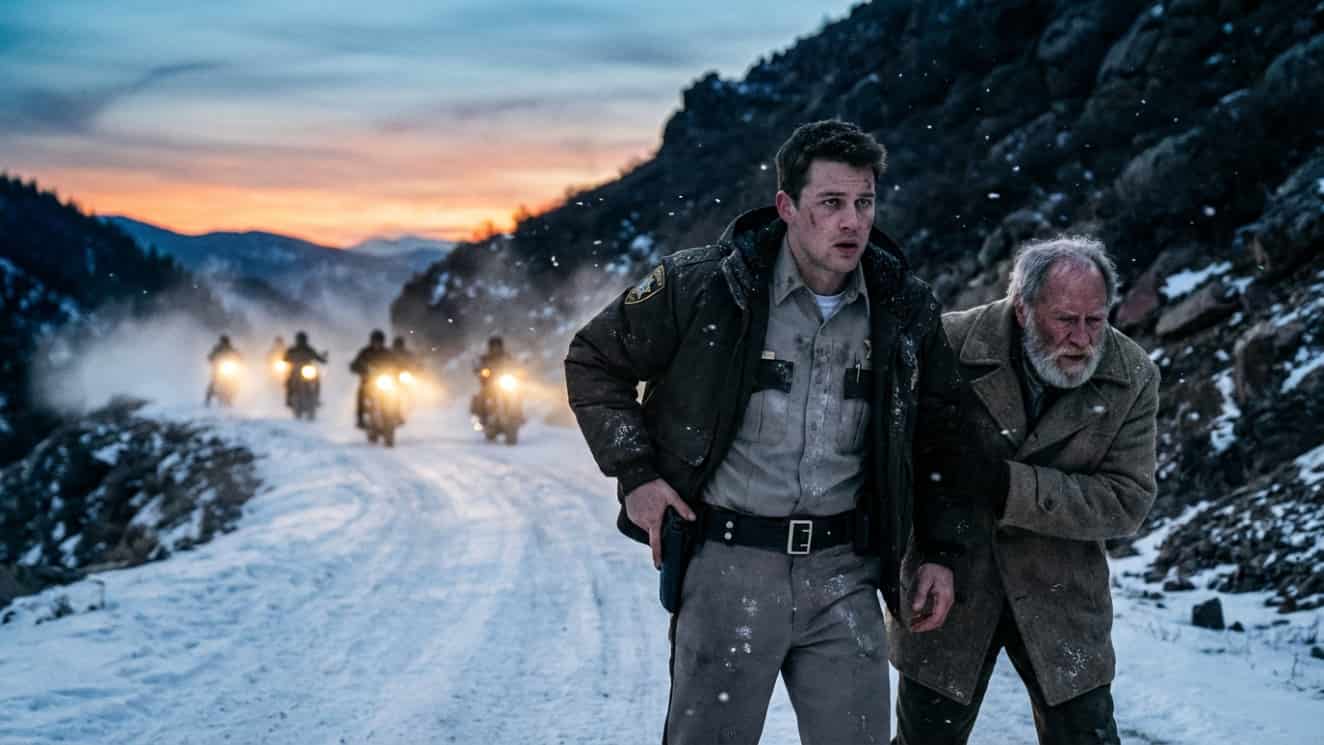
Beau worked ten times harder than any other recruit just to earn the right to wear the badge. In a town that remembers every sin, being the son of Clint “The Rat” Miller was a life sentence of sideways glances and spat-upon windshields.
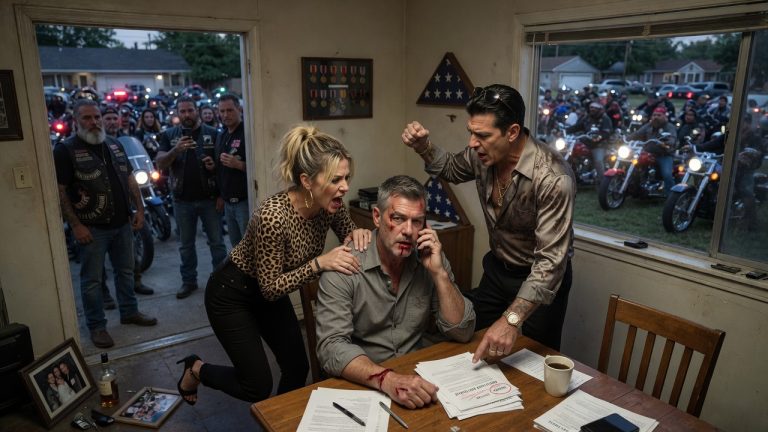
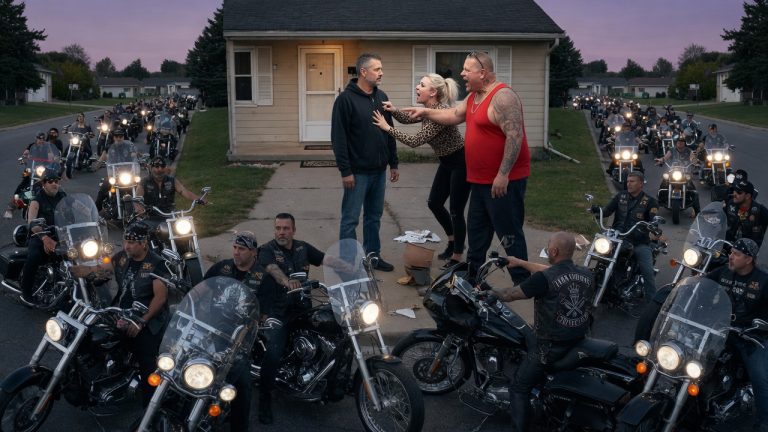
But now, the past has stopped being a memory and started being a threat. “The Pack” has arrived in the Rockies—five men with cold eyes and a debt of blood that only Beau’s father can pay.
Beau is hiding the man the whole world wants dead. He’s risking his career, his honor, and his life for a father who never gave him a reason to stay.
Is it loyalty? Or is it just the only way Beau knows how to survive the shadow he was born into?
FULL STORY
Chapter 1
The wind through the Rabbit Ears Pass didn’t just blow; it searched. It found the gaps in the door seals of Beau’s cruiser, whistling a low, thin note that tasted like pine resin and old snow. Beau sat on the shoulder of Highway 40, the engine idling with a rhythmic click-clack that matched the pulse in his jaw.
His radar gun sat on the dash, silent. He wasn’t really looking for speeders. He was looking for shadows.
A silver Ford F-150 slowed down as it passed, the driver leaning out just enough to make sure Beau saw him. It was Miller, a deputy from the county office. Miller didn’t wave. He didn’t nod. He just stared, his eyes tracking Beau with a familiar, cold suspicion. In a town of four thousand people nestled in the high peaks of the Rockies, everyone knew who lived in which house and whose blood was tainted.
Beau adjusted his duty belt, the leather creaking. The weight of the Glock 17 on his hip and the heavy silver badge pinned to his polyester shirt was the only thing keeping him grounded. He’d spent seven years building a reputation as the straightest arrow in the department. He wrote more tickets, worked more overtime, and polished his boots more often than any three officers combined. He had to. He was Clint Miller’s son, and in this part of the country, that meant he was born half-guilty.
His radio crackled. “Unit 44, check in.”
Beau keyed the mic. “44. Stationary at Mile Marker 152. All quiet.”
“Copy, 44. Be advised, we’ve got reports of a group of five riders coming up from the south. Heavy leather, no colors, but moving in formation. Keep your eyes open.”
Beau’s hand tightened on the steering wheel until his knuckles turned the color of bone. Five riders. Moving in formation. It wasn’t the tourists on their Harleys looking for craft beer in Steamboat Springs. It was The Pack. He knew the name, even if the department didn’t.
He pulled the cruiser onto the asphalt, the tires kicking up a spray of gravel. He didn’t head toward the highway. He headed toward the old access road that wound up toward the abandoned silver mines—the places the maps forgot.
Ten minutes later, he pulled behind a stand of blackened spruce. He hiked the rest of the way, his breath coming in ragged plumes in the thin air. The entrance to the “Broken Bit” mine was a jagged hole in the side of the mountain, half-hidden by a rotted timber frame.
Inside, the air was still and smelled of damp earth and cheap bourbon.
“Dad?” Beau called out, his voice flat.
A shuffle came from the darkness. A man emerged, squinting against the dim light. Clint Miller looked like a caricature of the man he’d been twenty years ago. His hair was a greasy grey mane, his skin the color of a wet sidewalk. He was wearing a tattered flannel shirt and work pants that hung off his skeletal hips.
“You got the stuff?” Clint asked, his voice a gravelly rasp. He didn’t ask how Beau was. He didn’t ask if the police were looking for him.
Beau dropped a heavy plastic bag on a crate. “Bread, canned meat, water. And the medicine for your chest.”
Clint dove into the bag, ignored the food, and pulled out a pint of plastic-bottle whiskey Beau had been forced to buy. He cracked the seal with trembling hands and took a long, shuddering pull.
“They’re here,” Beau said.
Clint froze, the bottle halfway to his lips. “Who?”
“Don’t play stupid. Five of them. Coming up from the valley. You said they’d never find you here.”
“I stayed quiet!” Clint hissed, a sudden, frantic energy taking over. “I didn’t call nobody. I didn’t go into town. I been living like a damn rat in this hole, Beau. You said you’d protect me.”
“I said I’d hide you,” Beau corrected him, the bitterness rising in his throat like acid. “There’s a difference. You realize what happens if my sergeant finds out I’m harboring a fugitive? A man with an active warrant for witness tampering and a hit on his head from the biggest MC in the state?”
“I’m your father,” Clint said, trying to summon a shred of authority. It failed. “I did what I had to do back then. They were gonna send me away for life, Beau. I had a kid. I had you.”
“Don’t,” Beau said, his voice dropping to a dangerous whisper. “Don’t you dare put that on me. You didn’t snitch on five hundred men to save me. You did it because you were scared of a cell. You left those families with nothing. You left me to grow up in a town where people threw rocks at our windows because their dads were in Buena Vista because of you.”
Clint looked away, the whiskey bottle clutched to his chest like a holy relic. “What are we gonna do?”
“I’m going back on patrol,” Beau said, turning toward the light. “Stay deep. Don’t light a fire. If they find you, I can’t stop them, Dad. I’m one man with a badge that barely protects me, let alone you.”
As Beau walked back to his car, he felt the mountain pressing in on him. He drove back to the main road, his mind racing. He saw a motorcycle in his peripheral vision—a blacked-out cruiser parked near the trailhead. The rider was standing by the bike, checking a phone. He wasn’t wearing a vest, but he had the look—the heavy boots, the scarred knuckles, the way he stood like he owned the ground beneath him.
Beau slowed down, his heart hammering against his ribs. This was the choice. He could pull over, run the plates, call for backup, and let the law handle whatever happened next. If he did that, Clint would be found. If Clint was found, he’d be dead within forty-eight hours, either by a knife in the transport van or a “suicide” in a holding cell.
Beau stepped on the gas and drove past.
He spent the rest of his shift in a daze, the mundane tasks of a highway cop feeling like scenes from someone else’s life. He helped a woman change a flat tire near the Nordic center. She thanked him, calling him “Officer,” and for a second, he felt the warmth of the identity he’d fought so hard to build. Then she saw the nameplate on his chest—Miller—and her smile faltered. She knew the history. Everyone did.
The shift ended at 8:00 PM. As Beau walked into the station to log his paperwork, he saw Miller sitting at the dispatch desk, talking to Sergeant Vance. They both stopped talking when Beau walked in.
“Long day, Miller?” Vance asked. He was a big man with a grey mustache and eyes that had seen thirty years of mountain winters. He liked Beau, but he wasn’t a fool.
“Long enough,” Beau said, sliding his reports into the bin.
“We’ve got some transients causing trouble down at the Old Mill bar,” Miller said, his voice dripping with fake concern. “Bikers. Look like the serious kind. I told ’em we don’t like their sort around here. One of ’em asked about your old man, Beau. Said they were old friends.”
The room went silent. Beau didn’t move. He felt the weight of his badge—the physical silver—feeling like it was burning through his shirt.
“My old man’s been gone for years, Miller,” Beau said, his voice steady even as his insides curdled. “You know that better than anyone. You’re the one who served the eviction notice on my mom.”
Miller smirked. “Just thought you’d want to know. Friends are hard to come by for people like you.”
Beau walked out without another word. The cold night air hit him, and for the first time in his life, he didn’t feel like a cop. He felt like a criminal. He got into his personal truck, a beat-up Toyota, and watched the lights of the town. Down the hill, at the Old Mill, five motorcycles were lined up like a row of sharks.
He had to get Clint out. Not because he loved him, but because he couldn’t live with the alternative. He started the truck and headed toward the one person in town who might actually help him without asking too many questions—or at least, the one person who knew what it was like to be trapped by the mountains.
Chapter 2
Elena was elbow-deep in the engine of an old Search and Rescue Jeep when Beau pulled into the garage. The shop was a cavernous space filled with the smell of grease, kerosene, and the sharp tang of welding sparks. Elena was a woman built of wire and grit, her face perpetually smeared with a smudge of oil that she never seemed to notice.
She wiped her hands on a rag and looked up as Beau approached. She didn’t offer a greeting. People in this part of the world didn’t waste breath on “hellos” when the look on a man’s face said everything.
“You look like you just watched someone die, Beau,” she said, tossing the rag onto a workbench.
“Not yet,” Beau replied. He leaned against a tool chest, feeling the exhaustion finally beginning to settle into his bones. “I need a favor. A big one.”
Elena leaned back, crossing her arms. She’d known Beau since high school. She was one of the few who hadn’t joined in when the kids at the bus stop called him “Rat-Boy.” Her own father had been a mountain guide who went missing in a blizzard when she was twelve; she knew what it was like to have the mountain take something from you.
“Does it involve that badge?” she asked, nodding toward his chest.
“It involves me losing it if things go wrong.”
He told her. Not everything—he wasn’t that stupid—but enough. He told her his father was back, that he was hiding in the Broken Bit, and that men were in town looking to finish a twenty-year-old grudge.
Elena listened in silence, her expression unreadable. When he finished, she spat a piece of grit onto the concrete floor. “Your dad is a coward, Beau. You know that. He broke the only rule that matters out here. You don’t leave people behind.”
“I know,” Beau said. “But he’s still my blood. I can’t let them butcher him in a mine shaft.”
“So what do you want? A getaway driver?”
“I need your keys to the forest service gates on the north side of the pass. If I try to move him on the highway, The Pack will see us. Miller is watching me like a hawk. But if I can get him through the fire trails, I can get him across the border into Wyoming. From there, he’s on his own.”
Elena studied him. She saw the desperation, the way he was clinging to his integrity like a man holding onto a fraying rope. “You’re gonna destroy everything you worked for, for a man who wouldn’t give you the time of day if he had a full bottle in his hand.”
“I’m doing it so I can sleep,” Beau said. “Not for him. For me.”
Elena reached into her pocket and pulled out a heavy ring of keys. She held them out, but didn’t let go when Beau reached for them. “If you get caught, I don’t know you. My keys were stolen from the shop. Understand?”
“Understood.”
“And Beau? Those bikers… they aren’t here for a talk. I saw them at the diner an hour ago. They were quiet. Men who are loud are looking for attention. Men who are quiet are looking for blood.”
Beau took the keys and left. The drive back to the mine felt different now. The darkness seemed thicker. He took the back roads, keeping his lights off as much as possible, his eyes scanning the trees. He was a hunter who had become the hunted.
When he reached the mine, the air felt colder. He found Clint huddled in the back of the shaft, wrapped in a moth-eaten blanket. The whiskey was gone, and the withdrawal was setting in. Clint was shaking, his teeth chattering in a rhythmic, terrifying sound.
“We’re moving. Now,” Beau said, grabbing his father by the arm.
“Where? It’s dark… I can’t see…”
“You don’t need to see. You just need to walk.”
He practically dragged Clint out of the mine. The older man was dead weight, his boots dragging in the dirt. As they reached the Toyota, a sound drifted on the wind. A low, rhythmic thrumming.
V-twin engines.
They were close. Beau shoved Clint into the passenger seat and slammed the door. He jumped into the driver’s seat and threw the truck into gear, the tires spinning on the loose scree. He didn’t turn on his lights. He knew these roads by heart, every dip and curve burned into his brain from years of patrol.
He hit the first forest service gate five miles in. His hands shook as he fumbled with Elena’s keys, the metal cold against his skin. He got the padlock open, swung the gate wide, drove through, and then stopped to lock it behind him. It would buy them time, but not much.
“They’re gonna kill me,” Clint whimpered from the seat. “They’re gonna find me and they’re gonna peel me like a grape. I shoulda never come back. I shoulda stayed in Arizona.”
“Shut up, Dad,” Beau said, his voice cracking. “Just for once in your life, shut up and let me think.”
He pushed the truck hard, the engine screaming as they climbed toward the timberline. The trees began to thin out, replaced by jagged rock and patches of permafrost. The moon came out from behind a cloud, illuminating the peaks in a ghostly, silver light.
Then he saw it.
In the side mirror, miles below but unmistakably moving, were three sets of headlights. They weren’t on the highway. They were on the access road. They had found the trail.
“How?” Beau muttered. “How did they find the turn-off?”
Then it hit him. Miller. The deputy knew every inch of this county. If Miller had seen the bikers leaving the bar, and if Miller had been tailing Beau’s personal truck…
He wasn’t just fighting the bikers. He was fighting the town that wanted his father gone just as badly as the MC did.
“Hang on,” Beau said, his voice turning cold and professional. He shifted into 4-low. “It’s about to get rough.”
He veered off the main fire trail onto a “goat path”—a narrow, crumbling ledge that bypassed the next gate. The truck tilted dangerously, the passenger side hanging over a three-hundred-foot drop. Clint let out a strangled yelp and covered his eyes.
Beau didn’t look down. He looked ahead. He saw the ridge line, the point where the road dipped back down toward the Wyoming flats. If he could make the ridge, he had a chance.
But as he crested the final rise, his heart stopped.
A single motorcycle was idling in the middle of the path. The rider was sitting tall, his arms crossed over his chest. Behind him, the red and blue lights of a Sheriff’s cruiser began to strobe, illuminating the scene in a rhythmic, violent pulse.
Miller was standing by his car, his hand on his holster.
“End of the road, Miller,” the deputy called out over the wind. “Or should I say, end of the lie.”
Chapter 3
The strobe of the police lights turned the world into a series of jagged, disconnected images. Flash. Miller’s smug face. Flash. The biker’s silent, helmeted head. Flash. The trembling wreck of a man in Beau’s passenger seat.
Beau didn’t turn off his engine. He kept the Toyota idling, the heater blowing a dry, dusty warmth against his face. His hand was resting on the door handle, but he didn’t move. He was thinking like a cop, analyzing the tactical disadvantage. He was outgunned, outpositioned, and his “cargo” was a liability who was currently trying to crawl into the footwell of the truck.
“Beau, get out of the car!” Miller shouted. He sounded excited. This was the moment he’d been waiting for his entire career—the moment he could finally prove that a Miller was always a Miller.
Beau opened the door and stepped out. He didn’t put his hands up. He stood by the frame of the truck, his posture straight, the habit of authority still clinging to him like a second skin.
“What’s the charge, Miller?” Beau asked. His voice was loud and clear, carrying over the wind.
“Harboring a fugitive. Obstruction of justice. Take your pick,” Miller said, stepping forward. He was about twenty feet away. The biker remained stationary, a black silhouette against the grey rock. “I saw you buying that whiskey, Beau. I saw you heading up to the mine. You think you’re so much better than us, but you’re just as dirty as the old man.”
“There’s no warrant for him in this county,” Beau said.
“There is now. I called it in. An old ‘failure to appear’ out of Denver. I’ve got the paper right here.” Miller patted his pocket. “Now, step away from the vehicle. Let the gentleman behind me have a word with your father, and maybe I’ll forget I saw you driving him.”
The trade was clear. Give up the father, keep the badge. Miller wasn’t there to make an arrest; he was there to facilitate a murder and clear his town of the Miller name once and for all.
“You’re a peace officer, Miller,” Beau said, his voice dropping an octave. “You’re standing there with a member of a criminal organization, negotiating a hit. You realize how that looks?”
“It looks like justice,” Miller spat. “That man in your truck cost this town everything. He sent fathers to prison and left kids hungry. Nobody wants him back. Not the law, and certainly not his ‘brothers.’ He’s a leak, Beau. And you’re just the bucket trying to catch it.”
The biker finally spoke. His voice was muffled by the helmet, but the threat was unmistakable. “Give him to us, Officer. We don’t want you. We just want what’s owed.”
Beau looked at the biker, then back at Miller. He felt a strange, cold clarity. He had spent his whole life trying to be the “good” Miller. He had followed every rule, took every insult, and worked every shift. And it had led him here—to a mountain top where a fellow cop was helping a hitman.
“No,” Beau said.
Miller blinked. “What?”
“I said no. He’s a coward and he’s a drunk, but he’s in my custody now. If you want him, Miller, you’re going to have to arrest me first. And you better have your body cam on, because I’m going to state every word of this deal you just offered me.”
Miller’s face twisted into a mask of pure rage. He drew his weapon—not a fast, tactical draw, but a slow, shaky movement born of a man who realized he’d lost control of the narrative. “You think I won’t? You think anyone in this town will take your word over mine?”
“I think Elena at the shop will,” Beau said. “And I think the Sheriff might find it interesting why you’re out here on a fire trail at two in the morning without logging your location.”
The biker didn’t wait for the debate to finish. He kicked his kickstand up and revved his engine, the sound echoing off the rock walls like a gunshot. He didn’t head for Beau; he headed for the truck.
Beau didn’t think. He dove back into the driver’s seat, slammed the door, and threw the Toyota into reverse. He didn’t have room to turn around. He had to back down the ledge, a blind retreat with a three-hundred-foot drop on one side and a rogue deputy on the other.
“Beau! Stop!” Clint screamed, clutching the dashboard.
Beau ignored him. He watched the side mirror, his foot heavy on the gas. The biker swerved around Miller’s cruiser, his headlight bouncing as he hit the rough terrain.
Miller fired.
The sound was a sharp crack-crack that shattered the rear window of the Toyota. Glass sprayed over the back seat. Beau flinched but didn’t stop. He cut the wheel, swinging the back of the truck into the mountain wall to create a pivot point. The metal screeched as it scraped against the rock, sparks flying in the dark.
He shifted into drive and floored it, heading straight for the biker.
It was a game of chicken. The biker had a light machine, Beau had two tons of steel. At the last second, the rider blinked, swerving off the path into a patch of deep snow. The bike went down, sliding sideways, throwing the rider into the brush.
Beau didn’t look back. He drove over the ridge, the truck bouncing violently as he bypassed the road entirely, cutting through a meadow of sharp rocks and stunted pines.
“They’re coming!” Clint wailed.
Behind them, Miller’s cruiser was trying to follow, but the low-slung police car wasn’t built for the terrain Beau was taking. The red and blue lights faded into the distance, but the thrum of the other four motorcycles was getting louder.
The Pack was regrouping. And they were faster than a truck.
Beau hit the main road five miles down the other side of the pass. He was in the valley now, a long stretch of open highway that led toward the Wyoming border. He looked at his gas gauge. A quarter tank.
“We can’t make it to the border,” Beau said, his voice flat.
“Then where? Where are we going?” Clint asked, his face covered in small cuts from the shattered glass.
“Back to the only place they won’t expect us,” Beau said. “The station.”
“The station? You’re handing me over?”
“I’m going to do the one thing you never did, Dad,” Beau said, his eyes fixed on the road. “I’m going to face it.”
He checked his mirror. Four sets of headlights were visible now, a mile back and closing fast. They were moving at a hundred miles an hour, a dark tide of steel and leather.
Beau reached for his radio. He didn’t call the local dispatch. He switched to the state-wide emergency channel.
“This is Officer Beau Miller, Unit 44. I am under fire on Highway 14, headed south. I have a high-value witness in the vehicle. Multiple armed suspects in pursuit. I need immediate air support and a hard block at the county line.”
He wasn’t a son anymore. He wasn’t a pariah. He was a Highway Patrolman. And he was calling in the cavalry.
Chapter 4
The interior of the Toyota was a mess of cold air and the smell of ozone. Clint was sobbing now—not a loud, dramatic cry, but a thin, pathetic whimper that made Beau’s skin crawl.
“They’re gonna kill us both, Beau,” Clint whispered. “You shoulda just let me go. You shoulda stayed on your porch.”
“I’m not doing this for you, Clint,” Beau said, using his father’s first name for the first time in years. “I’m doing it for the five hundred guys you left rotting in prison. You owe them a trial. You owe them the truth. And if I have to be the one to drag you to the stand to give it to them, then that’s what’s gonna happen.”
The motorcycles were closer now. They were splitting up, two on the left, two on the right, attempting to box the truck in. The lead rider pulled alongside the driver’s side window. He was wearing a full-face helmet, but Beau could see the glint of a barrel in the man’s hand.
Beau slammed on the brakes.
The sudden deceleration caught the riders off guard. The two lead bikes shot forward, and Beau swerved hard to the left, clipping the rear tire of the bike on his flank. The rider wobbled, fought the handlebars for a desperate second, and then disappeared into the ditch in a cloud of dust and sparks.
Three left.
Beau floored it again, but the truck was complaining. The engine temperature was climbing, and the steering was pulling hard to the right where he’d hit the wall.
Up ahead, he saw the lights of a gas station—a lonely, twenty-four-hour Oasis in the middle of the dark flats.
“Get down!” Beau yelled.
He drove the truck right onto the concrete apron of the station, screeching to a halt next to the pumps. He didn’t get out. He grabbed the shotgun from the rack between the seats—a Remington 870 he’d bought with his own money—and racked a shell into the chamber.
The three motorcycles circled the station like vultures. They didn’t come in close. They knew he was armed. They parked at the edge of the light, their engines idling in a low, menacing growl.
The door to the gas station opened, and a kid in a red vest stepped out, looking confused. “Hey, you can’t park—”
“Get inside!” Beau screamed. “Call the State Police! Tell them Miller is at the Oasis! Go!”
The kid didn’t need to be told twice. He dove back inside and locked the door.
Beau stepped out of the truck, using the engine block for cover. He leveled the shotgun at the nearest rider. “Stay back! I have a radio and backup is five minutes out!”
One of the riders dismounted. He took off his helmet, revealing a face that looked like a topographical map of a bad life. Deep scars, a broken nose, and eyes that were as dead as the moon. This was the leader.
“You’re a long way from your precinct, boy,” the man said. His voice was surprisingly calm. “And you’re carrying a heavy load. Why don’t you just slide that old man out the door? We’ll take him into the woods, and you can go back to being a hero. We’ll even tell everyone you fought us off.”
“His name is Clint Miller,” Beau said, his voice steady. “He’s a citizen of this state, and he’s under my protection. You come one step closer, and I’ll put a slug through your intake.”
The man smiled. It wasn’t a friendly look. “You’re just like him, you know. You think you can talk your way out of a debt. But the road doesn’t forget, Beau. And it sure as hell doesn’t forgive.”
The man reached into his jacket. Beau tightened his finger on the trigger.
But the man didn’t pull a gun. He pulled a heavy, silver chain with a patch hanging from it. The 500. He tossed it onto the concrete. It skittered across the ground, stopping inches from Beau’s boot.
“Your father didn’t just snitch,” the man said. “He was the one who set the fire at the clubhouse. He was the one who locked the back door. There were kids in there, Beau. My kid was in there.”
The world seemed to tilt. Beau looked at the patch, then back at the truck where Clint was hiding.
“Is that true?” Beau whispered, his voice barely audible over the wind.
Clint didn’t answer. He just curled tighter into a ball, his face pressed against the floorboards.
“He didn’t tell you that part, did he?” the biker said, taking a step forward. “He told you he was a victim. He told you he was doing it for you. But he was just covering his own tracks. He burned them alive so he wouldn’t have to face the music.”
Beau felt the weight of the shotgun. It felt like it weighed a thousand pounds. He looked at the man in the vest—a man who had lost everything to the coward in the truck.
This was the moral problem. The law said protect the witness. The soul said let the monster go.
“Five minutes, Beau,” the biker said. “That’s how long before the sirens get here. You have five minutes to decide if you’re a cop or a man.”
The silence that followed was the heaviest thing Beau had ever felt. He could hear the hum of the fluorescent lights, the ticking of the cooling engine, and the ragged breath of his father.
He looked at the patch on the ground. Then he looked at the badge on his chest.
He reached up, unpinned the silver shield, and dropped it next to the biker’s patch.
“I’m not a cop tonight,” Beau said.
The biker nodded, reaching for his waist.
“But I’m still his son,” Beau added, leveling the shotgun directly at the man’s chest. “And if you want him, you’re going to have to go through me. Not because he’s worth it. But because if I let you kill him, I’m no better than he was when he locked that door.”
The biker paused. He looked at Beau—really looked at him. He saw the grief, the shame, and the absolute, terrifying resolve in the younger man’s eyes.
“You’re going to die for a ghost,” the biker said.
“I’ve been dead for twenty years,” Beau replied. “Tonight is the first time I’ve actually felt like I was standing on my own two feet.”
The sound of sirens began to bleed into the air, a faint, high-pitched wail coming from the north. Blue and red flickered on the horizon.
The biker looked at the lights, then back at Beau. He picked up his patch, tucked it into his pocket, and walked back to his bike.
“We’ll be seeing you, Miller,” he said. “The road is long. And we’ve got nothing but time.”
The three bikes roared to life and vanished into the darkness just as the first State Trooper slid into the parking lot.