Chapter 5
The climax of the scandal didn’t happen in a courtroom; it happened at the Oakridge Town Hall.
The interim Chief of Police, a man named Miller who was trying to salvage the department’s reputation, called a public hearing. The room was packed, the air thick with the smell of damp coats and anxiety.
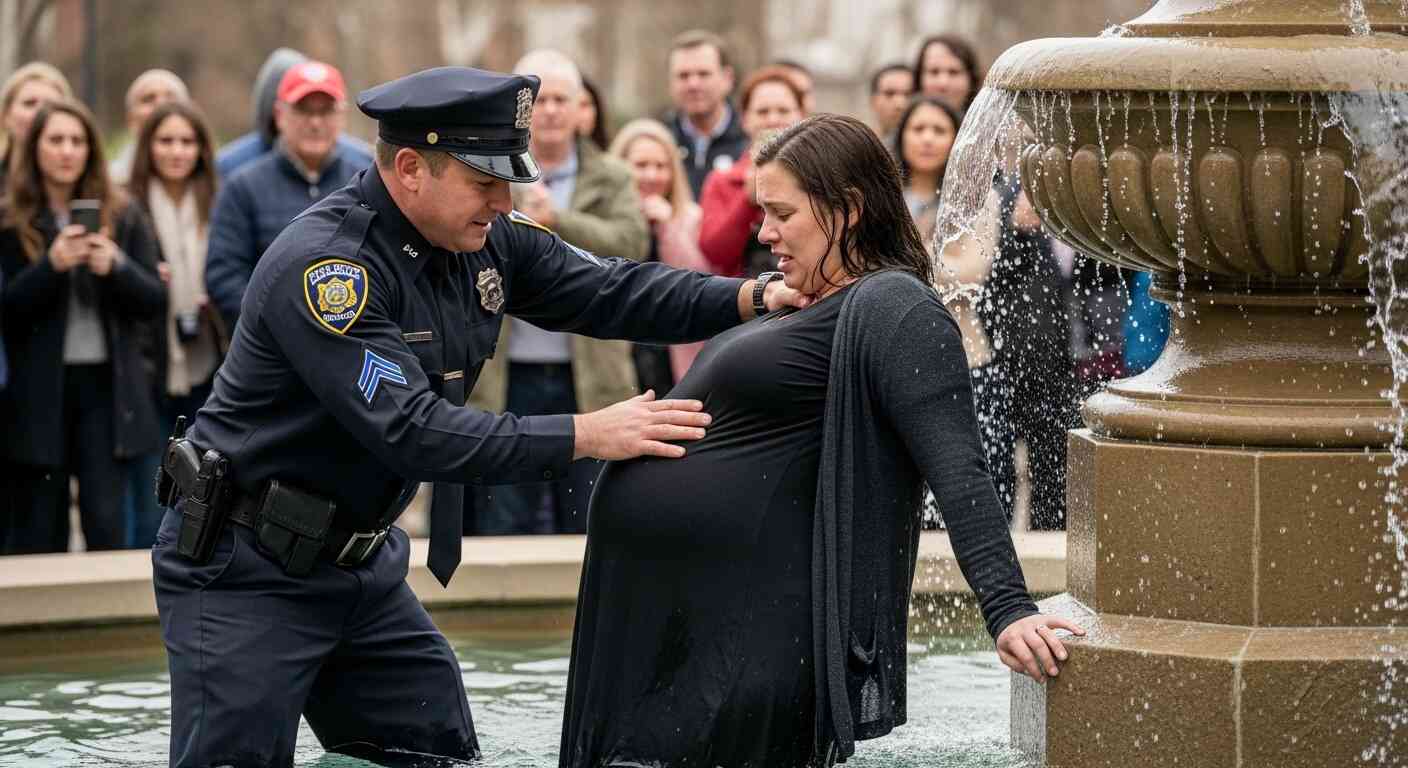
Vance’s lawyer was there, arguing that his client was a victim of “political theater” and that Maya had provoked him. He played a clip of the video, trying to frame Maya as a “spoiled brat” mocking a hardworking officer.
“My client was under immense stress,” the lawyer shouted over the boos of the crowd. “He saw a woman he believed was a vagrant violating park ordinances. He used a minor amount of force to maintain order!”
“A minor amount of force?” Maya stood up from the front row. She wasn’t wearing her thrift-store clothes today. She was wearing a sharp, dark suit—a gift from her father that she had finally accepted. If she was going to use her privilege, she would use all of it.
“Officer Vance didn’t see a violation,” Maya said, walking to the podium. “He saw a person he thought was powerless. He saw a target. And he didn’t realize that in the 21st century, the powerless have a way of becoming very, very loud.”
She turned to the back of the room. “Bring him in.”
The doors opened, and a man in a wheelchair was pushed inside. The room went silent. It was Officer Miller’s predecessor—the man who had been Chief before the corruption took hold. He had been silenced years ago after an “accident” that many whispered was orchestrated by Vance’s father, a former politician himself.
He held an old, dusty ledger.
“This is the record of every bribe, every payoff, and every ‘fountain bath’ that has happened in this town for twenty years,” the old man said, his voice raspy. “Vance wasn’t the first. He was just the loudest.”
The revelation sent the town hall into chaos. Vance’s lawyer tried to object, but the evidence was overwhelming. It wasn’t just one cop; it was a dynasty of bullying that stretched back decades.
In the middle of the shouting, Maya’s phone buzzed. It was a text from an unknown number.
Check the parking lot. You aren’t as safe as you think, Princess.
Chapter 6
Maya didn’t tell her security. She felt a sudden, frantic need to face the ghost of her own fear. She slipped out the side door into the rainy night.
Standing by the edge of the darkened parking lot was Vance’s brother, a man who looked exactly like the cop but with hollower eyes and a twitch in his jaw. He was holding a heavy crowbar, his knuckles white.
“You ruined his life,” the man said, his voice shaking. “He was a hero to this family. He kept this town in line.”
“He was a bully,” Maya said, her heart hammering against her ribs. “And you know it.”
“He’s in a cell because of you! My kids have to go to school and hear their dad is a monster!” He stepped forward, raising the metal bar.
Maya didn’t run. She stood her ground, the cold rain hitting her face just like the fountain water had.
“Then be better than him,” she said quietly. “Don’t prove me right. If you hit me, you’re just another Vance proving that your family only knows how to hurt people. Put it down, and go home to your kids. Be the father they actually deserve.”
The man stared at her, his chest heaving. The seconds stretched into eternity. Slowly, the crowbar slipped from his fingers, clattering onto the asphalt. He put his face in his hands and sobbed—not for his brother, but for the shame of it all.
Maya walked past him, back into the light of the town hall.
The aftermath was a slow, painful healing. Vance was sentenced to ten years for a litany of civil rights violations. The department was disbanded and rebuilt from the ground up, with Caleb and Sarah sitting on the oversight committee.
Maya didn’t go back to the capital. She bought a small house in Oakridge, using a portion of her inheritance to start a legal aid clinic for low-income families. She still ate lunch by the fountain, but now, the people who sat there didn’t look over their shoulders.
On the one-year anniversary of the “shove,” Maya sat on the same stone ledge. The water was sparkling in the autumn sun.
Her father sat down next to her. He looked older, less like a Governor and more like a man who had finally realized he couldn’t control everything.
“Are you happy here, Maya?” he asked.
Maya looked at Sarah, who was walking across the plaza with her son, both of them laughing. She looked at the police officers patrolling the park, who were stopping to give directions rather than orders.
“I’m not a tourist anymore, Dad,” Maya said, leaning her head on his shoulder. “I’m home.”
She looked at the fountain, the water dancing in the light.
Justice isn’t a single moment of victory; it’s the quiet peace that follows when the bullies finally realize that the world is no longer afraid of them.