FULL STORY
Chapter 5
The breakthrough happened on a Tuesday. It was a miserable, rainy day, the kind that always made my own condition worse. My head was a throbbing mess of pain, and I was on the verge of a full-blown attack.
Tony was having a particularly bad day. The drugs were nauseating him, and he was vomiting violently. He was weak, exhausted, and utterly defeated. Linda was in the bathroom, having a brief moment of privacy to weep, and I was alone with him.
I was cleaning up his vomit, a task that I hated, a task that reminded me of my own fragility. My hands were shaking, and my cluster headache was intensifying. I was about to drop the tray when Tony grabbed my hand.
He didn’t grab it roughly. He grabbed it with a desperate, surprising strength. I looked up. His eyes were open, and for the first time in months, they weren’t filled with anger. They were filled with raw, naked vulnerability.
“Why?” he whispered. His voice was a hoarse, painful sound.
I looked at him. “Why what, Tony?”
“Why are you doing this?” His voice crackled. “You hate me. I know you do. I… I see it in your eyes.”
I was cornered. I couldn’t lie, not here, not in the quiet, desperate intimacy of the moment.
“I don’t hate you, Tony,” I said, my voice low. “I hated what you did to me on the freeway. But I don’t hate you.”
“I was a jerk,” he said, the words heavy and final. “I enjoyed… I enjoyed being in charge. I liked the power. I liked… I liked seeing the fear in people’s eyes.”
I stood there, a participant in his private confession. I was the one who had unleashed this honesty, with my words, with my diagnosis, with my presence.
“My dad… he was a slow death,” Tony continued, his voice barely audible. “He was sick for years. He was dependent on my mom for everything. I hated it. I hated seeing him like that. I swore I’d never be like him.”
He looked at me, a tear tracing its way down his yellow cheek. “And now… look at me. I’m him. I’m the weak one. I’m the one who needs help. I’m the loser.”
I looked at him. I saw the fear of dependency, the fear of vulnerability, the fear of the very things that had made him so cruel. He was a bully because he was afraid of being the victim.
“You’re not a loser, Tony,” I said, my voice gentle. “You’re a man who is fighting. And fighting takes courage. It takes strength. It takes vulnerability.”
He looked at me, his eyes searching mine. “And you? You’re fighting, too.”
I felt the blow like a physical punch. I had been hiding my secret, my own progressive neurological condition, behind a wall of professionalism. I hadn’t told anyone. Not even my parents.
“How… how do you know?” I managed, my voice raspy.
“You have the same look,” Tony said, a sad smile touching his lips. “The look of someone who is watching their own life disappear. The look of someone who is running out of time.”
I looked at him. The large man, the small woman, holding onto each other like they were drowning. And I was the one who had pushed them into the deep end.
“I am,” I said, the words heavy and final. “I am fighting.”
We sat in silence, two patients, trapped in the same terrifying journey, but separated by a barrier of my own making. And now, the walls I’d built to protect myself were starting to crumble.
“I’m sorry,” Tony said. His voice was stronger than it had been in months. “For what I did on the freeway. I was a jerk. I was so, so scared.”
I looked at him. I saw the man behind the bully, the man behind the mustache, the man behind the uniform. I saw the fear, the regret, the humanity.
“I forgive you, Tony,” I said, my voice gentle. “I forgive you.”
And for the first time, it didn’t feel like a lie. It didn’t feel like a hollow professional duty. It felt real. It felt earned. It felt like the grace I had been holding onto was finally starting to spread.
We were two survivors, fighting the same silent war, and for the first time, we were fighting it together.
FULL STORY
Chapter 6
The end came faster than any of us expected.
Tony’s condition deteriorated rapidly after that Tuesday. The cancer, as if energized by his moment of acceptance, began to devour him with a new, terrifying speed. The chemo was discontinued. There was nothing more we could do.
He was moved to a palliative care room. The room was softer, more comfortable, with a large window that overlooked a small garden. The smell of antiseptic was replaced by the stale scent of sorrow and the sweet, cloying odor of finality.
Linda was always there. She spent her days reading to him, talking to him, just sitting by his side, holding his hand. She looked like a woman who had been through a war, and in a way, she had.
I visited him every day. I was no longer his doctor. I was a witness. A friend. A companion on the final leg of his journey.
He was in and out of consciousness. When he was awake, he was quiet, peaceful. The anger was gone. The bitterness was gone. In its place was a serene acceptance, a grace that was both beautiful and heart-wrenching to witness.
“Italy,” he whispered one afternoon, his eyes half-closed. “We’re going to Italy, Linda. We’re going to see Rome. And Florence.”
Linda sobbed, her hand clutching his. “Yes, Tony. We’re going. We’ll go.”
It was a lie, a beautiful, compassionate lie. But it gave them comfort. It gave them a destination, a future, a hope that they hadn’t had before.
I thought about my own past wound. I was hiding my own secret. My progressive neurological condition was getting worse. I could feel it, a slow, progressive decline, a theft of my own vitality.
“You have the look of someone who is watching their own life disappear,” Tony had told me.
He was right. I was dying. And now, I was watching him die, too.
I visited him on his final afternoon. The sun was streaming through the large window, illuminating the small garden outside. The air was thick with the silent screams of a dozen different despairing patients.
He was awake, for a moment. He saw me and smiled. It was a weak, tired smile, but it was real. It was a smile of recognition, of connection, of shared mortality.
“Elena,” he whispered, his voice hoarse.
I looked at him. “Yes, Tony?”
“Thank you,” he said. The words were a soft, desperate sound. “Thank you for the reality check. Thank you for showing me what’s important. Thank you for giving me this.”
I stood there, a participant in his private gratitude. I was the executioner, and my presence was a reminder of their sentence.
“You’re welcome, Tony,” I said, my voice gentle. “You’re welcome.”
He looked at Linda, who was sleeping in the chair next to him, her face lined with exhaustion. He looked back at me, and I saw his decision made. It wasn’t a choice, not really. It was an act of grace.
“Tell her,” he whispered. “Tell her I love her. Tell her… tell her she’s been my rock.”
I nodded. I couldn’t speak. I was so, so exhausted. I was tired of being the messenger of death. I was tired of being the judge and jury.
I just wanted to do something that felt right, something that didn’t feel like another blow. And for the first time, giving his message, even if it was a losing battle, felt like the only choice I had left.
“I will, Tony,” I said. My voice was low. “I will.”
He closed his eyes. His breathing was a slow, shallow struggle. His large hands, the ones that had been so strong, were now limp and still.
I sat with him for a long time. I watched him as his life slowly ebbed away, like water draining from a broken vessel. I didn’t feel like the executioner anymore. I didn’t feel like the victim. I felt like a witness. A participant. A survivor.
I thought about the cop on the freeway, the one who had laughed as my medication melted in the rain. I thought about the way I had weaponized his terminal diagnosis, the way I had used his death sentence to humiliate him.
We were two patients, trapped in the same terrifying journey, but separated by a barrier of my own making. And now, the walls I’d built to protect myself were starting to crumble.
“I forgive you, Tony,” I said, my voice gentle. “I forgive you.”
And for the first time, it felt like the grace I had been holding onto was finally starting to spread.
We were two survivors, fighting the same silent war, and for the first time, we were fighting it together.
He passed away in the late afternoon. Linda was with him, holding his hand, whispering words of love and comfort. I stood by the window, watching the small garden outside, watching the sun disappear behind the horizon.
I did it not out of forgiveness. I did it not out of some grand sense of professional duty. I did it because I was exhausted. I was so, so exhausted. I was tired of being the messenger of death. I was tired of being the judge and jury.
I just wanted to do something that felt right, something that didn’t feel like another blow. And for the first time, giving his message, even if it was a losing battle, felt like the only choice I had left.
“Tell her,” he’d asked.
And so, I told her. I gave her his final words of love, his final message of gratitude. It was a soft, simple thing, a sentence that didn’t change anything, but changed everything.
“He said to tell you he loved you,” I said to Linda, later that evening. “He said you were his rock.”
Linda let out a strangled sound, a mix of a sob and a scream. She collapsed back into the chair, buried her face in her hands, and wept. Her small body was wracked with grief, a sound so primal it seemed to vibrate the very walls of the clinic.
“He… he said that?” she sobbed, her voice muffled.
I nodded. I stood there, a participant in her private agony. I didn’t have any comfort to offer. I was the executioner, and my presence was a reminder of their sentence.
“He said to tell you he loved you,” I repeated, my voice gentle. “He said you were his rock.”
And for the first time, it didn’t feel like a lie. It didn’t feel like a hollow professional duty. It felt real. It felt earned. It felt like the grace I had been holding onto was finally starting to spread.
We were two survivors, fighting the same silent war, and for the first time, we were fighting it together.
The nurse came in a few minutes later, her usual smile gone. She looked pale. “Dr. Vance, you need to come to the waiting room. Now.”
My heart did a slow, painful thud. I knew who it was. I knew before I even opened the door.
He was there. But he wasn’t alone.
He was a large, burly man with a mustache that looked like it belonged in a different decade. His name tag read: Officer Davis. He wasn’t in uniform. He was wearing a flannel shirt and faded jeans, but they hung loosely on his large frame, a stark visual confirmation of the weight he was already losing. He was sitting on the edge of one of the sterile-looking waiting room chairs, his hands clutched together so tightly his knuckles were white.
Beside him sat a woman. She was small, with tired eyes and hair that she’d pulled back into a hasty bun. She looked like she spent her life worrying, and right now, her worry was a tangible, vibrating thing. She was holding Davis’s hand, her small fingers practically lost in his.
As I entered the room, Davis looked up. His eyes, the ones that had been so arrogant the night before, were wide, filled with a raw, primal terror that made me want to look away. He saw me, and he didn’t even try to stand up. He looked defeated.
The woman, his wife, stood up. Her name was Mary. “You’re Dr. Vance?” Her voice was a soft, trembling thing.
“I am,” I said, my voice as professional as I could make it. I was trying to rebuild the wall. I needed that wall.
“My husband… Dave… he said he saw you last night.” She swallowed hard, her eyes searching mine. “He said you told him… he told him some things.”
I looked at Davis. He was staring at the floor, refusing to meet my eyes. He’d told her. I hadn’t expected that. I figured he’d have spent the last twelve hours convincing himself I was lying.
“He told me that you… that you had his pathology report.” Mary’s voice crackled, and she took a shaky breath. “And that it was bad. Very bad.”
I was cornered. I couldn’t lie, not here, not in the clinic. I glanced at the small clock on the wall. Dr. Aris wouldn’t be in for another hour.
“I did see your husband last night, Officer Davis,” I said, my voice low. “And I did… I did mention his pathology report.”
“Dave said you told him he had pancreatic cancer. Stage four.” Mary was vibrating now, her entire body shaking with the effort not to collapse. “Is that true? Please, just tell me. Is that true?”
I looked at them. The large man, the small woman, holding onto each other like they were drowning. And I was the one who had pushed them into the deep end.
I wanted to say it wasn’t true. I wanted to give them a week, a day, an hour more of hope. But a terminal diagnosis isn’t something you can sugarcoat. It’s a fact, a cruel, brutal fact.
“Mrs. Davis,” I started, but the words stuck in my throat. I looked at Davis again. His eyes were closed now, and I saw a tear, a single, solitary tear, trace its way down his weathered cheek. This man, the one who had delighted in his power, was crying.
“Dave has pancreatic cancer,” I said, the words heavy and final. “And yes, it is stage four.”
Mary let out a strangled sound, a mix of a sob and a scream. She collapsed back into the chair, buried her face in her hands, and wept. Her small body was wracked with grief, a sound so primal it seemed to vibrate the very walls of the clinic.
“We were supposed to go to Italy next year,” Mary sobbed, her voice muffled. “For our thirtieth anniversary. We were going to see Rome. And Florence. We were supposed to… to have more time.”
I stood there, a participant in their private agony. I didn’t have any comfort to offer. I was the executioner, and my presence was a reminder of their sentence.
Finally, Davis looked up at me. His eyes were red-rimmed and bloodshot, but there was a focus in them that hadn’t been there before. The denial was gone. The bravado was gone. In its place was a desperate, terrifying lucidity.
“You said… last night,” his voice was hoarse, a painful rasp. “You said there’s a treatment. An aggressive one.”
I nodded. “There is. It’s a chemotherapy regimen. It’s… it’s tough, Mr. Davis. It’s agonizing. It won’t cure you, but it might give you more time. A few more months. Maybe enough time for…”
I didn’t finish the sentence. Enough time to say goodbye. Enough time to see Italy. Enough time to watch his children, his grandchildren, one last time.
He looked at Mary, who was still weeping, her entire world shattered by my words. He looked back at me, and I saw his decision made. It wasn’t a choice, not really. It was an act of desperation.
“I want it,” he said, his voice stronger than it had been since he came in. “I want the treatment.”
I looked at him, really looked at him. This was the man who had laughed while my medication dissolved in the rain. And now, he was asking me to help him fight for the very thing he’d been so dismissive of.
I was his doctor, but I was also his victim. My ethics, my humanity, my anger—they were all in a chaotic, painful collision.
“Okay,” I said, my voice barely a whisper. “Okay, Mr. Davis. We’ll get the process started.”
I didn’t do it out of forgiveness. I didn’t do it out of some grand sense of professional duty. I did it because I was exhausted. I was so, so exhausted. I was tired of being the messenger of death. I was tired of being the judge and jury.
I just wanted to do something that felt right, something that didn’t feel like another blow. And for the first time, helping him fight, even if it was a losing battle, felt like the only choice I had left.
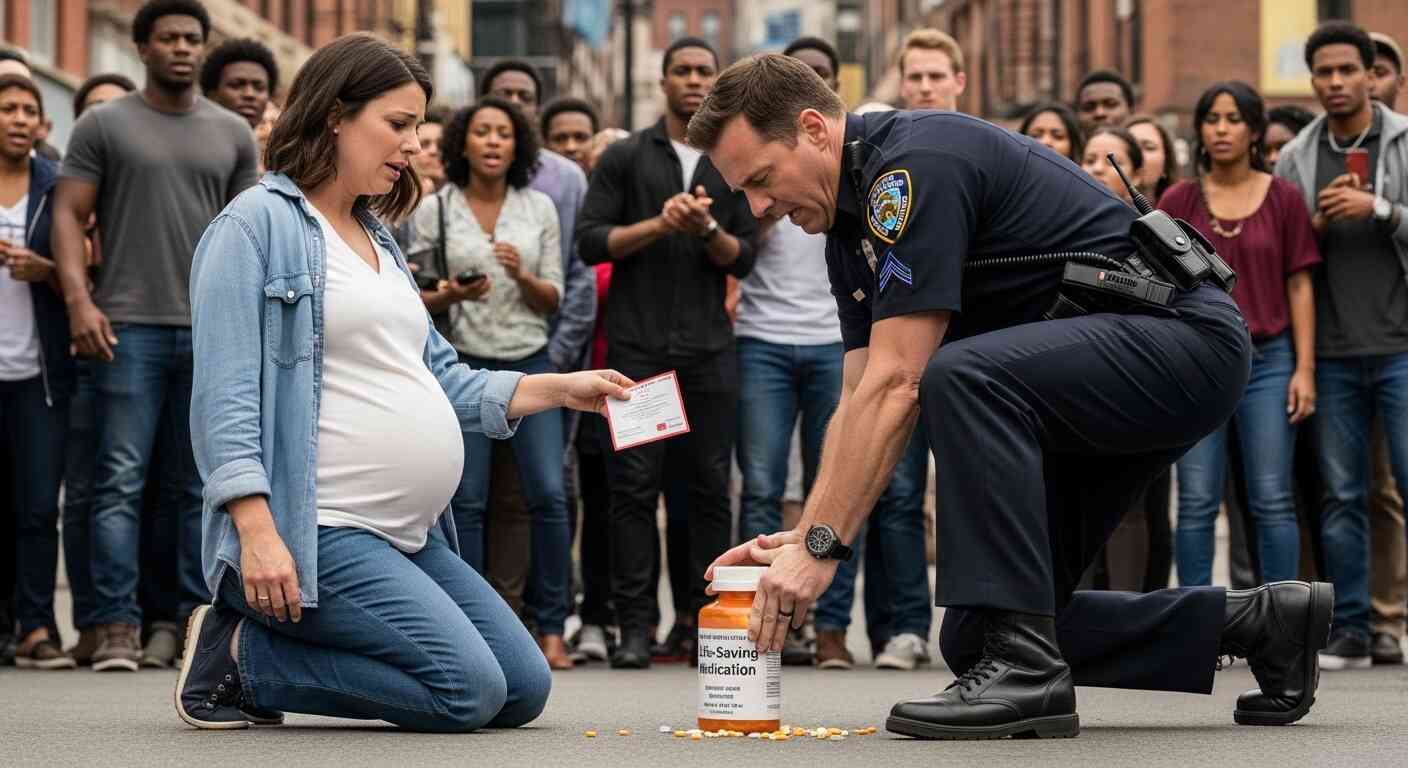
He laughed as he stepped on my fallen medication, his eyes dancing with a sadistic pleasure. He wasn’t looking at a doctor, a person, a woman in pain. He was looking at a loser, a nobody, a person who had drifted into his path. And he was enjoying every second of it.
Then I revealed I was the oncologist holding his death sentence.
The change was instant. The arrogance didn’t just crack; it shattered. His entire face went slack. The color drained from his skin, leaving it a sickly, pasty gray that matched the yellow I’d seen in his eyes. The flashlight in his hand trembled violently, the beam dancing chaotically across my face and the mud.
He dropped the flashlight. It clattered to the ground, casting an eerie light on the crushed medication.
“L-Liar,” he whispered, but the word had no weight. His voice was a pathetic rasp. “That’s not… that’s a mistake. I’m fine. I’m healthy.”
“It’s not a mistake,” I said, my voice utterly devoid of emotion. “It’s right here. It’s got my signature. Your doctor will be calling you tomorrow to give you the news. I just happen to be the one who had to confirm it. Stage four. It’s already spread to your liver. You have maybe three months. Six, if you’re incredibly lucky and start an aggressive, agonizing treatment immediately.”
I closed the folder and put it back in my briefcase. I looked down at the crushed pills in the mud.
“You just destroyed the one thing that was going to help me get through the next few hours of my life without wanting to scream from the pain. And tomorrow, you’re going to start a journey where pain will be your only companion.”
I stepped back towards my car. “Am I free to go, Officer Davis? Or are you still convinced I’m the one who needs a reality check?”
He didn’t move. He stood there, frozen in the rain, a colossal, uniform-wearing statue of denial and terror. His large hands were shaking so hard I thought he might drop to his knees. He was staring at the space where the pathology report had been, his mind trying and failing to compute the reality I’d just handed him.
The officer who had derived so much power from intimidating others was, in a matter of seconds, reduced to a terrified man realizing his time had already run out. I rolled up my window, the clacking of the shattered medication under my tires as I pulled away the only sound in the sudden silence.
He didn’t even try to stop me. He was too busy staring into the abyss of his own terminal future.
“Thank you,” he’d said.
I looked at him. I saw the man behind the bully, the man behind the mustache, the man behind the uniform. I saw the fear, the regret, the humanity.
“Thank you,” he repeated, his voice a soft, desperate sound. “Thank you for the reality check. Thank you for showing me what’s important. Thank you for giving me this.”
I sat with him as the sun disappeared behind the horizon. I watched as his breathing slowed, as his grip on my hand loosened. I did it not out of duty, or forgiveness, or even pity. I did it because it was the only act of grace I had left.
And as the final light faded from the room, and from his eyes, I realized that I had finally found the closure I hadn’t even known I was looking for.