The soup was still steaming when the world ended.
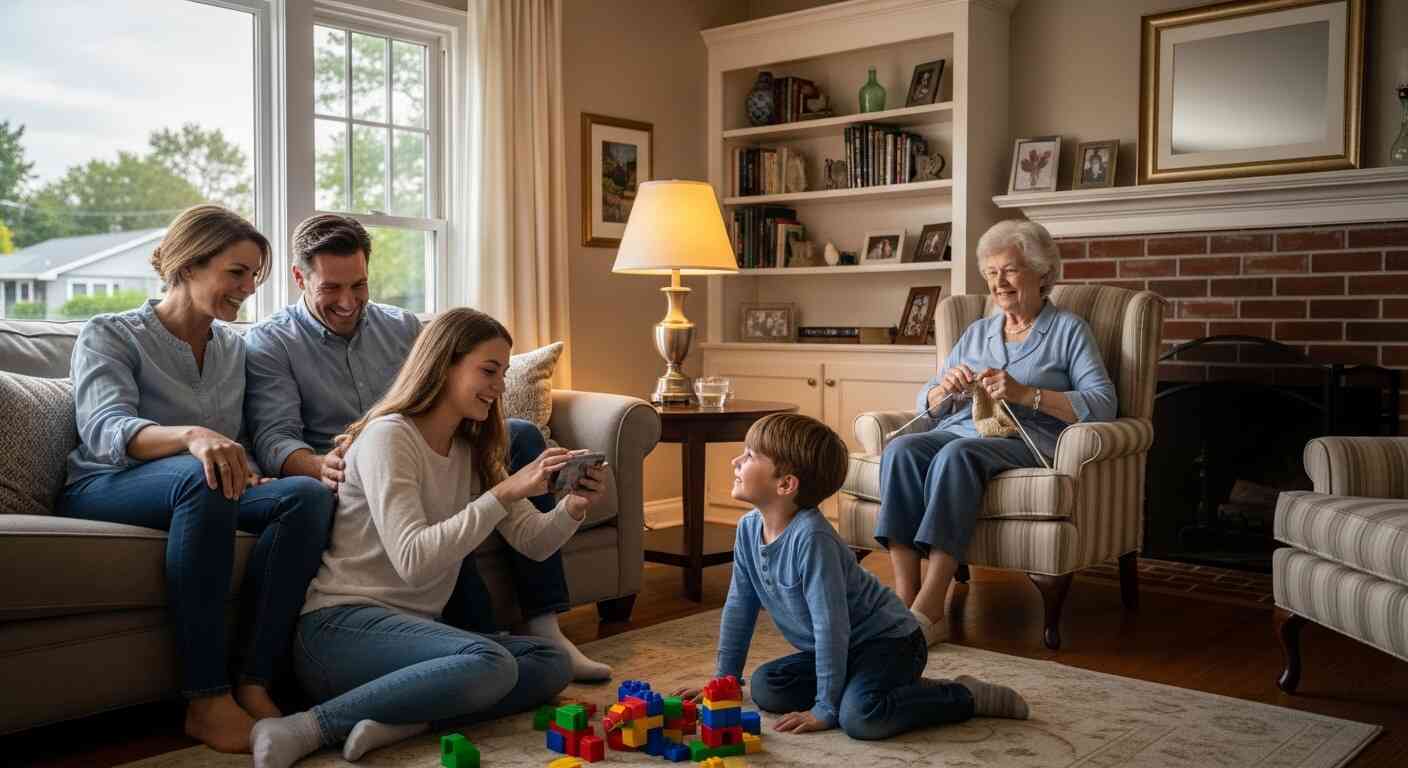
It was a Sunday. In the suburbs of Greenwich, Sundays were for pot roast, expensive Pinot Noir, and the suffocating pretense of the “perfect” American family.
I remember the smell of thyme and roasted carrots. I remember the way the silver spoons caught the light of the chandelier. And I remember the sound of my mother-in-law’s chair screeching against the hardwood floor.
Evelyn didn’t say a word at first. She just reached into the pocket of her silk cardigan and pulled out a piece of paper. It was crumpled, stained with what looked like coffee, but the letterhead of the DNA laboratory was unmistakable.
“Evelyn, please,” I whispered, my heart hammering against my ribs like a trapped bird. “Let’s talk about this in the other room.”
She didn’t talk. She didn’t cry. She reached across the table and threw the paper directly into my bowl of soup. The liquid splashed onto my white blouse, scalding my skin, but I didn’t move. I watched the ink of the “0% Probability of Paternity” result begin to bleed into the broth.
Then came the slap.
It wasn’t a feminine sting; it was a heavy, bone-jarring strike that sent me reeling back against the sideboard. My ears rang. The room blurred. Before I could catch my breath, Evelyn lunged for the high chair.
“You will not poison this house for one more second,” she hissed, her voice a jagged blade.
She snatched my eight-month-old son, Leo, from his seat. He started to wail—a high, piercing sound that cut through the thunder rolling outside.
“Evelyn, stop! He’s just a baby!” I screamed, lunging for her.
She shoved me back with a strength born of pure, distilled hatred. “He isn’t a baby. He’s a lie. And he belongs to me now.”
She didn’t grab a coat. She didn’t grab a diaper bag. She just threw open the front door, the freezing Connecticut rain instantly soaking her hair, and disappeared into the darkness with my son.
I stood there, the taste of blood in my mouth and the smell of ruined soup in the air, realizing that the life I had spent seven years building had just collapsed in seven seconds.
FULL STORY
Chapter 2: The Architect of Shadows
The house felt cavernous and haunted the moment the door slammed shut. I stood in the foyer, the rain spraying through the cracks of the doorframe, my face throbbing where Evelyn had struck me. My mind was a chaotic mess of “What now?” and “How did she find out?”
I had married David Thorne because he was everything I wasn’t. He was stable, wealthy, and came from a family whose name was etched into the cornerstones of half the buildings in Manhattan. I was a scholarship kid from a trailer park in Ohio who had reinvented herself in the fires of New York City. I thought I had buried my past. I thought I had secured my future.
But David had a secret, too. One he didn’t even know.
Three years ago, after two miscarriages and a mounting pressure from Evelyn to “produce an heir,” David had gone to a clinic. The results were devastating: he was sterile. A childhood bout of mumps had stolen his ability to father a child.
He didn’t want to tell his mother. He couldn’t face the “weakness” of it. So, we made a deal. A private donor. A closed file. A lie that would keep the Thorne legacy intact. Or so I thought.
I fumbled for my phone, my fingers slick with cold sweat. I called David.
“Elena? I’m just leaving the office. The storm is getting bad, I might be—”
“She took him, David,” I choked out. “Your mother. She found the papers. She knows about Leo.”
There was a long, terrifying silence on the other end. I could hear the rhythmic click of his turn signal.
“Which papers, Elena?” his voice was suddenly small.
“The DNA test. She must have gone behind our backs. She took him into the storm. She’s driving the Escalade. David, she’s out of her mind.”
“I’m coming home,” he said, but his voice lacked the urgency of a father. It sounded like the voice of a man who was watching his own execution. “Stay there. Don’t call the police yet. If the press gets wind of this, the firm is dead.”
“The firm?” I screamed into the phone. “Your son is in a car with a woman having a psychotic break in the middle of a gale! Forget the firm!”
I hung up. I couldn’t wait for David. David was a man who built walls; I was a woman who had spent her life breaking through them. I grabbed my car keys and ran out into the night.
The rain was a solid wall of grey. As I backed my sedan out of the driveway, my headlights caught a figure standing at the edge of the woods. It was Marcus, our gardener—a man who had always looked at me with a little too much understanding. He was soaking wet, holding a shovel, staring at the house with an expression that wasn’t sympathy. It was hunger.
I didn’t stop. I floored it, the tires screaming against the wet asphalt. I had to find Evelyn. I had to find my son. But as I reached the main road, I saw the first sign of the horror to come: Evelyn’s SUV hadn’t turned toward the city. She had turned toward the cliffs.
Chapter 3: The Edge of the World
The winding roads of the Gold Coast were treacherous even in daylight. In a storm like this, they were a death trap. I drove like a woman possessed, my eyes straining against the rhythmic slap of the wipers.
Why the cliffs?
Evelyn had a cabin there—a “retreat” where she went when the world became too much for her. It was a glass-and-steel structure perched on a precipice overlooking the Atlantic. It was a place of isolation. A place where secrets went to die.
As I sped along the coastline, my mind drifted back to the donor. We had chosen him for his traits: athletic, musical, Ivy League. But there was a detail I never told David. I had recognized the donor’s profile. It wasn’t a stranger. It was Julian, David’s younger brother who had “died” in a boating accident ten years ago.
Except Julian hadn’t died. He had been paid off by Evelyn to disappear because he was a “stain” on the family—a drug addict, a rebel. I had found him in a dive bar in Jersey, a ghost of a man, and in a moment of desperate, twisted irony, I had used his DNA to ensure the Thorne bloodline continued.
I thought I was being clever. I thought I was keeping the family “pure” in the most corrupted way possible.
I saw the taillights of the Escalade about half a mile ahead. She was weaving, hitting the rumble strips, the massive vehicle hydroplaning through deep puddles.
“Pull over, you crazy bitch!” I screamed, though she couldn’t hear me.
I accelerated, pulling alongside her on a narrow stretch of road. I looked over and saw her face through the rain-streaked glass. She wasn’t looking at the road. She was looking at Leo, who was strapped into the car seat in the back. She was crying—not the quiet tears of a grandmother, but the heaving, ugly sobs of someone who had lost their grip on reality.
She swerved toward me, the heavy SUV slamming into my passenger side. The metal screeched, a spark of orange fire igniting in the dark. My car spun, the world turning upside down for a heartbeat before I slammed into a guardrail.
The airbag deployed with a deafening thwack. Dust and the smell of chemicals filled the cabin.
Through the haze, I watched the Escalade’s red lights disappear around the bend toward the cliff house. My head was bleeding, a warm trickle running down my temple. I fumbled for the door handle, kicking it open when it jammed.
I didn’t feel the cold. I didn’t feel the pain. I started to run.
Chapter 4: The Glass Cage
By the time I reached the cabin, the storm had reached a fever pitch. The wind howled through the pines, sounding like a choir of the damned.
The front door was wide open.
I stepped inside the minimalist living room. The floor-to-ceiling windows showed nothing but the black void of the ocean and the occasional flash of lightning. It was silent, except for the distant, muffled sound of a baby whimpering.
“Evelyn?” I called out, my voice trembling. “It’s over. David is on his way. Just give me Leo.”
A light flickered on in the kitchen. Evelyn was standing there, holding a kitchen knife in one hand and a bottle of scotch in the other. Leo was on the floor at her feet, still in his car seat, looking up at the ceiling with wide, confused eyes.
“He looks just like him,” Evelyn whispered. She wasn’t looking at me. She was looking at the baby. “The eyes. The way he curls his lip. I knew the moment I saw him in the nursery. You thought you were so smart, Elena. The trailer park girl playing at being a queen.”
“I did what I had to do for David,” I said, taking a cautious step forward. “He wanted a son. You wanted a legacy.”
“A legacy of what? A ghost?” Evelyn snapped her head up, her eyes bloodshot. “I know who the father is. I saw the donor ID on the lab report. I recognized the code. I set up that trust fund for Julian years ago. I know his numbers.”
She stepped closer, the knife glinting. “You brought a dead man back into my house. You brought him back.”
“He’s your grandson, Evelyn! He’s a Thorne!”
“He is a reminder of my failure!” she shrieked. “Julian was a mistake. I spent millions to erase him, and you… you went and put him back in the cradle!”
Suddenly, the lights cut out. The house was plunged into total darkness.
In the silence, I heard a floorboard creak behind me. Not Evelyn. Someone else.
“Mother? Elena?”
It was David. He was standing in the doorway, drenched, his silhouette framed by a flash of lightning. But he wasn’t alone. Behind him stood two men in dark suits—lawyers? Or something worse?
“David, thank God,” I cried out. “Get the baby! She’s lost it!”
But David didn’t move toward me. He moved toward his mother.
“Did you get it?” David asked her. His voice was cold. Professional.
Evelyn reached into her pocket and pulled out a small USB drive. “Everything, David. Her emails with the clinic. The wire transfers to Julian. The whole trail.”
I froze. The world stopped. “David… what are you doing?”
David looked at me, and for the first time in seven years, I saw the man behind the mask. He wasn’t the victim of a lie. He was the architect of a trap.
“The firm is struggling, Elena,” David said quietly. “Your ‘infidelity’ and this ‘fraudulent’ birth give me the grounds for a divorce that voids our pre-nuptial agreement. I get the house. I get the assets. And most importantly, I get the sympathy of the board.”
“You… you knew?” I whispered. “You knew about the donor?”
“I suggested the clinic, didn’t I?” he smiled, a thin, cruel line. “I knew you’d go to Julian. You always had a soft spot for the underdog. You’re so predictable, Elena.”
Chapter 5: The Price of Blood
The betrayal was a physical weight, crushing the air from my lungs. My husband and his mother had orchestrated this entire “meltdown.” The DNA test, the “stolen” baby—it was all a performance to break me, to document my “instability” and my “deception” in a way that would stand up in a court of law.
Evelyn set the knife down on the counter. The “psychotic break” evaporated, replaced by the chilling composure of a CEO.
“You can leave now, Elena,” she said, smoothing her wet hair. “The car out front will take you to a hotel. Your things will be sent to you. If you ever try to contact us, or Leo, we will release the files. You’ll go to prison for fraud. You’ll be nothing again.”
I looked at Leo. My beautiful, innocent boy. He was the only real thing in this house of glass and lies.
“You can’t have him,” I said, my voice growing steady. “He’s not a chess piece. He’s a human being.”
“He’s a Thorne,” David said, stepping toward the car seat. “And he’s my ticket to staying Chairman. He stays with me. A ‘single father’ betrayed by his social-climber wife… the city will eat it up.”
As David reached down to grab the handle of the car seat, the front windows of the cabin shattered.
It wasn’t the wind. It was a tree limb, torn loose by the storm, propelled like a missile through the glass. The vacuum of the storm rushed in, glass shards flying like shrapnel.
Evelyn screamed as a piece of glass sliced her arm. David dove for cover.
In the chaos, I didn’t think. I acted. I lunged for Leo, grabbing the car seat and shielding him with my body as the wind roared through the house. I scrambled toward the back exit, the one that led to the cliff path.
“Elena! Stop!” David shouted, his voice muffled by the gale.
I burst out into the rain. The path was narrow, slick with mud, and dropped five hundred feet into the churning Atlantic. I could hear them behind me—David and his “security” team.
I reached the overlook where the railing had been washed away. I was trapped. To my left, the sheer face of the cliff. To my right, the dense, thorny woods. Behind me, the man I thought I loved, coming to take my son for a PR stunt.
I looked down at Leo. He had stopped crying. He was looking at me, his tiny hand reaching out to touch my wet face.
“I’m sorry,” I whispered. “I’m so sorry.”
I didn’t run into the woods. I didn’t surrender. I looked at the dark water below and remembered something Julian had told me before he disappeared. “The only way to beat a Thorne is to stop playing their game.”
Chapter 6: The Unfinished Symphony
They found the car seat three days later, washed up on a rocky cove five miles down the coast. It was empty.
The news was a sensation. “Tragedy at the Thorne Estate.” David played the part of the grieving father to perfection. He stood on the steps of the courthouse, his eyes hidden behind dark glasses, a black armband on his custom suit. The firm’s stock price soared on a wave of public sympathy. Evelyn retired to a private sanitarium, citing “emotional exhaustion.”
The case was closed. A mother, driven mad by the discovery of her own lies, had jumped with her child. A classic American tragedy.
Two months later, in a small, nameless town on the coast of Maine, a woman sat on a porch overlooking a very different ocean. Her hair was dyed a dull brown, and her face bore a thin, jagged scar across the temple.
Inside the cottage, a radio played softly. A toddler laughed, the sound of a wooden block hitting a hardwood floor echoing through the small space.
A man walked up the porch steps, carrying a bag of groceries. He looked like David, but his eyes were older, kinder, and lacked the polished sheen of the Greenwich elite.
“Did you see the paper?” Julian asked, setting the bag down.
Elena didn’t look at the headline. She didn’t need to see David’s face or read about the Thorne legacy. She looked at the small, sturdy boy who was now crawling toward the screen door.
“He’s starting to walk,” she said, her voice a ghost of its former self.
“We can’t stay here forever, Elena,” Julian said, sitting beside her. “David has people. Eventually, someone will look twice at a dead man and a ghost.”
Elena looked out at the horizon, where the grey sky met the grey water. She thought about the night on the cliff—how she had hidden Leo in the hollow of an old oak tree before jumping into the shallow safety of a maintenance ledge, letting the empty car seat fall into the abyss. She thought about the blood she had left behind to make the “death” look real.
She reached out and took Julian’s hand. They were two ghosts raising a lie, built on the ruins of a family that never existed.
“Let them look,” she whispered, a cold, hard light flickering in her eyes. “I’ve spent my whole life learning how to disappear, and I’m just getting started.”
She stood up, picked up her son, and walked inside, closing the door on the world that thought she was dead.
Love is a beautiful lie, but survival is the only truth that remains when the storm finally clears.