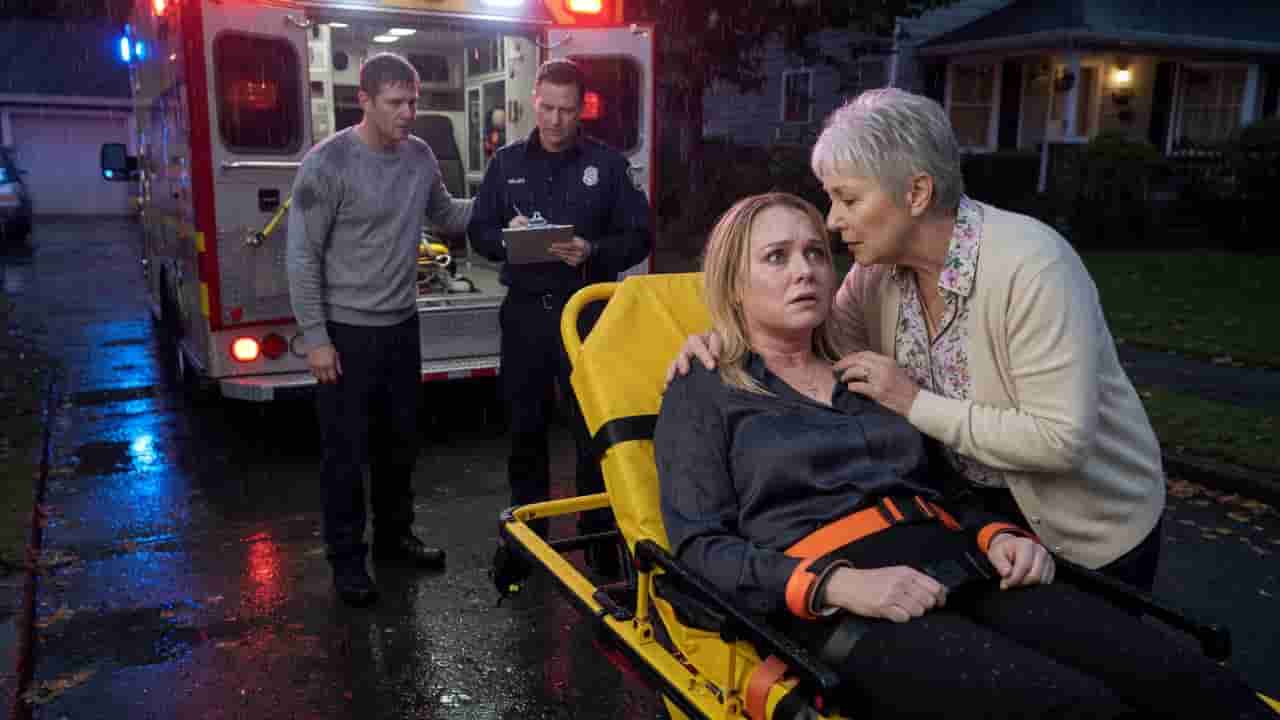
“Don’t worry, Julianne. The baby is finally safe with a real mother.”
My mother-in-law whispered those words into my ear while the paramedics were lifting my gurney into the back of the ambulance. I couldn’t breathe, my throat was closing up from the third “unexplained” reaction this month, and my husband was standing ten feet away, watching me fall apart with a look of pure exhaustion.
He didn’t hear her. Nobody heard her. To the rest of the world, Martha is a retired nurse and a saint who moved in to help us when I “started losing my grip.” She’s the one who cooks the family dinners, the one who tucks our four-year-old daughter into bed, and the one who tells my husband that I’m probably just overworked and imagining things.
But I’m a pediatrician. I know what anaphylaxis feels like. And I know that the “special herbal tea” Martha makes for me is the only thing I’ve consumed before every single one of my collapses.
She wants my life. She wants my daughter. And she’s spent the last six months making everyone believe I’m mentally unstable so that when she finally gets rid of me, no one will even ask why.
I finally managed to hide a camera in the one place she feels most at home—the kitchen. I just got back from the hospital, and I have five minutes to check the footage before she comes back from “checking on the baby.”
Chapter 1: The Sterile Fortress
The rain in Seattle doesn’t just fall; it colonizes. It’s a grey, insistent weight that turns the cedar siding of our Queen Anne home into something that looks like it’s bruised. Inside, the house is too clean. It has that high-end, minimalist vacuum-sealed quality that Sam loves—all white oak floors and Carrara marble—but lately, it feels less like a home and more like a recovery ward where I’m the only patient.
I sat at the kitchen island, my fingers tracing the cold edge of my laptop. My throat felt tight. Not the medical tightness of a narrowing airway—not yet—but the psychological constriction of being a stranger in my own life.
“You’re doing it again, Jules.”
I didn’t look up. I knew that voice. Sam was standing by the espresso machine, his tie loosened, the light from the pendant lamps reflecting off his forehead. He looked older than thirty-six. He looked like a man who spent his days litigating corporate mergers and his nights managing a wife who was “breaking down.”
“Doing what?” I asked, my voice sounding thin even to me.
“Counting your breaths. Checking your pulse. You’re spiraling before we’ve even sat down for dinner.”
“I’m not spiraling, Sam. I’m monitoring. There’s a difference.”
“To a doctor, maybe. To me, it looks like my wife is terrified of a salad.”
He wasn’t entirely wrong. I was terrified. But I wasn’t terrified of the lettuce; I was terrified of what was hidden in the dressing. For a month, I’d been experiencing idiopathic episodes. Tachycardia, hives, laryngeal edema. Three trips to the ER. Three sets of negative labs for common allergens. My colleagues at the hospital looked at me with that devastating brand of professional pity—the kind you reserve for the brilliant surgeon who starts drinking or the pediatrician who develops a “nervous disorder.”
The door to the pantry swung open, and Martha stepped out. She was holding a jar of artisanal honey like it was a holy relic. Martha didn’t walk; she marched with a soft-soled efficiency she’d perfected over thirty years as a floor nurse. She was sixty-two, with silver hair cut into a precise bob that never seemed to move, even in the wind.
“Is everything alright in here?” she asked, her voice a warm, low contralto. She draped a hand over Sam’s shoulder as she passed, a gesture so practiced it felt like an extension of his own nervous system. “Julianne, dear, you look a bit peaked. Did you take your antihistamine?”
“I don’t need an antihistamine, Martha. I need to know why my IgE levels are spiking when I haven’t changed my diet.”
Martha sighed, a soft, motherly sound. She set the honey down and moved toward me, reaching out to brush a stray hair from my face. I flinched. I couldn’t help it. The flinch was a confession, and I saw the way Sam’s jaw tightened.
“We talked about this, Jules,” Sam said, his voice dropping an octave—his ‘mediation’ voice. “The stress of the malpractice suit last year… the loss of your mother… it leaves a residue. The mind manifests what the heart can’t process.”
“I am a doctor, Sam. I am not ‘manifesting’ a closed throat.”
“And I was a nurse for three decades, honey,” Martha added gently, her hand now resting on the marble counter, inches from mine. “I’ve seen dozens of women go through this. Post-partum depletion can hit years later. It’s nothing to be ashamed of. That’s why I’m here. To take the load off.”
She made it sound like a gift. She’d moved in six months ago, right after my second ER visit. At first, it was a relief. Someone to help with Lily, someone to manage the house while I struggled through my shifts at the clinic. But then the help started to feel like a siege. My clothes were moved to different drawers because “it made more sense.” Lily started asking for “Mimi” instead of “Mommy” when she scraped her knee. And the food—the food always tasted slightly… off. A hint of bitterness behind the garlic, a floral sweetness in the water.
“Where is Lily?” I asked, closing my laptop.
“She’s in the den with her Legos,” Martha said. “I gave her a little snack. She was so hungry.”
“What kind of snack?”
Martha paused, her eyes locking onto mine. There was a flicker there—something sharp and cold that vanished as quickly as a spark hitting wet grass. “Just some apple slices and peanut butter, dear. Why?”
I felt the blood drain from my face. “Martha, we don’t keep peanut butter in this house. You know I have a mild sensitivity to legumes. It’s in my chart.”
Martha blinked, her expression one of horrified realization. “Oh, Julianne. I… I forgot. I used the jar I brought from my own house. I was so careful to keep it away from your things. I’m so sorry. My memory is just… I’m getting older, I suppose.”
“It’s fine,” Sam snapped, looking at me. “She gave it to Lily, not you. You’re not going to have a reaction just because Lily ate a peanut in the other room. For god’s sake, Jules, don’t turn this into a scene.”
“I’m not turning it into a scene, Sam. Cross-contamination is a real thing.”
I stood up, my heart beginning to hammer against my ribs. Was it the fear, or was it the start of an attack? I could feel the heat rising in my neck. I looked at Martha. She wasn’t looking at Sam. She was looking at me, and there was a tiny, infinitesimal curve to the corner of her mouth.
“I think I’ll go check on her,” I said, my voice cracking.
As I walked toward the den, I heard Martha whisper to Sam, “She’s so fragile, Sammy. It breaks my heart to see her like this. Maybe we should look into that retreat Dr. Aris mentioned? The one for ‘rest’?”
I stopped in the hallway, out of sight. I leaned against the cool plaster wall and forced myself to breathe. Square breathing. Four seconds in, four seconds hold, four seconds out. I pulled my phone from my pocket and opened the app.
Two days ago, I’d bought a camera disguised as a USB wall charger. I’d plugged it into the outlet behind the toaster—a spot Martha never cleaned because it required moving the heavy Breville oven.
I swiped to the live feed. The kitchen appeared in grainy color. I watched Sam walk out of the frame toward the garage. Martha was alone now.
She didn’t look piteous anymore. She moved to the sink and began washing the honey jar. Then, she reached into the pocket of her cardigan and pulled out a small, amber glass vial. She unscrewed the dropper and squeezed three clear drops into the pitcher of filtered water sitting on the counter—the water I drank from all day.
My stomach did a slow, sickening roll. It wasn’t peanut butter. It wasn’t stress.
It was her.
I leaned my head against the wall, the plastic of the phone case biting into my palm. I had the proof. But as I watched her stir the pitcher with a long silver spoon, a terrifying thought surfaced. If I showed this to Sam now, would he even believe it? Or would he think I’d faked the footage in some desperate, delusional attempt to blame his mother for my own failing mind?
Martha had spent six months building the cage. She’d used the “residue” of my mother’s death—a botched surgery that still haunted my sleep—to convince my husband that I was broken. She’d turned my own medical expertise against me, making my caution look like paranoia.
I looked through the doorway into the den. Lily was sitting on the rug, her blonde curls bouncing as she built a tower. She looked so much like me at that age.
“Mommy?” Lily called out, sensing me there. “Mimi says you’re sick. Do you need a Band-Aid?”
I walked into the room and sank onto the floor beside her, pulling her into my lap. She smelled like apples and something faintly chemical.
“No, baby,” I whispered, burying my face in her hair. “Mommy doesn’t need a Band-Aid. Mommy just needs to win.”
I looked up to see Martha standing in the doorway. She was holding a glass of water.
“Here you go, Julianne,” she said, her voice dripping with artificial grace. “You look parched. Drink up.”
I looked at the glass. The water was clear, innocent, and deadly. I looked at Martha’s eyes—the eyes of a woman who had spent a lifetime in hospitals, knowing exactly how much of a substance it took to mimic a crisis without leaving a trace in a standard tox screen.
“Thanks, Martha,” I said, taking the glass. My hand was steady. “I’ll drink it in a minute.”
I set the glass on the end table, just out of Lily’s reach. I knew I couldn’t keep playing this game for long. The dinner party was tomorrow night—Sam’s partners, my department head, the whole social circle we’d built. Martha had been planning it for weeks. It was her “coming out” as the matriarch of the house.
And I knew, with a chilling certainty, that it was intended to be my final performance.
Chapter 2: The Guest List of Witnesses
The kitchen smelled of roasting lamb and rosemary, a scent that should have been comforting but instead felt like the heavy perfume of a funeral parlor. Martha was in her element. She wore a tailored charcoal dress and an apron that remained impossibly white, her movements a synchronized ballet of domestic dominance.
“The Merriweather’s will be here at seven, Julianne. Do try to put on some color. You look a bit… translucent.”
I stood by the window, watching the rain smear the Seattle skyline into a blur of grey and charcoal. I’d spent the day at the clinic, seeing twenty patients, my mind a fractured mess of pediatric dosages and the image of that amber vial. I hadn’t touched a drop of water in the house. I’d bought a liter of Evian on the way home and hidden it in my gym bag.
“I’m fine, Martha,” I said, my voice tight.
“Of course you are. Sam tells me you had a wonderful day. No ‘episodes’?”
She said the word like it was a dirty secret. An episode. A lapse in character.
“None.”
“Good. It would be such a shame to ruin Sam’s night. He’s worked so hard on the Miller acquisition. He needs this to be perfect.”
I turned to look at her. “He needs me to be perfect, you mean.”
Martha stopped stirring the reduction sauce. She looked at me, her eyes flat and unreadable. “He needs a wife who can hold a conversation without checking her throat for swelling every five minutes. He needs a mother for Lily who doesn’t look like she’s about to faint.”
She stepped closer, the smell of rosemary following her. “You know, Julianne, I was a nurse when your mother died. I read the reports. It was a tragic mistake, but it wasn’t the end of the world. Some people just… they don’t have the constitution for the pressure. You’re just like her, aren’t you? Soft. Prone to breaking under the weight of it all.”
The mention of my mother was a physical blow. The surgery had been simple—a gallbladder removal—but the anesthesiologist had missed the signs of malignant hyperthermia. By the time they realized, her heart had already given out. I was in med school at the time. I’d spent years dissecting the records, convinced I could find a way to retroactively save her. Martha knew exactly where the scar was, and she’d just pressed her thumb into it.
“My mother was a teacher, Martha. She wasn’t soft. She was failed by people who were supposed to be watching.”
“And who’s watching you, Julianne?” Martha whispered, her face inches from mine. “Who’s going to save you when you fail yourself?”
The doorbell rang, the chimes echoing through the hollow spaces of the house. Martha instantly transformed. The coldness vanished, replaced by a radiant, welcoming warmth. She smoothed her apron and headed for the foyer.
The evening was a slow-motion car crash. There were twelve of us around the long oak table—Sam’s boss, Marcus; my department head at the hospital, Sarah; and several other high-powered couples. Martha sat at the foot of the table, the place usually reserved for the hostess. I was shunted to the side, between Marcus’s silent wife and a corporate litigator who talked exclusively about his vineyard in Woodinville.
“This lamb is exquisite, Martha,” Sarah said, raising her wine glass. “Sam, you’re so lucky to have your mother here. I don’t know how you’d manage with Julianne’s schedule.”
Sam smiled, but it didn’t reach his eyes. He looked at me, then quickly away. “We’re very grateful. It’s been a… challenging year.”
“I can imagine,” Sarah said, turning to me. Her tone changed—it became softer, more clinical. “How are the allergies, Julianne? We’ve missed you at the Wednesday rounds.”
I felt the eyes of the entire table on me. It was the same feeling as being under the surgical lights. “I’m much better, Sarah. Just a bit of a mystery, but we’re narrowing it down.”
“It’s the stress,” Martha chimed in, leaning forward with a look of deep concern. “The poor thing. She’s been having these terrible panic attacks, though she calls them ‘reactions.’ It’s so hard for medical professionals to admit when they’re the ones who need help.”
“They aren’t panic attacks, Martha,” I said, my voice louder than I intended. The table went silent. The sound of silverware hitting china was the only noise.
“Now, Julianne,” Sam said, his voice warning.
“No, Sam. I’ve had three anaphylactic events. Those don’t come from stress. They come from an allergen. I’m a doctor; I think I know the difference between a racing heart and a closing airway.”
“Of course you do, dear,” Martha said, her voice like honey. She stood up and reached for the pitcher of water—the same pitcher I’d seen her spike on the camera. “You’re just tired. Here, have some water. You’re getting flushed.”
She walked around the table. She didn’t pour it into my glass. She stood behind me, her presence a cold weight on my neck. She leaned down, pouring the water with a steady hand.
“Drink,” she whispered, so low only I could hear. “Before you make a fool of yourself in front of Sarah.”
I looked at the water. It was shimmering under the chandelier. I knew what was in it. I’d spent the last twenty-four hours researching. Martha wasn’t using peanuts. She was a nurse; she knew about chlorpheniramine—a common antihistamine that, in high doses, can cause paradoxical reactions in some people, or maybe it was something more obscure, something that mimicked the symptoms of the very thing I feared.
I felt a sudden, sharp pinch in my arm.
I gasped and jerked away, knocking my fork to the floor. Martha was standing there, her hand retracted, a small, silver sewing pin clutched between her fingers.
“Oh, goodness!” she cried, her hand flying to her mouth. “I am so sorry, Julianne! My brooch came loose. I was trying to fix it and I must have caught you. Am I just a total klutz tonight?”
The table erupted into sympathetic murmurs. “Are you okay, Jules?” Sam asked, his brow furrowed.
I looked at my arm. A tiny bead of blood was forming. But it wasn’t just a pinprick. I felt a cold, spreading sensation—a localized numbness that began to travel up my shoulder.
She hadn’t just pricked me. She’d injected something. A rapid-acting allergen? Or something worse?
Within seconds, the room began to tilt. The voices of the guests became a dull roar, like the sound of the ocean inside a shell. My heart began to gallop, a frantic, uneven rhythm that made my chest ache.
“Julianne?” Sarah stood up, her face a mask of professional concern. “You’re very pale. Your eyes are starting to swell.”
“I… I can’t,” I wheezed. The air felt like it was being filtered through a thick, wet wool blanket. I reached for my throat.
“It’s happening again,” Martha wailed, her voice a perfect pitch of maternal agony. “Sam, get her EpiPen! She’s having another one of her episodes!”
Sam was on his feet, but he looked paralyzed. He’d seen this too many times. The fatigue of the caregiver had turned into the numbness of the witness.
I tried to stand, but my legs felt like water. I slumped back into the chair, my vision narrowing to a small, bright circle. I looked at Martha. She was leaning over me, her face a mask of horror for the guests, but her eyes were bright with a terrifying, clinical focus.
“Just breathe, honey,” Martha whispered. “Let it go. The baby is going to be so much better off without all this drama.”
I tried to speak, but my tongue felt like a lead weight. I looked at Sarah, trying to signal her, but she was already shouting orders to Marcus to call 911.
The last thing I saw before the darkness took me was Martha, standing over me, her hand resting on my shoulder in a gesture of perfect, murderous comfort. She looked at the guests, her eyes brimming with fake tears.
“I don’t know what we’re going to do,” she sobbed. “She’s just… she’s just not herself anymore.”
Chapter 3: The Whisper in the Rain
The world came back in fragments of sound and light. The rhythmic thwip-thwip of windshield wipers. The low hum of a diesel engine. The acrid smell of ozone and disinfectant.
I was on my back. My chest felt like an elephant was standing on it, but the air was finally moving—cold and sharp through the plastic prongs of an oxygen cannula. I tried to move my hand, but it was weighted down by a blood pressure cuff that was cycling, the Velcro rasping against my skin.
“Pressure’s stabilizing. Heart rate coming down from one-forty. We’re at one-ten,” a voice said.
I opened my eyes. A man in a dark blue uniform—EMT Miller—was leaning over me, his face illuminated by the pulsing red glow of the ambulance lights. He was checking the IV line in my arm.
“Welcome back, Doc,” he said, a touch of weary kindness in his voice. “You gave us a scare. Second time this month I’ve seen you, isn’t it?”
I tried to nod, but my neck felt stiff. I could see the rain streaking the glass of the ambulance doors. We weren’t moving yet. We were still in the driveway.
“Sam?” I managed to croak.
“He’s right outside, talking to your mother-in-law,” Miller said. “He’s pretty shaken up. He said you had a reaction at dinner?”
“She… she did it,” I whispered.
Miller paused, his hand on the heart monitor. He looked at me, his expression shifting from professional to cautious. “Who did what, Dr. Julianne?”
“Martha. She… she’s poisoning me.”
The silence that followed was heavy. Miller didn’t look away, but I could see the gears turning. He’d heard this before—patients in the middle of a systemic shock, their brains deprived of oxygen, hallucinating, grasping at shadows. He looked at the monitor, then back at me.
“The doctor at the ER mentioned you’ve been under a lot of stress,” he said gently. “Sometimes the body reacts in ways we don’t expect. Let’s just focus on getting you to the hospital, okay?”
“I’m not… I’m not crazy,” I said, but even to my own ears, my voice sounded like a fever dream.
The back doors of the ambulance swung open, letting in a gust of cold, wet Seattle air. Sam was standing there, his grey sweater damp, his face a hollow mask of exhaustion. Behind him stood Martha.
She looked perfect. Her hair was still in place, her cream cardigan draped over her shoulders. She looked like the grieving matriarch of a fallen house.
“Can I see her?” Sam asked, his voice breaking.
“Just for a second, Mr. Sterling. We need to roll,” Miller said.
Sam stepped into the small, cramped space. He took my hand, but his grip was loose, tentative. He didn’t look at my eyes; he looked at the IV bag.
“Jules,” he whispered. “I can’t do this anymore. I can’t keep watching you disappear like this. Sarah… she thinks you need to take a leave of absence. A long one.”
“Sam, listen to me,” I said, my voice gaining a desperate strength. “Check the kitchen. The toaster. There’s a camera… I saw her, Sam. I saw her putting drops in the water.”
Sam’s face didn’t change. It just got harder. “Martha told me you’d say that. She said you’ve started imagining things. She found the camera, Jules. She showed it to me.”
My heart plummeted. “She found it?”
“She was cleaning. She thought it was a fire hazard. She saw what was on it, Jules. It was just footage of her making tea. You’ve been spying on her. Do you realize how sick that is?”
“No… Sam, she switched the files. She must have—”
“Enough!” Sam’s voice cracked. “She’s the only one holding this family together while you’re off in some medical fantasy world where everyone is out to get you. I’m taking Lily to her sister’s for a few days. We need space. I need space.”
He let go of my hand. He didn’t look back as he stepped out of the ambulance.
Then, Martha stepped forward.
She didn’t get into the ambulance. She leaned over the gurney, her sturdy build blocking the light from the driveway. She rested her hand on my shoulder—the same shoulder where she’d pricked me. Her fingers dug in, a sharp, reminder of her power.
She leaned down, her silver hair brushing my ear. The smell of rosemary and antiseptic was overwhelming.
“Don’t worry, Julianne,” she whispered, her voice a chillingly soft purr. “The baby is finally safe with a real mother. You can rest now. Everyone knows you’re broken.”
I stared at her, my breath catching in my throat. I wanted to scream, to grab her, to show Miller the monster hiding behind the cashmere. But the door was already swinging shut.
“Wait!” I wheezed.
Thump.
The doors locked. The siren began its low, mournful wail. I was alone in the dark, the red lights strobing against the ceiling of the ambulance.
The residue of her words felt like a physical weight, heavier than the oxygen mask. The baby is safe with a real mother. She wasn’t just trying to make me look sick. She was erasing me. She was stepping into the vacuum of my life, using my own grief and my own body as the fuel for her takeover.
I looked at EMT Miller. He was writing on his clipboard, his face impassive.
“She told me,” I whispered. “She just admitted it.”
Miller didn’t look up. “Lie back, Doc. The Benadryl is going to make you drowsy. Just close your eyes.”
I realized then the depth of the trap. Martha didn’t need to kill me. She just needed to kill the version of me that people believed in. She’d turned my husband into a stranger, my house into a prison, and my daughter into a prize.
As the ambulance sped through the rainy streets of Seattle, I didn’t close my eyes. I watched the IV drip, counting the seconds. I was a doctor. I knew about systems. I knew about survival.
Martha thought she had won because she had the witnesses and she had the house. But she’d made one mistake. She’d left me alive.
And she’d forgotten that I knew exactly what was in her knitting bag.
Chapter 4: The Residue of Truth
The hospital discharge was a quiet affair. No Sam. No Lily. Just a taxi voucher and a manila envelope containing my personal effects. Sarah had stopped by my room earlier that morning, her face a mask of professional distance that hurt worse than a direct insult.
“Take the time, Julianne,” she’d said. “The board is… concerned. We can’t have a pediatrician on the floor who is experiencing systemic collapses of unknown origin. It’s a liability. For the kids, and for you.”
“Sarah, I told you—”
“You told me a story about your mother-in-law that sounds like a Gothic novel,” Sarah interrupted, her voice not unkind, but firm. “Get some help. Real help. Not just an EpiPen.”
I stood on the sidewalk outside Swedish Medical Center, the grey Seattle drizzle soaking through my thin hospital-issue sweatshirt. I felt hollowed out, a ghost haunting my own life. I had no car, no husband, and no daughter. But I had one thing Martha hadn’t taken yet.
I had the key to the house.
I took a rideshare back to Queen Anne. I made the driver drop me off three blocks away, tucked behind a row of overgrown hydrangeas. I watched the house for twenty minutes. Martha’s Volvo was gone. Sam’s SUV wasn’t in the driveway. The house looked silent, a fortress of white oak and secrets.
I let myself in through the side door, the one that led into the mudroom. The silence was deafening. The house smelled of lavender and floor wax—Martha’s scent. It felt like walking into a crime scene that had already been scrubbed clean.
I went straight to the kitchen. I looked behind the toaster. The outlet was empty. The camera was gone, just as Sam had said. Martha had been thorough. She’d scrubbed the digital footprint as easily as she’d scrubbed the counters.
I stood in the center of the kitchen, my heart starting to race. I needed proof. Something physical. Something that a lab could identify.
I went to the pantry. I searched through the jars of honey, the boxes of tea, the artisanal spices. Nothing. It was all brand-name, sealed, and innocent.
Then I thought of Martha’s room.
She’d taken over the guest suite on the first floor. It was the only room in the house I hadn’t entered since she moved in. It felt like a border crossing.
The room was unnervingly tidy. The bed was made with hospital corners—crisp, white, and cold. On the nightstand sat a framed photo of Sam as a boy, and beside it, her knitting bag.
It was a large, woven tote made of stiff seagrass. I knelt on the floor, my breath coming in short, jagged bursts. I reached inside. Yarn. Soft, grey wool. A pair of bamboo needles. A half-finished sweater for Lily.
I dug deeper, my fingers brushing against something hard and cold.
At the very bottom, tucked into a hidden pocket in the lining, was a small leather medical kit. I unzipped it.
Inside were four amber glass vials, identical to the one I’d seen on the camera. They were unlabeled, but beside them was a small box of insulin syringes and a single, silver sewing pin—the twin to the one she’d used to prick me at dinner.
I pulled out one of the vials. The liquid inside was clear.
“Looking for something, dear?”
I froze. The voice came from the doorway.
Martha was standing there, her hands folded over her charcoal skirt. She didn’t look angry. She looked disappointed, like a teacher catching a student whispering in class.
“I called Sam,” she said, stepping into the room. “I told him I forgot my heart medication and had to swing back. I didn’t expect to find you burglarizing my room.”
“This isn’t heart medication, Martha,” I said, standing up, the vial clutched in my hand. “What is it? Succinylcholine? A concentrated allergen? What have you been putting in my body?”
Martha laughed. It was a dry, rattling sound. “You really are desperate, aren’t you? That’s my B-12 supplement, Julianne. I have a deficiency. Being a nurse is hard work; you have to keep your energy up.”
“Then you won’t mind if I take this to the lab at the clinic,” I said, moving toward the door.
Martha didn’t move. She didn’t have to. She was blocking the only exit, her sturdy frame filling the doorway.
“You won’t make it to the clinic,” she said, her voice dropping to a low, clinical tone. “Sam is on his way. I told him you were here, acting erratically, threatening me. He’s bringing the police, Julianne. He’s going to have you committed for observation. For your own safety.”
“He won’t believe you this time,” I said, though my voice trembled. “I have the vial. I have the needles.”
“You have a stolen medical kit belonging to a retired nurse,” Martha countered. “And you have a history of ‘episodes.’ Who do you think the police are going to believe? The woman who’s been caring for your child, or the woman who just got discharged from the psychiatric ward?”
She stepped closer, the smell of lavender suddenly suffocating. “You should have just left, Julianne. You should have taken the ‘rest’ Sarah offered. Now, you’re going to lose everything. Not just Sam. Not just your job. You’re going to lose Lily. Forever.”
The mention of Lily broke something inside me. It wasn’t fear anymore. It was a cold, hard rage that felt like ice water in my veins.
“You think you’ve won because you’re a better liar,” I said, my voice steady. “But you forgot one thing, Martha. I’m a better doctor.”
I looked down at the vial in my hand. I knew I couldn’t get past her. I knew the police were coming. I knew the trap was closing.
But I also knew that Martha’s pride was her greatest weakness. She’d spent her life being the ‘helper,’ the ‘saint,’ the one who knew best. She couldn’t help but boast about her handiwork.
“Why?” I asked. “Why go to all this trouble? You could have just moved in. You could have been the grandmother.”
Martha’s face contorted, the mask of the saint slipping for a brief, ugly second. “You weren’t enough for him. You were always at the hospital. You let your mother die because you weren’t fast enough, and you were doing the same thing to Sam. He was lonely. He was drowning. He needed someone who actually cared about this family. He needed me.”
“He doesn’t need a murderer,” I said.
“I’m not a murderer,” Martha snapped. “I’m a savior. I’m giving him back the life you stole from him.”
In the distance, I heard the faint, pulsing wail of a siren. Not an ambulance this time. A police cruiser.
Martha smiled. It was a thin, triumphant expression. “That would be Sam. Time to go, Julianne.”
I looked at the vial one last time. I knew what I had to do. It was a risk—a massive, medical gamble. But it was the only way to break the system she’d built.
“You’re right, Martha,” I said, my voice a whisper. “I am just like my mother.”
Before she could react, I popped the cap off the vial and jammed the silver pin into the rubber stopper. I didn’t need a syringe. I just needed the residue.
I dragged the pin across my palm, a deep, stinging scratch.
“What are you doing?” Martha hissed, her eyes wide.
“I’m making sure the witnesses see the truth,” I said.
The room began to spin almost immediately. This wasn’t a slow build. It was a violent, systemic reaction. My heart hammered against my ribs like a trapped bird. My throat began to click, the airway narrowing with terrifying speed.
I collapsed onto the white oak floor, the amber vial rolling away under the bed.
The front door slammed open.
“Martha? Julianne?” Sam’s voice echoed through the house.
I looked up at Martha. She was standing over me, her face a mask of sudden, genuine panic. She hadn’t expected this. She hadn’t expected me to weaponize my own body.
“She… she did it to herself!” Martha cried as Sam burst into the room. “Sam, she took my medicine! She’s trying to kill herself!”
I lay on the floor, my vision blurring, my lungs screaming for air. I looked at Sam. He was kneeling beside me, his face a blur of terror.
But I didn’t look at his eyes. I looked at his hands.
And then, with the last of my strength, I pointed at the knitting bag.
“Check… the… lining,” I wheezed.
The darkness came then, but it wasn’t the heavy, hopeless dark of the ambulance. It was the sharp, cold dark of a surgery. A place where things were cut out so that life could begin again.
I stopped breathing just as the first police officer entered the room.
Chapter 5: The Chemical Witness
The transition from the floor of the guest suite to the ICU was a blur of fluorescent lights and the rhythmic, mechanical hiss of a ventilator. I didn’t wake up to a choir of angels or a sudden burst of clarity. I woke up to the taste of plastic and the dull, thrumming ache of a body that had been jolted back from the edge.
My first conscious thought was clinical: Epinephrine. Steroids. Diphenhydramine. I could feel the drugs coursing through me, a chemical cocktail that left me jittery and hollowed out. I tried to lift my hand to touch the tube in my throat, but my wrists were restrained—soft, padded cuffs that anchored me to the bed. Standard procedure for a patient who might wake up in a state of hypoxic agitation.
The room was quiet, save for the beep of the cardiac monitor. It was a private room, the kind reserved for VIPs or staff. Beyond the glass wall, I could see the darkened hallway of the Intensive Care Unit. It was late—or early. Time in the hospital is a fluid concept, measured in vitals and shift changes rather than sunrises.
A figure sat in the chair by the window. It wasn’t Martha. It was a man in a rumpled suit, his head in his hands. Sam.
I made a sound—a wet, guttural rasp against the endotracheal tube. Sam’s head snapped up. His eyes were bloodshot, his face a map of exhaustion and something that looked dangerously like shame. He stood up, his movements hesitant, like he was approaching a wounded animal.
“Jules,” he whispered. “Don’t… don’t try to talk. The tube is coming out soon. The doctors… they stabilized you.”
I stared at him. I didn’t have the energy for anger, only a cold, crystalline observation of his presence. He looked at my restrained wrists and flinched. He reached out as if to touch my hand, then pulled back.
“The police are here,” he said, his voice barely audible over the hum of the ventilator. “They found it, Julianne. In the lining. Just like you said.”
The memory of the guest room flooded back—the seagrass bag, the amber vial, the silver pin. I closed my eyes, a single tear escaping and tracing a path through the salt and sweat on my cheek.
“They took the vials to the lab,” Sam continued, his words coming out in a frantic, desperate rush. “It wasn’t B-12. It was a concentrated solution of Arachis hypogaea proteins—peanut extract—and a synthetic trigger designed to accelerate the reaction. Martha… she’d been using her old nursing contacts to get a pharmaceutical-grade allergen. She was injecting it into the water, the food… and that night at dinner, she didn’t prick you with a brooch. She used a needle hidden in the pin.”
He sank back into the chair, his hands trembling. “I didn’t believe you. I called you crazy. I let her stay in our house while she was… God, Jules, she was trying to kill you right in front of me.”
I watched him. The “residue” of his betrayal was a physical weight in the room. This wasn’t a movie where the husband’s realization leads to a tearful reconciliation. This was the moment the foundation of our marriage didn’t just crack—it dissolved. He had been the witness who chose the wrong side. He had been the silence that allowed the bullying to escalate into attempted murder.
A nurse entered—a tall, efficient woman named Elena whom I recognized from the pediatric ward. She looked at me with a mix of professional concern and a profound, personal sadness.
“Dr. Sterling,” she said softly. “We’re going to extubate you now. It’s going to be uncomfortable, but you know the drill.”
The process was a violent, gagging mess. When the tube was finally out, my throat felt like it had been scraped with sandpaper. I coughed, a raw, painful sound, and Elena held a cup of ice chips to my lips. The water was the first thing I’d tasted in days that didn’t feel like a threat.
“Where is she?” I rasped, my voice sounding like a stranger’s.
Sam looked at Elena, who gave a small, somber nod before stepping out of the room to give us privacy.
“She’s in custody,” Sam said. “They picked her up at the house. She tried to tell them you’d planted the vials, that you were trying to frame her. But the police found the hidden camera she’d taken from the kitchen. She hadn’t destroyed it yet. She’d kept it as a trophy, I think. They found the footage of her spiking the pitcher. It was all there, Jules. Every bit of it.”
He leaned forward, his face inches from the bed rail. “I’m so sorry. I’ll spend the rest of my life making this up to you. I’ll do whatever it takes.”
I looked at him, and for the first time, I felt the full weight of the loss. Not the loss of my health or my career, but the loss of the man I thought I’d married. The Sam I loved would have seen the truth. The Sam I loved would have protected me. The man sitting in front of me was a stranger who had been seduced by a lie because it was easier than facing the truth.
“You can’t,” I said. It was a croak, but it was final.
“What?”
“You can’t make it up to me, Sam. You were in the room. You watched me gasp for air, and you looked at her with pity while you looked at me with disgust. You let her take Lily. You let her convince you I was a danger to our daughter.”
“I was confused! She’s my mother, Jules! I thought she was helping!”
“Helping who?” I asked, my voice gaining a jagged edge. “She was helping herself to my life. And you were her best accomplice. You weren’t a witness, Sam. You were the weapon she used to break me.”
The silence that followed was different than the one in the kitchen. This was the silence of a dead thing. Sam’s face crumpled. He didn’t argue. He couldn’t. The clinical reality of the situation was undeniable. He had failed the most basic test of a partner: he had failed to believe the person he loved when the world turned against her.
Later that afternoon, a Detective Vance from the Seattle PD came by. He was a man with a face like a crumpled paper bag and eyes that had seen too many family tragedies to be surprised by another. He sat where Sam had sat, but he didn’t look ashamed. He looked focused.
“Dr. Sterling,” he said, opening a digital tablet. “I need to go over the events of the last forty-eight hours. We have the physical evidence—the vials, the syringes, the footage from the camera. But I need your statement regarding the confrontation in the guest suite.”
I told him everything. I told him about the “B-12” lie, the sewing pin, the way Martha had stood in the doorway and told me Lily was finally safe with a “real mother.” As I spoke, the words felt like they were purging a poison more dangerous than the peanut extract.
“She knew exactly what she was doing,” Vance said, tapping a pen against the tablet. “She wasn’t just trying to make you sick. She was building a case for your incompetence. If you’d died, it would have looked like an accidental exposure caused by your own ‘deteriorating’ mental state. If you’d survived, she’d have had you committed. Either way, she wins the kid and the house.”
“Why did she keep the camera?” I asked.
Vance shrugged. “Arrogance. People like Martha… they don’t think they can be caught. They think everyone else is too stupid or too emotional to see the patterns. She probably wanted to watch the footage later, to see you searching for the truth and failing. It’s a power thing.”
He stood up to leave, then paused. “Your husband is outside. He’s been there since they brought you in.”
“I know,” I said.
“Do you want me to tell him to go home?”
I looked at the window, at the grey Seattle rain that was still Colonizing the world outside. “No. Let him stay. I want him to remember this feeling. The feeling of being on the outside.”
The rest of the day was a blur of medical checks and visits from my colleagues. Sarah came back, her face flushed with a shame that mirrored Sam’s. She didn’t offer any more “rest.” She offered a formal apology from the board and a promise that my position was secure.
“We should have listened, Julianne,” she said, her hand resting briefly on my blanket. “The signs were there. We just… we didn’t want to believe that someone could be that calculated.”
“It’s easier to believe a woman is crazy than to believe a mother is a monster,” I said.
Sarah didn’t have an answer for that. There wasn’t one.
As night fell, the ICU settled into its nocturnal rhythm. The lights were dimmed, and the sounds of the monitors became the heartbeat of the ward. I lay there, my body finally starting to feel like my own again, though the “residue” of the trauma was everywhere. I could still feel the phantom itch of the hives, the ghostly constriction in my throat.
I thought about Lily. She was with Sam’s sister, safe from the storm. But how do you explain to a four-year-old that her Mimi—the woman who tucked her in and made her “special snacks”—was the one who tried to take her mother away? How do you protect a child from the knowledge that the people who are supposed to love you can sometimes be the ones who hurt you the most?
I closed my eyes, but I didn’t sleep. I listened to the rain. I thought about the house on Queen Anne—the white oak floors, the marble counters, the sterile beauty of a life that had been a lie. I knew I couldn’t go back there. Not with Sam. Not with the memories of Martha’s silver bob and her cream-colored cardigans.
The system had been broken. The bully had been caught. But the victory felt like a hollow thing, a sterile recovery in a room full of strangers. I was alive, but the world I’d built was gone, washed away by the rain and the truth.
And as I lay there in the dark, I realized that the hardest part wasn’t surviving the poison. It was surviving the aftermath.
Chapter 6: The Anatomy of the End
Three weeks later, the air in Seattle had finally turned crisp, the kind of autumn day that feels like a fresh start but carries the scent of decaying leaves. I stood in the driveway of the Queen Anne house, watching a pair of movers carry a crate labeled LILY – BOOKS toward a waiting van.
The house looked different now. The sterile perfection was gone, replaced by the messy reality of a life being dismantled. Sam was standing by the garage, his hands in his pockets, watching me with a look of quiet, permanent defeat. He’d lost fifteen pounds. His hair was starting to go grey at the temples, a physical manifestation of the guilt that had become his constant companion.
“You’re sure about the apartment in Ballard?” he asked. It was the tenth time he’d asked.
“It’s close to the clinic, Sam. And it’s smaller. Lily likes the view of the locks.”
“I can… I can pay for the first year. Or more. Anything you need.”
“I don’t need your money, Sam. I need the distance.”
He nodded, looking down at the pavement. “The lawyer said the trial will probably start in the spring. Martha’s moved for a change of venue. She claims she can’t get a fair trial in King County because of the ‘media circus.'”
The media had, indeed, loved the story. THE PEDIATRICIAN AND THE POISONER. It was the kind of headline that sold papers and triggered endless debates on local talk shows about “Mother-in-Law Monsters.” Martha had become a symbol of a particular kind of domestic evil—the nurse who uses her knowledge to destroy instead of heal.
“She’s still maintaining her innocence,” I said, a bitter smile touching my lips.
“She’s maintaining that you had a ‘pre-existing psychological break’ and that the vials were yours. She’s even trying to sue for visitation with Lily from jail.”
The sheer audacity of it didn’t surprise me anymore. Martha was a creature of absolute, unwavering conviction. In her mind, she was still the savior. She was the victim of a daughter-in-law who was too weak for the life she’d been given.
“She won’t get it,” I said. “Detective Vance made sure of that. The toxicologist’s report was the final nail. The peanut extract they found in her room matched the residue in my system perfectly. There’s no explaining that away.”
Lily came running out of the house, clutching a battered stuffed rabbit. She looked happy, oblivious to the tectonic plates of her world shifting beneath her. She ran to Sam, who picked her up and held her with a desperation that made my heart ache.
“Hey, Goose,” he whispered into her hair. “You ready to go see the boats?”
“Are you coming, Daddy?” she asked.
Sam looked at me, a silent plea in his eyes. I looked away.
“Daddy will come visit you on Saturday, Lily,” I said, my voice firm. “We talked about this, remember? Two houses now.”
“Two houses,” Lily repeated, as if it were a new game she was still learning the rules to.
Sam set her down and she ran toward the van, her curls bouncing in the sunlight. We were alone again in the driveway. The residue of the last six months hung between us like a thick, invisible fog.
“I keep thinking about that night,” Sam said, his voice low. “The night of the dinner party. When you looked at me before you fell… I saw the fear, Jules. I saw it, and I told myself it was just the stress. I chose the easier lie. I’ll never forgive myself for that.”
“I know you won’t,” I said. “And I can’t either. That’s the problem, Sam. Every time I look at you, I don’t see my husband. I see the man who watched his wife die and did nothing.”
“You didn’t die.”
“Part of me did. The part that trusted you. The part that felt safe in this house.” I gestured to the white oak and the Carrara marble. “You can keep the house, Sam. It suits you. It’s beautiful and it’s hollow.”
I turned and walked toward my car—a new one, a sensible SUV I’d bought with my own savings. I didn’t look back at the house. I didn’t look back at the man standing in the driveway.
I drove toward Ballard, the city of Seattle unfolding around me in shades of steel and blue. I thought about the first day I’d met Sam, in a coffee shop near the university. He’d been so charming, so solid. I’d thought he was the anchor I needed after the chaos of my mother’s death. I’d spent years trying to build a fortress of stability, and in the end, the fortress was the very thing that had trapped me.
I arrived at the new apartment. It was on the third floor of a converted warehouse, all exposed brick and big windows that looked out over the Ship Canal. It was messy, it was loud, and it was mine.
Lily was already inside, exploring the boxes with the movers. I sat on a crate in the middle of the living room and watched the sun set over the Olympic Mountains. The sky was a bruised purple, the color of a fading injury.
My phone buzzed. It was a text from Sarah.
Board meeting went well. Your return to the floor is officially approved for Monday. We’re all glad to have you back, Julianne.
I felt a brief flash of satisfaction, but it was quickly replaced by a sober realization. My career was intact, but my reputation would always carry the “residue” of this scandal. I would always be the doctor who was poisoned by her mother-in-law. I would always be the woman who had to weaponize her own body to be believed.
But as I watched Lily build a tower out of moving boxes, I realized that the cost was worth it. We were safe. The bully was behind bars, and the witness was in the rearview mirror.
The ending wasn’t a clean, happy bow. There was no grand reconciliation, no “everything happens for a reason” platitude. There was only the quiet, clinical reality of survival. I had lost a husband, a home, and a version of myself that believed the world was a safe place. But I had gained something more important.
I had gained the truth.
I stood up and went to Lily, sitting on the floor beside her.
“What are we building, baby?” I asked.
“A castle,” she said, her eyes bright. “But with no doors. So the bad people can’t get in.”
“Good idea,” I said, picking up a piece of cardboard. “But let’s put in one window. So we can see the boats.”
We sat there in the fading light, two survivors in a room full of boxes, building something new from the wreckage of the old. The rain had finally stopped, and for the first time in six months, I didn’t check my pulse. I didn’t monitor my breath.
I just lived.